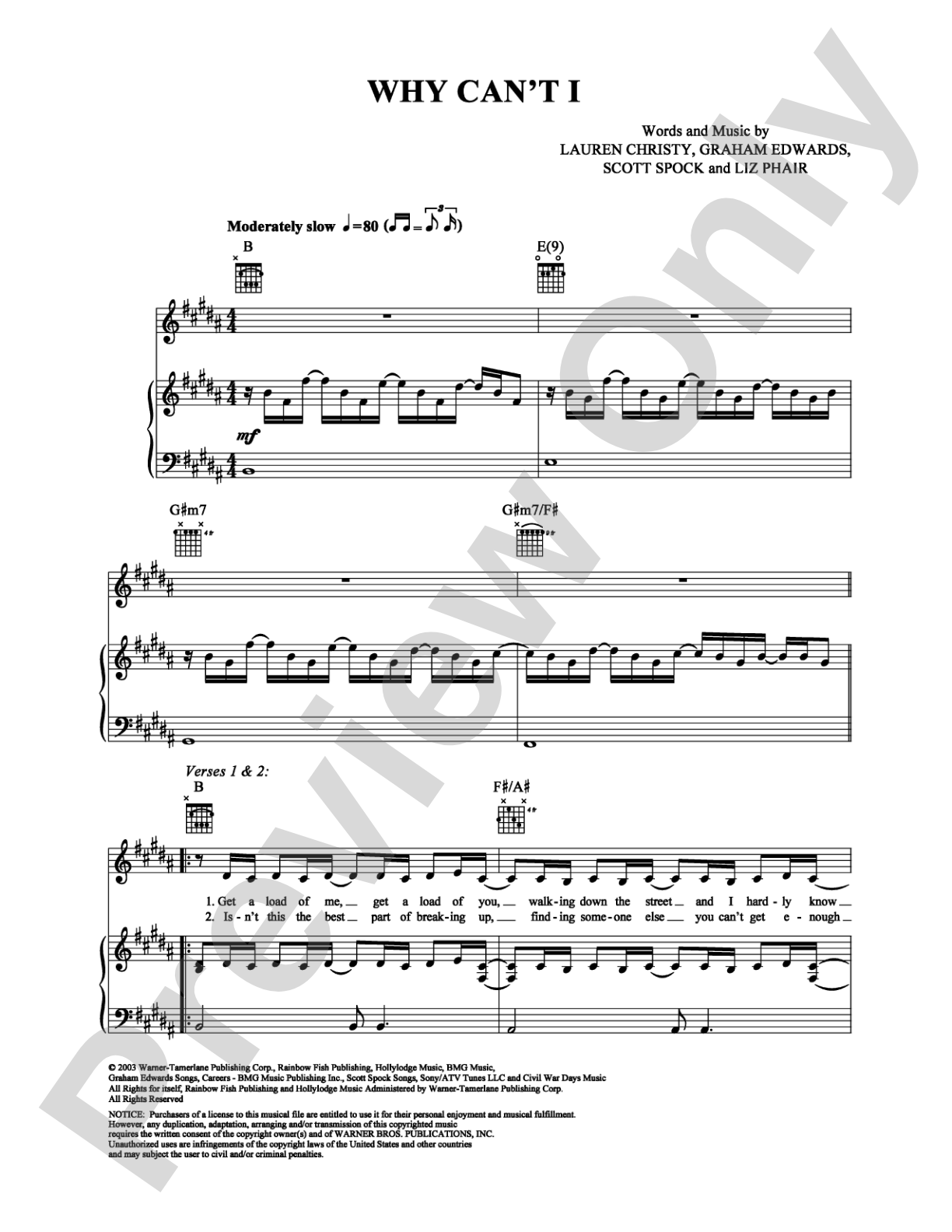
Why Can't I: Piano/Vocal/Chords Digital Sheet Music

Why Can't I: Piano/Vocal/Chords Digital Sheet Music

Lauren Christy, Graham Edwards, Scott Spock, Liz Phair

Item: 00-PS-0006397

Digital Download
$3.99
Description

Why Can't I: Piano/Vocal/Chords Digital Sheet Music isn't in MakeMusic Cloud just yet...but it could be. Let us know you'd like to see it, and you'll help shape what comes next. In the meantime, start a free trial and dive into thousands of interactive titles your students can play along with today.

Sample Audio
No sample audio found.
Sample Video
Additional Details
SKU: 00-PS-0006397

More about this title

About the Artist: Liz Phair

Liz Phair emerged from the Chicago indie rock scene in the 1990s and became known for her direct songwriting, guitar-driven arrangements, and willingness to challenge conventions in rock and pop music. Her work spans alternative rock, pop, and country influences, and she has maintained an active recording and performing career across multiple decades.

Why we love this

This song gives singers and pianists a contemporary pop-rock piece with genuine lyrical substance and a memorable melody that sits well for voices across different ranges. The chord chart allows for flexible interpretation, whether you're teaching students to play from lead sheets or preparing a performance with harmonic flexibility in mind.

What to expect

The song carries a tone of direct questioning and emotional immediacy, grounded in pop-rock instrumentation that feels both introspective and energized. Its conversational melody and straightforward harmonic language make it accessible without sacrificing emotional depth.

Who it's for

This piece works well for intermediate to advanced piano students and singers who want to explore contemporary pop-rock repertoire in a teaching or recital setting. It appeals to students working on lead sheet reading and interpretation, as well as those developing confidence with modern vocal styles.

How to get the most out of it

  • Emphasize the conversational phrasing of the melody; treat it like speech set to music rather than a traditional vocal line, which gives the song its authentic character.
  • Experiment with the accompaniment texture by varying which chord voicings you emphasize, especially in the verses, to create dynamic contrast without changing the harmonic structure.
  • Lock the vocal line with the piano's rhythmic feel early in rehearsal; this song relies on rhythmic conversation between voice and accompaniment to land its emotional impact.

How to use it

Include this in a recital focused on contemporary singer-songwriters or as part of a program exploring pop-rock composition. It pairs well alongside other modern pop standards in mixed repertoire settings and works effectively as a solo vocal piece with piano accompaniment.

Skills your students will build

  • Reading and interpreting lead sheets with chord symbols
  • Vocal phrasing in contemporary pop-rock style
  • Piano accompaniment textures from chord charts
  • Rhythmic coordination between voice and piano
  • Chord voicing choices for arrangement flexibility

You May Also Like