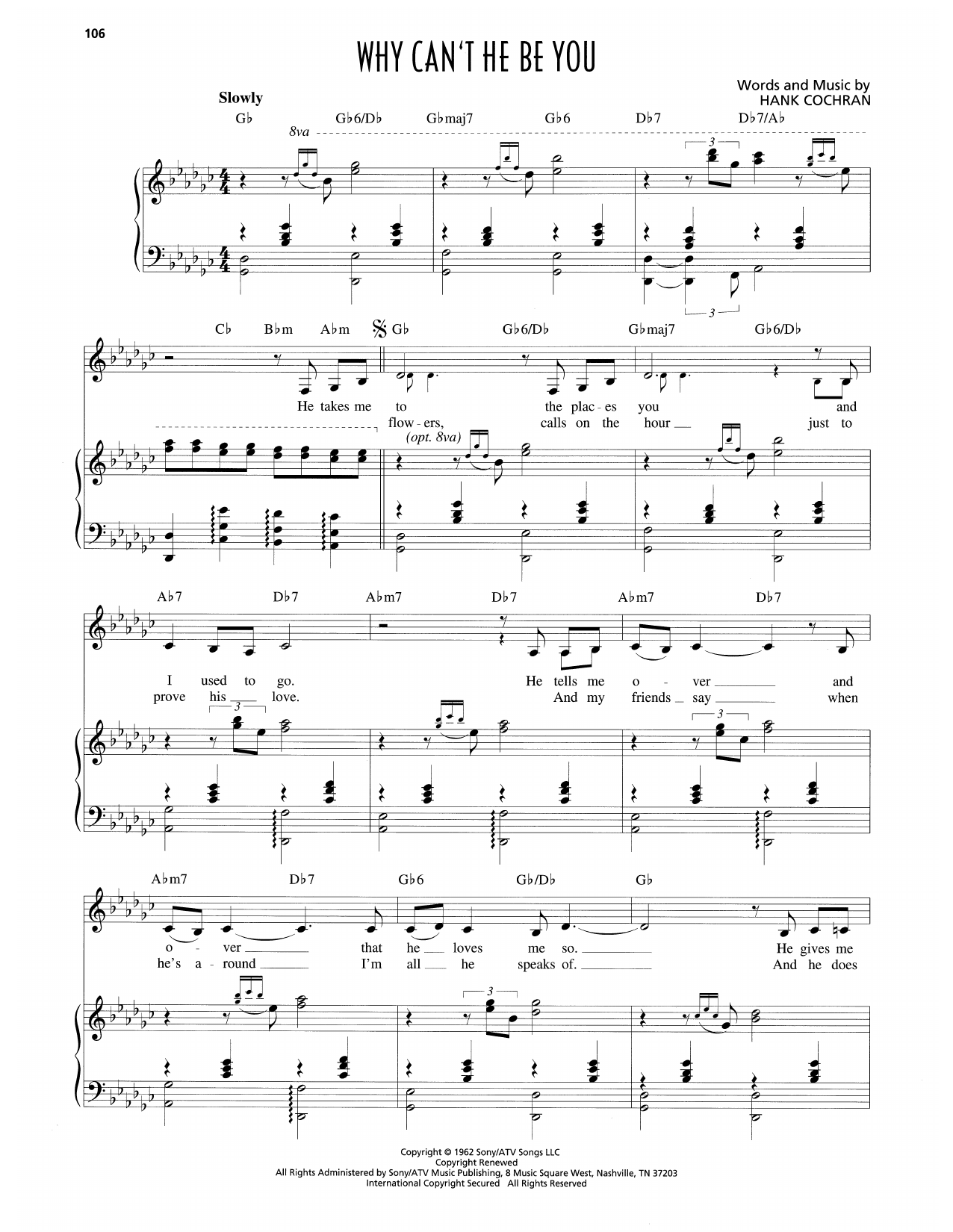
Why Can't He Be You Sheet Music Preview

Why Can't He Be You: Piano Vocal

As performed by Patsy Cline

Item: 35-DS01823717

Digital Download
$5.99
Description

Why Can't He Be You: Piano Vocal isn't in MakeMusic Cloud just yet...but it could be. Let us know you'd like to see it, and you'll help shape what comes next. In the meantime, start a free trial and dive into thousands of interactive titles your students can play along with today.

Sample Audio
No sample audio found.
Sample Video
Additional Details
Publisher: Hal Leonard
Page Count: 4
SKU: 35-DS01823717

More about this title

About the Artist: Patsy Cline

Patsy Cline stands as one of the most influential vocalists in American music history, pioneering a crossover sound that brought country music into the mainstream pop charts during the late 1950s and early 1960s. Her warm, mature contralto voice and impeccable phrasing made her a standard bearer for vocal control and emotional authenticity in popular song.

For music educators, Cline's catalog offers a masterclass in legit singing technique applied to popular material. Her recordings demonstrate how proper breath support, consistent vibrato, and careful dynamic control elevate a song regardless of genre. Students who study her work gain insight into how classical vocal discipline serves contemporary repertoire.

Why we love this

This song showcases Cline's gift for delivering vulnerability through a perfectly controlled vocal line. The piano part sits comfortably in the foreground without overwhelming the voice, making it an excellent choice for students learning to balance accompaniment with lyrical singing.

What to expect

Wistful and contemplative, with a gentle resignation that never teeters into self pity. The song unfolds with the quiet confidence of someone reflecting honestly on love and loss, asking a simple question that carries weight precisely because it's asked so gently.

Who it's for

Vocalists developing legit technique in popular song styles, and accompanying pianists seeking to support singers with tasteful, uncluttered accompaniment work. This arrangement functions well for voice lesson repertoire, recital programming, and classroom performance.

How to get the most out of it

  • Approach the vocal line as a legit melody rather than a spoken/conversational delivery. Cline's strength lies in maintaining phrase shape and consistent tone quality across longer musical lines.
  • Ensure the pianist gives full weight to the introductory material and any instrumental bridges. These sections set the emotional tone and deserve intentional playing, not just vamping.
  • Shape dynamics gradually rather than in sudden shifts. This song rewards subtle crescendos and decrescendos that mirror the lyrical arc.

How to use it

Include this in a vocal recital alongside other introspective song literature, or use it as an accessible entry point into Cline's work for students studying American popular song standards. Its four-page length makes it an efficient addition to a program built around thematic programming (lost love, reflection, etc.).

Skills your students will build

  • Sustaining legit vocal tone across longer phrases
  • Balancing supported breath with lyrical expression
  • Reading and executing dynamic subtlety in a popular song context
  • Collaborative listening between vocalist and pianist
  • Understanding phrase architecture in American popular song

You May Also Like