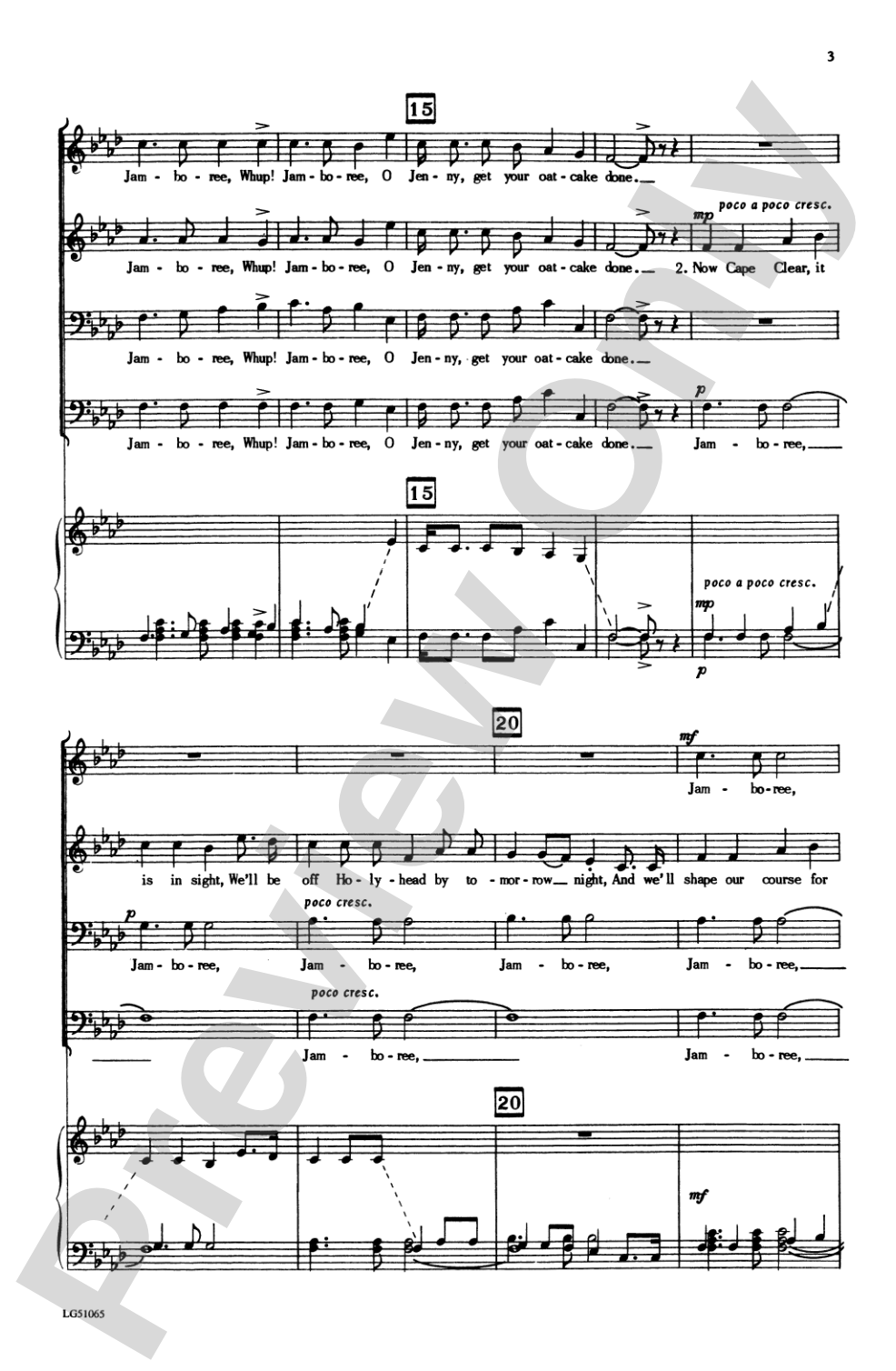
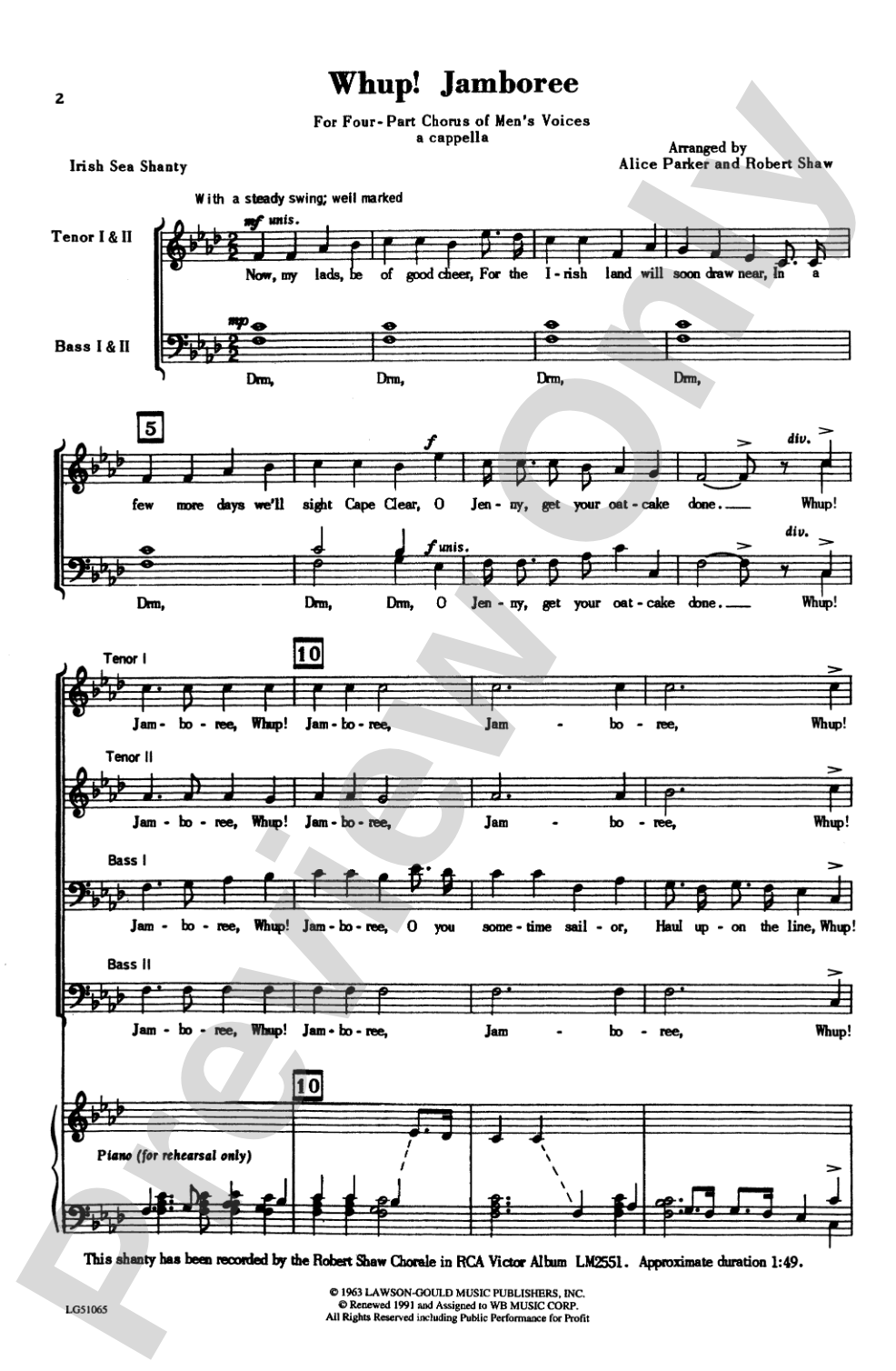
Whup! Jamboree Sheet Music Preview

Whup! Jamboree: TTBB Choral Octavo

Irish Sea Shanty

Arr. Robert Shaw and Alice Parker

Item: 00-PO-0003009

Digital Download
$2.25

Minimum order quantity: 20 copies

Description

Whup! Jamboree: TTBB Choral Octavo isn't in MakeMusic Cloud just yet...but it could be. Let us know you'd like to see it, and you'll help shape what comes next. In the meantime, start a free trial and dive into thousands of interactive titles your students can play along with today.

Sample Audio
No sample audio found.
Sample Video
Additional Details
Series: Alfred Archive Edition: Lawson-Gould Music Publishers
Publisher: Alfred Music
Page Count: 8
SKU: 00-PO-0003009

More about this title

About the Arranger: Robert Shaw

Robert Shaw stands among the most influential choral musicians of the twentieth century, renowned for his meticulous arrangements and his ability to unlock the expressive potential of ensemble singing. His work as both conductor and arranger shaped American choral practice, earning him recognition as a master of voice leading and textural clarity. Shaw's arrangements remain essential to the choral repertoire, prized for their musicality and their capacity to elevate folk material into concert-worthy art.

Why we love this

Shaw and Parker's treatment of this folk tune balances infectious energy with genuine musical substance. The flexible voicing options (TB/TTB/TBB/TTBB) mean you can program this with whatever combination of singers you have on any given night, making it a pragmatic choice for mixed or developing ensembles without sacrificing the arrangement's integrity.

What to expect

The piece radiates the spirit of an outdoor gathering, with the kind of straightforward joy that folk jamborees embody. The rhythmic vitality and syncopated figures create a sense of movement and celebration, while Shaw and Parker's harmonization keeps the writing sophisticated enough to satisfy musicians without becoming precious.

Who it's for

This arrangement serves TTBB and mixed ensembles seeking accessible secular material that's genuinely fun to sing and perform. The flexible voicing makes it equally useful for TTB groups, baritone-heavy ensembles, or situations where you need to accommodate variable attendance.

How to get the most out of it

  • Maintain rhythmic clarity in the homophonic sections by having each voice part think of its role as part of a single harmonic gesture rather than independent lines.
  • The folk origins demand a conversational, natural approach to phrasing; avoid over-shaping phrase endings where the text suggests momentum forward.
  • Balance the lower voices so they anchor the harmony without overshadowing the tenor line, which often carries the melodic interest in folk arrangements.

How to use it

Program this as a contrast to more introspective repertoire, or use it to anchor a folk-themed concert section. Its eight pages and moderate difficulty make it an ideal choice for closing a set or a program section where you want to leave the audience smiling.

Skills your students will build

  • Handling syncopated rhythms in folk idioms
  • Balancing homophonic texture while maintaining rhythmic precision
  • Adapting flexible voicing to available singers without compromising the arrangement

You May Also Like