Whole Lotta Loving Sheet Music Preview

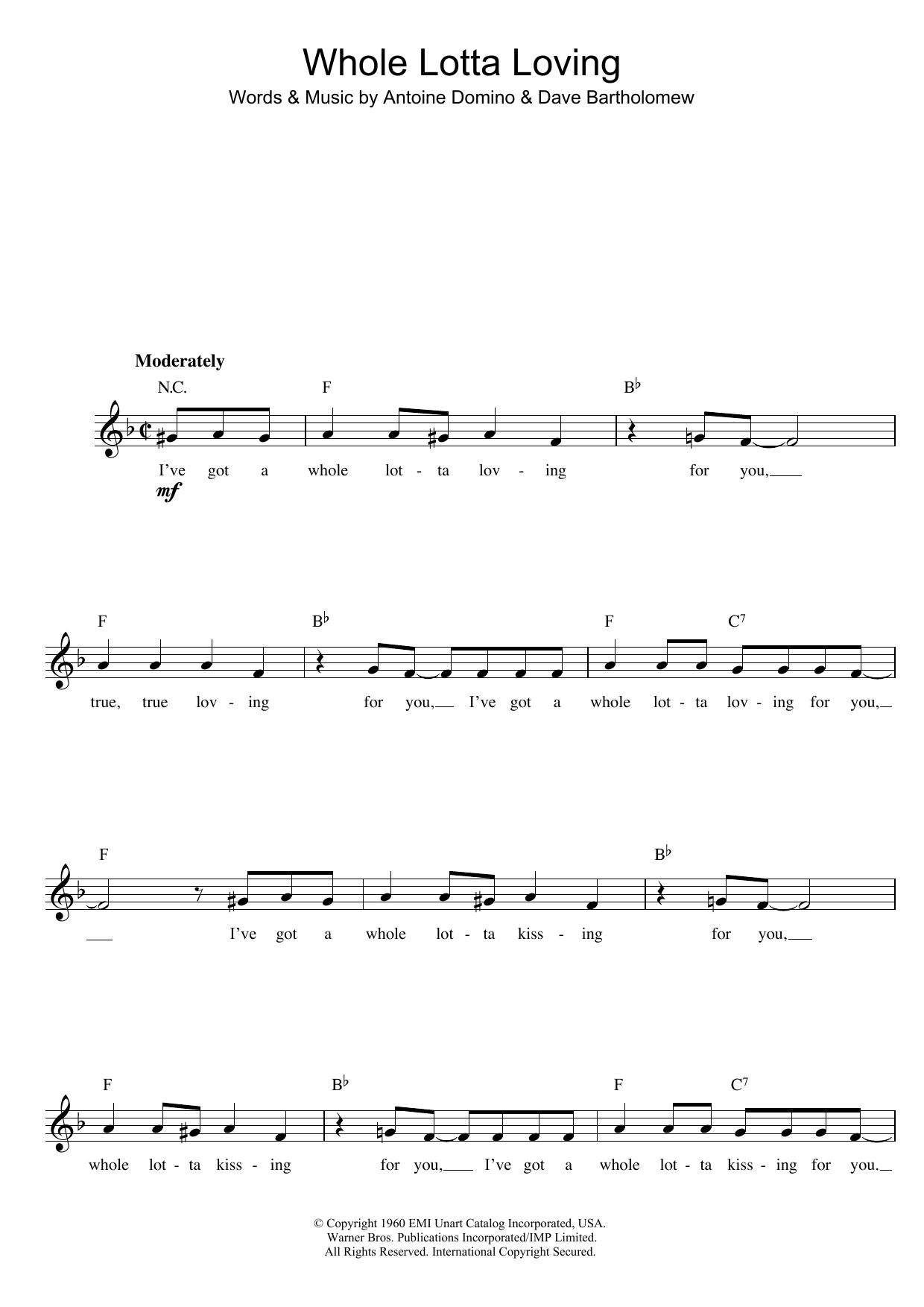
Whole Lotta Loving: Lead Sheet / Fake Book

As performed by Fats Domino

Item: 35-DS00354143

Digital Download
$3.99

One moment…

One moment…

Description

Whole Lotta Loving: Lead Sheet / Fake Book isn't in MakeMusic Cloud just yet...but it could be. Let us know you'd like to see it, and you'll help shape what comes next. In the meantime, start a free trial and dive into thousands of interactive titles your students can play along with today.

Sample Audio
No sample audio found.
Sample Video
Additional Details
Publisher: Hal Leonard
Page Count: 2
SKU: 35-DS00354143

More about this title

About the Artist: Fats Domino

Fats Domino (1928-2017) was a pianist and singer who bridged rhythm and blues with rock and roll, making him one of the most commercially successful recording artists of the 1950s. His rollicking piano style, infectious energy, and accessible songwriting influenced generations of musicians across genres, from rock pioneers to contemporary funk and soul players.

Why we love this

This lead sheet captures the swagger and loose-limbed joy that made Domino's recordings so influential. The harmonic structure and melodic phrasing offer pianists and vocalists a chance to explore how blues sensibility powers rock and roll without needing a full band.

What to expect

Infectious good humor runs through every phrase. The changes move with an easy confidence that feels both laid back and propulsive, inviting players to relax into the groove while keeping the energy buoyant. It's music that swings without strain.

Who it's for

Pianists working on blues vocabulary and comping skills will find this a practical resource for understanding how a blues feel translates to rock and roll language. Vocalists studying songs from the early rock era gain direct access to Domino's original harmonic framework, and instrumentalists treating this as a learning standard benefit from the straightforward changes and memorable melody.

How to get the most out of it

  • Lean into the swing feel. The written rhythms suggest a relaxed, behind-the-beat pocket that separates this from straight rock; listen to recordings to internalize the groove before locking into the changes.
  • Keep the left hand conversational rather than timekeeping. Domino's piano playing was conversational with the rhythm section, so avoid rigid accompaniment patterns in favor of space and responsiveness.
  • Let the blues notes breathe. The melody invites bends and note choices that aren't notated; space allows singers and soloists room to find their own voice within the form.

How to use it

Include this in a unit on early rock and roll history, pairing it with other Domino standards to show students how blues piano became a foundational voice in rock. It works equally well as a solo jazz or pop standard for recitals, or as a small ensemble feature that connects different instrumental voices around a simple, strong melody.

Skills your students will build

  • Blues chord progressions and their application to early rock repertoire
  • Swing feel and behind-the-beat phrasing
  • Jazz comping and left-hand independence from melody
  • Call-and-response sensibility between vocalist and accompaniment
  • Reading and interpreting rhythmic notation in a blues context

You May Also Like