
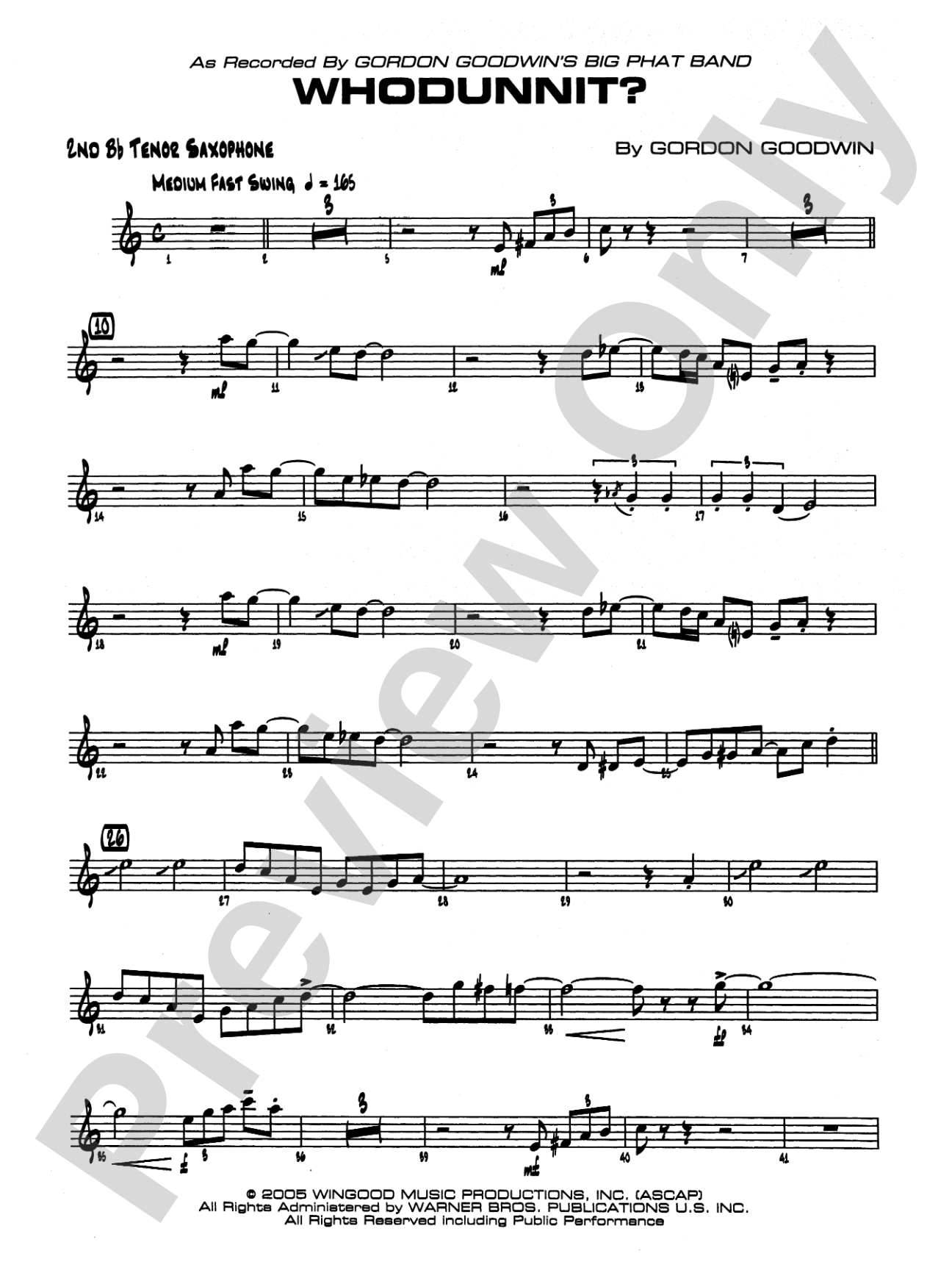
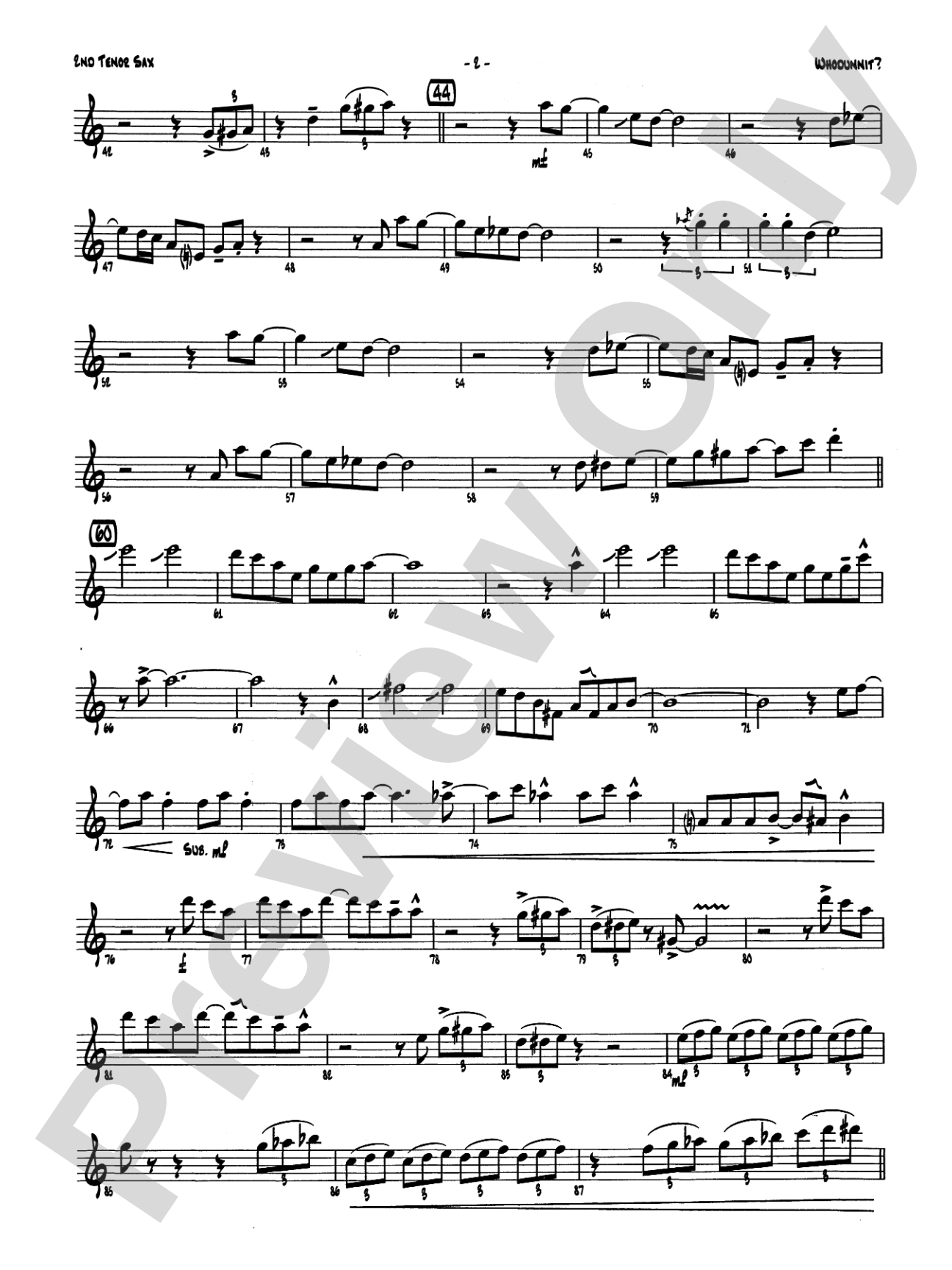

Whodunnit?: 2nd B-flat Tenor Saxophone
By Gordon Goodwin
Grade: 5 (Advanced / Difficult)
Item: 00-PC-0014734_TX2
$3.00
Pickup currently not available
Description
Another Gordon Goodwin work of art. Commissioned by New Trier High School, Jim Warrick, director, this is sort of a bluesy-swing chart with a huge shout chorus. Optional vibe/xylophone/percussion part and an optional flute part on 2nd alto part. Demands a strong sax section and has a powerful shout chorus. As performed by Gordon Goodwin's Big Phat Band. Wonderful chart! (excerpt 2:06) This title is available in MakeMusic Cloud.


Don't just read it, hear it, play along with it, and watch your students grow with it. In MakeMusic Cloud, Whodunnit?: 2nd B-flat Tenor Saxophone comes alive with professional accompaniment, adjustable tempo, and built-in practice tools that turn solo practice into real progress.
Open in the Player
Jump straight in and assign it today.
Start Your Free Trial
Open this title and explore the full library in minutes.
Sample Audio
1
Audio File
--:--
0:00
0:00
Sample Video
No sample videos found.
Additional Details
Series:
Gordon Goodwin Series
Publisher:
Alfred Music
Page Count:
98
SKU:
00-PC-0014734_TX2
More about this title
About the Composer: Gordon Goodwin

Gordon Goodwin heard complete compositions in his mind from age five, writing them down with remarkable fidelity. By thirteen, he had already created his first big band chart, signaling the emergence of a compositional voice that would eventually shape modern big band jazz. His work in television and film earned him three Emmy Awards and multiple Grammy nominations, with his orchestrations featured in scores ranging from action films like Con Air and Bad Boys II to sports dramas like Remember the Titans.
Goodwin's collaborations span generations of music titans, from Ray Charles and Quincy Jones to Christina Aguilera and David Foster. In 2000, he founded Gordon Goodwin's Big Phat Band, which immediately made history with the first commercially released DVD audio album and subsequent Grammy nominations. His albums XXL and Swingin' for the Fences demonstrated his mastery of the large jazz ensemble sound, a command he brings to every commission and publication.
Why we love this
Goodwin writes for high school ensembles with the same sophistication and energy he brings to his Grammy-nominated recordings. The shout chorus here delivers genuine excitement and a built-in crowd moment, while the bluesy-swing foundation gives the chart personality beyond technical difficulty. The optional percussion and flute parts show respect for varying ensemble configurations, making this accessible without sacrificing the powerhouse sound his Big Phat Band recordings are known for.
What to expect
A controlled explosion of blues and swing energy. The chart moves with the easy confidence of a professional big band, building tension through the verse before unleashing the shout chorus as a moment of pure ensemble power. There is sophistication in the arranging choices, but the core feeling is pure joy and swinging groove.
Who it's for
Jazz ensembles with strong saxophone sections and the ability to execute Grade 5 complexities with confidence. This chart suits high school and college groups ready to tackle a piece that demands accuracy and blend across the full ensemble while still rewarding the hard work with genuine musical payoff.
How to get the most out of it
- Spend rehearsal time locking the sax section into the pocket of this chart; Goodwin's bluesy feel depends on unanimity across reeds, and any daylight between saxes will dissolve the shout chorus impact.
- Shape the dynamic contour of the shouting section over multiple rehearsals rather than nailing it all at once. Let the ensemble discover where the natural peaks and valleys sit.
- If you include the optional vibraphone or xylophone part, balance it carefully in the mix so it colors rather than dominates the ensemble texture.
- Record a rehearsal version and listen back as a section or full ensemble; Goodwin's writing rewards precision, and hearing playback reveals rhythmic alignment issues that can be hard to spot in real time.
How to use it
Program this as a centerpiece for a jazz concert, where it can anchor a second half and showcase your ensemble's technical abilities and section cohesion. It works equally well as a finale slot, where the shout chorus leaves audiences with an indelible memory of your group's sound. The excerpt length and professional pedigree also make it suitable for a jazz showcase or invitational where you want to demonstrate serious musicianship.
Skills your students will build
- Ensemble blend and precision in the sax section across multiple range registers
- Phrasing and dynamic control in a bluesy-swing style
- Reading complex jazz rhythms and syncopation at Grade 5 difficulty
- Responding to shout chorus arrangements with unified energy and articulation
- Balance between optional and core parts within the ensemble texture