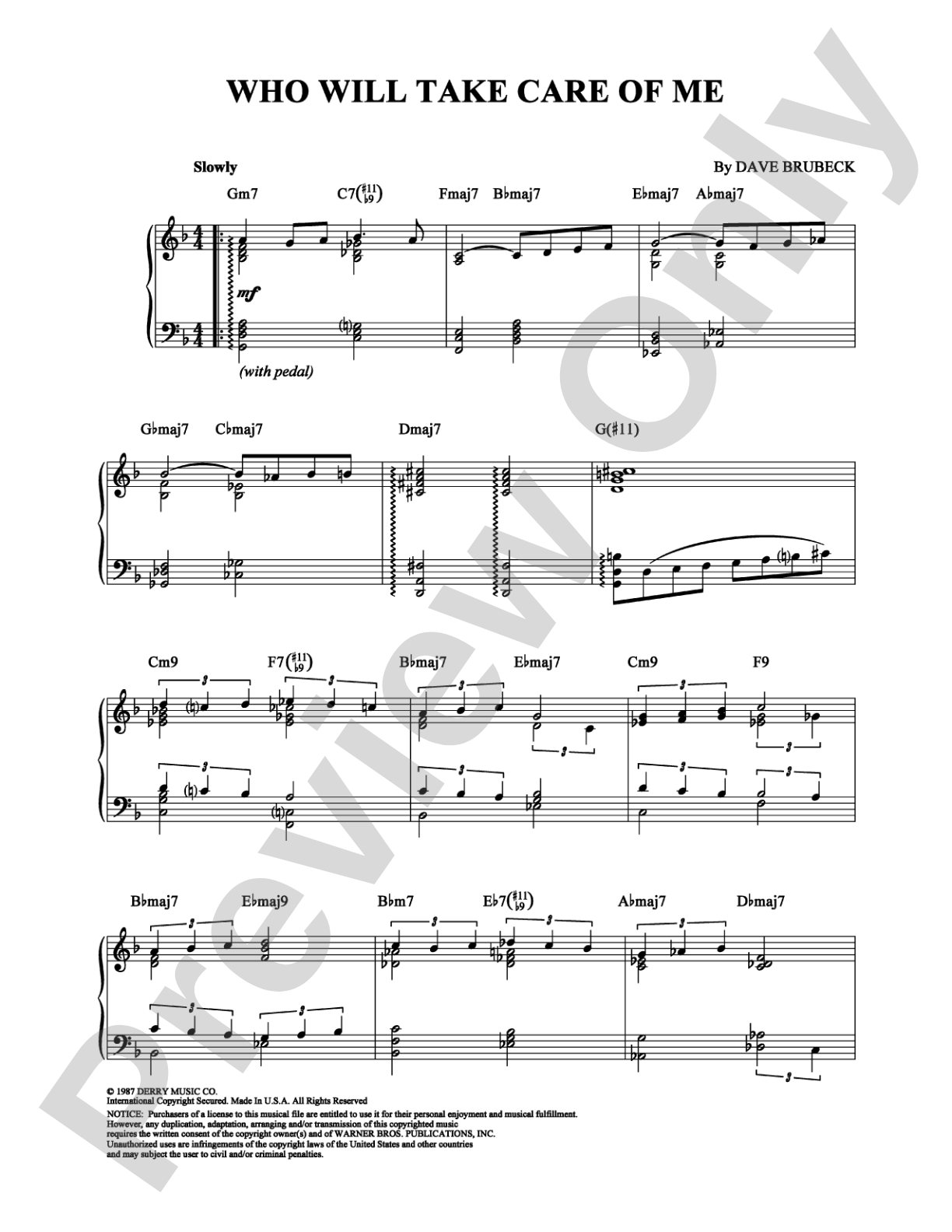
Who Will Take Care Of Me: Piano Digital Sheet Music

Who Will Take Care Of Me: Piano Digital Sheet Music

Dave Brubeck

Item: 00-PS-0000990

Digital Download
$3.99
Description

Who Will Take Care Of Me: Piano Digital Sheet Music isn't in MakeMusic Cloud just yet...but it could be. Let us know you'd like to see it, and you'll help shape what comes next. In the meantime, start a free trial and dive into thousands of interactive titles your students can play along with today.

Sample Audio
No sample audio found.
Sample Video
Additional Details
SKU: 00-PS-0000990

More about this title

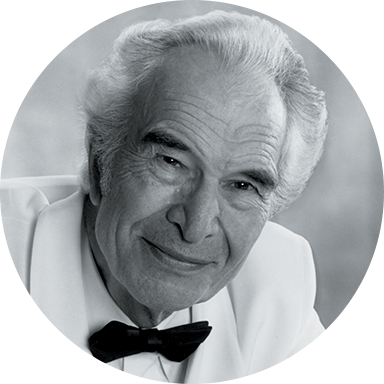
About the Artist: Dave Brubeck

Dave Brubeck

Dave Brubeck built his reputation as both a virtuosic improviser and a disciplined composer, creating works that moved seamlessly between jazz vernacular and concert hall forms. His education under Darius Milhaud at Mills College shaped a compositional voice that refused easy categorization, balancing rhythmic sophistication with lyrical depth across symphonies, masses, string quartets, and piano solos. Beyond his musical legacy, Brubeck became a cultural force, desegregating jazz ensembles in the 1950s and using his art to challenge social barriers throughout the mid-twentieth century.

His commercial breakthrough came with the album "Time Out" and the standard "Take Five," the first jazz LP to sell over one million copies. Yet his ambitions extended far beyond popular success. Sacred works like "To Hope!" and "Pange Lingua Variations" found their way into cathedrals and concert halls across Europe and North America, performed by the London Symphony Orchestra and choral societies. Recognition came late but abundantly: a Grammy Lifetime Achievement Award, the Presidential Medal of the Arts, and induction into the American Classical Music Hall of Fame in 2003.

Why we love this

This solo captures Brubeck's lyrical gift for melody alongside his instinct for harmonic sophistication. A pianist seeking material that sits comfortably under the fingers while rewarding deeper exploration of jazz harmony and phrasing will find real substance here. It's the kind of piece that works equally well as a recital selection or as an introduction to Brubeck's compositional language beyond his most famous recordings.

What to expect

Introspective and tender, with harmonic movement that feels inevitable once you hear it. The piece carries a gentle vulnerability, the kind Brubeck brought to his most personal compositional moments, reflective rather than flashy, with warmth baked into every phrase.

Who it's for

Jazz pianists working to expand their repertoire beyond standards and blues-based forms will appreciate Brubeck's compositional approach. Intermediate to advanced students interested in the intersection of jazz and classical writing will find this piece instructive. This digital score suits recital preparation, practice exploration, and anyone curious about Brubeck's creative output beyond his legendary ensemble recordings.

How to get the most out of it

  • Maintain clarity in the left hand even as you shape the melody; Brubeck's accompaniment patterns are harmonic architecture, not just texture.
  • Listen to Brubeck's own recordings to internalize the rhythmic feel and approach to swing; this informs how you'll voice and time the notated material.
  • Let rubato emerge naturally from the harmonic progression rather than imposing it artificially; jazz phrasing follows the chords.

How to use it

Pair this with other mid-20th-century jazz compositions for a program exploring how composers bridged classical and jazz languages. It works as a solo recital piece that showcases compositional sophistication beyond ensemble performance. Program it alongside standards or other Brubeck compositions to illustrate his range as both performer and writer.

Skills your students will build

  • Jazz harmony and voice leading in a solo context
  • Interpreting written jazz notation with appropriate swing feel and phrasing
  • Understanding Brubeck's compositional approach to melody and accompaniment
  • Balancing notated precision with interpretive freedom in jazz settings

You May Also Like