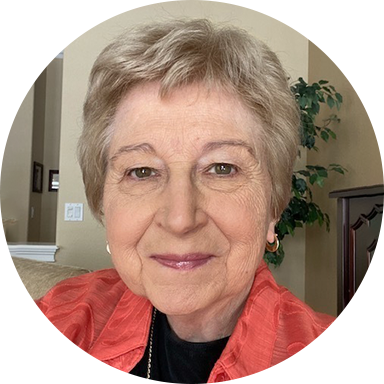
Mary Donnelly grew up in Reno, Nevada, and initially pursued English and French at the University of Nevada, Reno. While still an undergraduate, she co-founded two children's choruses and discovered her true calling in music education, prompting her return to graduate school.
Donnelly earned her Master's Degree in Education from Lesley College in Cambridge, Massachusetts, where her coursework centered on arts integration across the curriculum. She spent three decades teaching general music and choir in the Washoe County School District before retiring. Her partnership with arranger George L.O. Strid, which began in 1985 during a team-taught sixth grade music class, has yielded over two hundred songs and twenty-five musicals. She holds membership in ACDA, NEA, and ASCAP.
Why we love this
Donnelly and Strid's arrangement breathes fresh life into a familiar tune by layering "Up On The Housetop" into something that feels contemporary and engaging rather than quaint. The 2-part voicing keeps the arrangement accessible while the interplay between parts gives singers real musical work to do, making rehearsals productive for middle school or younger high school choirs.
What to expect
Playful and clever, with that spark of recognition that comes when a beloved melody transforms into something unexpected. The blend of old and new creates warmth without sentimentality, inviting singers and audiences to enjoy a familiar song through fresh ears.
Who it's for
This works beautifully for middle school choirs, elementary music programs with strong singers, and community choirs looking to program something festive without complexity. The 2-part voicing and 7 pages make it manageable for groups preparing holiday concerts on a tight timeline.
How to get the most out of it
Balance the melody line clearly in Part 1 while keeping Part 2 supportive; a slight dynamic emphasis on the primary line helps audiences follow the familiar tune beneath the new material.
Establish the text of "Who's Up There?" with crisp articulation and clear vowels so the new lyrical content comes through distinctly from the traditional song underneath.
Rehearse the harmonic rhythm separately if your singers struggle with independence; have Part 2 tap or speak their rhythm while Part 1 sings to isolate any vertical alignment issues.
How to use it
Slot this into a holiday concert as a high-energy moment between slower seasonal pieces, or use it as an opener to establish a lighter tone early. It pairs especially well with other contemporary holiday arrangements that honor tradition while keeping energy alive.
Skills your students will build
Two-part vocal independence and harmonic awareness
Text clarity and lyrical phrasing in dialogue between parts
Sight-reading in treble clef with straightforward rhythmic patterns
You May Also Like
Scan to Complete Your Purchase
Use your phone's camera to scan the code below
You'll log in on your phone and the order will be added to your account