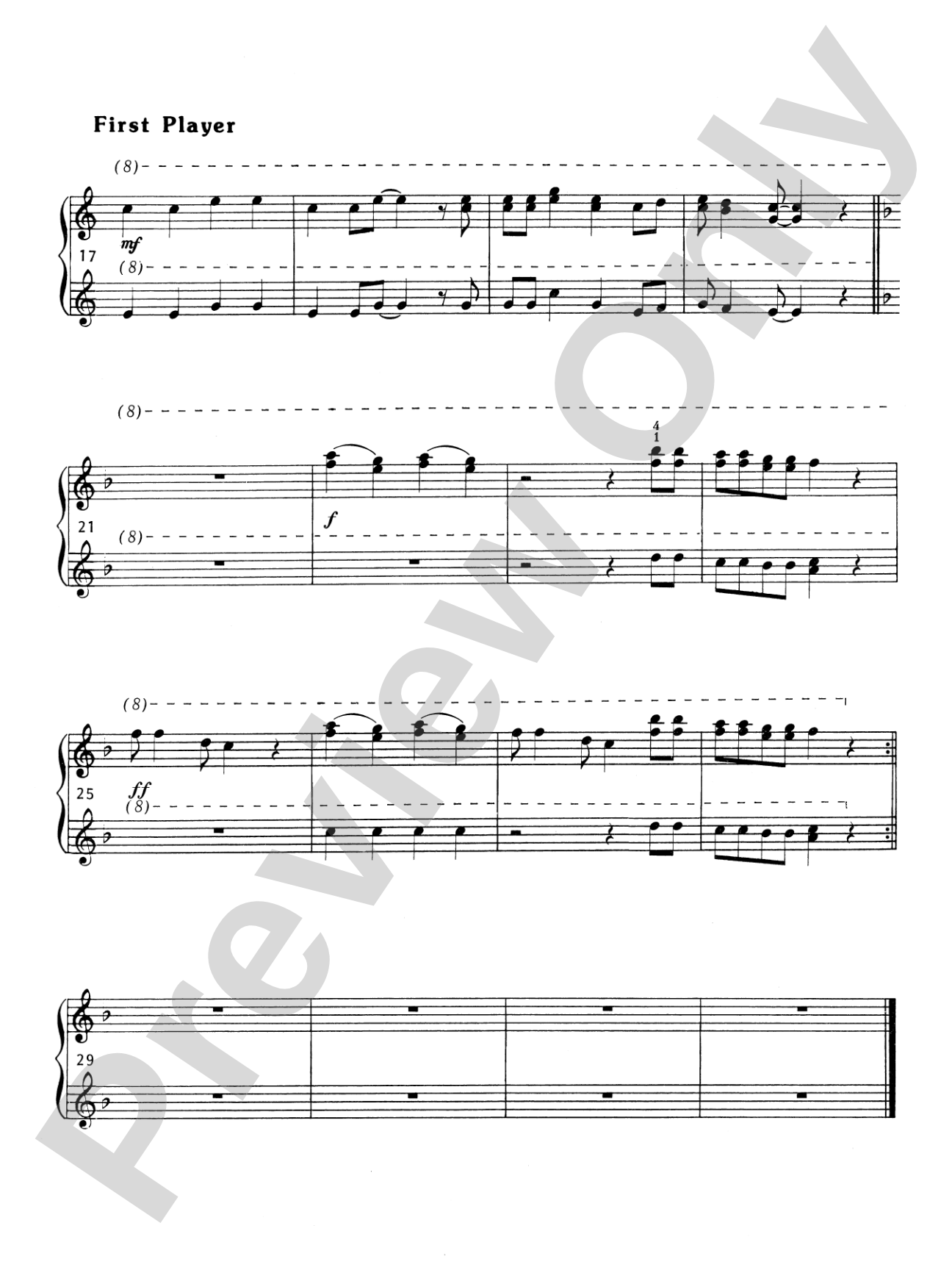
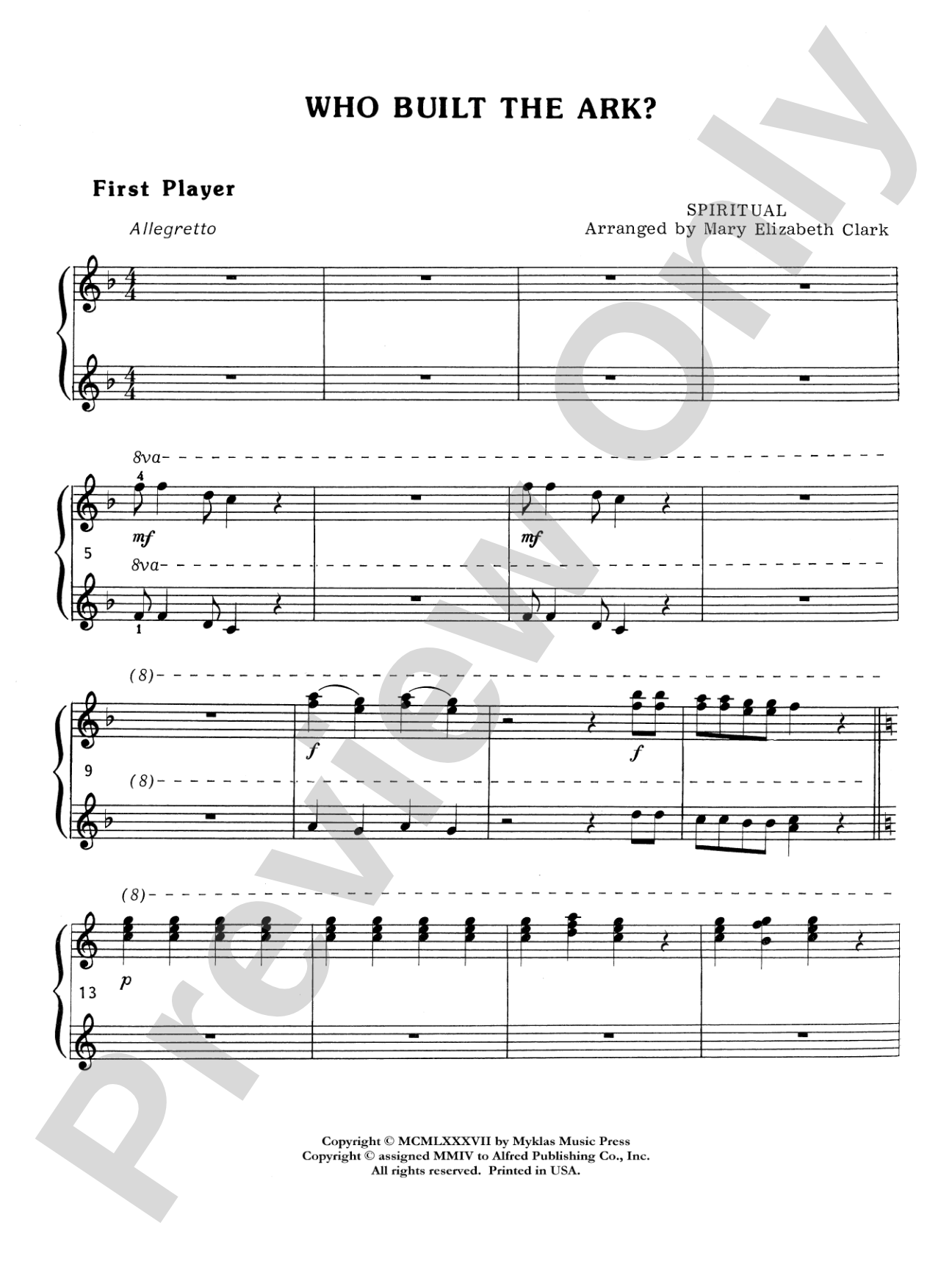
Who Built the Ark? - Piano Trio (1 Piano, 6 Hands) Sheet Music Preview

Who Built the Ark? - Piano Trio (1 Piano, 6 Hands): Piano

Arranged by Mary Elizabeth Clark

Level: Late Elementary

Item: 00-PB-0000668

Digital Download
$5.50
Description
Mary Elizabeth Clark arranged this spiritual for late elementary piano trio---one piano, six hands. In the keys of F major and C major and 4/4 meter, the introduction establishes the syncopated rhythm that continues throughout the piece. Conveniently shown in score form on the inside covers, separate parts for each player are also included. A Federation Festivals 2016-2020 selection. A Federation Festivals 2020-2024 selection.

Who Built the Ark? - Piano Trio (1 Piano, 6 Hands): Piano isn't in MakeMusic Cloud just yet...but it could be. Let us know you'd like to see it, and you'll help shape what comes next. In the meantime, start a free trial and dive into thousands of interactive titles your students can play along with today.

Sample Audio
No sample audio found.
Sample Video
Additional Details
Publisher: Alfred Music
Page Count: 10
SKU: 00-PB-0000668

More about this title

Why we love this

Mary Elizabeth Clark's arrangement cuts through the usual piano trio repertoire by giving all three players something genuinely engaging to do. The syncopated rhythmic foundation threads through the entire piece, which means students aren't just trading solo passages; they're building a cohesive sound together from the first measure. It's accessible without being simplistic, and it earned selection for two consecutive Federation Festivals cycles for good reason.

What to expect

Buoyant and driving. The syncopated rhythms give this spiritual a forward momentum that lives somewhere between reverent and joyful, with enough rhythmic snap to keep young pianists engaged. The arrangement honors the spiritual tradition while letting students feel the pulse beneath their fingers.

Who it's for

Late elementary students ready for collaborative keyboard work without the complexity of three separate instruments. It works equally well for elementary and middle school festival preparation or as a concert closer that showcases ensemble musicianship on a single instrument.

How to get the most out of it

  • Lock the syncopated rhythm in the introduction before anything else lands. This is your foundation, and if the ensemble nails it early, the rest falls into place naturally.
  • Attend to the transitions between F major and C major. These aren't jarring key changes, but they need clarity so the modulation registers as intentional rather than accidental.
  • Balance the parts so no single hand dominates. With six hands on one piano, clarity of line matters more than volume; lighter touch from the upper voices lets the spiritual's melody breathe.
  • Work the piece hands separately first for each player, then layer the trios gradually. This prevents the inevitable traffic jam that happens when three people learn their parts in isolation.

How to use it

This fits naturally into a festival season program or as the anchor piece in a piano ensemble set. It also works as a between-rehearsal reward for your main ensemble; students see immediately how chamber musicianship translates to keyboard work, which deepens their understanding of balance and listening.

Skills your students will build

  • Syncopated rhythm execution in F major and C major
  • Reading music from both score and individual parts simultaneously
  • Ensemble listening and balance among three equal voices
  • Modulation between related keys
  • Collaboration on a single keyboard instrument

You May Also Like