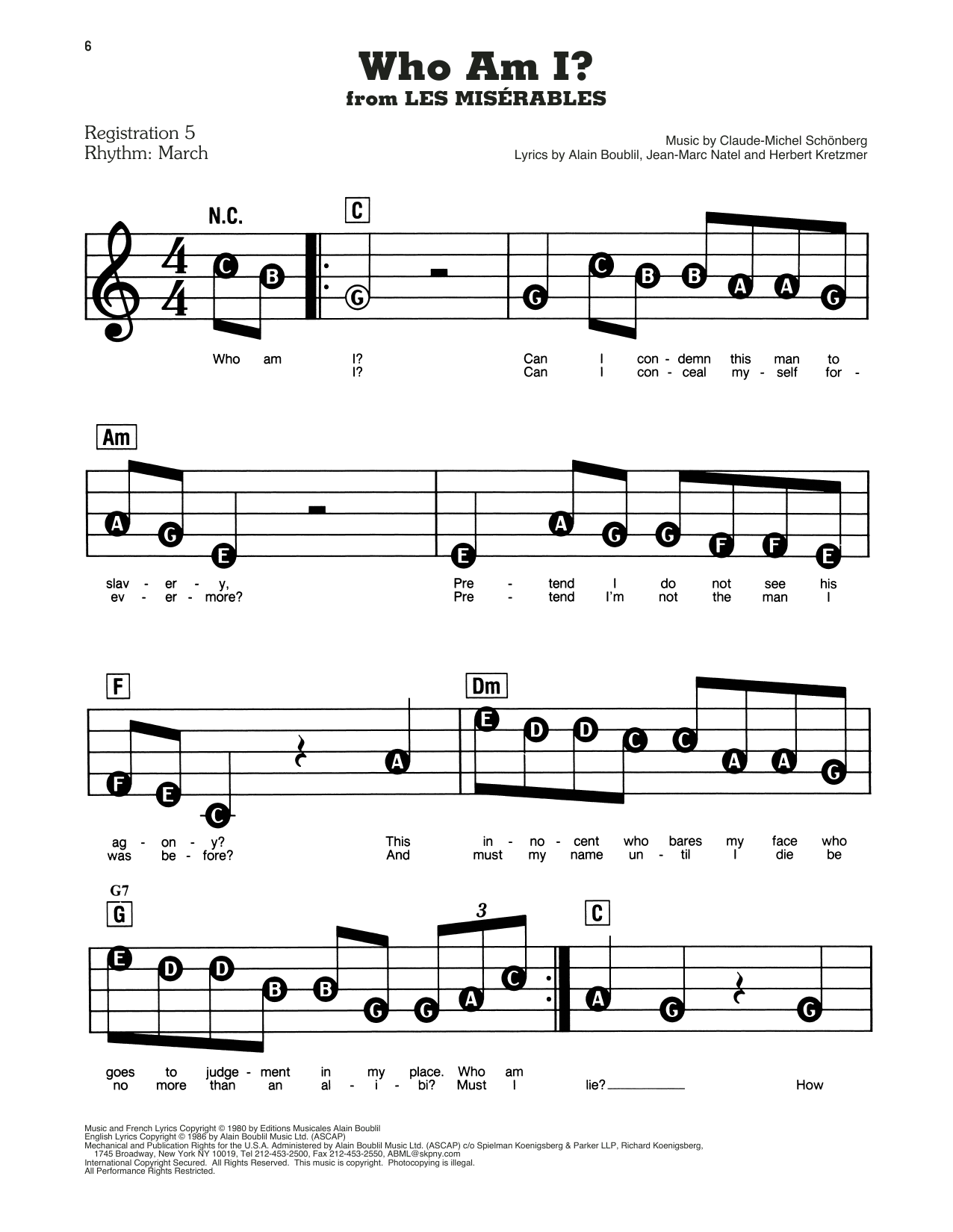
Who Am I? (from Les Miserables) Sheet Music Preview

Who Am I? (from Les Miserables): E-Z Play Today

By Alain Boublil / By Claude-Michel Schonberg / By Arnold Schönberg

Item: 35-DS00492855

Digital Download
$4.99
Description

Who Am I? (from Les Miserables): E-Z Play Today isn't in MakeMusic Cloud just yet...but it could be. Let us know you'd like to see it, and you'll help shape what comes next. In the meantime, start a free trial and dive into thousands of interactive titles your students can play along with today.

Sample Audio
No sample audio found.
Sample Video
Additional Details
Publisher: Hal Leonard
Page Count: 3
SKU: 35-DS00492855

More about this title

About the Composer: Alain Boublil

Alain Boublil is the librettist and lyricist behind Les Misérables, one of the most performed musicals in the world. Working alongside composer Claude-Michel Schönberg, he crafted a score that transformed the French concept album into a global phenomenon, reshaping how musical theater could tell sweeping historical narratives with emotional depth.

Boublil's influence on music education extends far beyond Broadway stages. His songs have become staples in piano studios, choral programs, and musical theater curricula because they balance accessibility with genuine dramatic substance. Teachers turn to his work when they need material that engages students emotionally while respecting their growing technical abilities.

Why we love this

This arrangement distills one of musical theater's most introspective moments into a manageable three-page piano setting. The song's emotional arc stays intact, giving your students a chance to inhabit a character's defining moment of vulnerability without the technical demands of a full orchestration.

What to expect

Introspection turns urgent. The opening feels like a conversation between Javert and his own conscience, marked by searching harmonic movement and restless accompaniment patterns. By the end, the internal conflict has intensified into something almost accusatory, the melody pressing higher while the accompaniment pushes harder beneath it.

Who it's for

Piano students who have moved beyond early intermediate repertoire and are ready to tackle character-driven material with dramatic range. This works equally well for voice students preparing audition cuts and needing reliable piano support.

How to get the most out of it

  • Shape the opening rubato carefully. Javert's questioning should feel conversational at first, not declamatory. Let the melody breathe in the early phrases before the harmonic tension builds.
  • Pay attention to the accompaniment texture shifts. As the character's internal conflict intensifies, the piano's role changes from supportive to urgent. Track how the voicing beneath the melody becomes denser and more agitated.
  • Maintain clarity in the left hand during moments of rapid figuration. Clean articulation prevents the accompaniment from muddying the vocal line, especially in passages where desperation peaks.

How to use it

This functions beautifully as a bridge piece between classical and contemporary repertoire in a recital or studio performance day. It also serves as an excellent preparation tool if you're planning a musical theater unit or mounting a larger production of Les Misérables.

Skills your students will build

  • Sustaining dramatic tension across long vocal phrases
  • Navigating emotional shifts within a single song
  • Accompanying a melody while maintaining rhythmic momentum
  • Interpreting stylistic indications specific to musical theater
  • Managing tempo and rubato in character-driven contexts

You May Also Like