
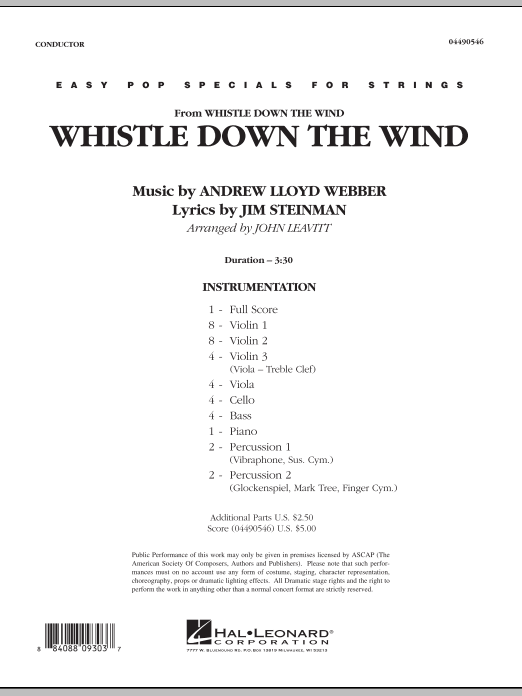

Whistle Down The Wind: String Orchestra Conductor Score & Parts
By Jim Steinman / By Andrew Lloyd Webber / Arranged by John Leavitt
Grade: 2-3
Item: 35-PK00143715
$40.00
Pickup currently not available
Buy Extra Parts (Digital PDF Download)
| Product | Price | Quantity |
|---|---|---|
| Whistle Down The Wind - Full Score | $6.00 | |
| Whistle Down The Wind - Violin 1 | $7.00 | |
| Whistle Down The Wind - Violin 2 | $7.00 | |
| Whistle Down The Wind - Violin 3 (Viola T.C.) | $7.00 | |
| Whistle Down The Wind - Viola | $7.00 | |
| Whistle Down The Wind - Cello | $7.00 | |
| Whistle Down The Wind - String Bass | $7.00 | |
| Whistle Down The Wind - Piano | $7.00 | |
| Whistle Down The Wind - Percussion 1 | $7.00 | |
| Whistle Down The Wind - Percussion 2 | $7.00 |
Parts Added to Cart!
Description
From Sir Andrew Lloyd Webber's most recent production comes this new title song, carefully arranged for developing string groups. It has the Lloyd Webber trademark melodic hook and musical drama that makes his music continue to stand out from the rest. Dur: 3:30


Whistle Down The Wind: String Orchestra Conductor Score & Parts isn't in MakeMusic Cloud just yet...but it could be. Let us know you'd like to see it, and you'll help shape what comes next. In the meantime, start a free trial and dive into thousands of interactive titles your students can play along with today.
Request This Title
Tell us you want it.
Start Your Free Trial
Explore everything that's ready to play right now.
Sample Audio
No sample audio found.
Sample Video
No sample videos found.
Additional Details
Publisher:
Hal Leonard
SKU:
35-PK00143715
More about this title
About the Composer: Jim Steinman
Jim Steinman brought theatrical intensity and rock sensibilities to Broadway, composing scores that prioritize driving narratives and memorable melodic content. His work alongside Andrew Lloyd Webber on Whistle Down The Wind demonstrates his gift for creating music that captures emotional stakes while remaining accessible to performers of varying levels.
Steiman's compositional voice emphasizes clarity of line and dramatic momentum. For educators, his arrangements and original works reward student performers with music that feels substantial without requiring advanced technique, making his output particularly valuable for developing ensembles seeking material with genuine theatrical presence.
Why we love this
John Leavitt's arrangement captures the signature Lloyd Webber melodic elegance while building in technical and interpretive depth that justifies programming at this level. The 3:30 duration and emotional arc make it substantive enough for concert programming without overshadowing ensemble development, and the Broadway context opens programming possibilities alongside classical and contemporary repertoire.
What to expect
The piece opens with the theatrical warmth Lloyd Webber made famous. As it builds, the arrangement reveals layers of harmonic color and rhythmic vitality that create genuine drama without melodrama, pulling listeners in with familiarity while challenging students to shape and sustain a compelling narrative.
Who it's for
String orchestras at grades 2 through 3 ready for Broadway repertoire that demands more than surface-level musicianship. This works especially well for ensembles with developing vibrato technique and basic understanding of phrasing, as the arrangement rewards expressive playing without requiring advanced virtuosity.
How to get the most out of it
- Shape the primary melody with vocal phrasing even on string instruments. Let the bow breathe where a singer would, and avoid over-sustaining notes that flatten the Lloyd Webber signature contour.
- Balance the harmonic layers carefully during the middle section. Accompanimental figures in lower strings need presence without overwhelming the melodic line in upper voices.
- Commit fully to the dramatic dynamic contrasts. This arrangement relies on expressive range to communicate the theatrical character of the source material.
- Establish a consistent tempo from the opening and maintain it throughout. The 3:30 duration requires steady pacing to allow the architecture of the piece to unfold naturally.
How to use it
Pair this with classical lyrical pieces or lighter contemporary works to create a concert that demonstrates your ensemble's range and accessibility to a general audience. The Broadway context also makes it an excellent choice for festival programming or as an introduction to musical theater repertoire within a season focused on standard orchestra literature.
Skills your students will build
- Expressive phrasing on sustained melodic lines
- Balance and blend within multi-voice harmonic textures
- Dramatic dynamic control and contrast
- Extended bow control across longer melodic passages
- Theater-aware interpretation of vernacular melody