
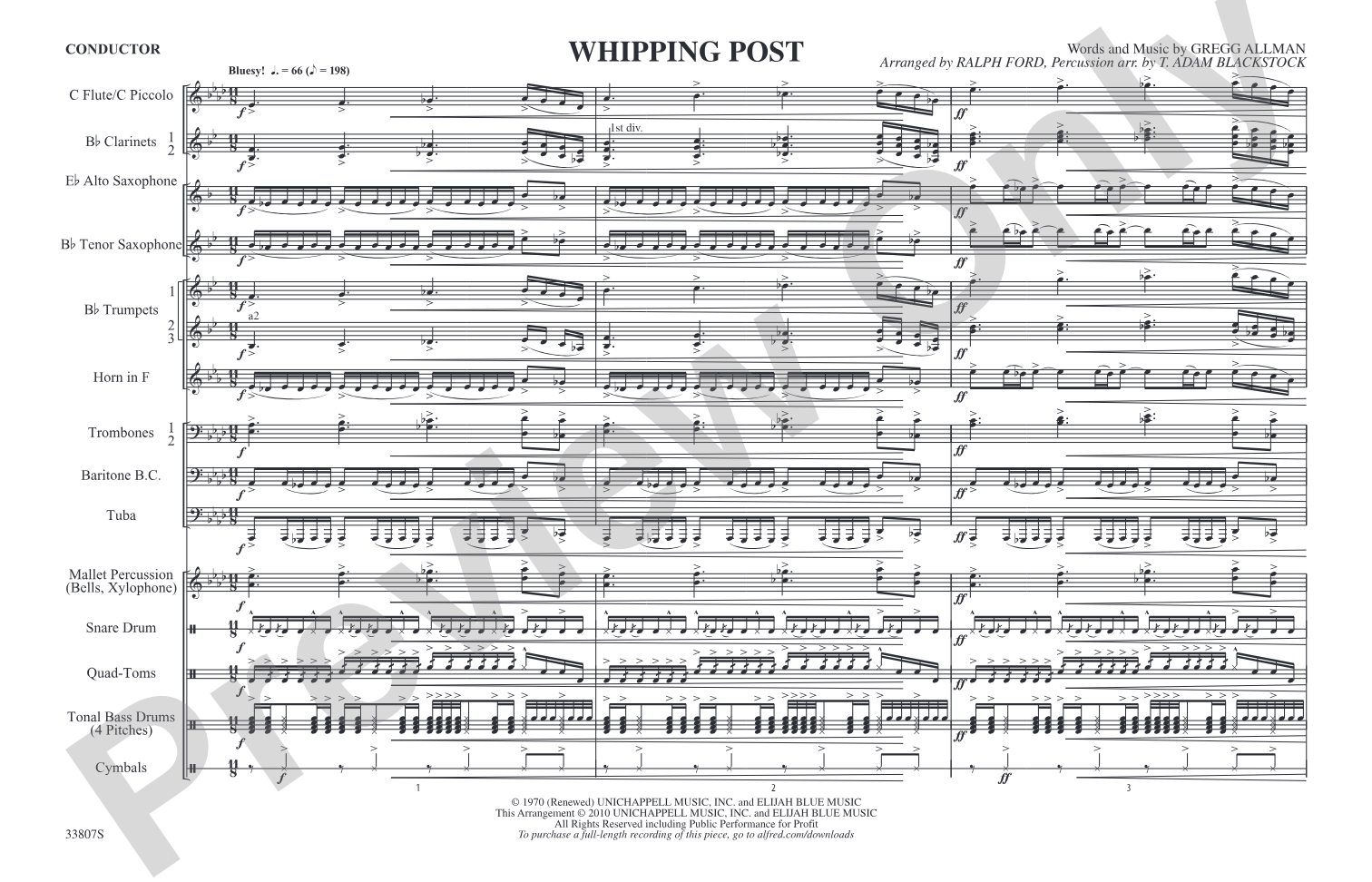
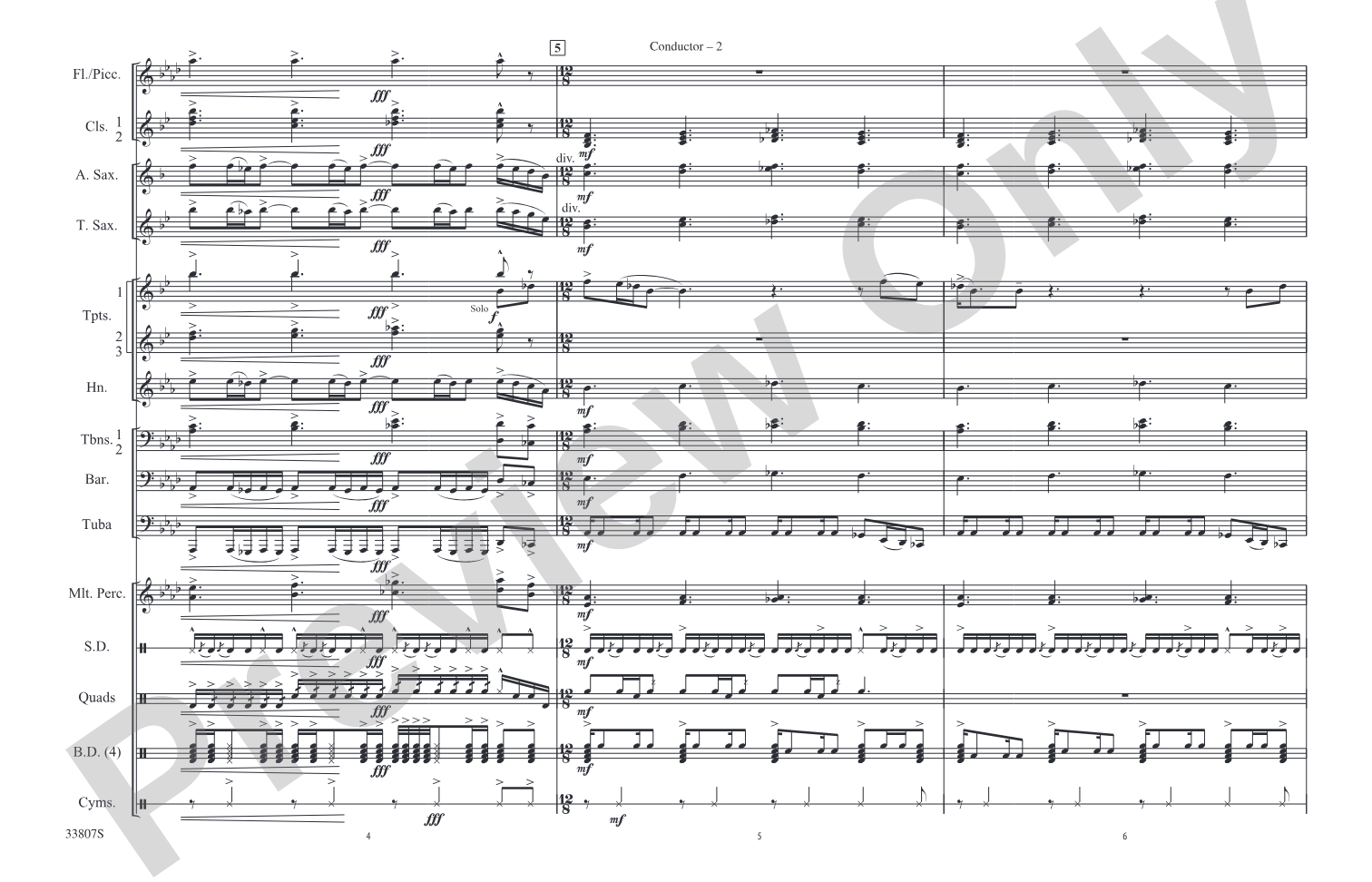
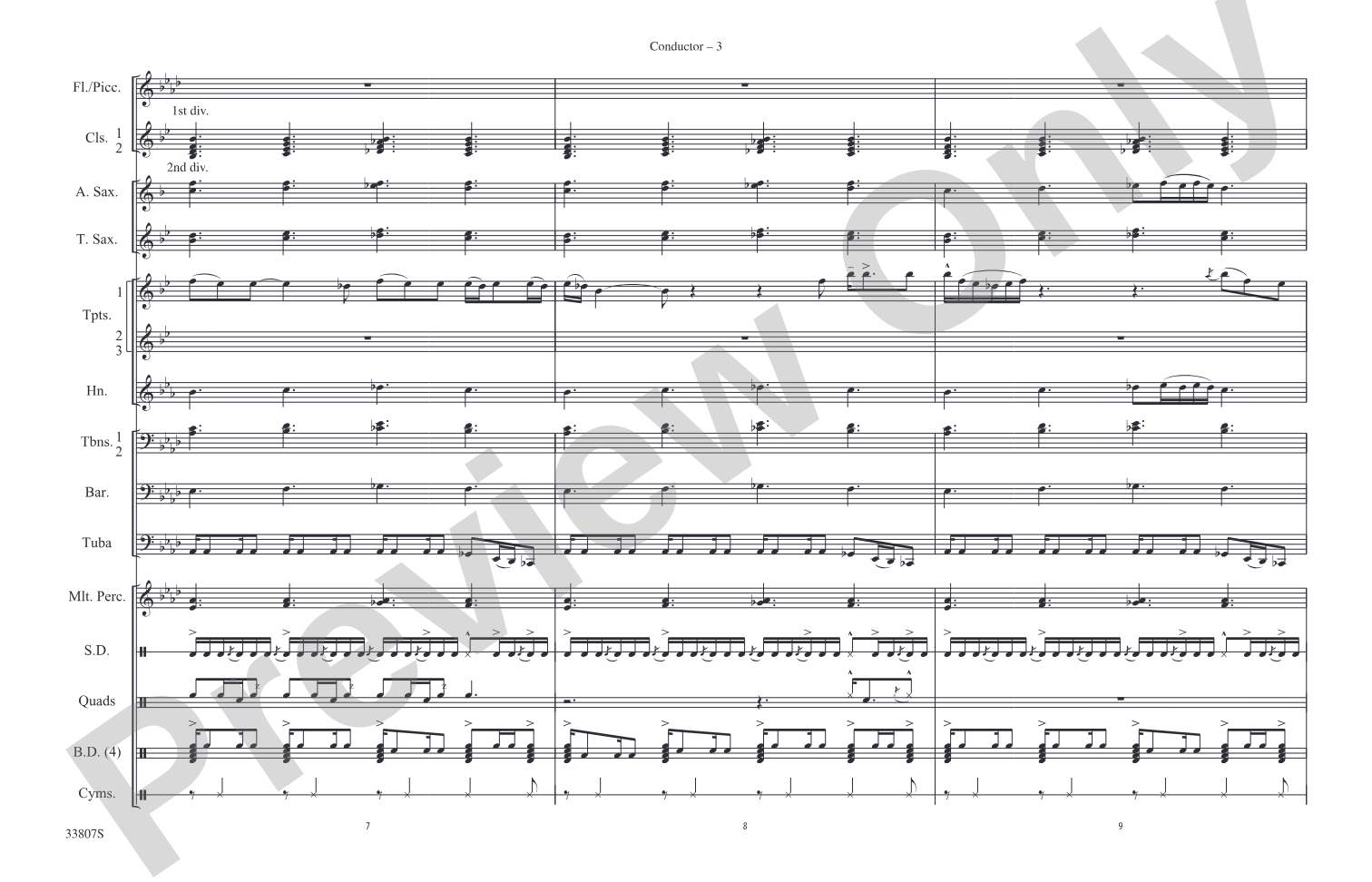
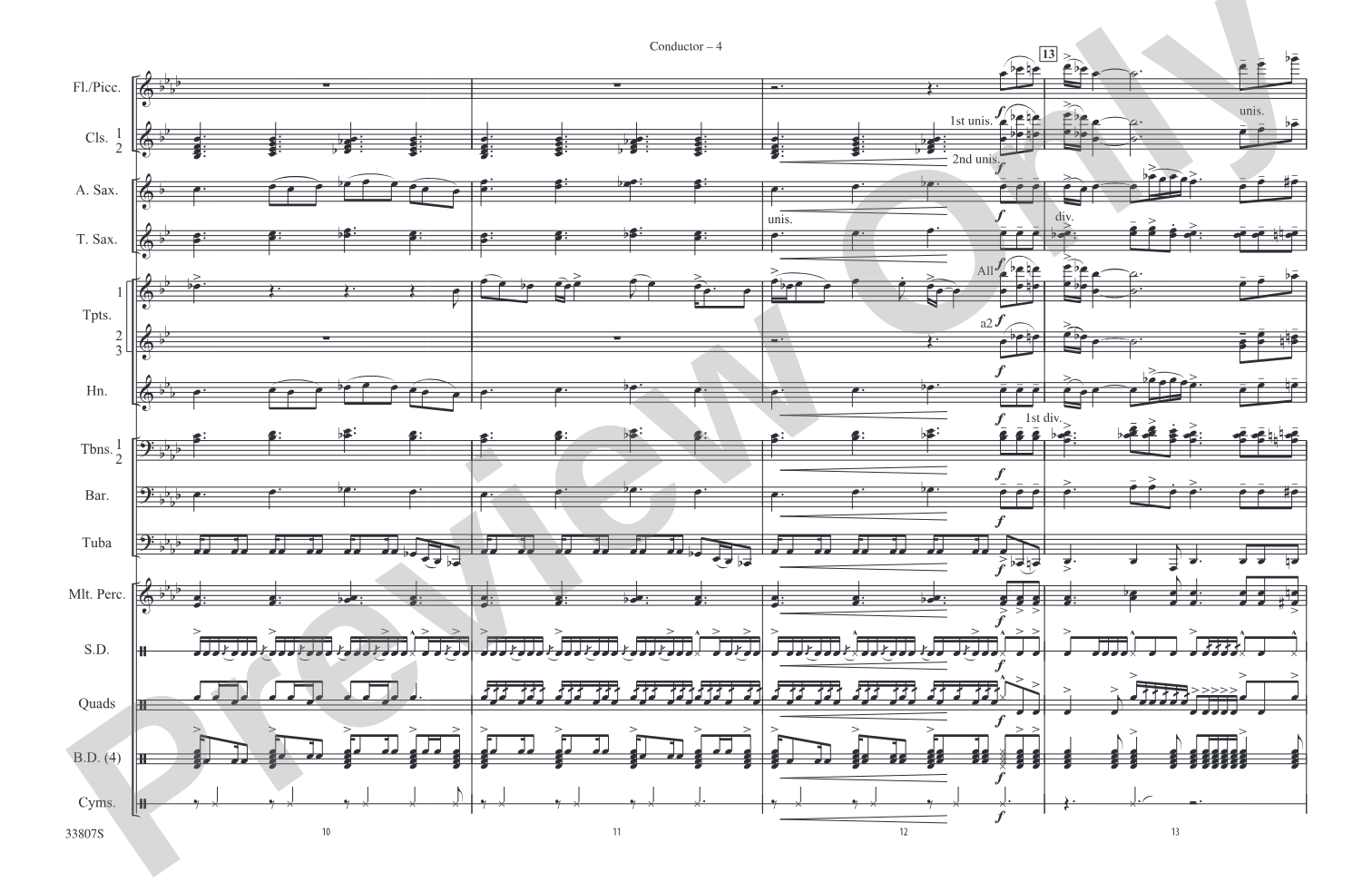
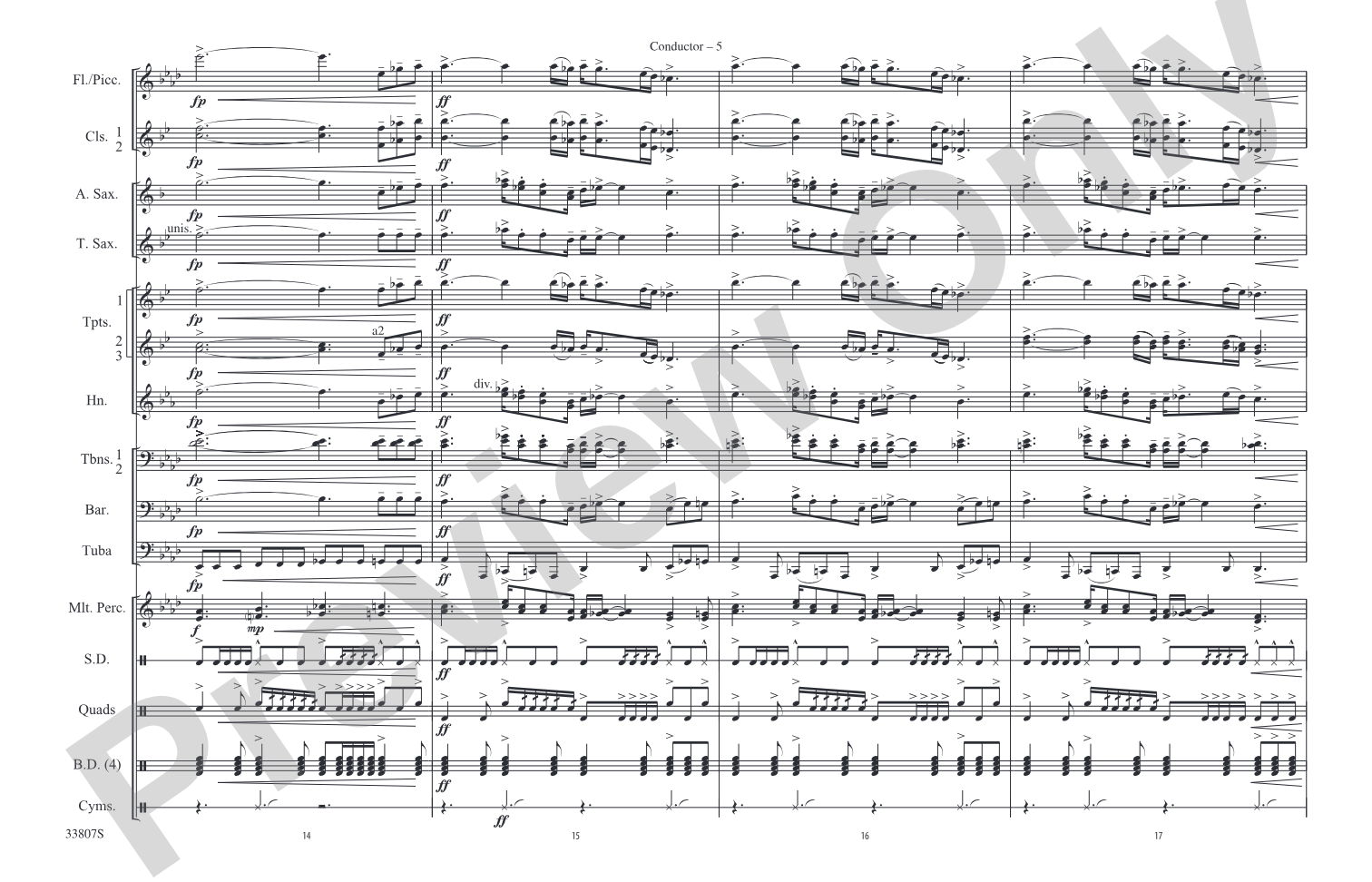
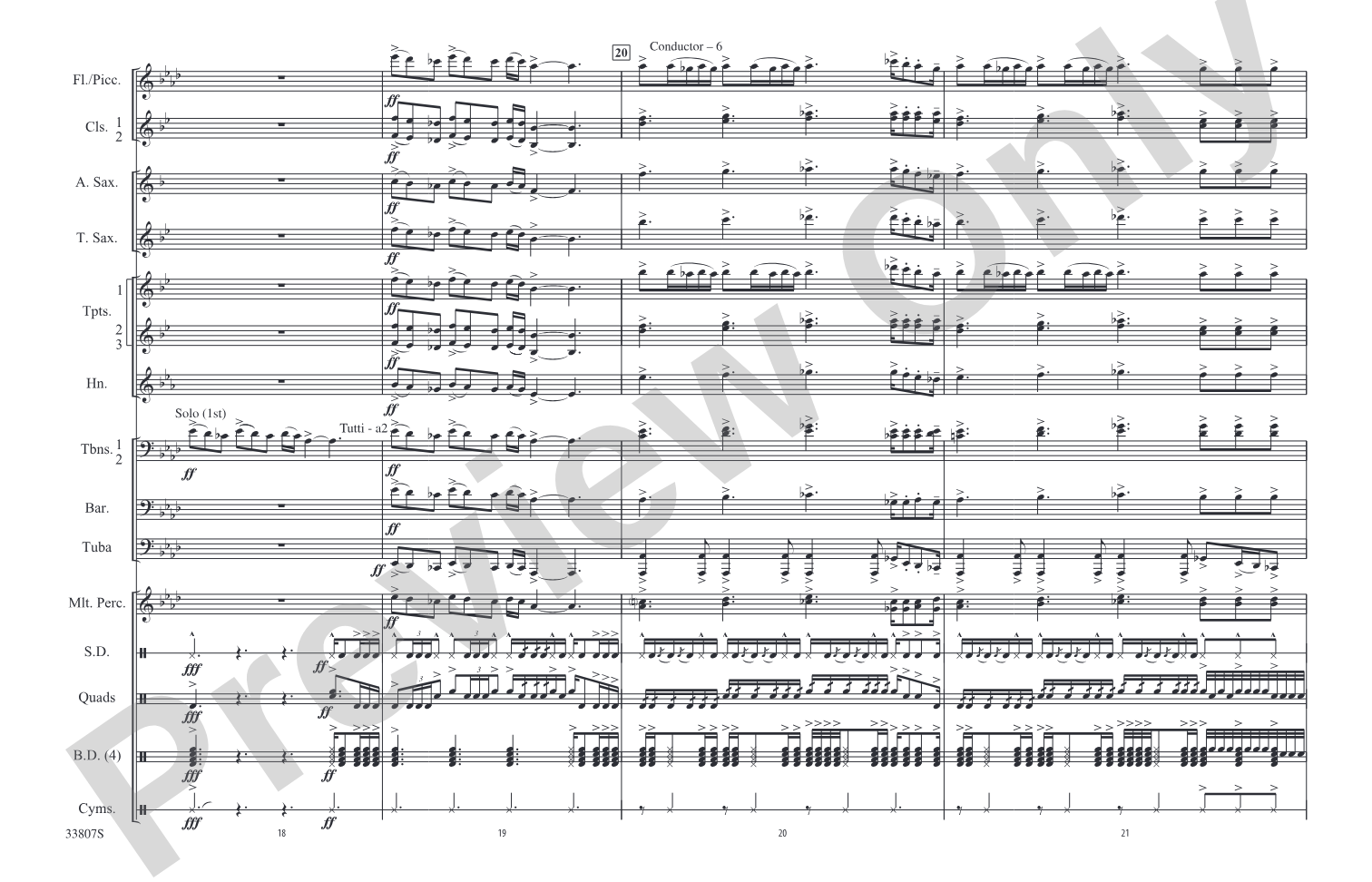
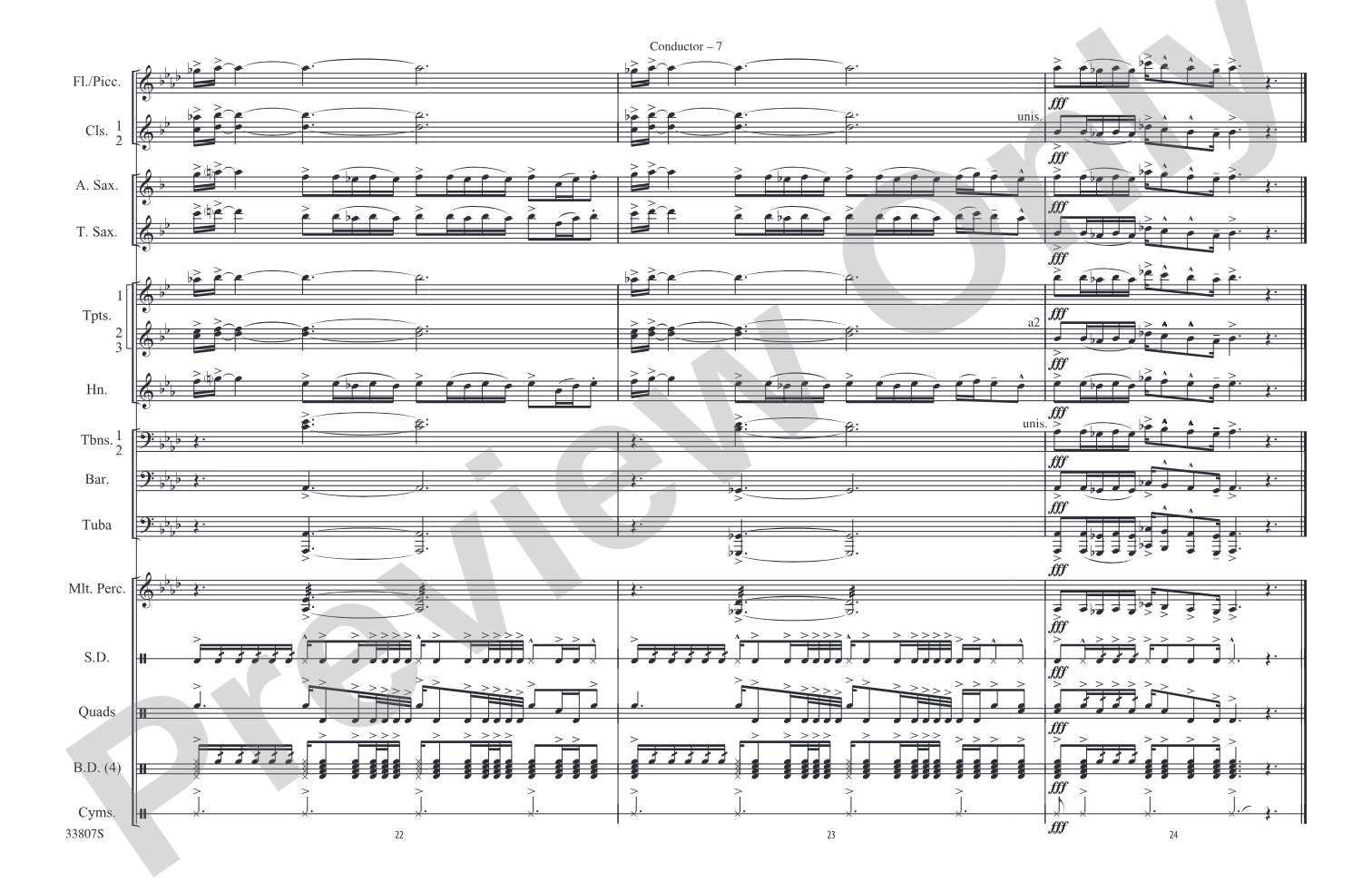
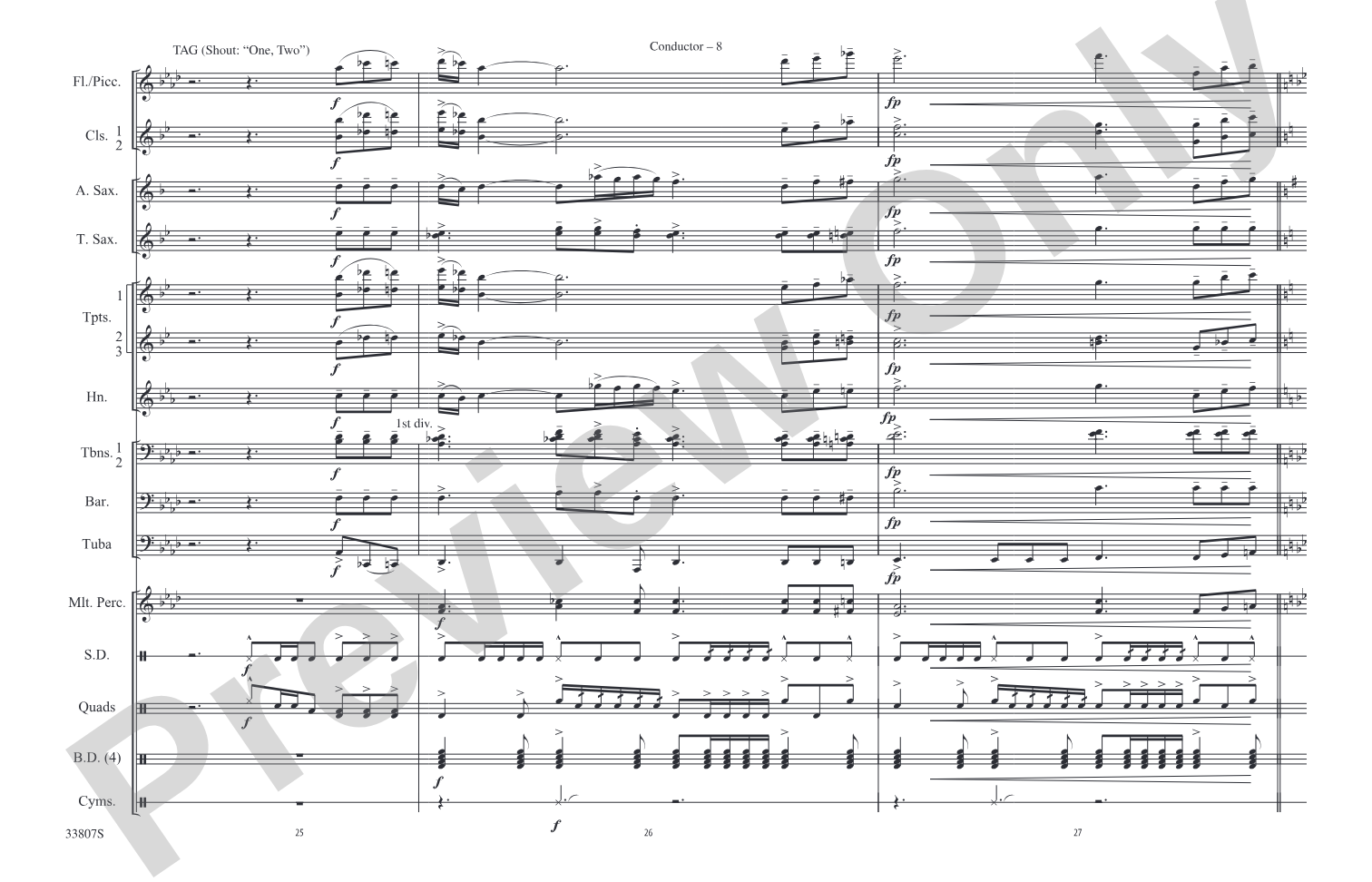
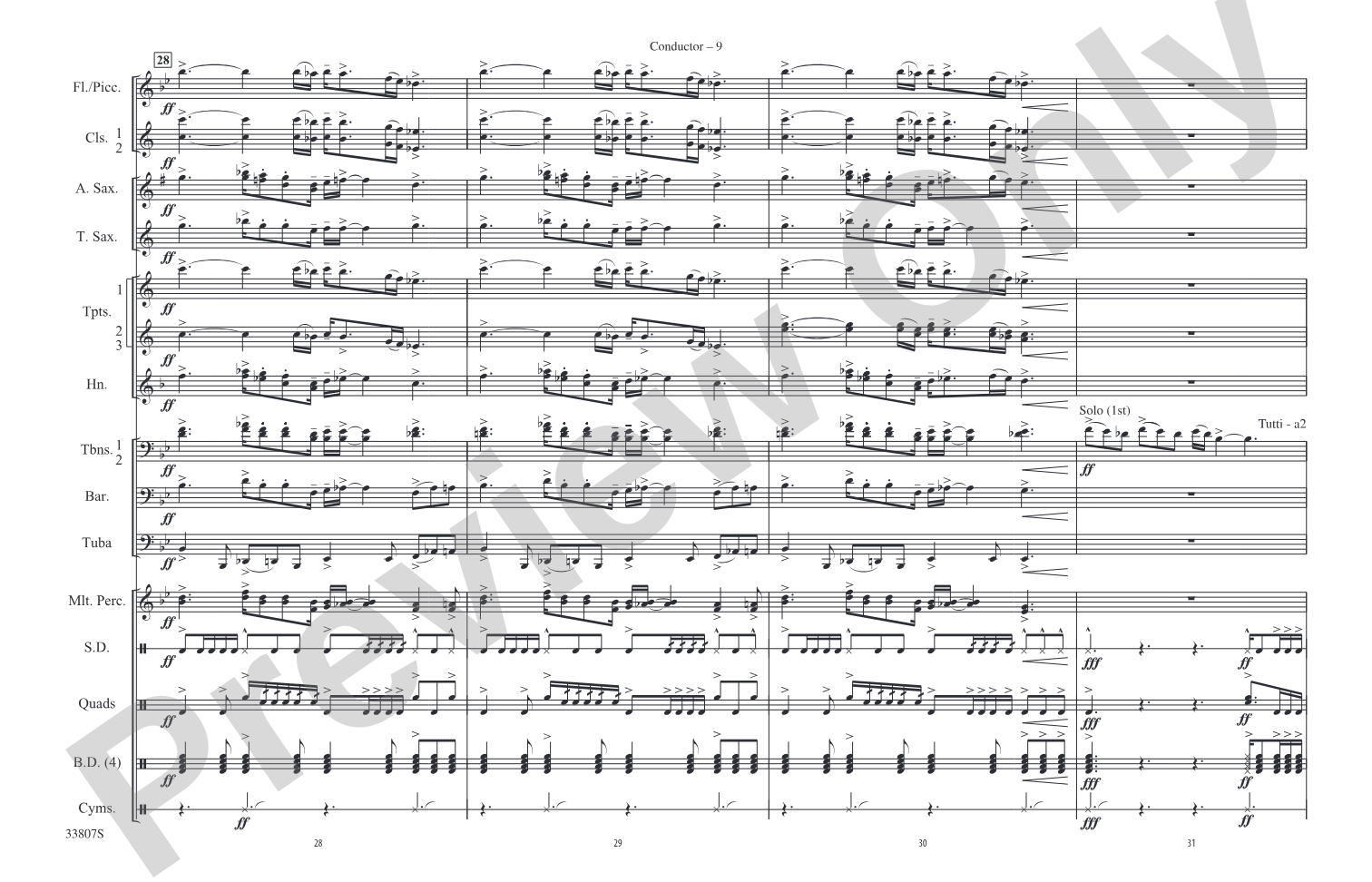
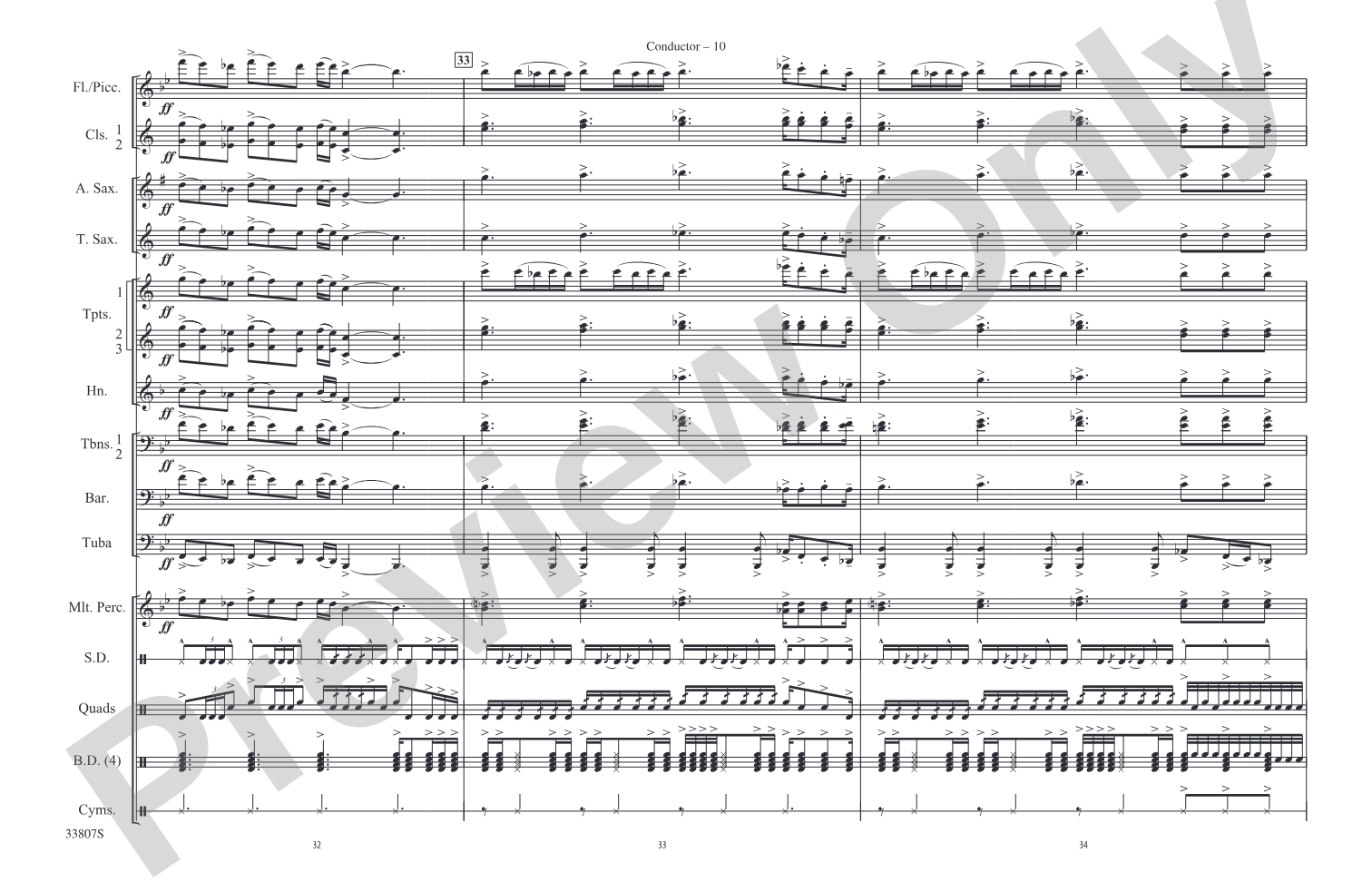
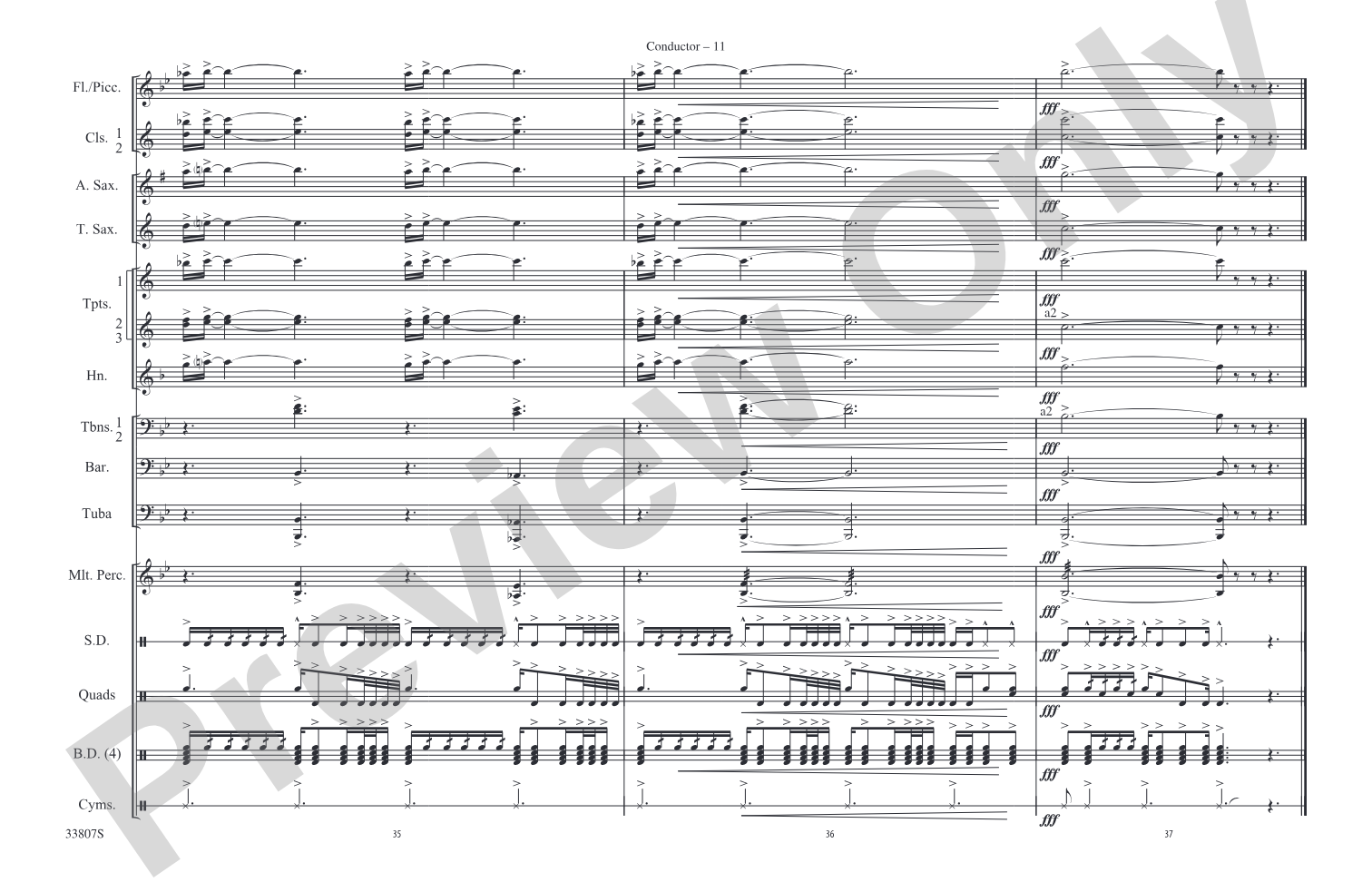

Whipping Post: Marching Band Conductor Score & Parts
Words and music by Gregg Allman [The Allman Brothers Band] / arr. Ralph Ford, perc. arr. T. Adam Blackstock
Grade: 4 (Advanced)
Item: 00-PK-0007942

$55.00
One moment…
Description
Here is the classic hit from The Allman Brothers Band turned into an "in-your-face" down and dirty showcase for your band by veteran arranger Ralph Ford. Ralph pulls out all of the stops on this one, with hot trumpet and trombone solos, driving percussion, and high impact sounds from start to finish. One of the best charts ever!


Don't just read it, hear it, play along with it, and watch your students grow with it. In MakeMusic Cloud, Whipping Post: Marching Band Conductor Score & Parts comes alive with professional accompaniment, adjustable tempo, and built-in practice tools that turn solo practice into real progress.
Open in the Player
Jump straight in and assign it today.
Start Your Free Trial
Open this title and explore the full library in minutes.
Sample Audio
1
Audio File
--:--
0:00
0:00
Sample Video
No sample videos found.
Additional Details
Series:
Diamond Series
Publisher:
Alfred Music
Page Count:
132
SKU:
00-PK-0007942
More about this title
About the Composer: Gregg Allman
Gregg Allman (1947-2017) was a keyboardist, singer, and songwriter who co-founded The Allman Brothers Band, one of American rock's most influential ensembles. His work bridged blues, rock, and soul, creating music that demanded serious musicianship from performers while never losing its raw emotional power. Allman's compositions remain central to the rock canon and translate remarkably well to ensemble settings, where their harmonic sophistication and rhythmic drive shine through fresh arrangements.
As a bandleader and composer, Allman understood how to write for groups; his songs were built on interplay between voices, call-and-response, and the kind of structured improvisation that makes both jazz and rock ensembles thrive. "Whipping Post" exemplifies his gift for marrying blues sensibility with rock urgency, making it an ideal vehicle for teaching advanced student musicians about authentic groove and the power of ensemble unity.
Why we love this
This arrangement respects the original's swagger and intensity without softening its edges. Ralph Ford and T. Adam Blackstock have given your band the chance to play something with genuine attitude, complete with featured solos that reward your best players and percussion writing that drives the whole machine forward. It's a chart that sounds like your band matured overnight.
What to expect
Sweat, focus, and purpose. The piece builds from a locked-in groove into an intense, driven energy that never quite relaxes. There's a blues backbone running through everything, but Ford wraps it in modern arranging that keeps the momentum forward. Students finish this feeling like they actually played something real.
Who it's for
Advanced high school and college marching bands ready for music with real personality and technical demands. Your section leaders should be solid players who can handle independence; this chart doesn't babysit anyone. If your band has the chops and the maturity to commit to a rock arrangement seriously, this is the vehicle.
How to get the most out of it
- Lock in the rhythm section (bass drum, cymbals, snare) with the low brass before adding upper voices. The groove won't groove unless the foundation is locked.
- Make sure trumpet and trombone soloists understand the blues feel underneath their parts. This isn't classical solo writing; the best solos will have swing and grit.
- Balance the percussion throughout. Ford's writing is generous with the drums, but they should enhance rather than bury the melodic content.
- Mark breath points and phrase boundaries in your score before rehearsal. With a 132-page chart, your band needs visual landmarks to stay organized.
How to use it
Close a marching show or a spring concert with this one. It's energetic enough to send an audience out on a high but rooted enough to feel coherent in a mixed program. It also works as a statement piece when you want to show community what your advanced students can do with contemporary material.
Skills your students will build
- Reading and executing blues-based rhythm figures with accuracy and feel
- Balancing independence in sectional voicing against group cohesion
- Interpreting solos with jazz-influenced phrasing and articulation
- Maintaining groove and pocket in extended passages
- Collaborative listening, especially in rhythm section coordination