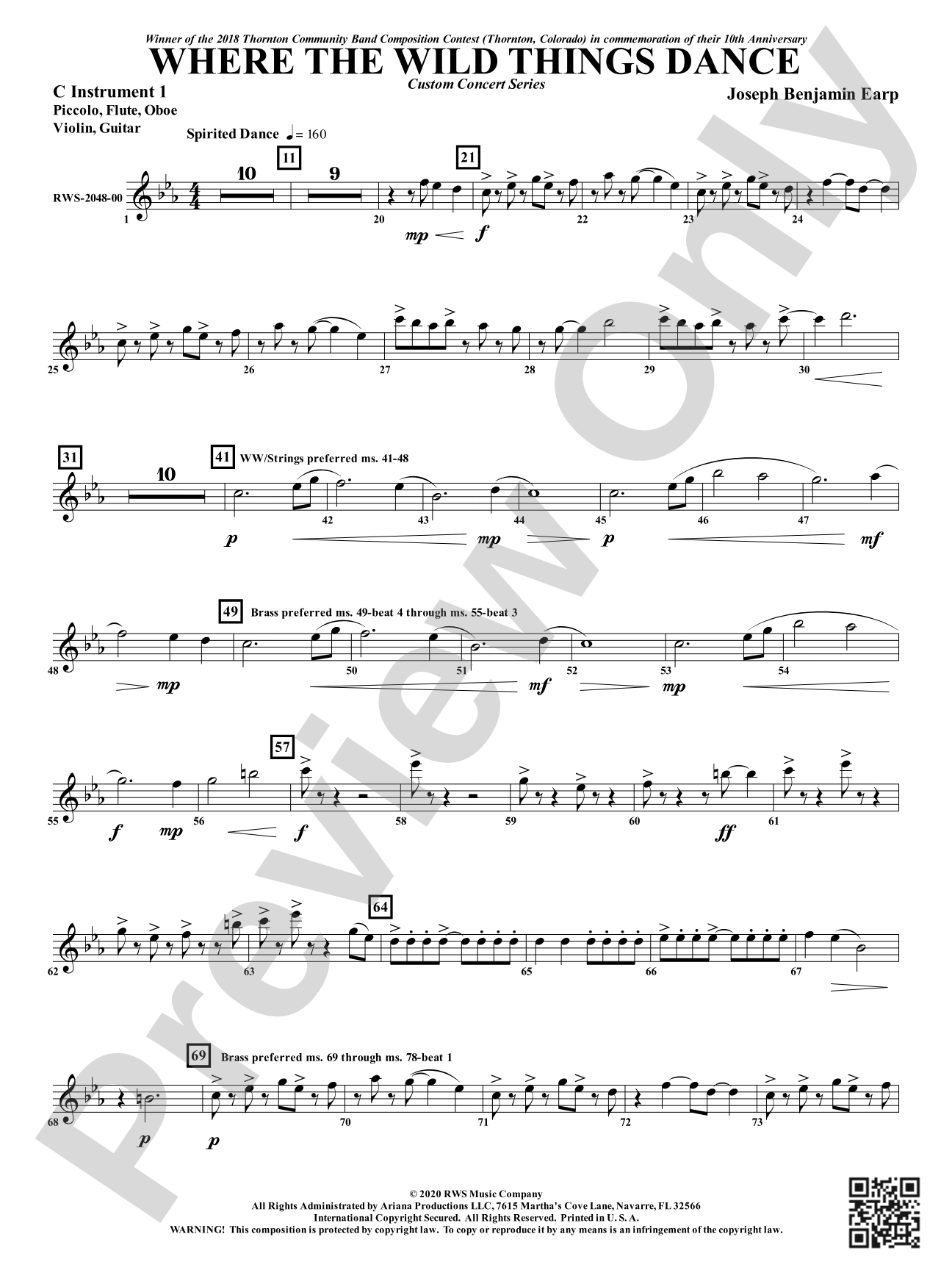
This energetic work by Joseph Earp is wildly infectious. This light and lively musical statement, inspired by the Sandhill Cranes of Monte Vista, Colorado, is sure to make all want to dance. The tubas and low woodwinds will particularly enjoy performing their opening groove as it sets the tone for the great music to come. This will be a musician favorite and a highlight of your next concert performance. Enjoy!
Original Item#: RWS-2048-00
Discover MakeMusic Cloud: thousands of interactive titles your students can play along with today.
Earp captures something genuinely fun here—a piece that energizes both the ensemble and the audience without relying on bombast or complexity. The opening groove for tubas and low woodwinds is written with real personality, giving those sections a moment to shine while establishing the entire band's forward momentum. At Grade 3.5, this hits the sweet spot where ambitious middle-school and early high-school programs can execute something musically satisfying and genuinely entertaining.
What to expect
Infectious and driving, with the rhythmic vitality of wildlife in motion. The piece has a playful character that invites both musicians and audiences into the energy without ever feeling frivolous. There's a sense of momentum and joy woven throughout, grounded in a rhythmic framework that keeps everything cohesive.
Who it's for
Concert bands at the Grade 3.5 level who want a programmatic work with immediate appeal and genuine musicality. This works well for groups that need repertoire bridging the gap between standard educational pieces and more sophisticated concert fare. Directors programming festivals or pops concerts will find this particularly valuable.
How to get the most out of it
Lock the low brass and bass woodwind groove in the opening. This section is your rhythmic foundation; precision here makes the whole piece groove.
Keep the energy consistent throughout. The piece draws from the natural, repetitive movement of Sandhill Cranes, so avoid letting momentum sag between sections.
Balance the melodic content against the driving accompaniment figures. The tune needs to sing clearly without overwhelming the groove that defines the piece.
Use dynamics strategically to build tension and release. Earp gives you room to shape the energy arc; take advantage of it to keep audience attention.
How to use it
This works beautifully as a concert opener or as a centerpiece in a lighter program segment. Its programmatic inspiration pairs well with other nature-themed works, or it can serve as a refreshing contrast if you're balancing more serious repertoire. Consider programming it where you want to reset audience energy or showcase your ensemble's ability to execute grooves with precision and style.
Skills your students will build
Groove-based ensemble cohesion and rhythmic locking
Balanced scoring with multiple rhythmic layers
Programmatic interpretation and musical storytelling
Flexible instrumentation management and part doubling
Dynamic shaping and energy control across extended sections
You May Also Like
Scan to Complete Your Purchase
Use your phone's camera to scan the code below
You'll log in on your phone and the order will be added to your account