Where the River Shannon Flows: Violoncello Sheet Music Preview

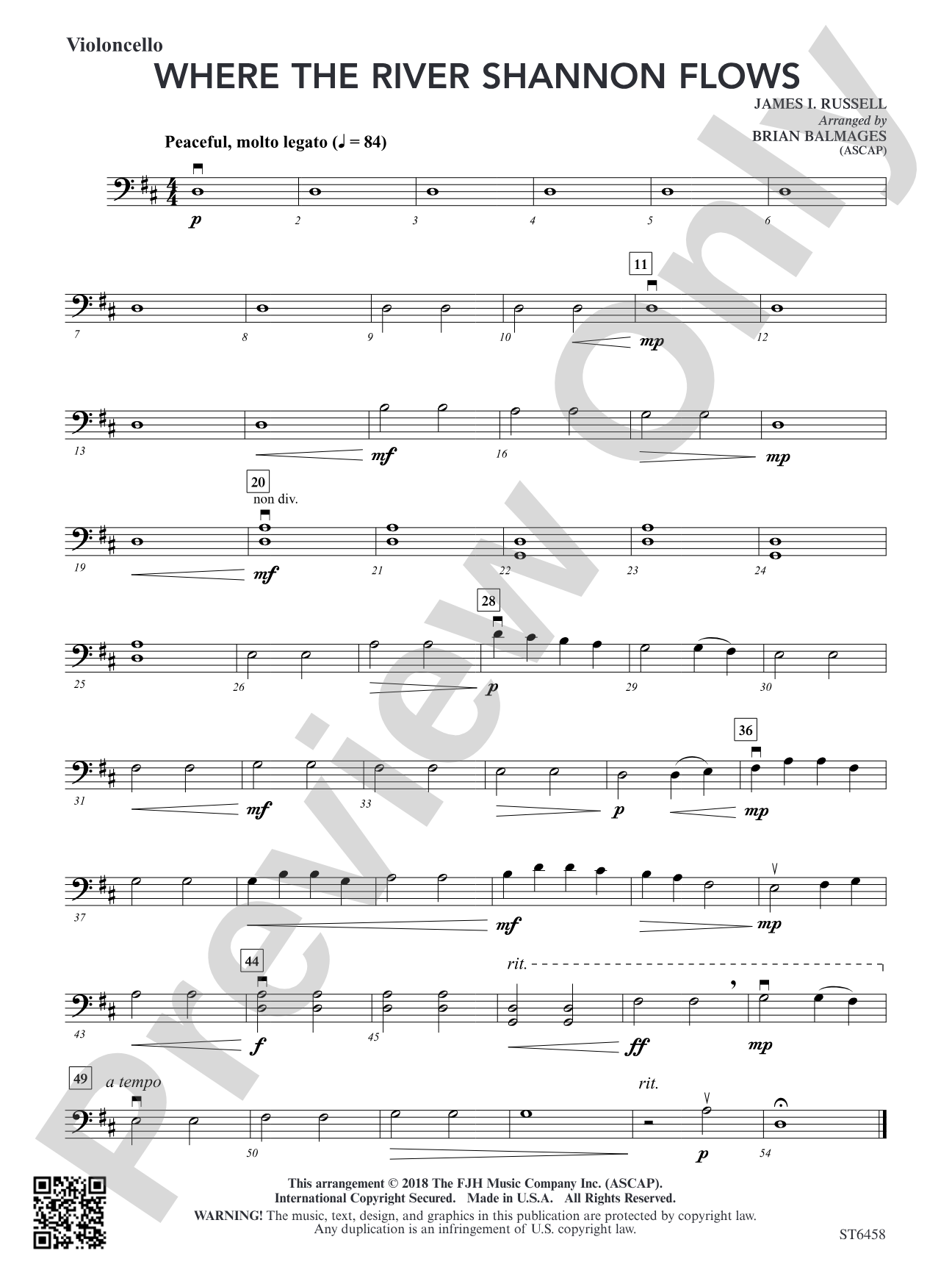
Where the River Shannon Flows: Violoncello

By James I Russell / arr. Brian Balmages

Grade: 1.5

Item: 98-PC-DST6458_VC1

Digital Download
$7.00
Description
Based on the emotional Irish song, this thoughtful setting paints a picture of a man dreaming of the day he can return home. At times, the piece feels more like a fantasy than an arrangement as the melody weaves through an increasingly complex series of textures and harmonies before returning to the plaintive sounds of the opening.

Don't just read it, hear it, play along with it, and watch your students grow with it. In MakeMusic Cloud, Where the River Shannon Flows: Violoncello comes alive with professional accompaniment, adjustable tempo, and built-in practice tools that turn solo practice into real progress.

Sample Audio
0:00
0:00
Sample Video
Additional Details
Series: FJH Beginning Strings
Publisher: The FJH Music Company, Inc.
SKU: 98-PC-DST6458_VC1

More about this title

Why we love this

Balmages' arrangement respects the emotional core of the original song while building orchestral sophistication that feels earned rather than imposed. The piece grows from simplicity into genuine harmonic and textural complexity, giving young players real musical challenges without losing the plaintive beauty that makes the melody memorable.

What to expect

A waking dream that starts with longing and grows increasingly vivid and complex before settling back into quiet yearning. The piece inhabits the space between folk authenticity and orchestral imagination, never losing sight of the yearning at its heart.

Who it's for

Beginning string orchestras ready to explore how a simple folk melody can sustain an entire piece through orchestration and harmonic development. This arrangement works for groups comfortable with Grade 1.5 independence and looking to program something with emotional depth and cultural significance.

How to get the most out of it

  • Lean into the opening's restraint. The opening statement should sound spare and introspective; resist the urge to add weight or vibrato that would blur its focus.
  • Shape the increasing textural layers as the piece develops. Each new harmonic or rhythmic layer should be audible but never overshadow the melody's journey.
  • Return to the opening material with fresh awareness of what came before. The return feels different because the listener now understands the dreamlike quality the piece has earned.
  • Balance sustained notes carefully in the middle sections so moving lines stay clear and the overall sound doesn't become muddy.

How to use it

This pairs well with other folk-based or multicultural pieces in a concert exploring home, displacement, and memory. It also works as a contest or festival piece where emotional maturity and orchestral balance matter more than technical pyrotechnics.

Skills your students will build

  • Sustaining lyrical tone across longer phrases
  • Listening for and balancing multiple simultaneous lines
  • Understanding how harmony and orchestration can deepen a melody
  • Maintaining tempo stability while responding to dynamic and textural changes
  • Reading and executing Grade 1.5 rhythmic and harmonic content with ensemble awareness

You May Also Like