
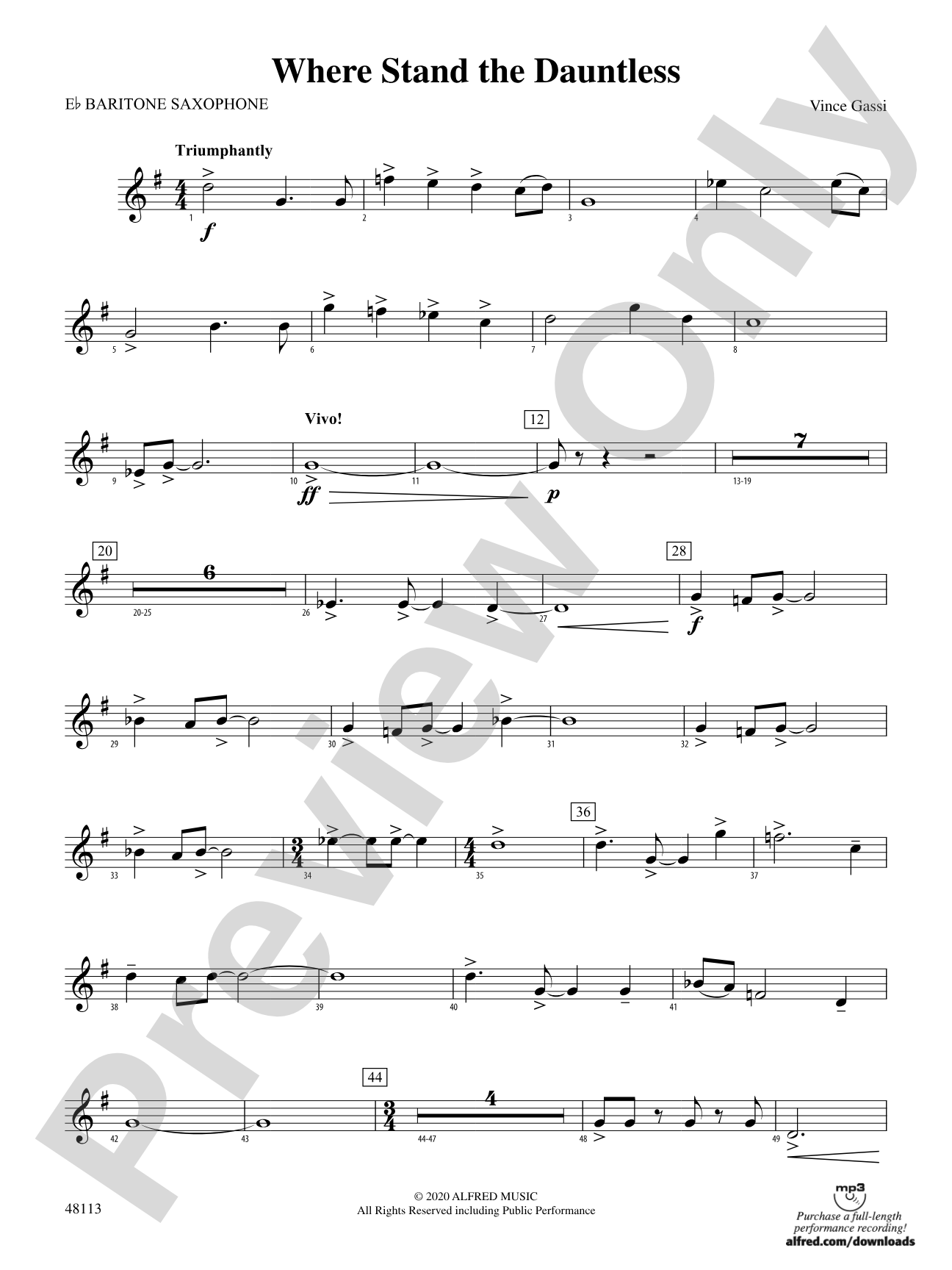

Where the Dauntless Stand: E-flat Baritone Saxophone
By Vince Gassi
Grade: 2 (Medium Easy)
Item: 00-PC-0018428_BTX
$3.00
Pickup currently not available
Description
A fanfare, a lyrical theme, and driving energy embody the spirit of the dauntless---the brave and amazing young musicians of Dolphin Senior Public School in Mississauga in Ontario, Canada. This exciting work is a perfect concert opener and contest piece. (2:35) This title is available in MakeMusic Cloud.


Don't just read it, hear it, play along with it, and watch your students grow with it. In MakeMusic Cloud, Where the Dauntless Stand: E-flat Baritone Saxophone comes alive with professional accompaniment, adjustable tempo, and built-in practice tools that turn solo practice into real progress.
Open in the Player
Jump straight in and assign it today.
Start Your Free Trial
Open this title and explore the full library in minutes.
Sample Audio
1
Audio File
--:--
0:00
0:00
Sample Video
Additional Details
Series:
Challenger Band Series
Publisher:
Alfred Music
Page Count:
254
SKU:
00-PC-0018428_BTX
More about this title
About the Composer: Vince Gassi

Vince Gassi has been publishing original concert band music since 2006, building a catalog of over 100 works that blend accessibility with musical substance. His training spans the University of Western Ontario, the Dick Grove School of Music in Los Angeles, and a Ph.D. from York University in Toronto, giving him deep roots in both composition and music education.
For 25 years Gassi has taught instrumental music at elementary and secondary levels while maintaining an active schedule as a guest conductor, adjudicator, and clinician across the United States and Canada. His work appears regularly on contest and concert programs internationally, and his pieces have been performed throughout North America, Europe, and Japan. He leads workshops on creative engagement and digital workflows for music directors, helping educators bring fresh energy to their programs.
Why we love this
This piece delivers exactly what a Grade 2 band needs for a contest or festival: a clear three-part arc (fanfare, melody, drive) that showcases musicality without overwhelming younger ensembles. Gassi's direct compositional voice and attention to ensemble balance make this rewarding to conduct, and the driving final section gives students momentum and confidence on stage.
What to expect
A celebration of youth and courage. The opening fanfare announces something important; the lyrical heart gives space for singers in the band to shine; the final push carries forward with forward-motion energy that feels triumphant rather than frantic. The whole arc feels like a story about determination.
Who it's for
Grade 2 concert bands preparing for fall or spring festivals, as well as groups building a contest repertoire. It works equally well for musicians seeking a high-impact opener that demonstrates ensemble growth without technical barriers. The piece also suits community bands and intermediate students who want professional-quality material that builds confidence.
How to get the most out of it
- Establish the fanfare's character in the first rehearsal by conducting it with crisp articulation; this opening gesture frames everything that follows and sets the band's energy level.
- Shape the lyrical theme with long phrase lines through the middle section, encouraging players to listen across sections rather than focus solely on their own parts.
- Build the final driving section gradually during rehearsals, adding layers of intensity across multiple run-throughs so the accelerating energy feels earned rather than sudden.
- Check balance between the melody and accompaniment figures in all three sections; Grade 2 players often let supporting lines disappear, which thins the overall sound.
How to use it
Open your concert or festival performance with this piece to set an upbeat tone and demonstrate your ensemble's polish from the first notes. It pairs well alongside lyrical ballads or classical arrangements, offering contrast in both energy and style. The two-and-a-half-minute length fits naturally into any program format without taking up excessive rehearsal time relative to its impact.
Skills your students will build
- Phrasing and shaping sustained melodic lines in the lyrical section
- Ensemble balance between melody and accompaniment in all three structural sections
- Dynamic control and energy management across a tempo-consistent longer form
- Articulation clarity in fanfare contexts and fast-moving passages
- Listening and responding to conductor gestures for dramatic timing and transitions