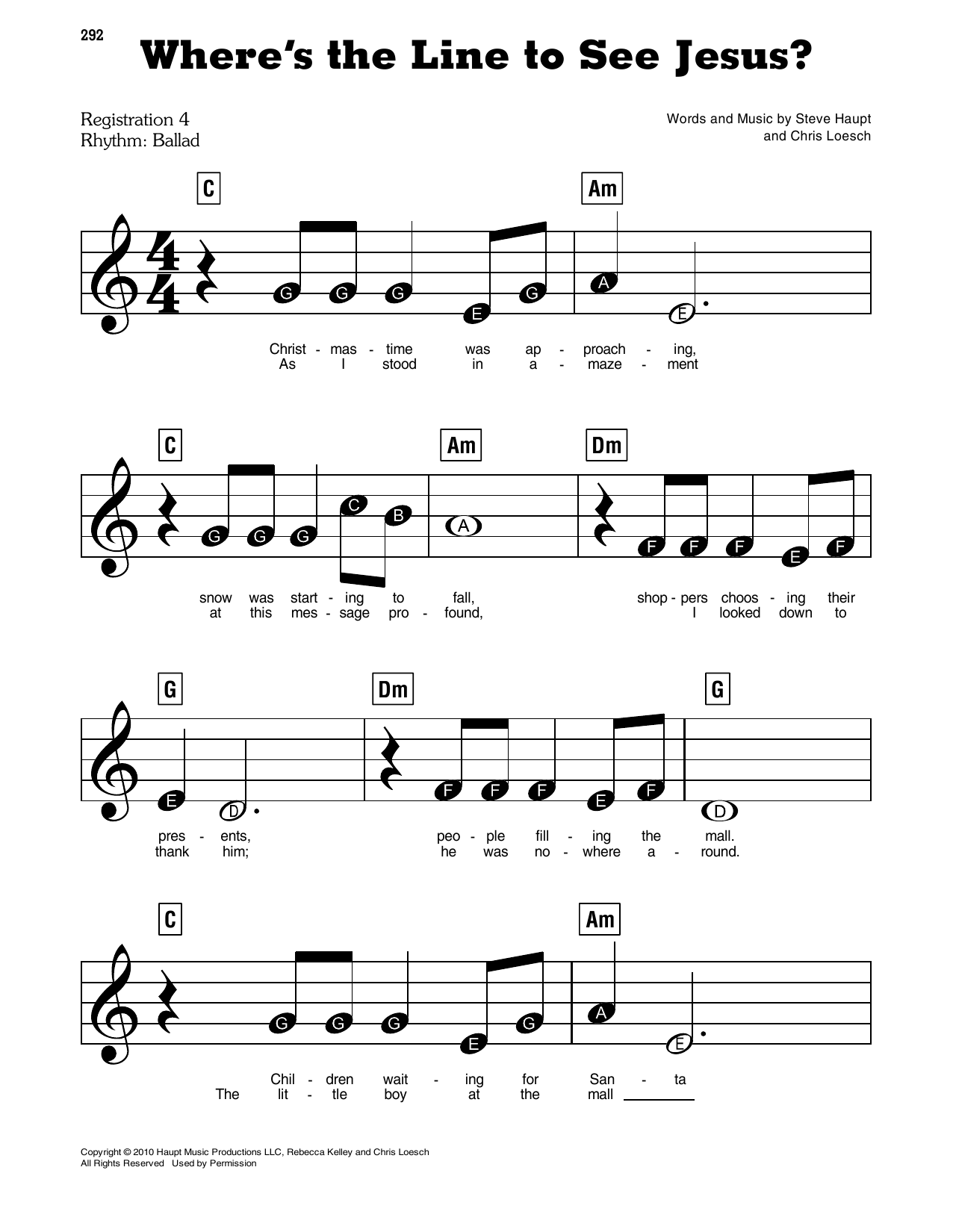
Where's The Line To See Jesus? Sheet Music Preview

Where's The Line To See Jesus?: E-Z Play Today

As performed by Becky Kelley

Item: 35-DS01110503

Digital Download
$4.99

One moment…

Description

Where's The Line To See Jesus?: E-Z Play Today isn't in MakeMusic Cloud just yet...but it could be. Let us know you'd like to see it, and you'll help shape what comes next. In the meantime, start a free trial and dive into thousands of interactive titles your students can play along with today.

Sample Audio
No sample audio found.
Sample Video
Additional Details
Publisher: Hal Leonard
Page Count: 4
SKU: 35-DS01110503

More about this title

Why we love this

Kelley brings a refreshing directness to Christmas repertoire. This arrangement works as both a standalone piece and a conversation starter about faith and meaning during the season, making it particularly valuable for programs seeking substance alongside tradition.

What to expect

The song carries a contemplative quality underneath its accessibility, questioning rather than declaring. It invites performers and listeners into reflection rather than sentiment.

Who it's for

This piece reaches pianists working toward independence at intermediate levels and accompanists supporting vocalists during the Christmas season. It also serves music programs with a Christian focus or those building inclusive seasonal concert programming.

How to get the most out of it

  • Balance the melody so the text remains intelligible even when accompanied by full harmony; clarity over volume keeps the message front and center
  • Explore the relationship between verses and chorus by varying touch and dynamics; gentle introspection in one section can deepen the impact of a fuller, more confident refrain
  • Let the accompaniment breathe at phrase endings rather than rushing through bar lines; four pages go fast, so intentional pacing creates depth

How to use it

Consider this for a sacred or interfaith Christmas concert segment, particularly paired with instrumental pieces that create space for listening and thinking. It also works well as a piano feature in a smaller, intimate performance setting or as part of a vocal concert where the piano takes the lead.

Skills your students will build

  • Reading chord symbols and interpreting harmonic progression
  • Balancing melody and accompaniment within a single hand at the piano
  • Maintaining rhythmic clarity while accompanying lyrical phrasing

You May Also Like