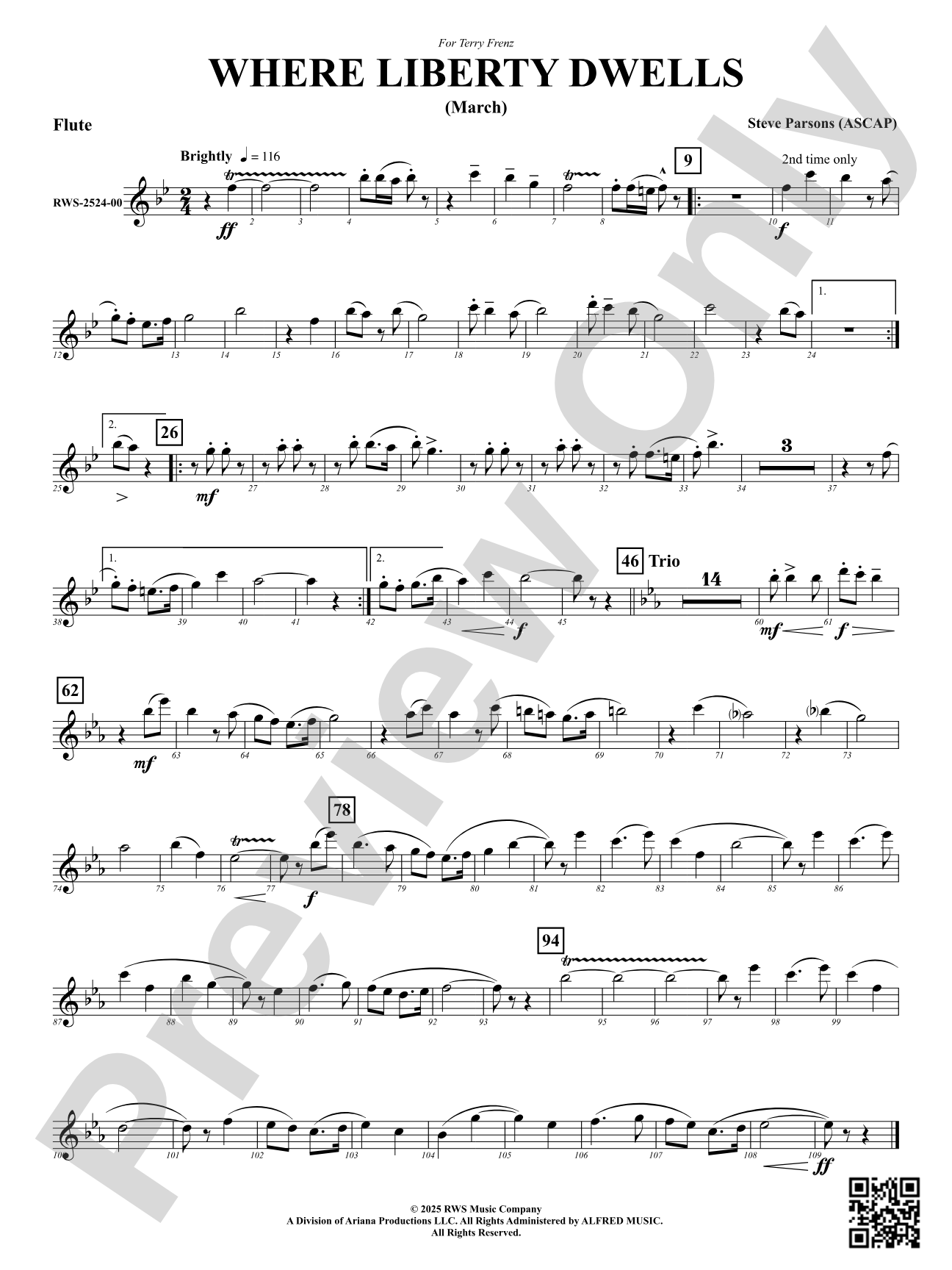
Where Liberty Dwells by Steve Parsons is a lively quickstep march, perfect for a concert opener or special occasion! Catchy contemporary themes blend seamlessly into a traditional march format, with just enough instrumental doubling to give younger bands confidence while keeping the energy dynamic and exciting. (2:25)
Discover MakeMusic Cloud: thousands of interactive titles your students can play along with today.
Parsons strikes an uncommon balance here: the piece reads as contemporary and engaging without losing the structural integrity of a real march. Young players get the confidence boost of strategic doubling while developing the rhythmic precision and articulation clarity that marches demand. It opens a concert with genuine lift rather than obligation.
What to expect
Energetic and forward-moving, with enough contemporary melodic flavor to catch the ear of younger audiences. The traditional march architecture keeps it grounded; the catchy themes keep it from feeling antiquated. It radiates confidence without demanding technical fireworks.
Who it's for
Grade 2 concert bands that need a dependable opener with real personality. Directors of developing ensembles will appreciate the built-in scaffolding through doubling, which lets younger sections participate without sinking the sound quality.
How to get the most out of it
Nail the articulation style early in rehearsal. The contemporary themes rely on crisp articulation to feel modern; sloppy tonguing flattens the energy.
Lock in the march rhythm section (bass drum, low woodwinds, low brass) before layering melody. This march sits on solid harmonic ground, but it only propels if the foundation is rock solid.
Use the doubling as a teaching tool. Young sections can shadow stronger players on exposed passages, then trade off as confidence grows.
Keep the tempo steady and bright. At 2 minutes 25 seconds, this piece moves; resist the urge to drag it or it loses its quickstep character.
How to use it
Program this as your opener to establish momentum and set a lively tone for the concert. Its natural appeal and competition-ready structure also make it a solid choice for festival or contest settings where your ensemble's growth matters as much as the repertoire itself.
Skills your students will build
Articulation control in tempo (bright tonguing and clean releases)
March rhythm and meter security (steady 2/4 or cut time feel)
Ensemble balance when playing in doublings
Melodic phrasing within a structured march form
You May Also Like
Scan to Complete Your Purchase
Use your phone's camera to scan the code below
You'll log in on your phone and the order will be added to your account