Where Is Thumbkin? Sheet Music Preview

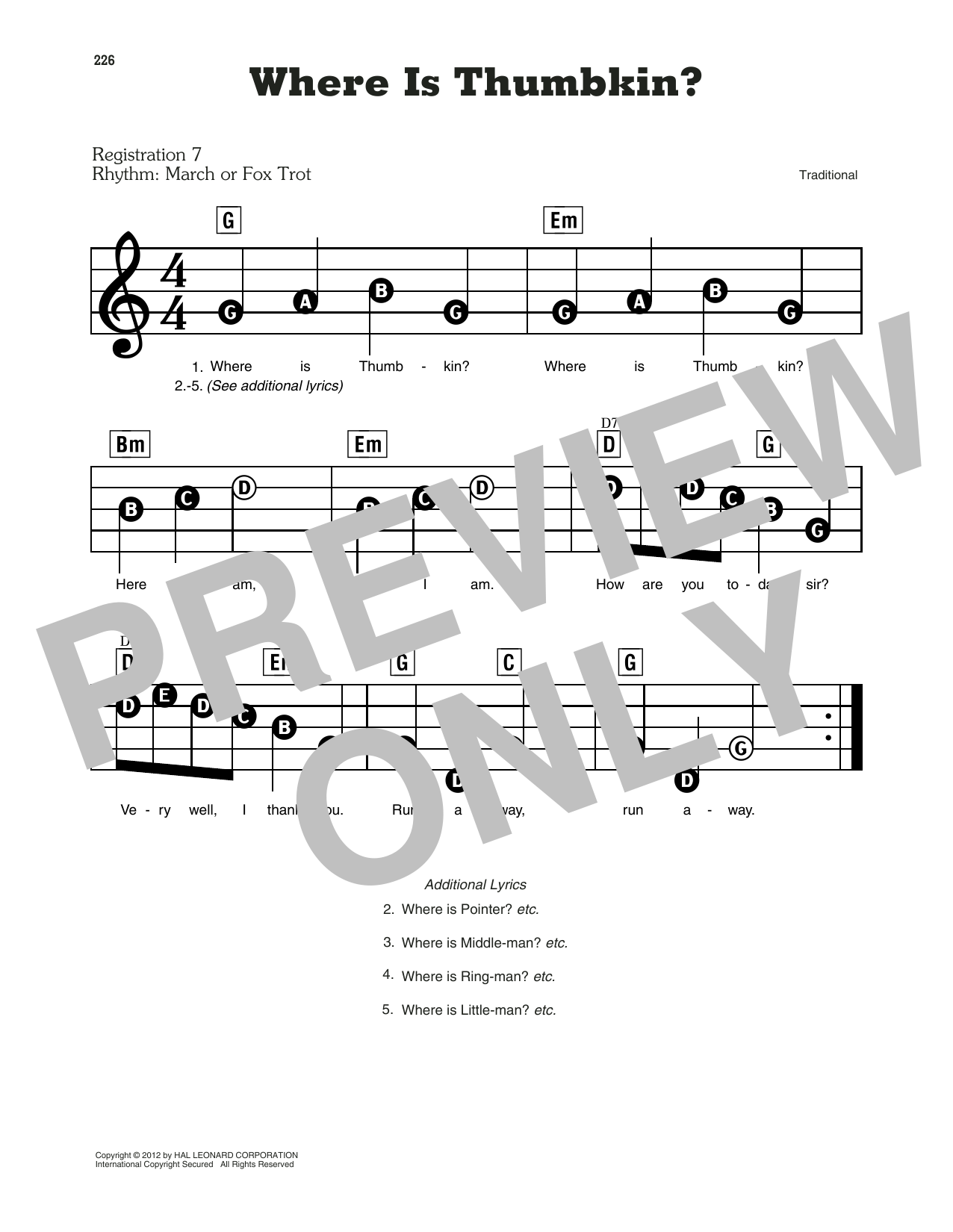
Where Is Thumbkin?: E-Z Play Today

Item: 35-DS00506245

Digital Download
$4.99
Description

Where Is Thumbkin?: E-Z Play Today isn't in MakeMusic Cloud just yet...but it could be. Let us know you'd like to see it, and you'll help shape what comes next. In the meantime, start a free trial and dive into thousands of interactive titles your students can play along with today.

Sample Audio
No sample audio found.
Sample Video
Additional Details
Publisher: Hal Leonard
Page Count: 1
SKU: 35-DS00506245

More about this title

Why we love this

This arrangement sits perfectly in early piano pedagogy because it treats a beloved finger play as genuine music rather than mere novelty. Young pianists engage with hand position and finger independence while learning a melody that already lives in their muscle memory and imagination.

What to expect

Playful and intimate, like sitting beside a young child and watching their hands discover music. The melody unfolds with the same straightforward charm as the game itself, creating moments of genuine delight when recognition happens.

Who it's for

Beginning piano students who are ready to move beyond pure technique drills but need repertoire that bridges their physical abilities with material they already know. This works equally well for young recital performers or classroom music settings where familiarity builds confidence.

How to get the most out of it

  • Establish a steady tempo before beginning; the finger play works best when the music matches the natural pace of the game itself.
  • Keep each note clean and separate, especially during the finger-naming sections where articulation clarity helps listeners follow the narrative.
  • Encourage dynamic awareness by having students play questions slightly lighter and answers slightly stronger, letting the call-and-response structure breathe.

How to use it

Include this in a family concert or early-childhood focused recital where parents appreciate seeing their own memory translated into a musical moment. It also serves as a natural bridge piece when students begin studying folk melody arrangements.

Skills your students will build

  • Hand position and finger independence
  • Melodic phrase recognition and shaping
  • Playing with rhythmic clarity in a narrative context
  • Dynamic control in call-and-response structures

You May Also Like