Where is love? (Encore Plus, Book 2) Sheet Music Preview

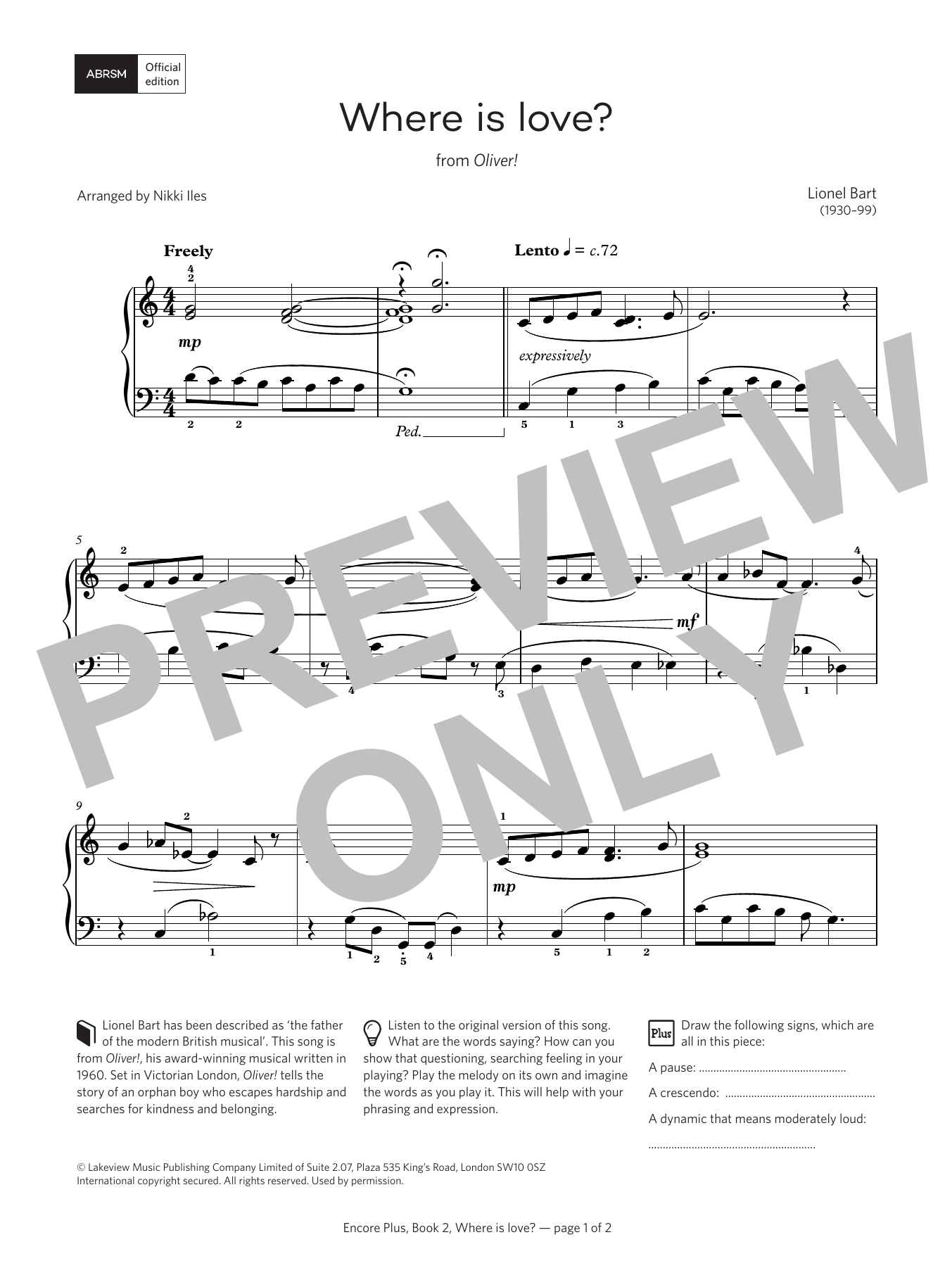
Where is love? (Encore Plus, Book 2): Piano Solo

By Lionel Bart / Arranged by Nikki Iles

Grade: 3

Item: 35-DS01989425

Digital Download
$3.99
Description

Discover MakeMusic Cloud: thousands of interactive titles your students can play along with today.

Sample Audio
No sample audio found.
Sample Video
Additional Details
Publisher: Hal Leonard
Page Count: 2
SKU: 35-DS01989425

More about this title

About the Composer: Lionel Bart

Lionel Bart (1930-1999) was a British composer and lyricist who shaped the sound of mid-century musical theatre. His gift for accessible melody and emotional directness made him one of the most performed writers in British theatre, particularly known for "Oliver!" which won the Tony Award for Best Musical and became a defining work of its era.

Bart's compositional approach prioritized singability and immediate emotional connection. His melodies work equally well in their original theatrical context or adapted for solo instruments, which is why his music continues to appear in educational arrangements across multiple levels.

Why we love this

Nikki Iles' arrangement preserves the melody's warmth while building in just enough harmonic interest to keep Grade 3 pianists engaged without overwhelming them. The emotional weight of the song shines through in a compact, two-page format that rewards students who invest in phrasing and touch work rather than technical fireworks.

What to expect

Tender and reflective, with the gentle hopefulness that defines Bart's musical voice. The arrangement sits comfortably under the hands while carrying genuine emotional depth; it's music that sounds simple but requires real musicality to bring to life.

Who it's for

Grade 3 pianists ready to move beyond purely technical exercises into repertoire that asks something musical from them. This works well for students developing sensitivity to tone production and phrasing, or for those encountering theatrical music in a classical context for the first time.

How to get the most out of it

  • Shape the melody line with subtle dynamic swells at phrase peaks rather than playing it as a single dynamic plane. This transforms a simple tune into something genuinely expressive.
  • Balance the accompaniment to support rather than compete. Your left hand should anchor the harmony without pulling focus from the singing right-hand voice.
  • Find a tempo that allows for gentle rubato in the melodic line. A steady, slightly contemplative pace gives the piece room to breathe emotionally.

How to use it

This pairs naturally with other theatrical or pop-influenced repertoire in a young pianist's recital. It also works beautifully as part of a February or spring concert focused on accessible, emotionally resonant pieces that showcase musical growth without demanding pyrotechnics.

Skills your students will build

  • Phrasing in melody lines and shaping longer musical sentences
  • Balance between right-hand melody and left-hand accompaniment
  • Sustaining expressive intent across a complete piece
  • Playing with gentle rubato while maintaining harmonic stability

You May Also Like