Where Do I Begin (Love Theme) (from Love Story) Sheet Music Preview

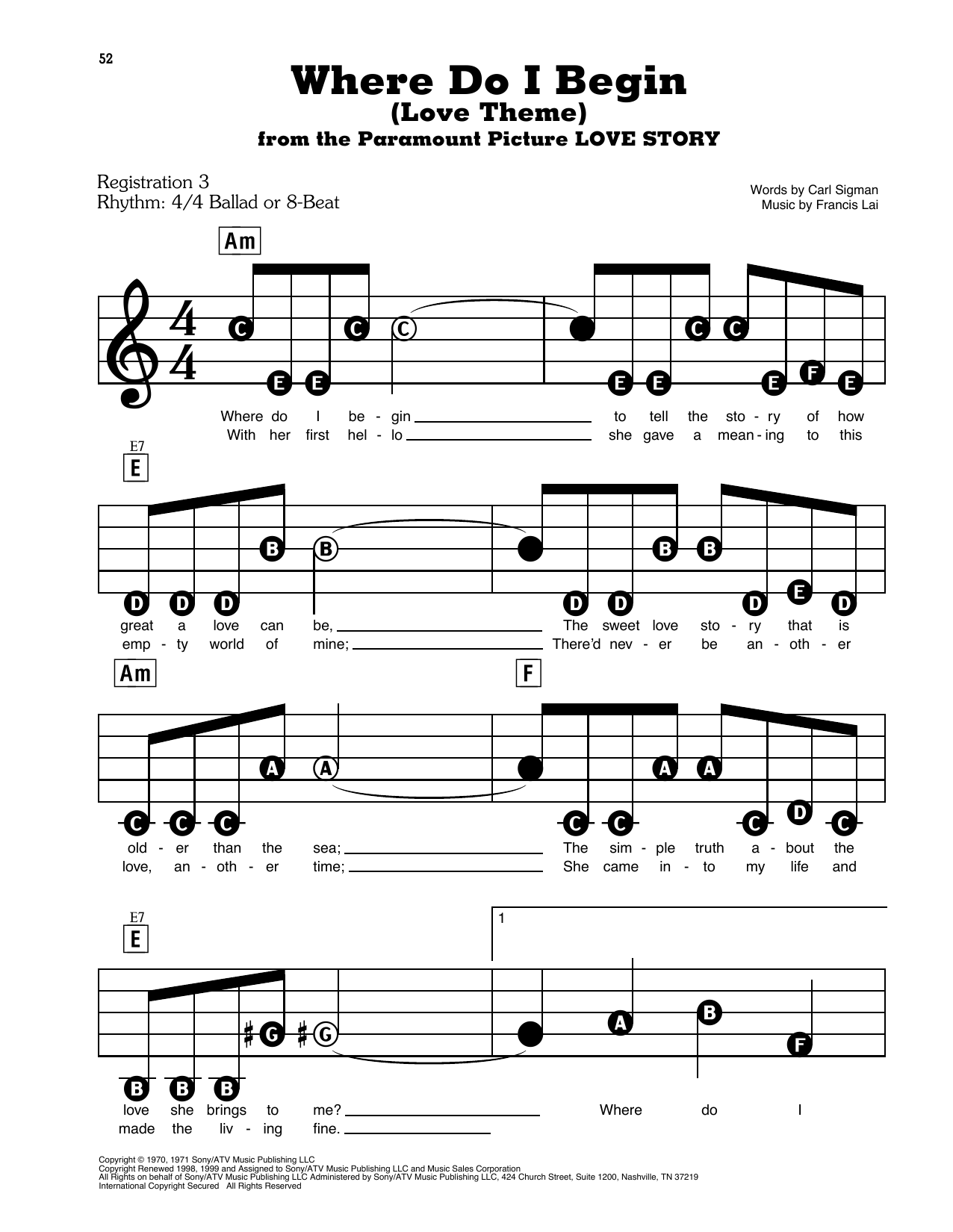
Where Do I Begin (Love Theme) (from Love Story): E-Z Play Today

As performed by Tony Bennett

Item: 35-DS00450550

Digital Download
$4.99
Description

Where Do I Begin (Love Theme) (from Love Story): E-Z Play Today isn't in MakeMusic Cloud just yet...but it could be. Let us know you'd like to see it, and you'll help shape what comes next. In the meantime, start a free trial and dive into thousands of interactive titles your students can play along with today.

Sample Audio
No sample audio found.
Sample Video
Additional Details
Publisher: Hal Leonard
Page Count: 4
SKU: 35-DS00450550

More about this title

About the Artist: Tony Bennett

Tony Bennett (1926–2023) was an American jazz and popular music vocalist whose career spanned more than seven decades. A master interpreter of the Great American Songbook, Bennett brought sophistication, emotional depth, and impeccable phrasing to every standard he recorded, making him a model for singers seeking authentic connection to melody and lyric.

Why we love this

Bennett's restraint and clarity make this love theme accessible without sacrificing musical integrity. The four pages offer singers and pianists an achievable pathway into classic film standards while preserving the song's elegant simplicity, perfect for building confidence with meaningful material.

What to expect

The piece unfolds with romantic vulnerability and introspection. Gentle piano figuration frames a lyrical melody that asks tender questions, creating space for the performer to communicate intimacy rather than grandeur.

Who it's for

Pianists and singers working through the E-Z Play Today series who want to explore classic film standards with genuine musicality. This arrangement bridges beginner accessibility and performance-quality interpretation.

How to get the most out of it

  • Shape the melody with Bennett's signature legato phrasing; let the piano support without rushing forward
  • Balance dynamic control in the lower register to keep the vocal line the focal point throughout
  • Honor the song's unhurried pace by resisting the urge to fill silences; silence itself is expressive here

How to use it

Pair this with other classic standards for a 1950s and 1960s film music concert, or feature it as an interlude between larger ensemble pieces to shift the room's emotional tone. It also works well as a solo recital opener that establishes warmth and connection with your audience.

Skills your students will build

  • Phrasing with intention across long melodic lines
  • Dynamic balance between vocal melody and piano accompaniment
  • Interpretation of a standard without embellishment
  • Reading and performing in a jazz-influenced harmonic language

You May Also Like