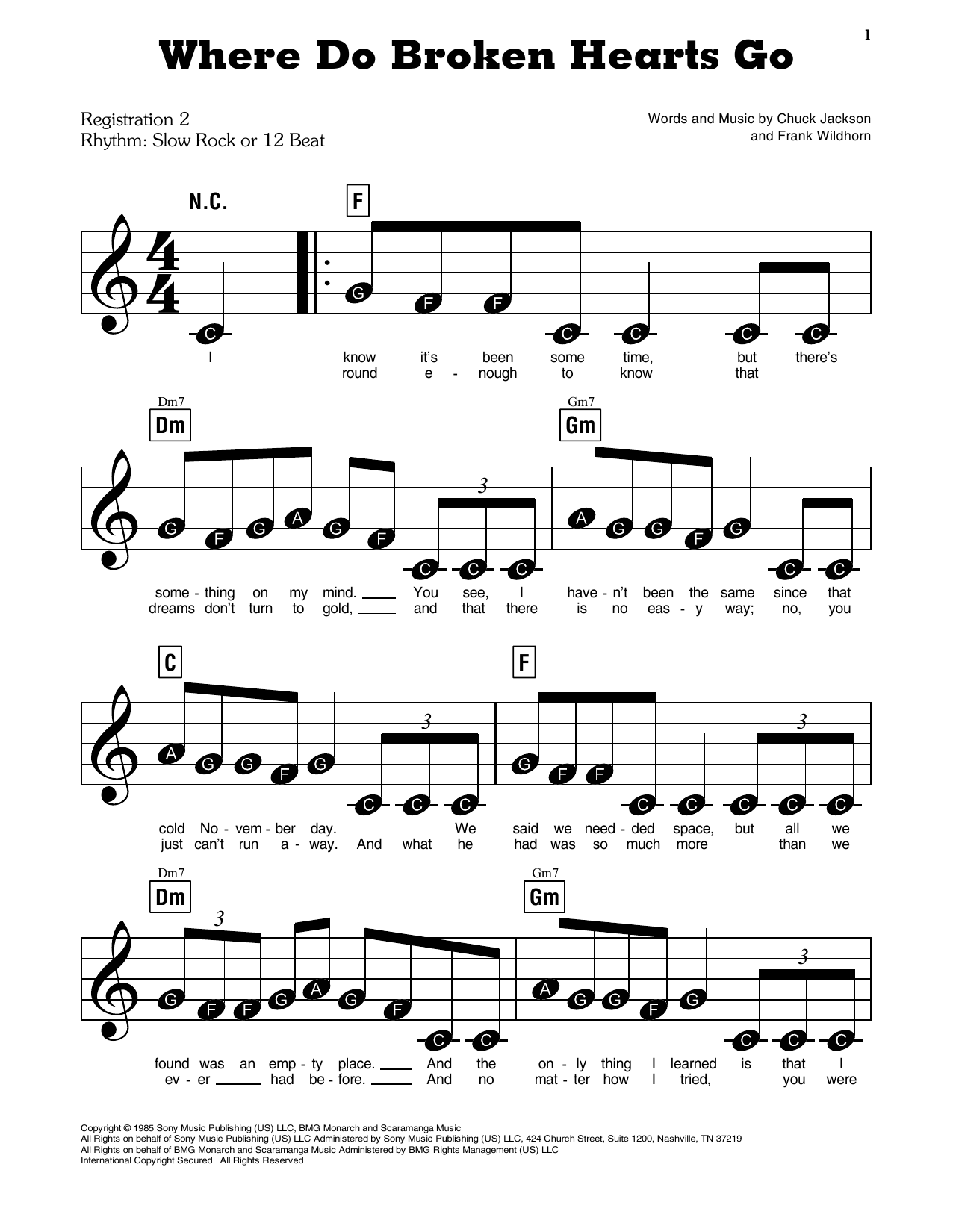
Where Do Broken Hearts Go Sheet Music Preview

Where Do Broken Hearts Go: E-Z Play Today

As performed by Whitney Houston

Item: 35-DS01260785

Digital Download
$4.99
Description

Where Do Broken Hearts Go: E-Z Play Today isn't in MakeMusic Cloud just yet...but it could be. Let us know you'd like to see it, and you'll help shape what comes next. In the meantime, start a free trial and dive into thousands of interactive titles your students can play along with today.

Sample Audio
No sample audio found.
Sample Video
Additional Details
Publisher: Hal Leonard
Page Count: 4
SKU: 35-DS01260785

More about this title

About the Artist: Whitney Houston

Whitney Houston emerged as one of the most technically gifted vocalists of the 1980s, known for her four-octave range and ability to navigate complex melodic lines with pristine control. Her influence on popular music extends deeply into music education, where her recordings serve as models for understanding vocal phrasing, dynamic control, and the emotional delivery that distinguishes a competent performance from a memorable one.

Why we love this

This ballad showcases the kind of accessible yet vocally demanding writing that makes pop repertoire genuinely useful in the classroom. Piano students get to accompany a melody shaped by one of the most expressive voices in modern music, which means they must listen closely and shape their playing to support rather than overpower the singer.

What to expect

A tender, introspective song built on gentle harmonic progressions that invite emotional restraint. The arrangement breathes space around the melody, creating moments where the piano's role is to provide warmth rather than complexity.

Who it's for

Piano students transitioning from classical to popular repertoire will find this ballad both accessible and rewarding. Teachers looking to engage reluctant pianists with contemporary songs they actually know will appreciate the straightforward arrangement in this E-Z Play edition.

How to get the most out of it

  • Shape the accompaniment dynamically to match the vulnerability of the vocal line; resist the urge to fill every measure with busy figures.
  • Pay attention to rubato in the vocal phrasing and adjust your tempo slightly to accommodate the singer's breath and emotional timing.
  • Keep chord voicings clean and transparent so the melody remains the focus, especially in the softer passages.

How to use it

Pair this with other '80s pop ballads to create a thematic concert segment that resonates with audiences spanning multiple generations. It also works well as a solo feature for a pianist with vocalist accompaniment in a casual school performance or assembly setting.

Skills your students will build

  • Playing sustained chord voicings with consistent tone quality
  • Following a vocalist's phrasing and tempo flexibility
  • Accompanying a melody while maintaining harmonic awareness
  • Dynamic control across the full range of the instrument

You May Also Like