Where Are You Going To My Pretty Maid? Sheet Music Preview

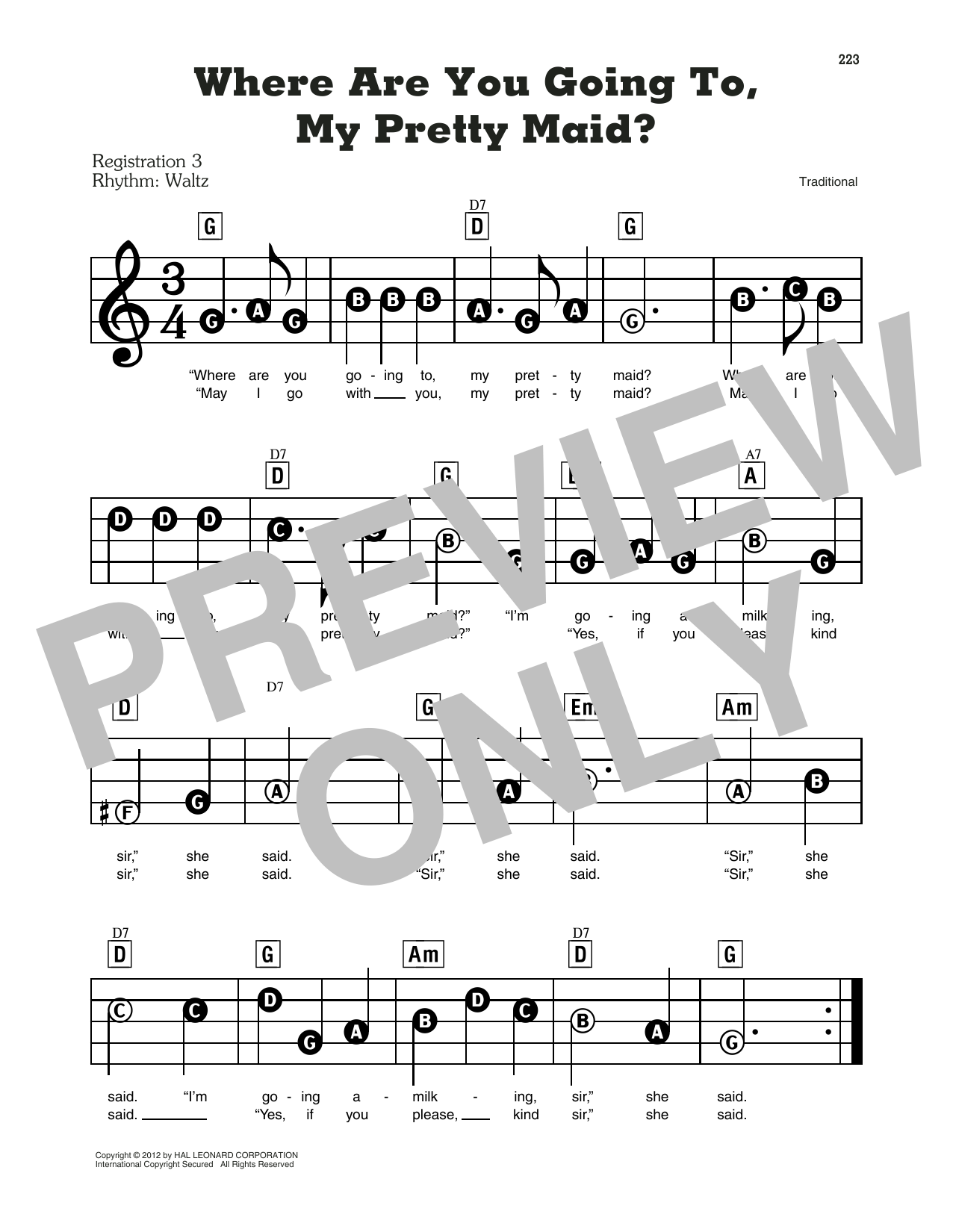
Where Are You Going To My Pretty Maid?: E-Z Play Today

Item: 35-DS00506261

Digital Download
$4.99
Description

Where Are You Going To My Pretty Maid?: E-Z Play Today isn't in MakeMusic Cloud just yet...but it could be. Let us know you'd like to see it, and you'll help shape what comes next. In the meantime, start a free trial and dive into thousands of interactive titles your students can play along with today.

Sample Audio
No sample audio found.
Sample Video
Additional Details
Publisher: Hal Leonard
Page Count: 1
SKU: 35-DS00506261

More about this title

Why we love this

E-Z Play Today's simplified arrangement makes this traditional nursery rhyme accessible to early pianists without sacrificing its playful character. One page keeps young students focused and motivated, perfect for building confidence during those first months of lessons.

What to expect

Light, curious, and gently bouncing along. The melody has a conversational lilt that invites the player to imagine the interaction behind the lyrics, making practice feel less like work and more like storytelling.

Who it's for

Beginning piano students in their first year of study will find this accessible and immediately playable. Teachers use nursery rhyme arrangements like this one to reinforce hand position, basic rhythm reading, and the joy of playing recognizable melodies.

How to get the most out of it

  • Keep the tempo conversational and unhurried; this melody lives in its storytelling quality, not in rushing through the phrasing.
  • Pay attention to any dynamic markings that shape the narrative arc of the question posed in the title.
  • Let each phrase breathe naturally, as if you're actually asking someone a genuine question.

How to use it

Pair this with other traditional folk songs in a recital to create a "Music Around the World" or "Stories in Song" theme. For younger students, it works beautifully as a confidence builder before more complex repertoire.

Skills your students will build

  • Reading melody in a single clef
  • Playing recognizable patterns and phrases
  • Maintaining steady tempo across simple harmonic accompaniment
  • Connecting musical phrasing to lyrical intent

You May Also Like