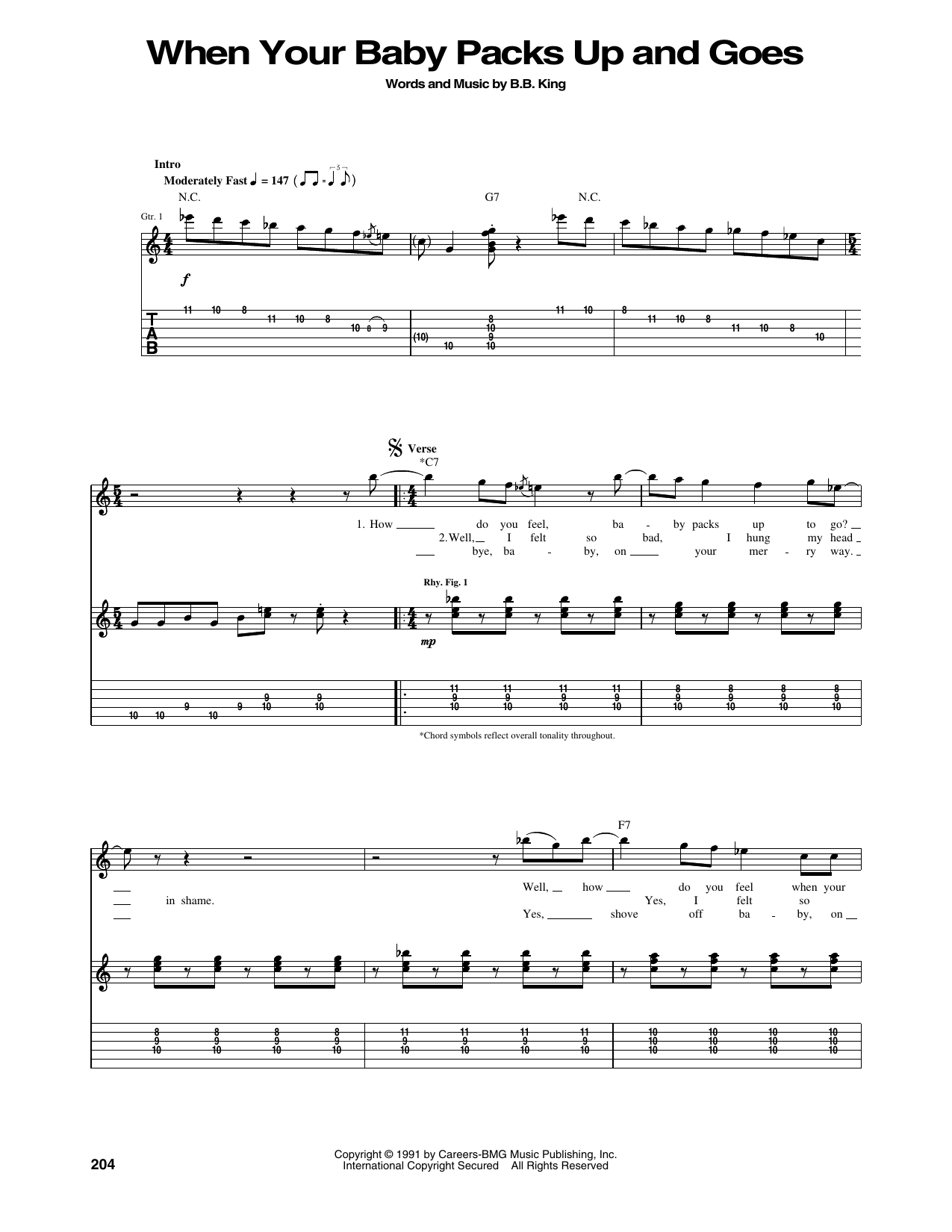
B.B. King stands as one of the most influential blues guitarists in American music history. His distinctive approach to single-note soloing, expressive vibrato technique, and emotional phrasing shaped modern blues guitar and influenced generations of players across all genres.
Why we love this
King's blues vocabulary is direct and teachable. This tune gives students a chance to absorb his phrasing sensibility and signature bent-note vocabulary through transcription, making it ideal for guitarists who want to understand how blues feeling translates into actual technique.
What to expect
The tune carries the emotional weight of loss and resignation that defines classic blues ballads. King's soloing is sparse but deeply expressive, using space and note choice to communicate rather than filling every beat.
Who it's for
Guitar students ready to move beyond basic blues box patterns and explore how a master musician shapes individual notes and phrases. This works for intermediate players who want to learn King's approach to soloing within a 12-bar blues structure.
How to get the most out of it
Prioritize the vibrato and bend articulation over strict rhythmic precision. King's timing bends around the beat intentionally; let that shape breathe.
Study the recorded version before working through the tab. Hear how the phrases sit against the accompaniment rather than trying to nail timing from notation alone.
Work through the sustained notes and bends at half tempo first, focusing on the smoothness of the vibrato width and release.
How to use it
Include this in a blues history unit focused on single-note soloing, or use it as a model for phrase-based improvisation in guitar ensemble classes. It also makes a strong addition to jazz guitar curricula exploring blues standards.
Skills your students will build
Interpreting and executing bent notes and microtonal adjustments
Controlling vibrato width and speed for expressive effect
Phrasing within blues changes while using rhythmic space
Transcribing and learning from recorded solos
Understanding blues soloing as a conversation with the 12-bar form
You May Also Like
Scan to Complete Your Purchase
Use your phone's camera to scan the code below
You'll log in on your phone and the order will be added to your account