When You Wish Upon A Star (Key: C) (from Pinocchio) (arr. Chuck Israels) Sheet Music Preview

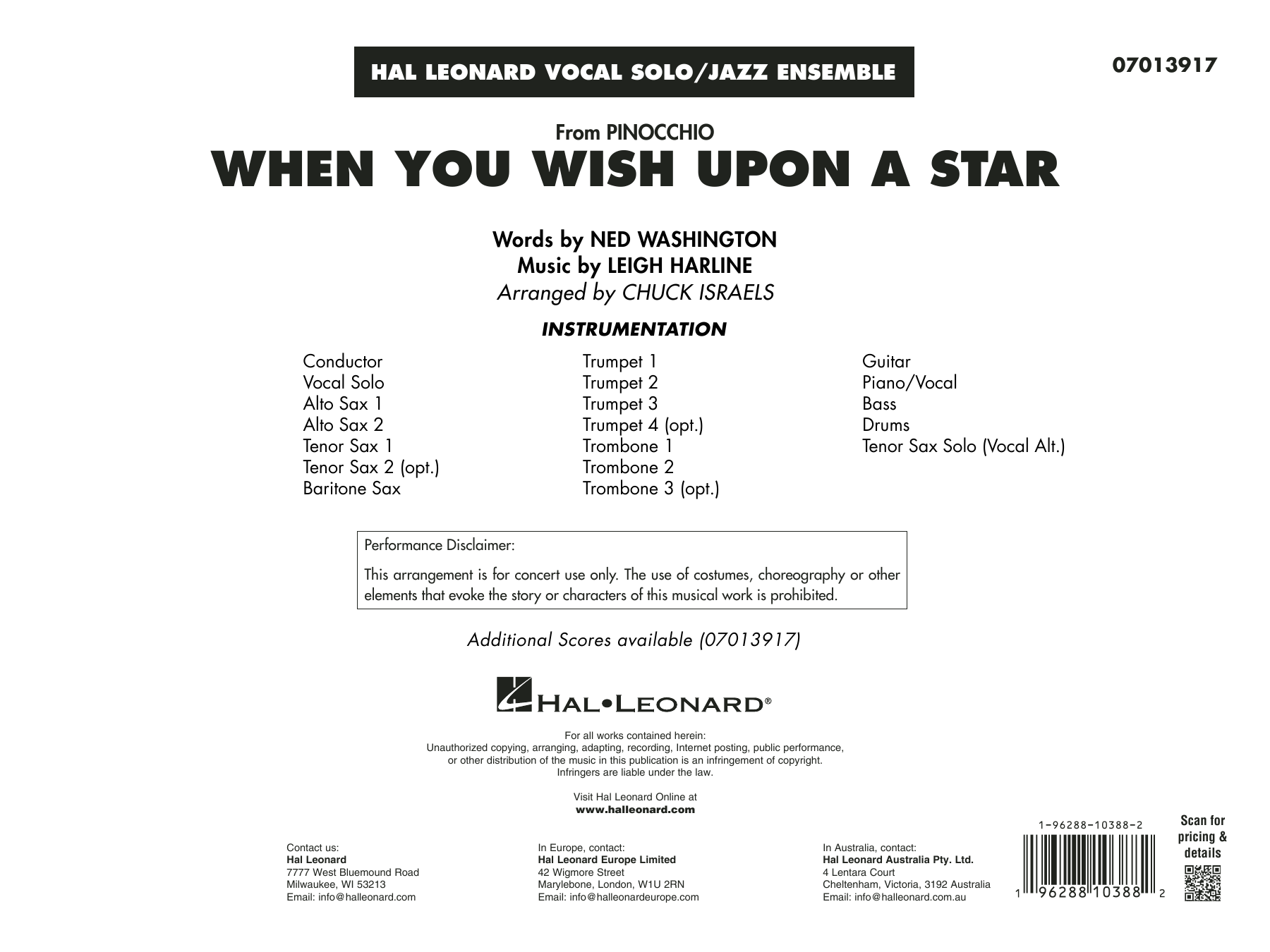
When You Wish Upon A Star (Key: C) (from Pinocchio) (arr. Chuck Israels): Jazz Ensemble Conductor Score & Parts

As performed by Cliff Edwards / Arranged by Chuck Israels

Grade: 3-4

Item: 35-PK01461254

Digital Download
$55.00

One moment…

Description
Using a comfortable moderate swing style, this masterful setting by Chuck Israels opens with the full ensemble then giving way to solo space for tenor sax. A key change announces the entrance of the vocalist who takes us the rest of the way out. Tender and very effective!

When You Wish Upon A Star (Key: C) (from Pinocchio) (arr. Chuck Israels): Jazz Ensemble Conductor Score & Parts isn't in MakeMusic Cloud just yet...but it could be. Let us know you'd like to see it, and you'll help shape what comes next. In the meantime, start a free trial and dive into thousands of interactive titles your students can play along with today.

Sample Audio
No sample audio found.
Sample Video
Additional Details
Publisher: Hal Leonard
SKU: 35-PK01461254

More about this title

About the Artist: Cliff Edwards

Cliff Edwards was a singer and actor who became known for his distinctive high-pitched voice in early Hollywood. He originated the role of Jiminy Cricket in Disney's Pinocchio (1940), performing "When You Wish Upon A Star" with a warmth and clarity that made the song an instant classic. Edwards' vocal style brought character and personality to the material, qualities that continue to inspire interpretations of this iconic melody.

Why we love this

Chuck Israels has created an arrangement that honors the song's gentle spirit while giving your ensemble room to stretch into jazz language. The moderate swing feel keeps things accessible for Grade 3-4 players, and the built-in solo space for tenor sax lets your section leaders shine without requiring extended technical passages. Programming this alongside a vocalist gives you a complete performance moment that audiences recognize and musicians enjoy executing.

What to expect

A gentle swing that preserves the wistful character of the original tune while inviting players to experience how jazz harmony and rhythm transform familiar material. The moderate tempo and moderate swing style create an intimate feel rather than a driving one, keeping the focus on the melody's emotional core.

Who it's for

Jazz ensembles working at the Grade 3-4 level who want repertoire that balances musicality with manageability. This works particularly well for groups that feature a capable tenor saxophonist and have or can bring in a vocalist for concert performances.

How to get the most out of it

  • Balance the full ensemble opening carefully so the melody sings above the comping; this sets up the shift to the tenor solo effectively.
  • Shape the tenor sax solo with space and dynamics rather than just tempo; let the soloist breathe with the accompaniment underneath.
  • Support the vocalist's entrance with lighter, more spacious voicings in the ensemble; the arrangement's description of "tender" depends on restraint from the other sections.
  • Nail the key change moment rhythmically as a group so the modulation lands cleanly and the vocal entrance feels like a genuine lift.

How to use it

Consider placing this mid-set, after you've established your ensemble's energy but before moving into harder-swinging material. It's an ideal piece for family concerts or education-focused performances where audiences include younger listeners who know the film. If you have a strong vocalist available, feature them here as a special guest or ensemble member.

Skills your students will build

  • Reading and playing in a moderate swing style with appropriate articulation and feel
  • Accompanying a solo (tenor sax) while maintaining ensemble cohesion
  • Executing a key change cleanly as an ensemble
  • Balancing melody and accompaniment in a jazz context
  • Supporting a vocalist in an ensemble setting

You May Also Like