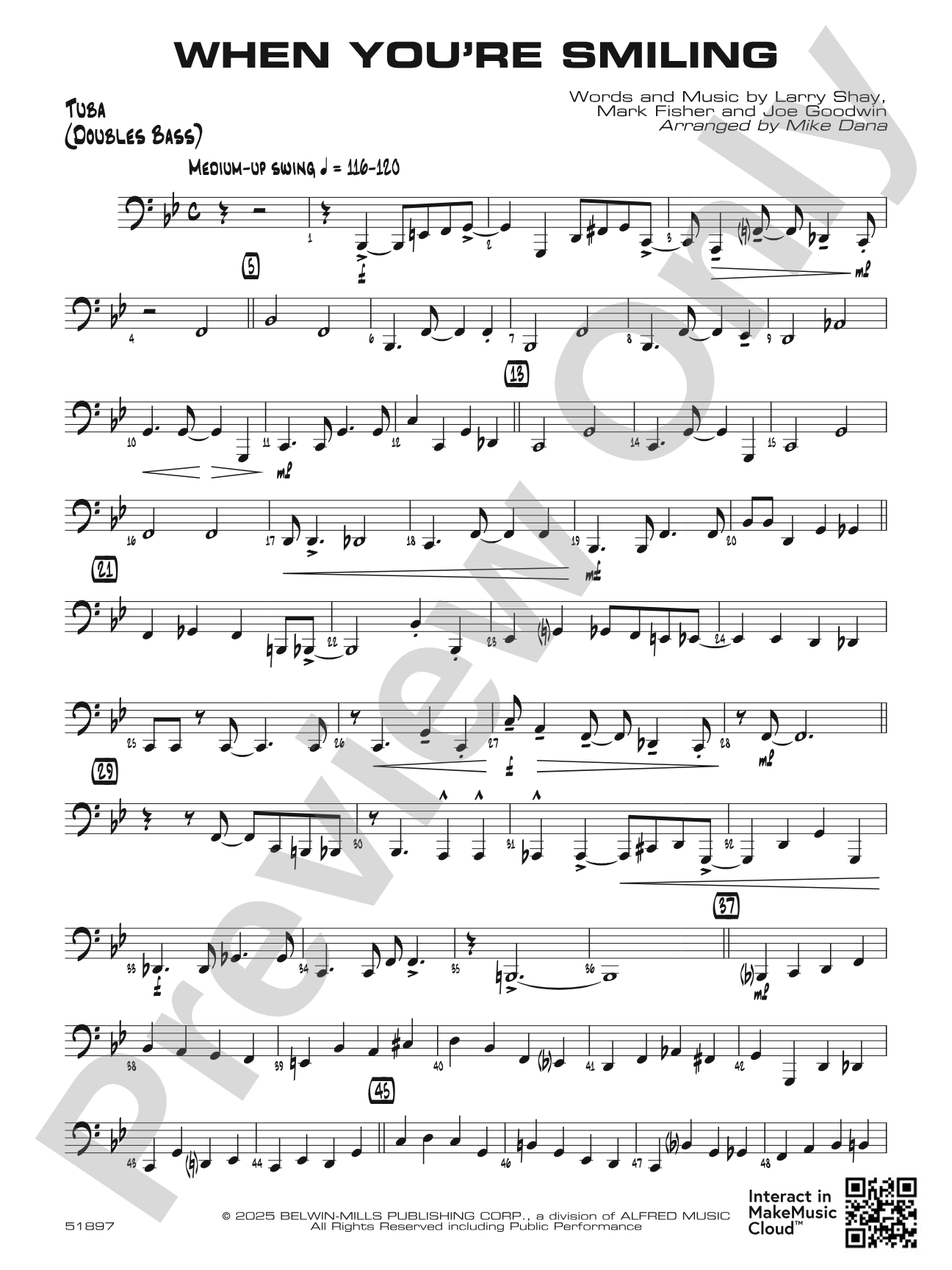
When You're Smiling: Tuba Sheet Music Preview

When You're Smiling: Tuba

Words and music by Larry Shay, Mark Fisher, and Joe Goodwin / arr. Mike Dana

Grade: 2.5

Item: 00-PC-0019589_TB1

Digital Download
$3.00
Description
Classic Basie-style medium swing fits this excellent chart. The suggested tempo is 118 BPM, and the lead trumpet range is to written G. Solos are provided for alto 1 and trumpet 1, and the usual optional parts, including flute, clarinet, and vibes. A tasty, well-written arrangement. (3:30)

When You're Smiling: Tuba isn't in MakeMusic Cloud just yet...but it could be. Let us know you'd like to see it, and you'll help shape what comes next. In the meantime, start a free trial and dive into thousands of interactive titles your students can play along with today.

Sample Audio
0:00
0:00
Sample Video
Additional Details
Series: Young Jazz Ensemble
Publisher: Alfred Music
SKU: 00-PC-0019589_TB1

More about this title

About the Composer: Larry Shay

Larry Shay composed during the golden age of American popular song, contributing to the standard repertoire that would define jazz and swing for generations. His melodies have become part of the fabric of American music, recorded countless times and arranged across every conceivable instrumentation.

Why we love this

Mike Dana's arrangement captures the infectious energy of a Count Basie swing chart while keeping the technical demands accessible for developing ensembles. The solo opportunities for alto 1 and trumpet 1 let your strongest improvisers shine without overwhelming the section, and the optional parts (flute, clarinet, vibes) give you real flexibility in how you voice the band.

What to expect

Pure, unburdened swing. The medium tempo and Basie-style voicings create an open, conversational sound where each section has room to breathe and personalities can emerge through the solos. It's the kind of chart that reminds musicians why people love playing jazz.

Who it's for

Jazz ensembles at the intermediate level who want to build confidence in swing feel and section cohesion without tackling complex harmonic territory. This works well for groups developing their first soloists or for directors looking to teach ensemble arrangement principles through a familiar, accessible standard.

How to get the most out of it

  • Nail the groove at 118 BPM by locking the rhythm section (piano, bass, drums) first; everything else lands once that pocket is solid.
  • Balance the written ensemble texture against the solos; the chart breathes most naturally when transitions between sections feel effortless rather than forced.
  • Encourage trumpet 1 and alto 1 to listen to classic Basie-era recordings of this tune to absorb the phrasing and articulation style before improvising.

How to use it

Pair this with other standards or blues heads to build a concert section that demonstrates your ensemble's command of authentic swing style. At just over three and a half minutes, it's an ideal opener or closer for a jazz concert, or a natural fit alongside other Young Jazz Ensemble charts for a program showcasing ensemble growth across multiple difficulty levels.

Skills your students will build

  • Swing articulation and phrasing in small- and large-group contexts
  • Improvisation over ii-V-I and related changes
  • Section balance and texture control in written ensemble passages
  • Listening and responding to solo counterpoint from the ensemble
  • Listening for and maintaining steady groove with rhythm section

You May Also Like