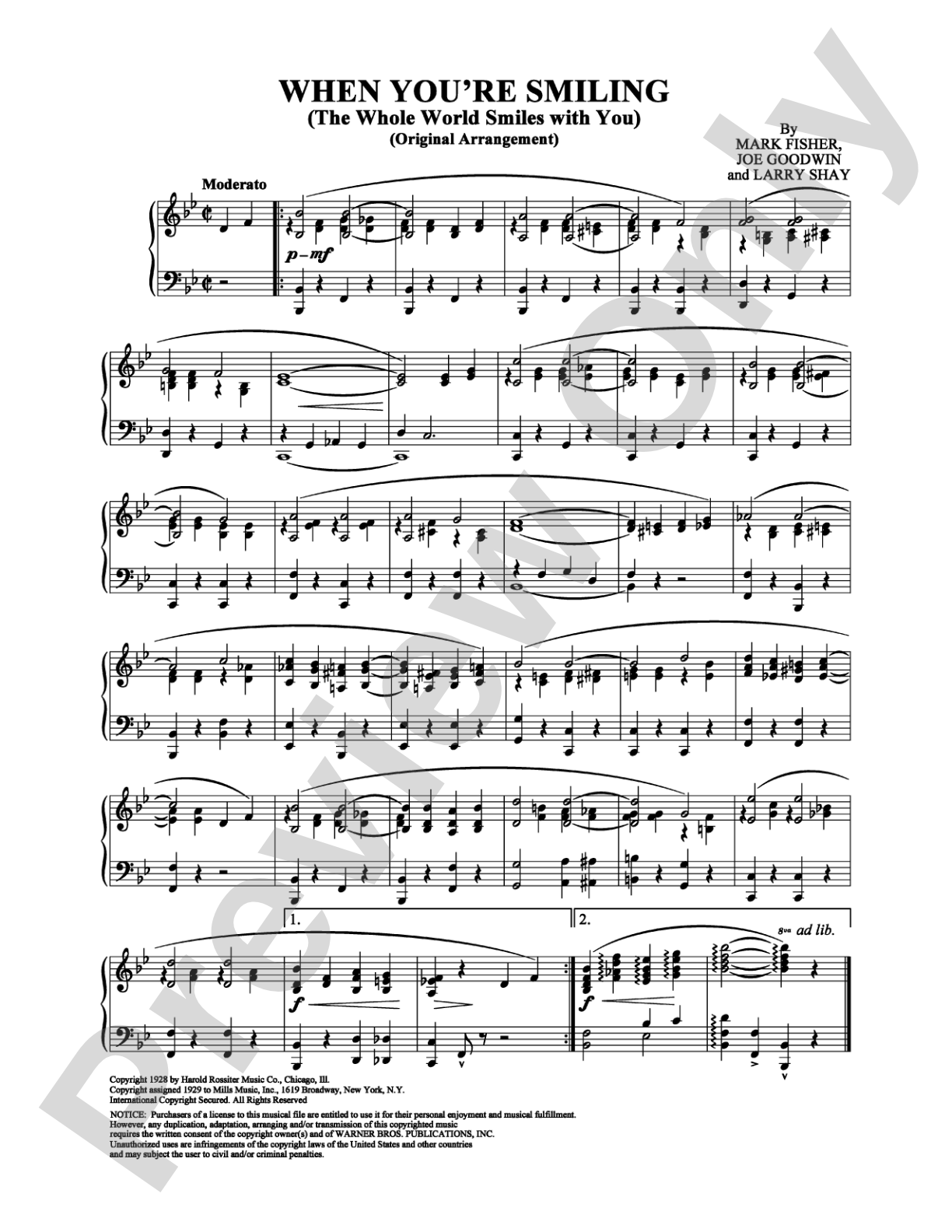
When You're Smiling (Original Arrangement): Piano Digital Sheet Music

When You're Smiling (Original Arrangement): Piano Digital Sheet Music

Mark Fisher, Larry Shay, Joe Goodwin

Item: 00-PS-0000745

Digital Download
$3.99
Description

When You're Smiling (Original Arrangement): Piano Digital Sheet Music isn't in MakeMusic Cloud just yet...but it could be. Let us know you'd like to see it, and you'll help shape what comes next. In the meantime, start a free trial and dive into thousands of interactive titles your students can play along with today.

Sample Audio
No sample audio found.
Sample Video
Additional Details
SKU: 00-PS-0000745

More about this title

Why we love this

This standard sits beautifully in a pianist's hands because the original arrangement respects what makes the tune memorable without overcomplicating it. The piece works equally well as a solo vehicle for recital or as an accessible bridge between classical repertoire and the jazz-inflected standards that serious piano students eventually want to explore.

What to expect

The piece radiates optimism and lightness, with the kind of infectious simplicity that made it a vaudeville hit. When you play it, you're channeling genuine warmth and good humor, not nostalgia; the melody has an uncomplicated joy that invites performers and listeners to smile along.

Who it's for

This arrangement serves pianists who want to play memorable, singable material without tackling advanced jazz voicings or complex reharmonization. It's ideal for students building confidence with standards repertoire, recital pianists seeking crowd-pleasing material, or teachers looking for an authentic piece that connects the concert tradition to the American songbook.

How to get the most out of it

  • Let the melody sing through clearly in the right hand while keeping the left hand accompaniment rhythmically conversational rather than heavy; the piece breathes when both hands feel like they're in dialogue.
  • The title itself is your roadmap: find genuine warmth in the phrasing and allow rubato in the melodic passages to suggest vocal expression without losing the underlying pulse.
  • Listen for opportunities to shape phrases into the changes; this standard rewards tasteful chord voicing awareness even at approachable levels.

How to use it

Place this in a recital set where you want to shift the mood upward after more serious work, or pair it with other American standards to create a themed concert segment. It also serves beautifully as an encore piece because its brevity and immediate appeal work perfectly in that context.

Skills your students will build

  • Balancing melody and accompaniment in both hands simultaneously
  • Phrasing and rubato in jazz-influenced standards
  • Reading and interpreting chord symbols and jazz notation
  • Maintaining steady pulse while playing with stylistic freedom

You May Also Like