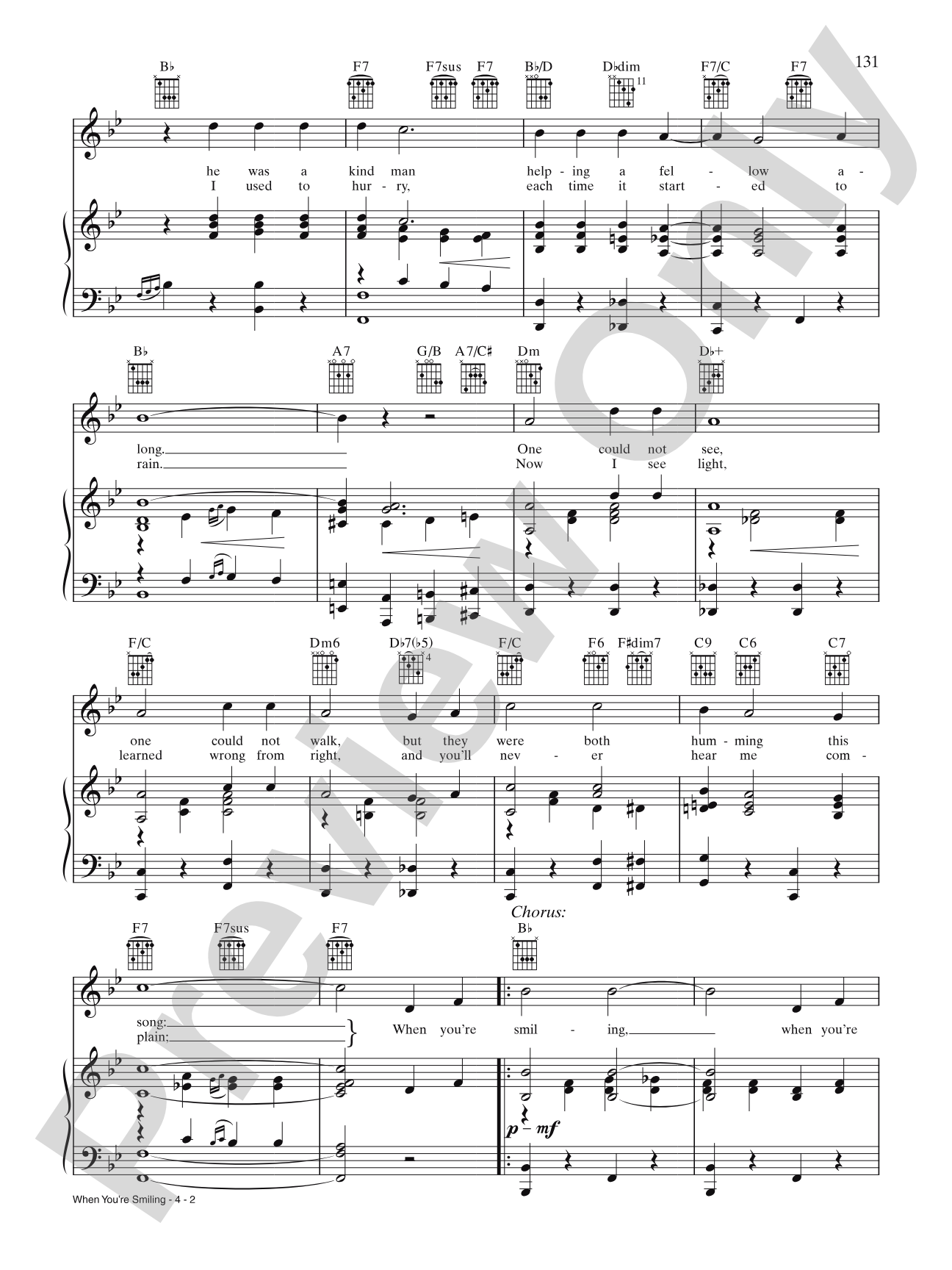
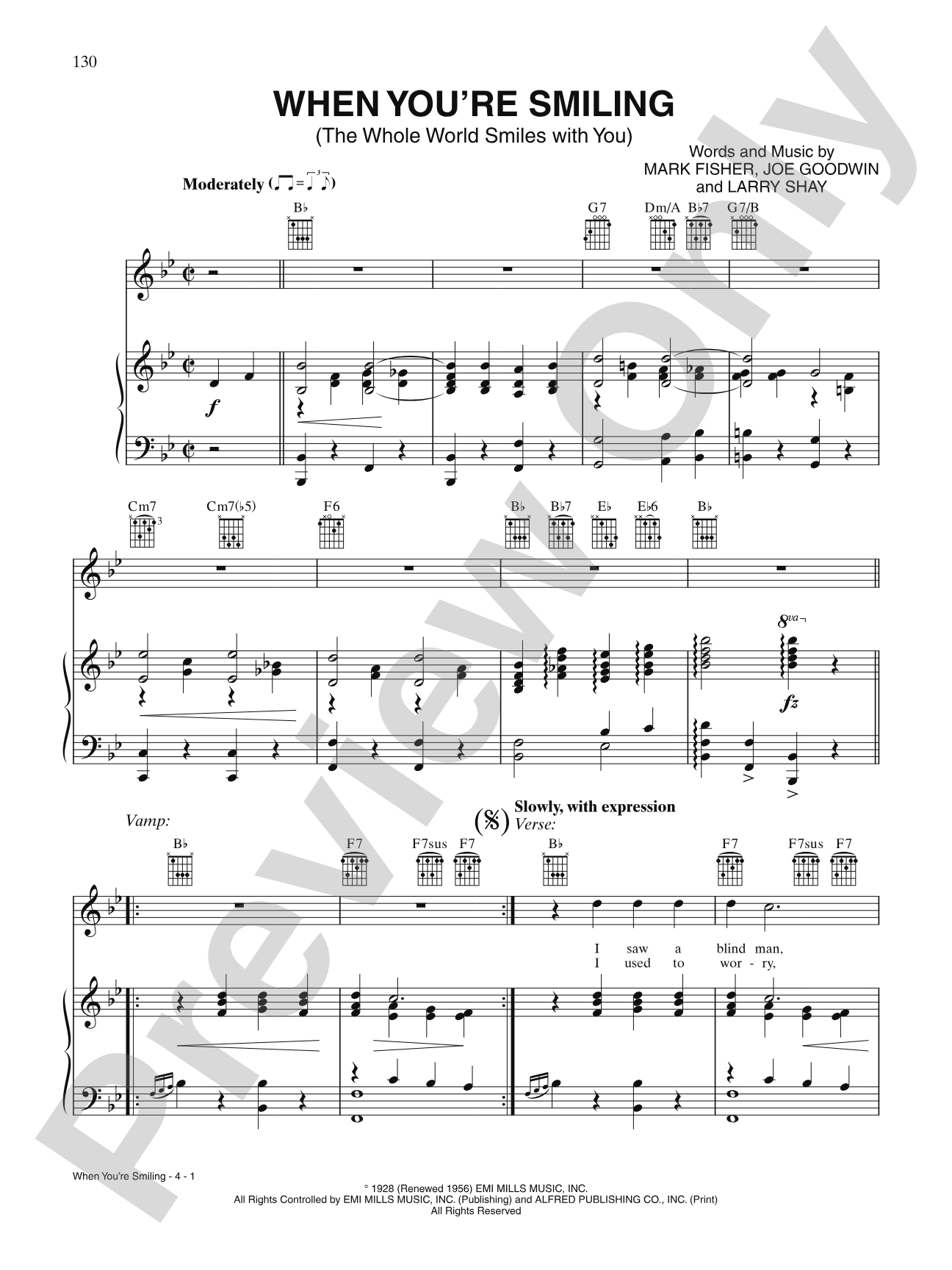
When You're Smiling Sheet Music Preview

When You're Smiling: Piano/Vocal/Chords

Words and music by Mark Fisher, Joe Goodwin, and Larry Shay

Item: 00-PIP-000032

Digital Download
$3.99
Description

When You're Smiling: Piano/Vocal/Chords isn't in MakeMusic Cloud just yet...but it could be. Let us know you'd like to see it, and you'll help shape what comes next. In the meantime, start a free trial and dive into thousands of interactive titles your students can play along with today.

Sample Audio
No sample audio found.
Sample Video
Additional Details
Series: Deluxe Edition
Publisher: Alfred Music
Page Count: 6
SKU: 00-PIP-000032

More about this title

Why we love this

This standard sits perfectly in the sweet spot between accessibility and genuine musicality. Pianists get a straightforward harmonic framework that still rewards thoughtful voicing, while singers can focus on the emotional directness of the melody without wrestling with unusual intervals or rhythmic complexity.

What to expect

Optimistic and unhurried, with the gentle charm of early 20th-century popular song. The melody has a conversational quality that feels natural to sing, supported by straightforward harmonies that evoke warmth and nostalgia without sentimentality.

Who it's for

Vocalists preparing for jazz standards repertoire, recitals, or auditions, working alongside a pianist who can read chord charts and provide harmonic support. Pianists seeking accessible jazz-era material that teaches voice-leading fundamentals without requiring advanced reharmonization.

How to get the most out of it

  • Shape the vocal line with gentle dynamic peaks at the phrase midpoints rather than pushing for volume throughout; the song's warmth comes from restraint and clarity.
  • Treat the piano part as more than accompaniment: the chord voicings suggest a particular harmonic color, so listen carefully to how your voice sits within that texture and adjust dynamics accordingly.
  • Lock the tempo early and keep it steady; this standard benefits from a conversational pace that lets each lyric land naturally without rushing into the next phrase.

How to use it

Pair this with other standards from the same era to build a coherent set for a jazz recital or American songbook program. It works equally well as an opener that sets a relaxed, engaging tone or as a palate cleanser between more dramatic pieces.

Skills your students will build

  • reading chord symbols and realizing them idiomatically at the piano
  • balancing vocal projection with clear diction in a straightforward melodic line
  • supporting a vocalist without drowning the lyric
  • interpreting dynamics and phrasing in music written without extensive notation

You May Also Like