When You're Alone (from Hook) Sheet Music Preview

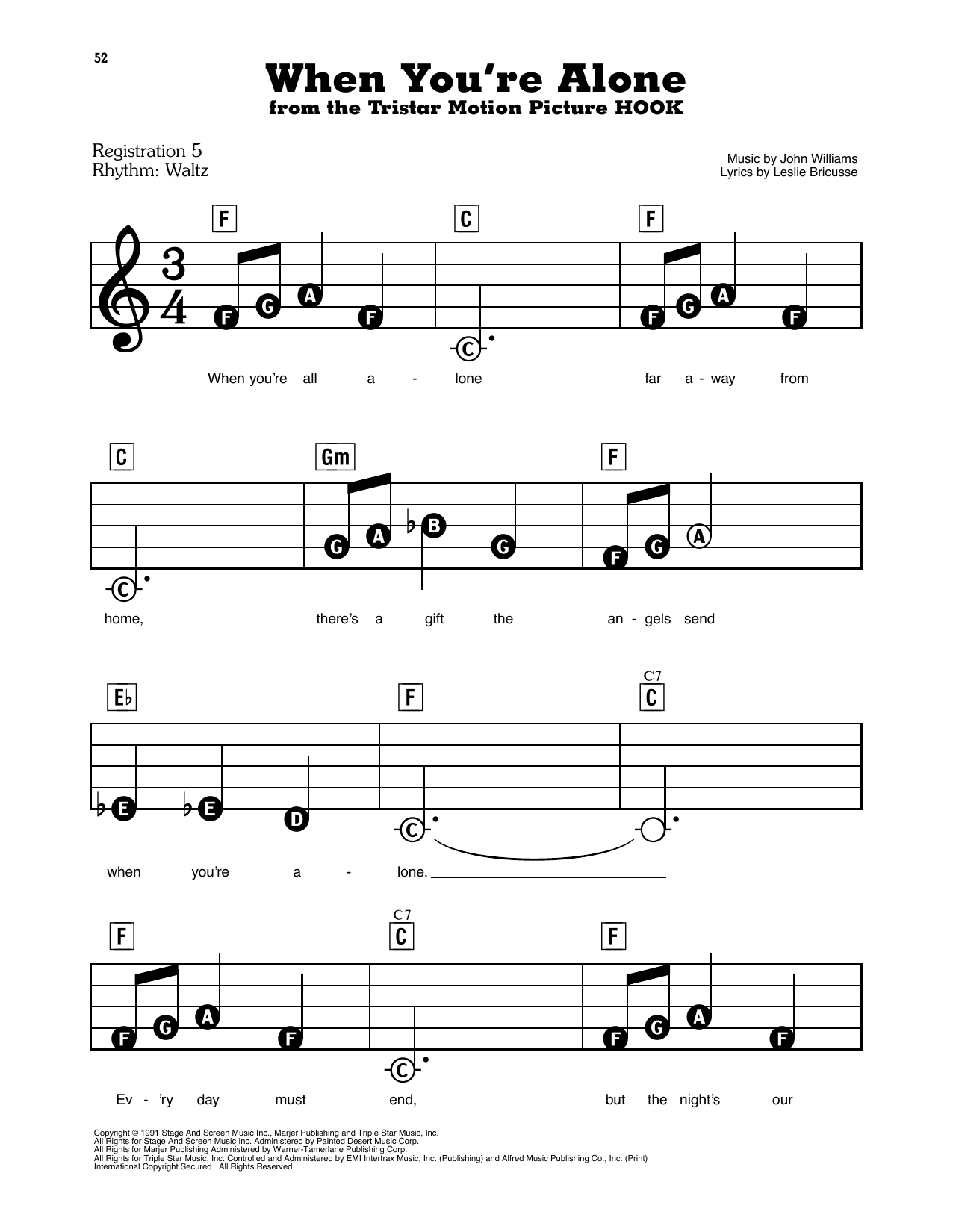
When You're Alone (from Hook): E-Z Play Today

By John Williams

Item: 35-DS00492626

Digital Download
$4.99
Description

When You're Alone (from Hook): E-Z Play Today isn't in MakeMusic Cloud just yet...but it could be. Let us know you'd like to see it, and you'll help shape what comes next. In the meantime, start a free trial and dive into thousands of interactive titles your students can play along with today.

Sample Audio
No sample audio found.
Sample Video
Additional Details
Publisher: Hal Leonard
Page Count: 3
SKU: 35-DS00492626

More about this title

About the Composer: John Williams

John Williams stands as one of the most consequential film composers in music history, with a catalog spanning seven decades of cinema and concert music. His gift for crafting memorable melodies that enhance emotional storytelling without overwhelming dialogue has made his work essential study for any musician learning how concert music functions in dramatic contexts.

Why we love this

Williams' ability to write singable, genuinely beautiful melodies shows up perfectly here. Students encounter a piece that sounds full and sophisticated on piano without requiring virtuosic technical demands, making it ideal for intermediate players who need to build confidence in musicality rather than speed.

What to expect

Tender and wistful, the melody conveys loneliness with genuine warmth rather than heaviness. There's a quality of yearning here, the kind that invites listeners into an intimate emotional space without demanding they feel sad.

Who it's for

Intermediate pianists benefit most from this arrangement, especially those drawn to accessible film music that still demands musical maturity. It works well for students building a contemporary classical repertoire that bridges concert and popular contexts.

How to get the most out of it

  • Pay close attention to the dynamic arc within each phrase. Williams shapes these melodies through subtle shifts in volume, not just note choices, so every decrescendo and crescendo marks a moment of dramatic intention.
  • The film context gives you permission to lean into rubato where the melody feels exposed. Allow yourself room to breathe at phrase endings without feeling locked to a metronomic beat.
  • Balance any accompaniment figuration against the main line so the melody stays foremost. It's easy for accompaniment patterns to take over; resist that instinct.

How to use it

Consider this for a concert segment exploring film music's role in emotional storytelling, or as a standalone offering in a student recital where it provides contrast to more technically demanding work. It also serves as a bridge piece for musicians exploring how concert writing principles apply to dramatic underscoring.

Skills your students will build

  • Shaping long melodic lines with intentional phrasing
  • Balancing melody against accompaniment texture
  • Controlling dynamics to support emotional arc
  • Interpreting film music beyond the literal score
  • Playing with expressive flexibility while maintaining form

You May Also Like