
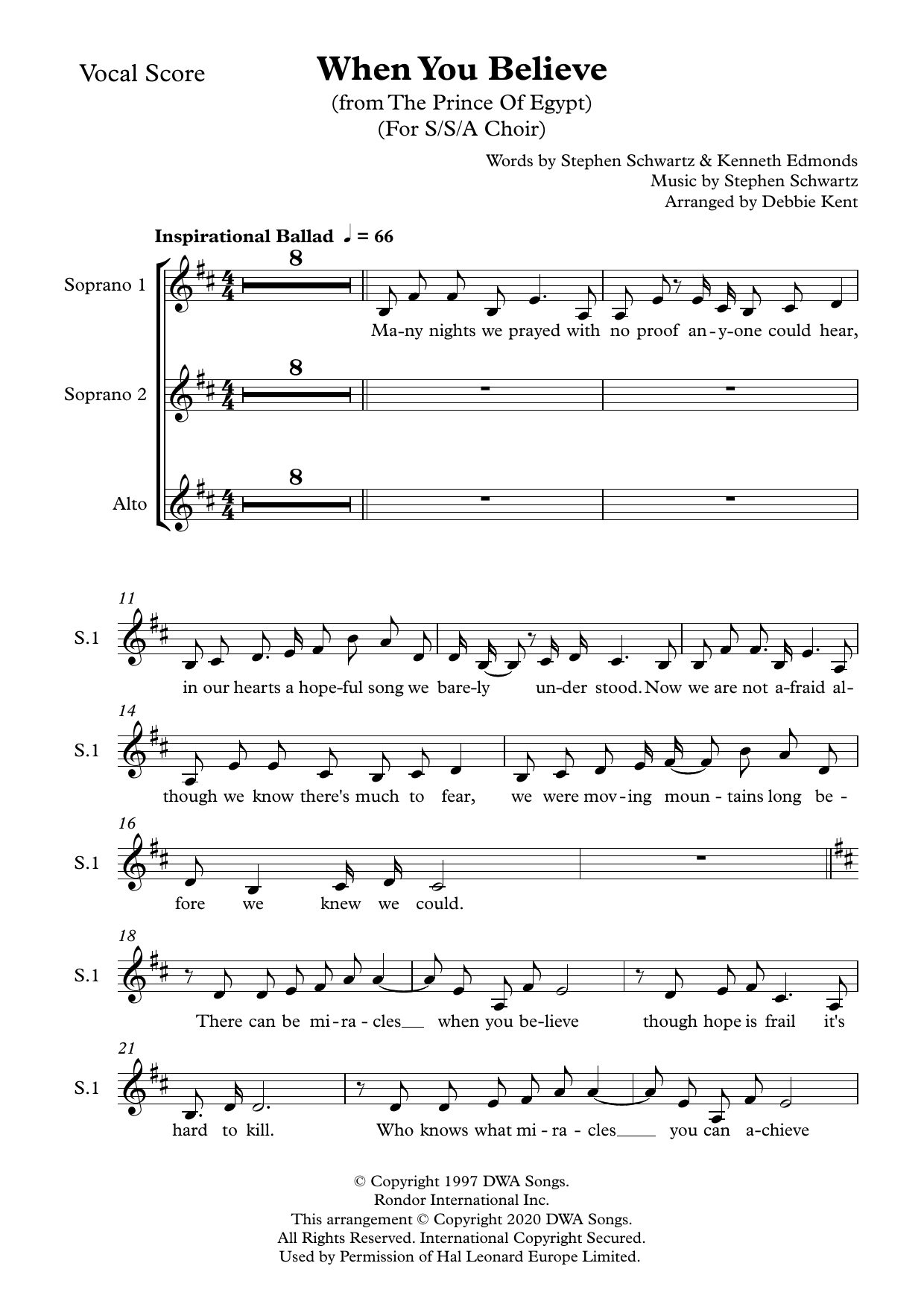

When You Believe (from The Prince Of Egypt) (arr. Debbie Kent): Choral Instrumental Pak
As performed by Whitney Houston and Mariah Carey / Arranged by Debbie Kent
Item: 35-PK00478331
$19.99
Pickup currently not available
Buy Extra Parts (Digital PDF Download)
Parts Added to Cart!
Description
(For S/S/A Choir)


When You Believe (from The Prince Of Egypt) (arr. Debbie Kent): Choral Instrumental Pak isn't in MakeMusic Cloud just yet...but it could be. Let us know you'd like to see it, and you'll help shape what comes next. In the meantime, start a free trial and dive into thousands of interactive titles your students can play along with today.
Request This Title
Tell us you want it.
Start Your Free Trial
Explore everything that's ready to play right now.
Sample Audio
No sample audio found.
Sample Video
No sample videos found.
Additional Details
Publisher:
Hal Leonard
SKU:
35-PK00478331
More about this title
About the Artist: Whitney Houston and Mariah Carey
Whitney Houston and Mariah Carey brought their distinctive vocal prowess to this duet from DreamWorks' The Prince of Egypt, a 1998 animated film that paired their voices across cultures and genres. Houston's powerful mezzo-soprano and Carey's whistle-register agility created a performance that transcended the film's narrative moment to become a standalone anthem of hope and resilience. Both artists built careers on vocal control, emotional authenticity, and the ability to move audiences through sheer musicianship, qualities that shine throughout this song.
For choral directors, their original recording serves as a masterclass in balanced blend and dynamic storytelling. The arrangement by Debbie Kent preserves the emotional core of their duet while making the piece accessible to developing singers, allowing your choir to inhabit the same spiritual and musical space these artists occupied.
Why we love this
This is a duet that actually works in a choir setting without losing its emotional immediacy. Debbie Kent's arrangement honors the soaring melodic lines and intimate moments of the original while giving your ensemble the scaffolding to deliver a genuinely moving performance. Directors reach for this piece because it connects with audiences across age groups and because it teaches singers to blend powerful voices while maintaining individual character.
What to expect
Soaring and introspective by turns, the piece radiates quiet determination that builds into something expansive and transcendent. The original duet's intimacy translates here as a moment of shared vulnerability, then grows into a collective affirmation that feels earned rather than imposed.
Who it's for
This arrangement suits choirs with developing to intermediate singers who are ready for a piece that demands both technical precision and emotional maturity. It works equally well for high school ensembles, church choirs, and community groups looking for repertoire that resonates beyond the rehearsal room. If your singers connect with film music and contemporary spirituals, this is accessible entry into that tradition.
How to get the most out of it
- Balance the alto and soprano lines so neither overshadows the other; the magic lives in how these parts interweave rather than compete for prominence.
- Shape phrases across the longer melodic arcs instead of breathing at every bar line. Listen to the original recording multiple times to internalize where Houston and Carey find their natural resting points.
- Attend to dynamic contrast throughout. The song builds toward climactic moments, and your singers need to understand when to pull back and when to lean in emotionally.
- Consider assigning your strongest soloists to the upper parts initially, then work toward a full-choir sound that feels unified rather than fragmented.
How to use it
Open a concert with this piece to establish an emotional tone immediately, or place it near the end of your program to leave audiences with something they'll remember. It pairs naturally with other contemporary spirituals or film music, and it works beautifully as a standalone feature when you want to showcase your ensemble's ability to blend power with nuance.
Skills your students will build
- Sustaining long legit phrases without sacrificing blend
- Balancing a duet texture across multiple voices
- Dynamic control and phrasing informed by recorded models
- Interpreting contemporary spiritual music with authenticity
- Coordinating alto and soprano independence within ensemble texture