When The World Was Young Sheet Music Preview

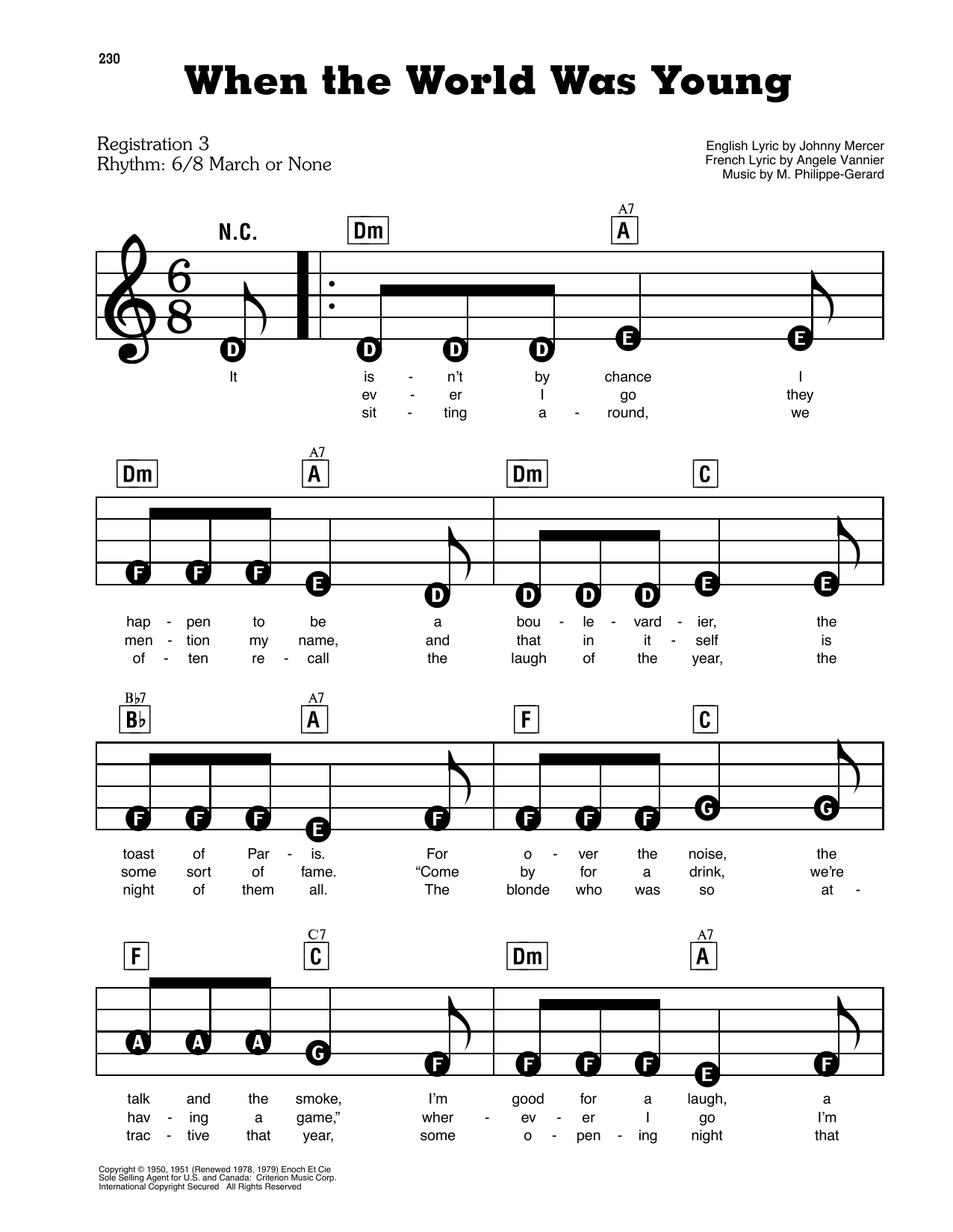
When The World Was Young: E-Z Play Today

As performed by Frank Sinatra

Item: 35-DS00447939

Digital Download
$4.99
Description

When The World Was Young: E-Z Play Today isn't in MakeMusic Cloud just yet...but it could be. Let us know you'd like to see it, and you'll help shape what comes next. In the meantime, start a free trial and dive into thousands of interactive titles your students can play along with today.

Sample Audio
No sample audio found.
Sample Video
Additional Details
Publisher: Hal Leonard
Page Count: 3
SKU: 35-DS00447939

More about this title

About the Artist: Frank Sinatra

Frank Sinatra shaped American popular music across seven decades, from his breakthrough with the Tommy Dorsey Orchestra through his solo career as one of the most recorded artists in history. His influence on jazz phrasing, melodic interpretation, and vocal-instrumental balance remains fundamental to how musicians approach the Great American Songbook.

For music educators, Sinatra's legacy offers a masterclass in how classical vocal training, jazz sensibility, and orchestral awareness converge. His recordings demonstrate the power of intentional phrasing, rhythmic flexibility, and emotional authenticity, making them essential study material for students exploring the intersection of technique and storytelling.

Why we love this

This standard carries the sophistication of postwar American songwriting, with a melody that rewards careful harmonic listening and rubato. Sinatra's definitive interpretation sets a high bar for understanding how great singers shape a phrase, making it an ideal choice for pianists developing their ear for jazz inflection and pianists exploring accompaniment styles beyond classical repertoire.

What to expect

Wistful and reflective, with the gentle melancholy of looking back on a simpler time. The melody unfolds with unhurried grace over warm harmonies that suggest nostalgia without sentimentality.

Who it's for

Pianists building their jazz standards repertoire and vocalists or accompanists preparing for auditions, recitals, or jazz ensemble settings. This piece serves equally well for music teachers introducing students to the harmonic language of midcentury American song.

How to get the most out of it

  • Balance the lyrical quality of the melody against the harmonic movement in the accompaniment; the left hand should never push ahead of the vocal line's emotional pacing
  • Treat the bridge section as a harmonic arrival point rather than mere contrast; let the key relationships breathe and give yourself room to respond to the vocalist's interpretation
  • Anchor the rhythm section feel without mechanical precision; this standard calls for a relaxed swing that breathes with the singer rather than driving against them

How to use it

Pair this with other standards from the 1940s and 1950s to create a focused recital segment on postwar American songwriting, or use it as a bridge piece between jazz and vocal repertoire when introducing students to the Great American Songbook.

Skills your students will build

  • Navigating jazz harmony and chord extensions (sevenths, ninths, alterations)
  • Phrasing with space and intention rather than strict metronomic adherence
  • Accompanying a singer while maintaining independence in the left hand
  • Understanding how harmonic context shapes melodic interpretation
  • Building fluency with swing rhythms and comping techniques

You May Also Like