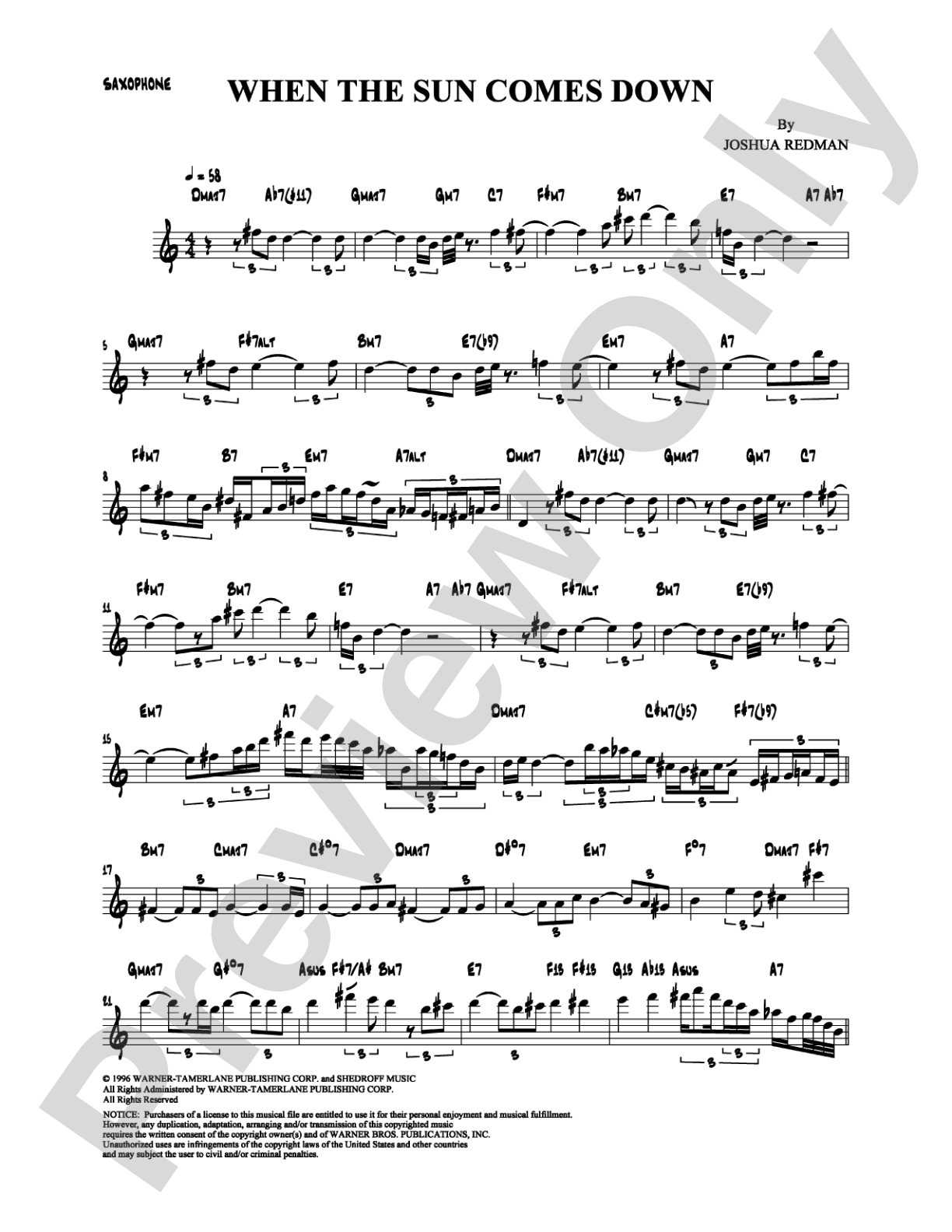
When the Sun Comes Down: Solo & Small Ensemble Digital Sheet Music

When the Sun Comes Down: Solo & Small Ensemble Digital Sheet Music

Joshua Redman

Item: 00-PS-0001199

Digital Download
$2.95
Description

When the Sun Comes Down: Solo & Small Ensemble Digital Sheet Music isn't in MakeMusic Cloud just yet...but it could be. Let us know you'd like to see it, and you'll help shape what comes next. In the meantime, start a free trial and dive into thousands of interactive titles your students can play along with today.

Sample Audio
No sample audio found.
Sample Video
Additional Details
SKU: 00-PS-0001199

More about this title

About the Artist: Joshua Redman

Joshua Redman is a tenor saxophonist and composer whose career bridges jazz tradition and contemporary exploration. Trained classically and steeped in bebop language, Redman has become known for his ability to improvise with clarity and intentionality, drawing on blues vocabulary while expanding into broader harmonic territories.

As an educator and bandleader, Redman demonstrates how jazz fundamentals serve as a foundation for creative expression. His work with small ensembles emphasizes listening, responsiveness, and the importance of individual voice within collective music-making.

Why we love this

This tune offers a genuine blues framework that teaches horn players how to voice melodic ideas over changes without overcomplicating the harmonic landscape. Small ensemble settings need repertoire that lets everyone contribute meaningfully, and Redman's writing for this piece does exactly that while sounding utterly natural.

What to expect

The piece settles into a relaxed blues groove that feels lived-in rather than formal. There's room for personal expression within a sturdy harmonic home, inviting soloists to explore without losing their way.

Who it's for

Small jazz ensembles and horn players building blues fluency will find clear footing here. It works equally well for educators introducing improvisation over traditional changes or for experienced groups seeking material that respects the blues tradition while remaining fresh.

How to get the most out of it

  • Establish the blues feel early in rehearsal through rhythm section work alone; lock the groove before adding melody or harmony parts.
  • Treat the head as a conversation starter rather than a fixed script. Once players know the shape, encourage slight variations in phrasing across ensemble repetitions.
  • Balance the soloist's freedom with ensemble cohesion by rehearsing with and without the melody stated, so accompanists understand when to support and when to step back.

How to use it

Pair this with other modern jazz standards in a concert focused on contemporary voices in blues. It also functions beautifully as a teaching demonstration piece for rehearsals exploring the mechanics of blues improvisation or small ensemble interplay.

Skills your students will build

  • Blues phrasing and note choice over I-IV-V progressions
  • Accompanying techniques that support soloist freedom while maintaining groove
  • Call-and-response textures within ensemble contexts
  • Listening and responding in real time to ensemble partners

You May Also Like