
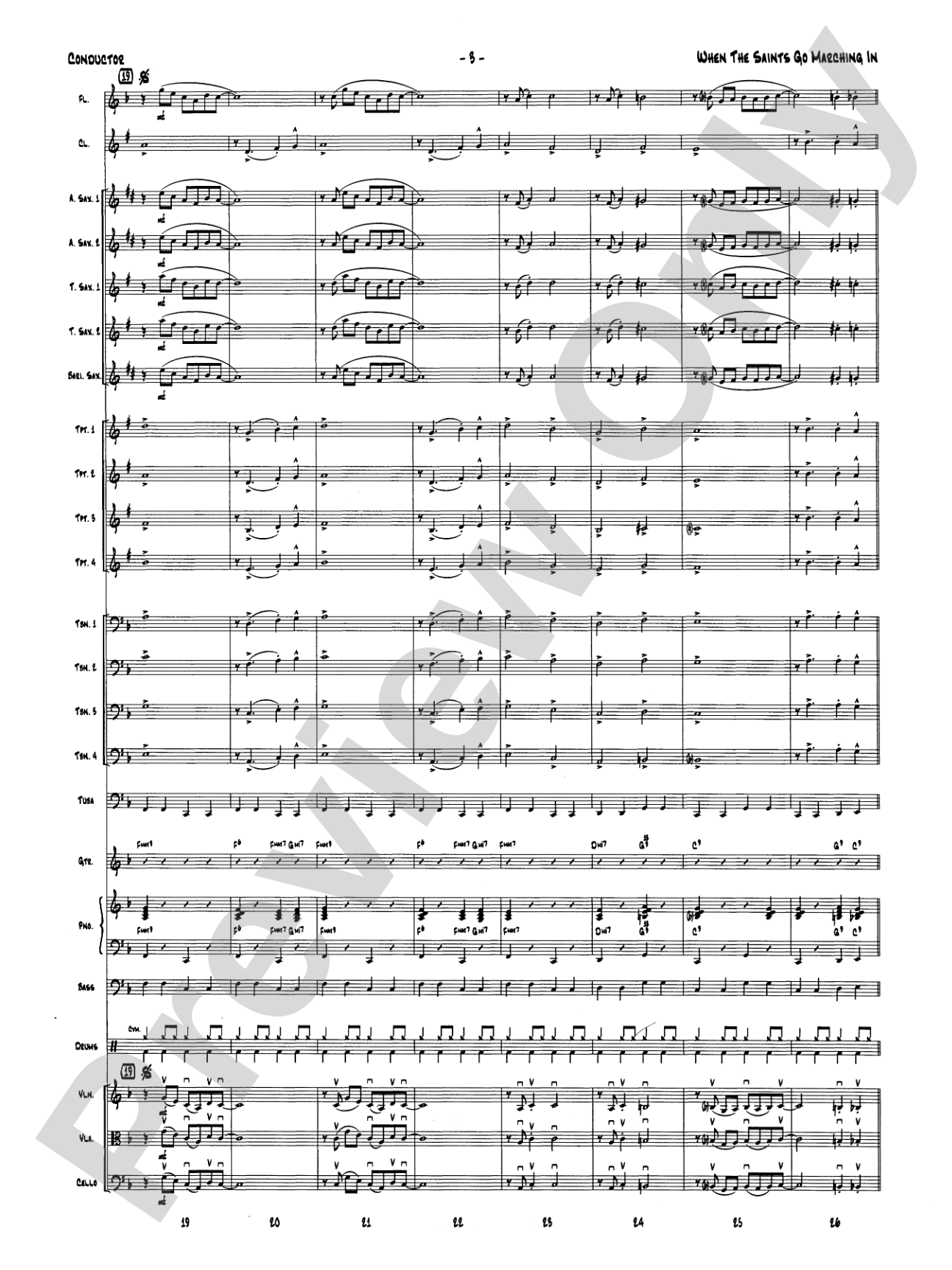
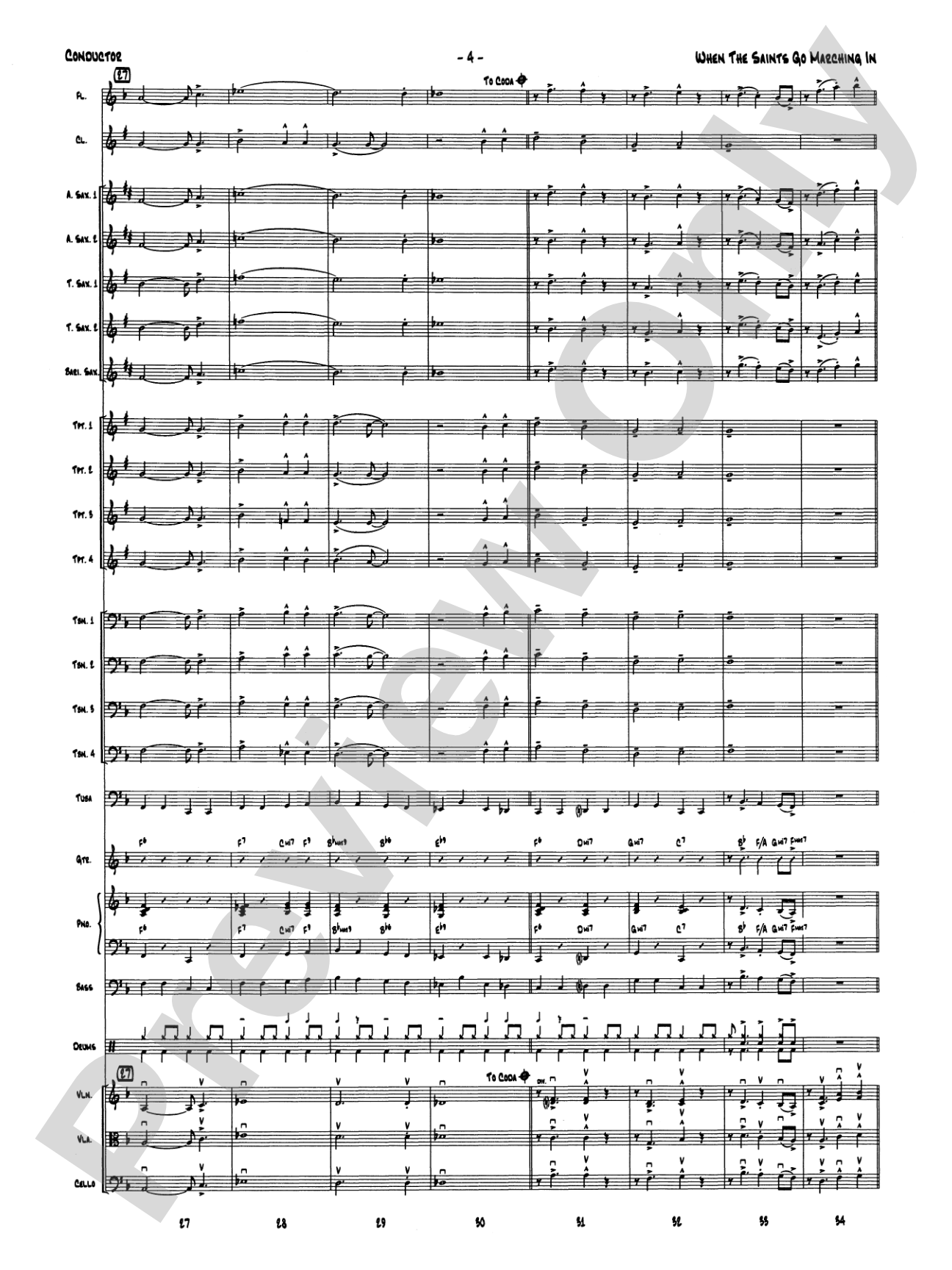
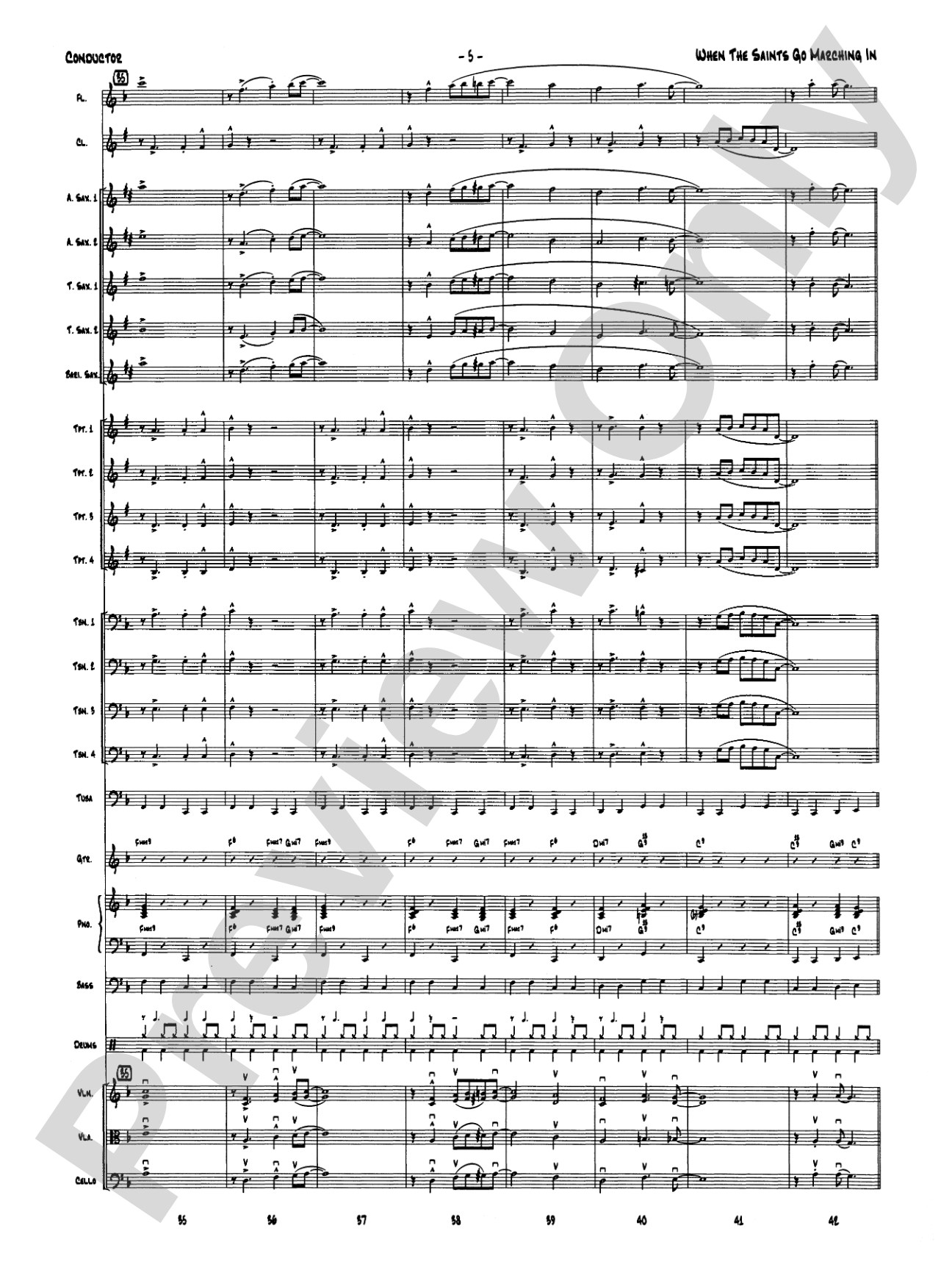
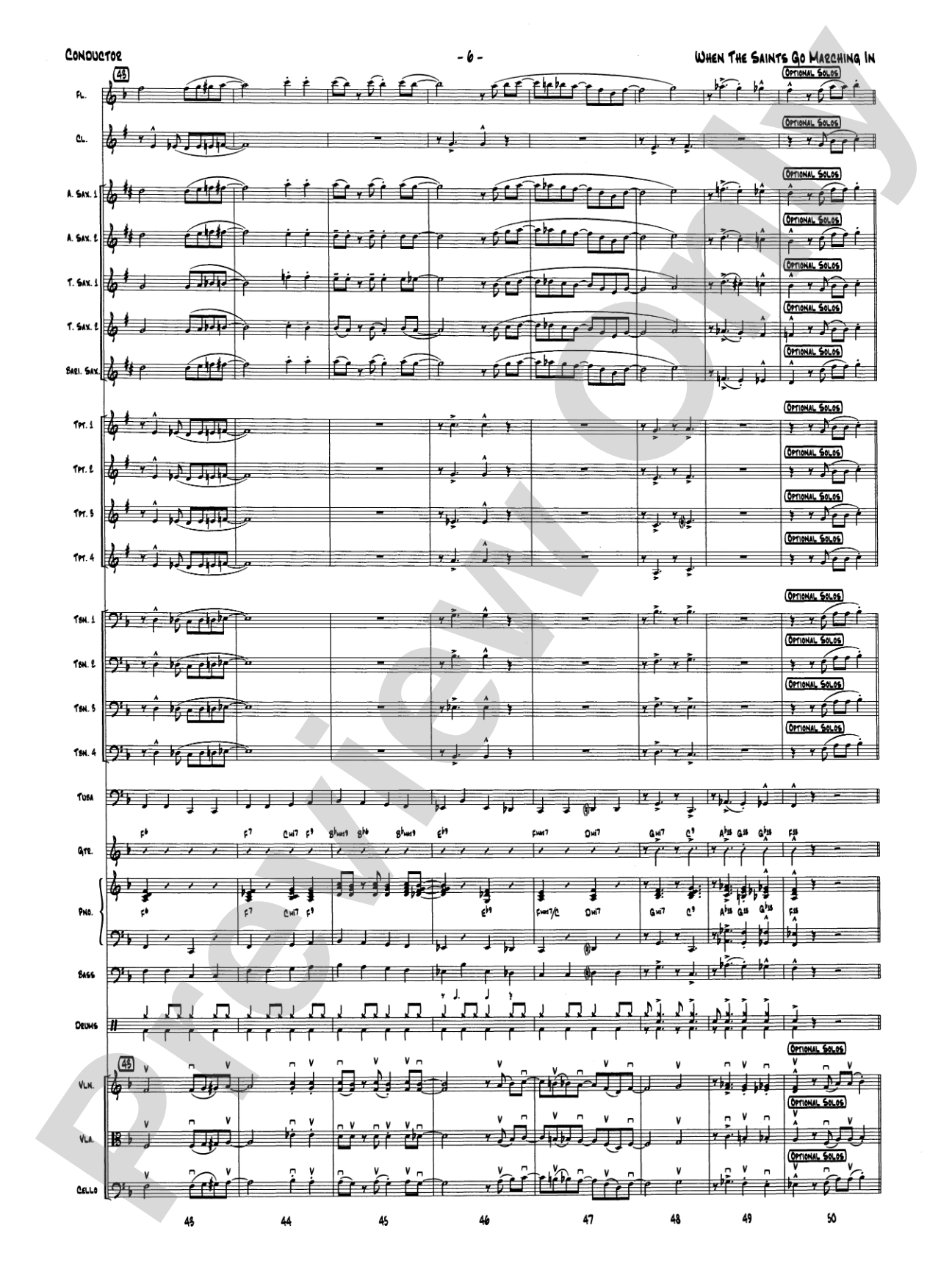
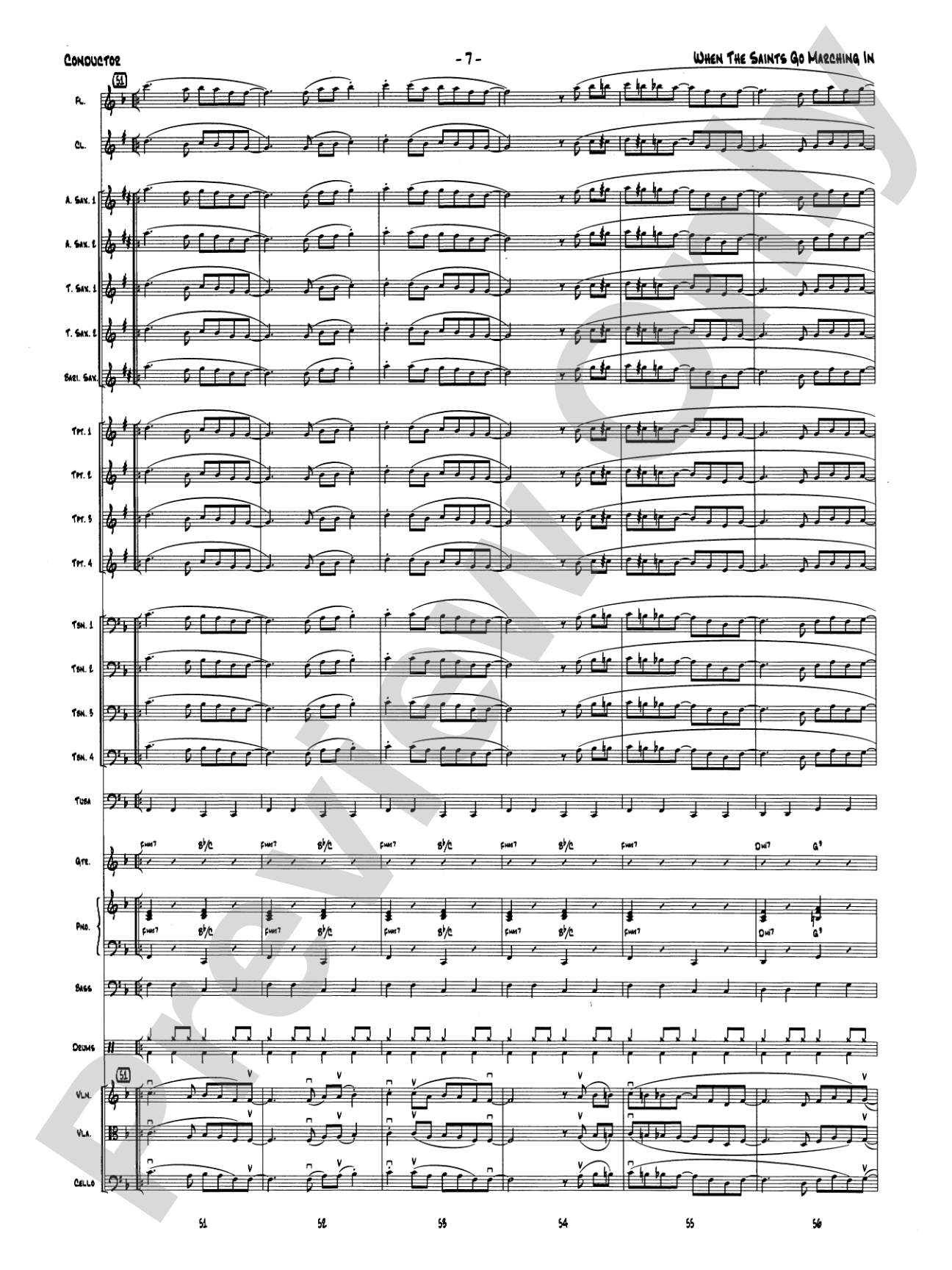
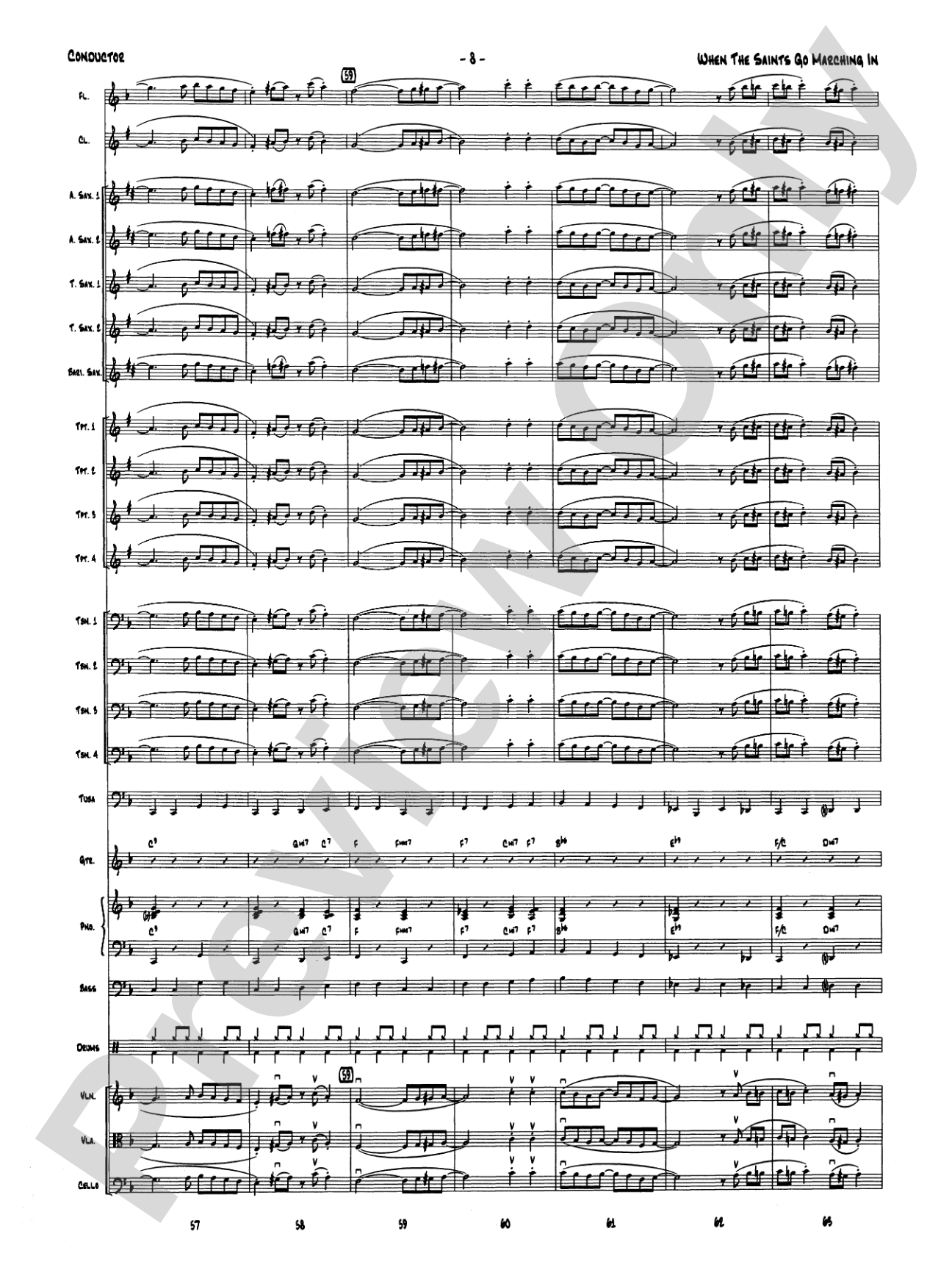
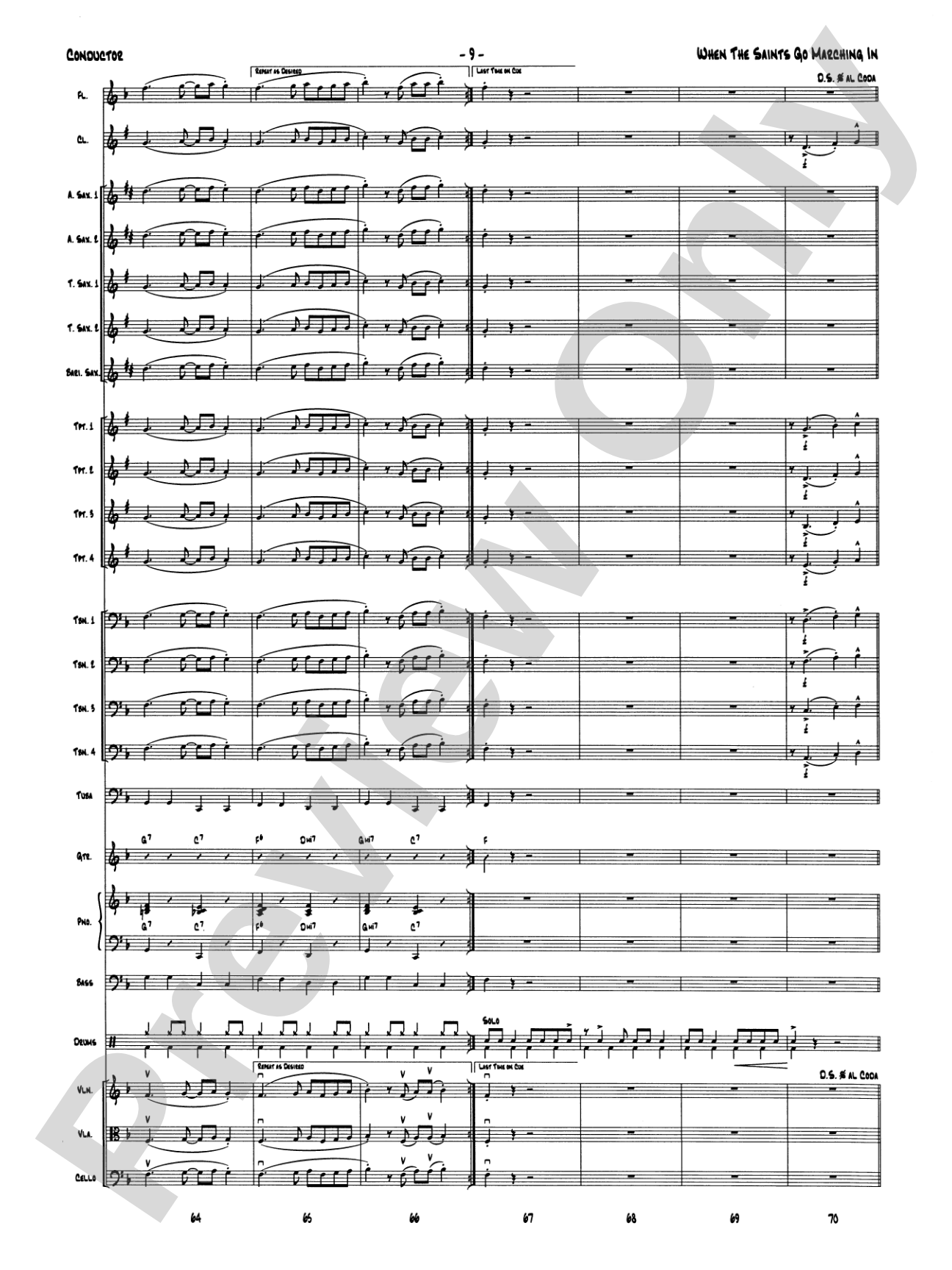
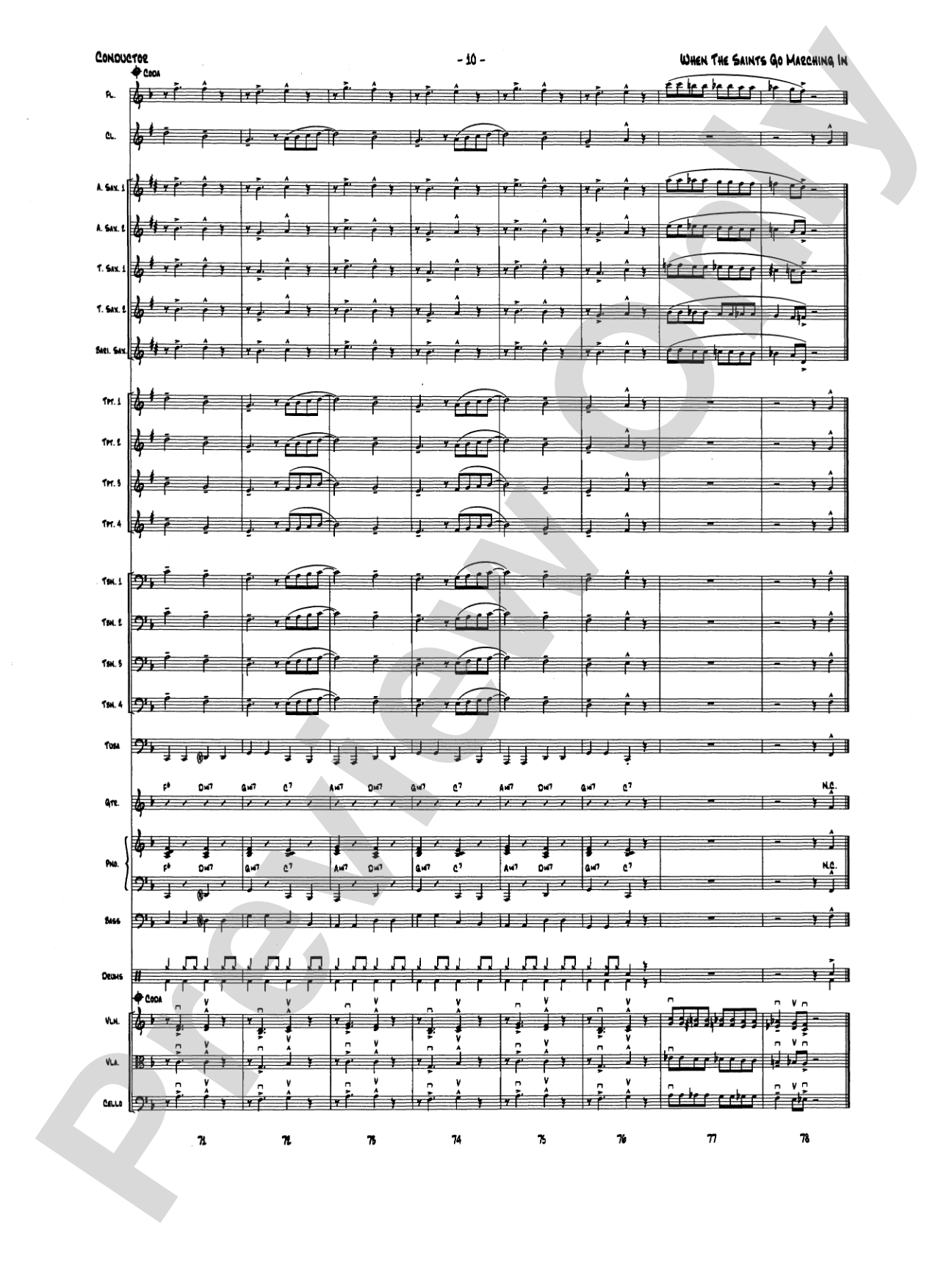

When the Saints Go Marching In: Jazz Ensemble Conductor Score & Parts
Music by James M. Black, words by Katherine E. Purvis / arr. Mike Lewis
Grade: 2 (Medium Easy)
Item: 00-PK-0002523

$44.00
Pickup currently not available
Buy Extra Parts (Digital PDF Download)
Parts Added to Cart!
Description
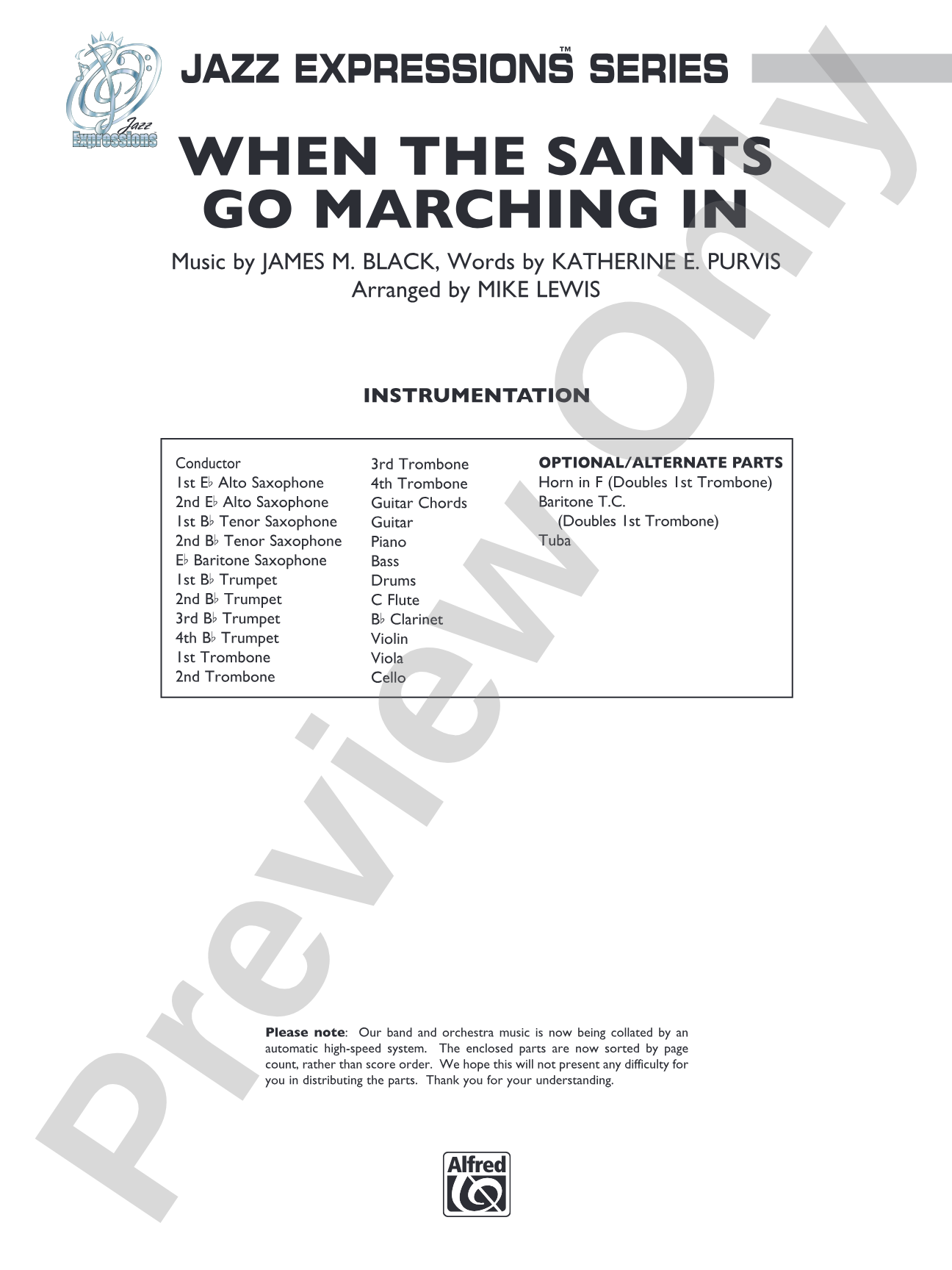
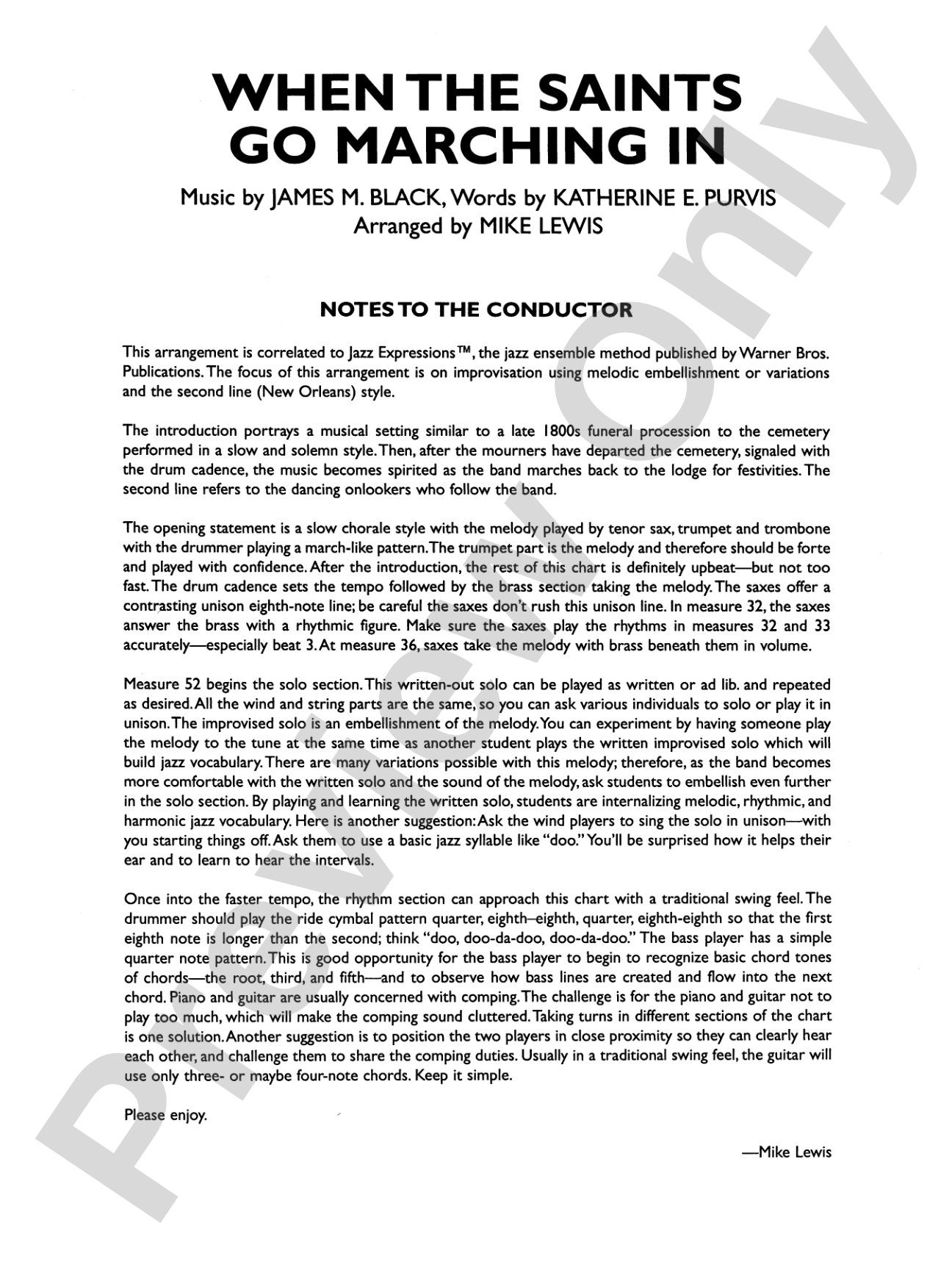
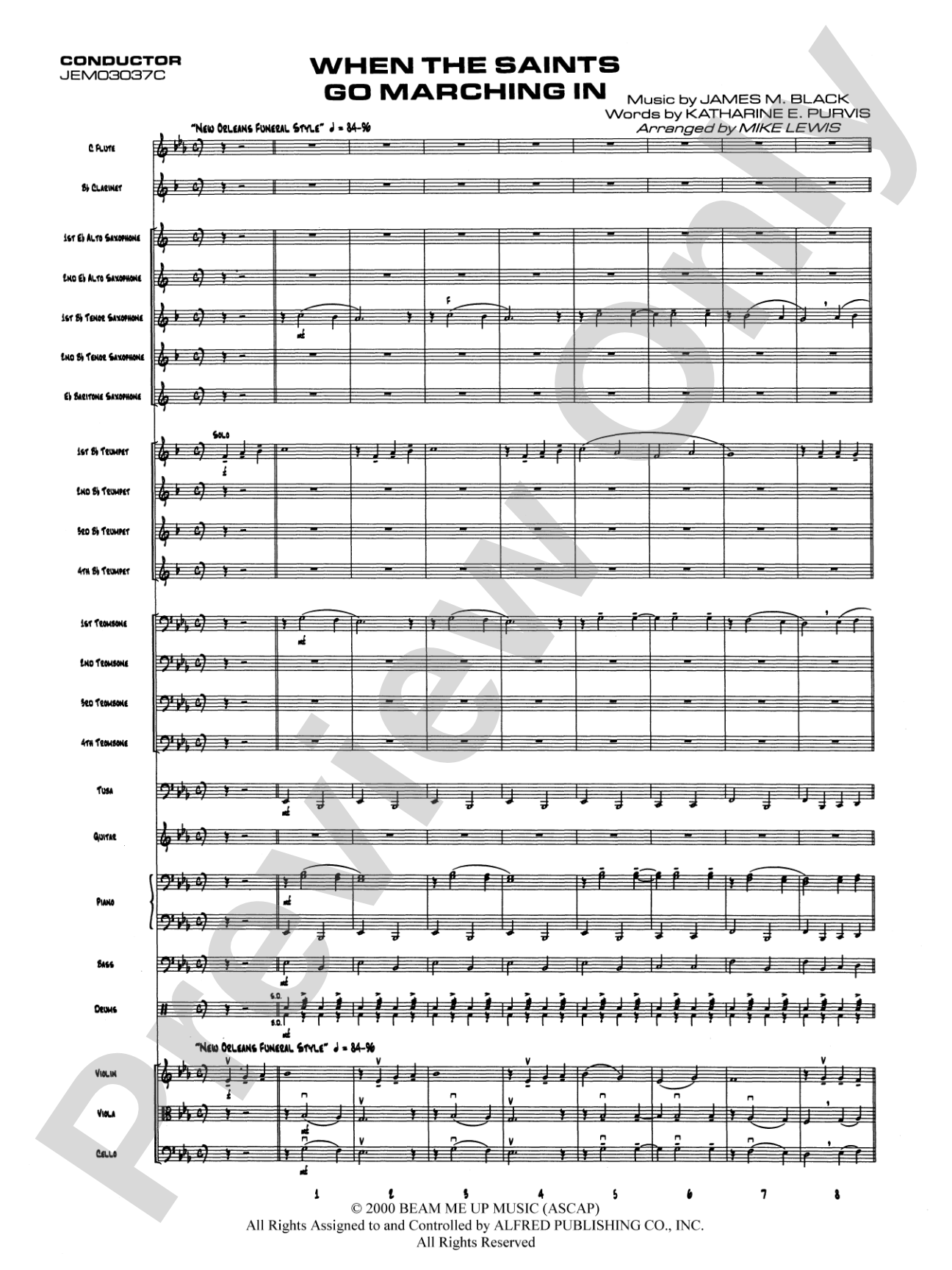
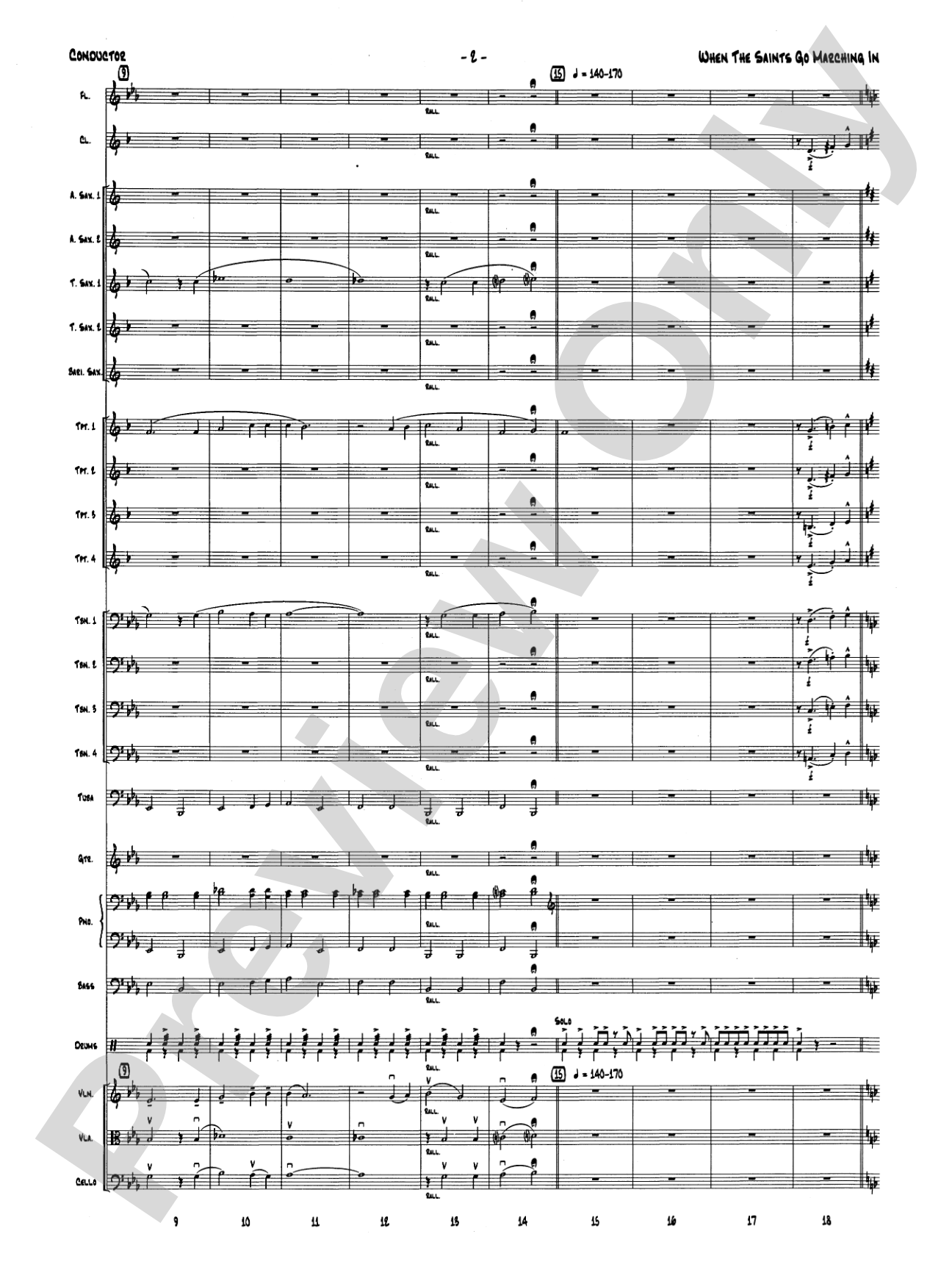
New in the Jazz Expressions™ Series, When the Saints Go Marching In is well-known as a jazz classic. The focus in this chart is on melodic improvisation and the second-line New Orleans style at the medium-easy level. This arrangement begins with a slow funeral-like march then breaks into a spirited swing. Mike Lewis has crafted this chart to include the following: modest ranges, easy rhythms, plenty of section and ensemble work, a solo section for all wind players, optional parts for flute, clarinet, horn, baritone horn, and tuba. And check this out: STRING PARTS include violin (2), viola, and cello. The jazz band can include everyone!


Don't just read it, hear it, play along with it, and watch your students grow with it. In MakeMusic Cloud, When the Saints Go Marching In: Jazz Ensemble Conductor Score & Parts comes alive with professional accompaniment, adjustable tempo, and built-in practice tools that turn solo practice into real progress.
Open in the Player
Jump straight in and assign it today.
Start Your Free Trial
Open this title and explore the full library in minutes.
Sample Audio
1
Audio File
--:--
0:00
0:00
Sample Video
No sample videos found.
Additional Details
Series:
Jazz Expressions
Publisher:
Alfred Music
Page Count:
98
SKU:
00-PK-0002523
More about this title
About the Composer: James M. Black
James M. Black composed "When the Saints Go Marching In" in 1896, creating one of the most enduring melodies in American music. Originally written as a hymn for a New Orleans church, the piece became inseparable from jazz tradition and the funeral processions of the city's second-line culture.
Black's simple, memorable melody proved infinitely adaptable. From brass bands to Louis Armstrong's legendary recordings, the tune absorbed every style it encountered. For music educators, Black's work demonstrates how a strong melodic core can anchor generations of reinterpretation and remain relevant across centuries.
Why we love this
Mike Lewis's arrangement captures the essence of New Orleans jazz tradition while keeping technical demands accessible for ensemble players still building their jazz vocabulary. The inclusion of optional string parts transforms what could be a standard jazz band piece into a genuinely inclusive ensemble experience, making this one of the few medium-easy charts that invites violinists and cellists into the jazz conversation alongside winds. The structural arc from processional dirge to infectious swing gives directors a built-in dramatic narrative without requiring advanced improvisation skills.
What to expect
The piece begins with the contemplative solemnity of a New Orleans second line at rest, then suddenly comes alive with the infectious joy and swagger that made the tradition legendary. Melodies sit comfortably in the middle of the range, rhythms stay grounded, and the interplay between sections creates moments of genuine ensemble joy without demanding virtuosity.
Who it's for
Jazz ensembles working at the medium-easy level who want authentic New Orleans style without overwhelming technical or harmonic complexity. This is ideal for groups that include string players alongside winds, or ensembles ready to welcome non-traditional jazz instruments into the fold.
How to get the most out of it
- Establish the funeral march feel in the opening section through deliberate phrasing and restraint; the contrast to the swing section lands harder when the early material breathes with restraint.
- Work the ensemble hits first as written rhythms before adding swing feel; this gives the band a shared foundation for the syncopation that follows.
- Balance the solo section so that featured improvisation feels conversational rather than isolated; rotate soloists through multiple choruses to build confidence and variety.
- Pay attention to section blend during ensemble passages; a Grade 2 band often benefits from hearing one player per part until the passages sit securely.
How to use it
This works beautifully on a program celebrating New Orleans culture, American roots music, or jazz history. It also serves as an excellent mid-season piece for building ensemble confidence and introducing students to melodic improvisation in a forgiving harmonic environment.
Skills your students will build
- Swing feel and jazz articulation
- Melodic improvisation over a blues-based harmonic foundation
- Ensemble balance and section coordination in jazz voicings
- Second-line rhythmic feel and New Orleans jazz history
- Reading and responding to lead sheet style arrangement notation