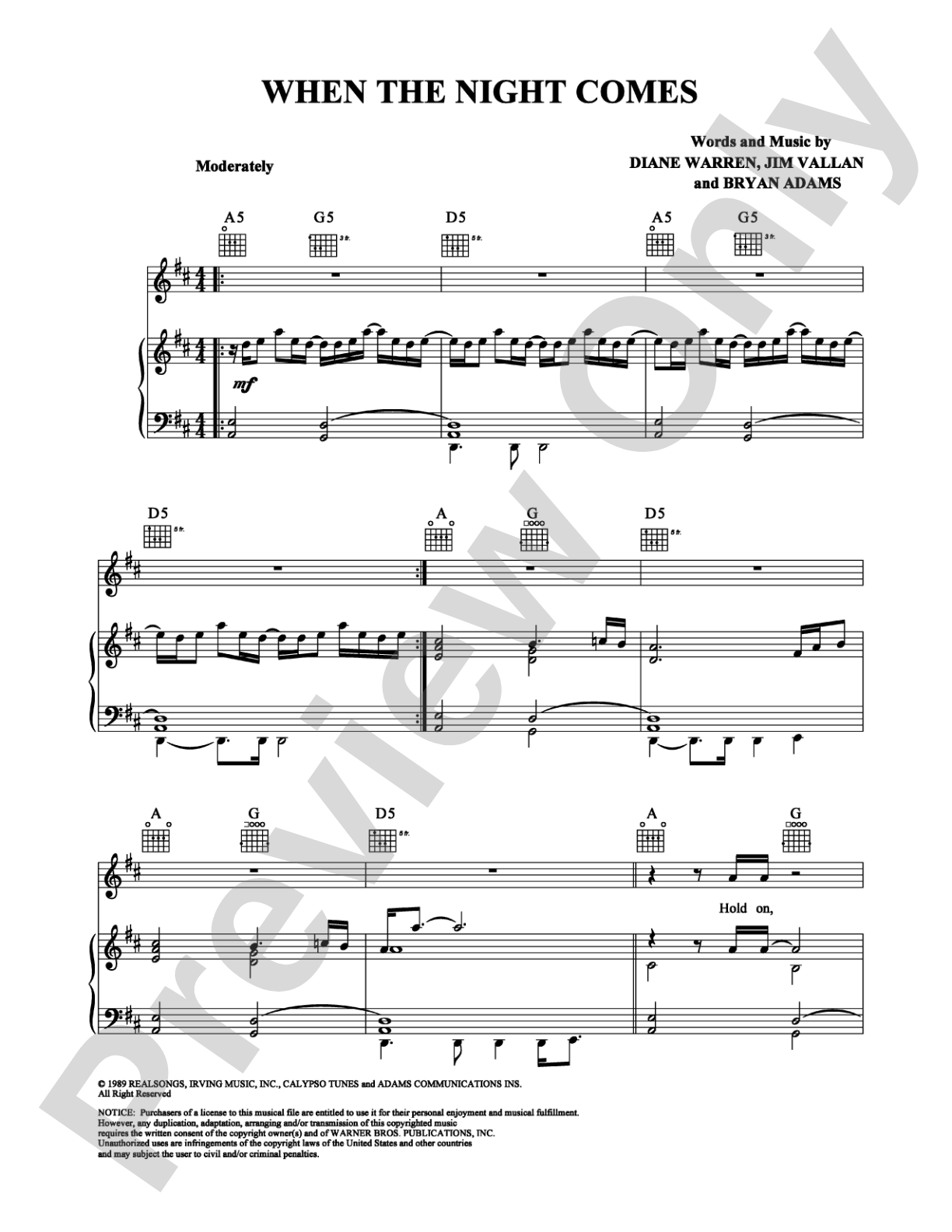
When the Night Comes: Piano/Vocal/Chords Digital Sheet Music

When the Night Comes: Piano/Vocal/Chords Digital Sheet Music

Diane Warren, Bryan Adams, Joe Cocker, Jim Vallance

Item: 00-PS-0002804

Digital Download
$3.99
Description

When the Night Comes: Piano/Vocal/Chords Digital Sheet Music isn't in MakeMusic Cloud just yet...but it could be. Let us know you'd like to see it, and you'll help shape what comes next. In the meantime, start a free trial and dive into thousands of interactive titles your students can play along with today.

Sample Audio
No sample audio found.
Sample Video
Additional Details
SKU: 00-PS-0002804

More about this title

About the Artist: Joe Cocker

Joe Cocker rose from Sheffield working-class roots to become one of rock's most distinctive vocalists, known for his raspy, soulful delivery and uninhibited stage presence. His interpretations of songs, whether originals or covers, transformed them through sheer emotional conviction, making him a bridge between blues, soul, and rock that influenced generations of singers.

Why we love this

Joe Cocker's raspy, blues-inflected voice paired with straightforward pop-rock melodies creates songs that sound deceptively simple but reward thoughtful interpretation. This digital resource gives pianists and singers immediate access to the chords and vocal line, making it practical for private lessons, rehearsals, and recitals without the barrier of hunting down published sheet music. The piano/vocal/chords format is ideally suited to collaborative learning between vocalist and accompanist.

What to expect

The song unfolds with a simmering intimacy, balancing vulnerability in its quieter moments with the gritty confidence of a seasoned performer. There's a blues-influenced depth beneath the pop-rock surface, and the vocal melody sits naturally in the middle register, allowing singers to convey feeling without strain.

Who it's for

This arrangement suits intermediate-level pianists who accompany singers in lessons or performances, as well as vocalists building their pop-rock repertoire with a trusted collaborator. Pianists working with students on the transition from strict classical accompaniment to more interpretive, rhythmically flexible playing will find this material especially useful.

How to get the most out of it

  • Lean into the conversational tone of the lyrics; resist the urge to oversing early phrases, allowing tension to build organically toward the chorus.
  • Balance the vocal line with the piano accompaniment rather than burying the instrumental part; the interplay between voice and chords is where the song's emotional arc lives.
  • Use chord voicings to shape dynamics; fuller, richer voicings can underscore emotional peaks while sparser voicings during verses keep the focus on the vocal melody and text.

How to use it

This works well in a recital program that mixes classical and contemporary repertoire, offering a bridge between formal art song and modern popular music. It's equally suitable for a studio recital or a salon-style concert where intimate, conversational performance takes priority over large-scale production.

Skills your students will build

  • Interpreting chord symbols and voicing piano accompaniments flexibly
  • Balancing lyrical phrasing with harmonic rhythm
  • Navigating pop-rock vocal style with appropriate breath placement and dynamics
  • Collaborating as vocalist and accompanist to shape the emotional arc of a song

You May Also Like