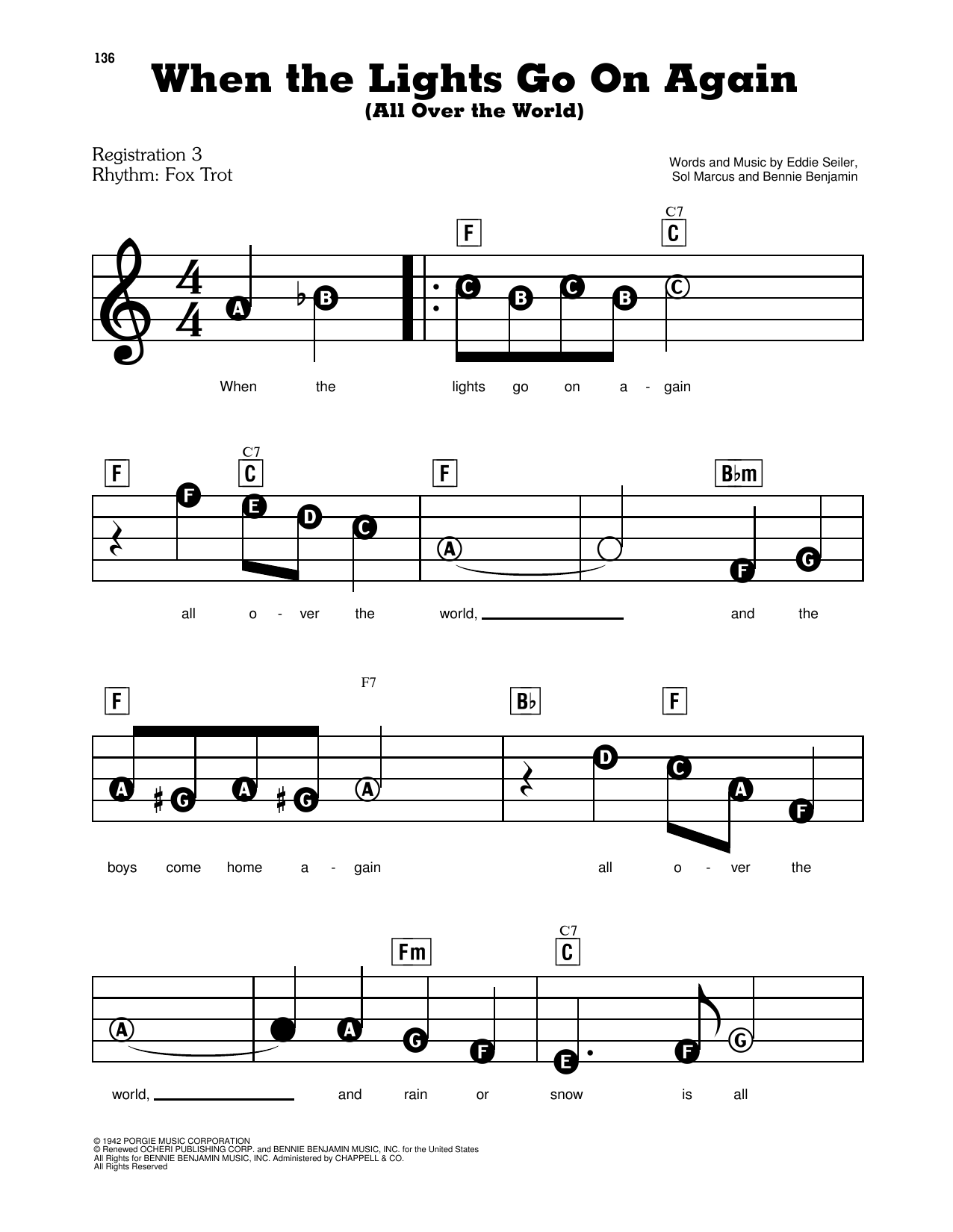
When The Lights Go On Again (All Over The World) Sheet Music Preview

When The Lights Go On Again (All Over The World): E-Z Play Today

As performed by Vaughn Monroe

Item: 35-DS00509191

Digital Download
$4.99
Description

When The Lights Go On Again (All Over The World): E-Z Play Today isn't in MakeMusic Cloud just yet...but it could be. Let us know you'd like to see it, and you'll help shape what comes next. In the meantime, start a free trial and dive into thousands of interactive titles your students can play along with today.

Sample Audio
No sample audio found.
Sample Video
Additional Details
Publisher: Hal Leonard
Page Count: 3
SKU: 35-DS00509191

More about this title

About the Artist: Vaughn Monroe

Vaughn Monroe (1911-1973) was a baritone vocalist and bandleader whose smooth, distinctive voice defined the sound of 1940s popular music. His orchestra became one of the most commercially successful big bands of the era, and Monroe's interpretations of wartime standards helped cement his place in American popular culture during and after World War II.

Why we love this

This wartime standard carries genuine emotional weight without sentiment or kitsch. The melody sits naturally under the hands, making it accessible for intermediate pianists while offering plenty of room for interpretive choice in phrasing and rubato.

What to expect

The piece carries the hopeful yearning of its era; there's both melancholy and resilience in the writing. A pianist working through this song finds themselves inhabiting the emotional landscape of wartime America, where a simple melody could speak volumes.

Who it's for

Students working through standards repertoire will find this a rewarding choice for understanding melody-driven composition and performance style from the swing era. It works equally well for teachers looking to add authentic period material to their students' musical vocabulary.

How to get the most out of it

  • Honor the song's nostalgic quality by allowing modest flexibility in tempo, particularly at phrase endings. This isn't a march; it's a reflection.
  • Shape the melodic line with careful attention to the natural speech rhythm of the lyrics, even when playing instrumentally.
  • Balance accompaniment texture so the harmony supports rather than crowds the vocal line or solo melody.

How to use it

Include this in a standards unit or American songbook survey to give students direct experience with the repertoire that shaped mid-20th-century popular music. It pairs naturally with other wartime songs or alongside jazz and swing studies.

Skills your students will build

  • Interpreting swing-era phrasing and rubato
  • Balancing melody and accompaniment in standards arrangements
  • Understanding the historical context and emotional content of American popular song

You May Also Like