
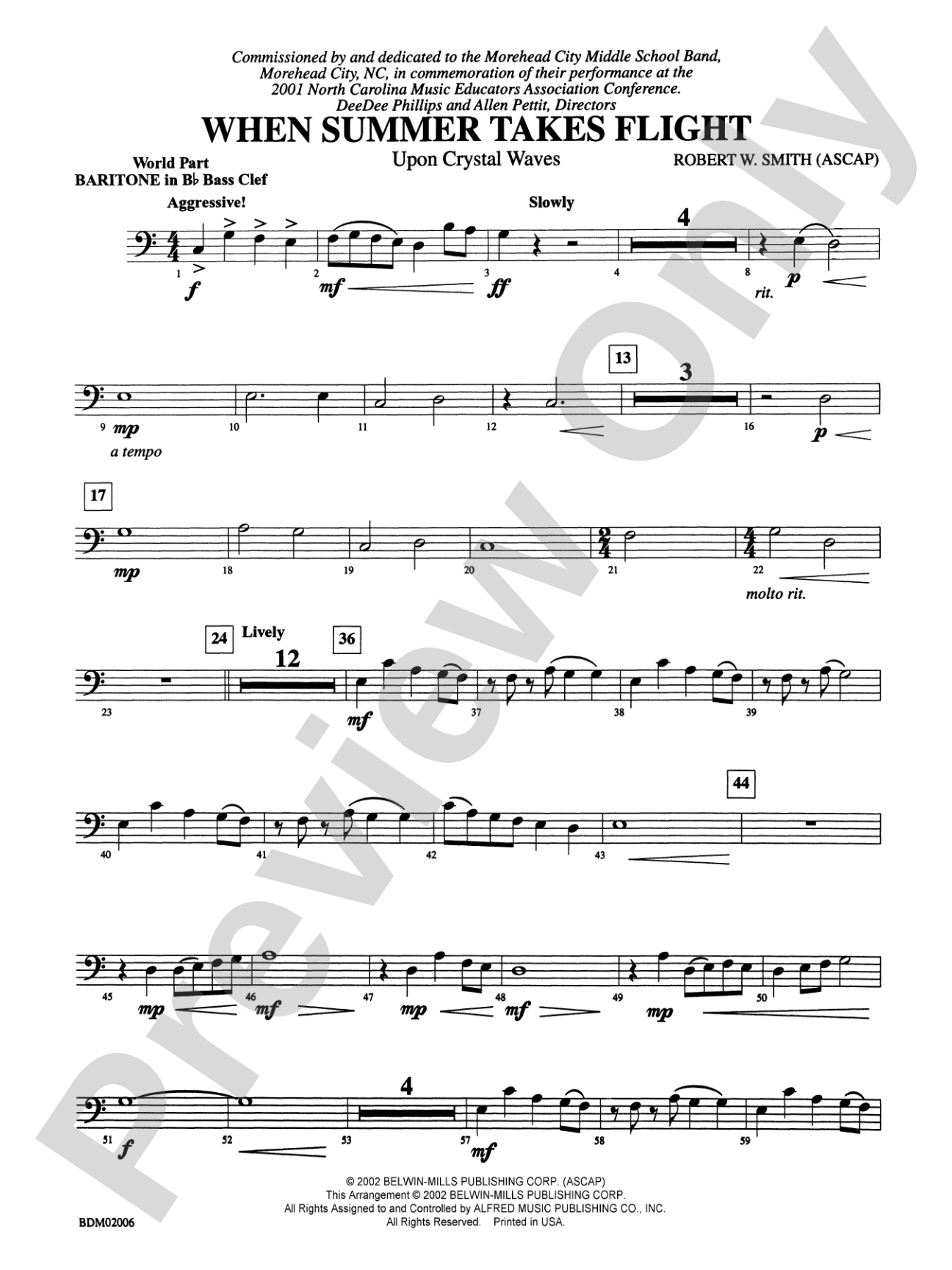
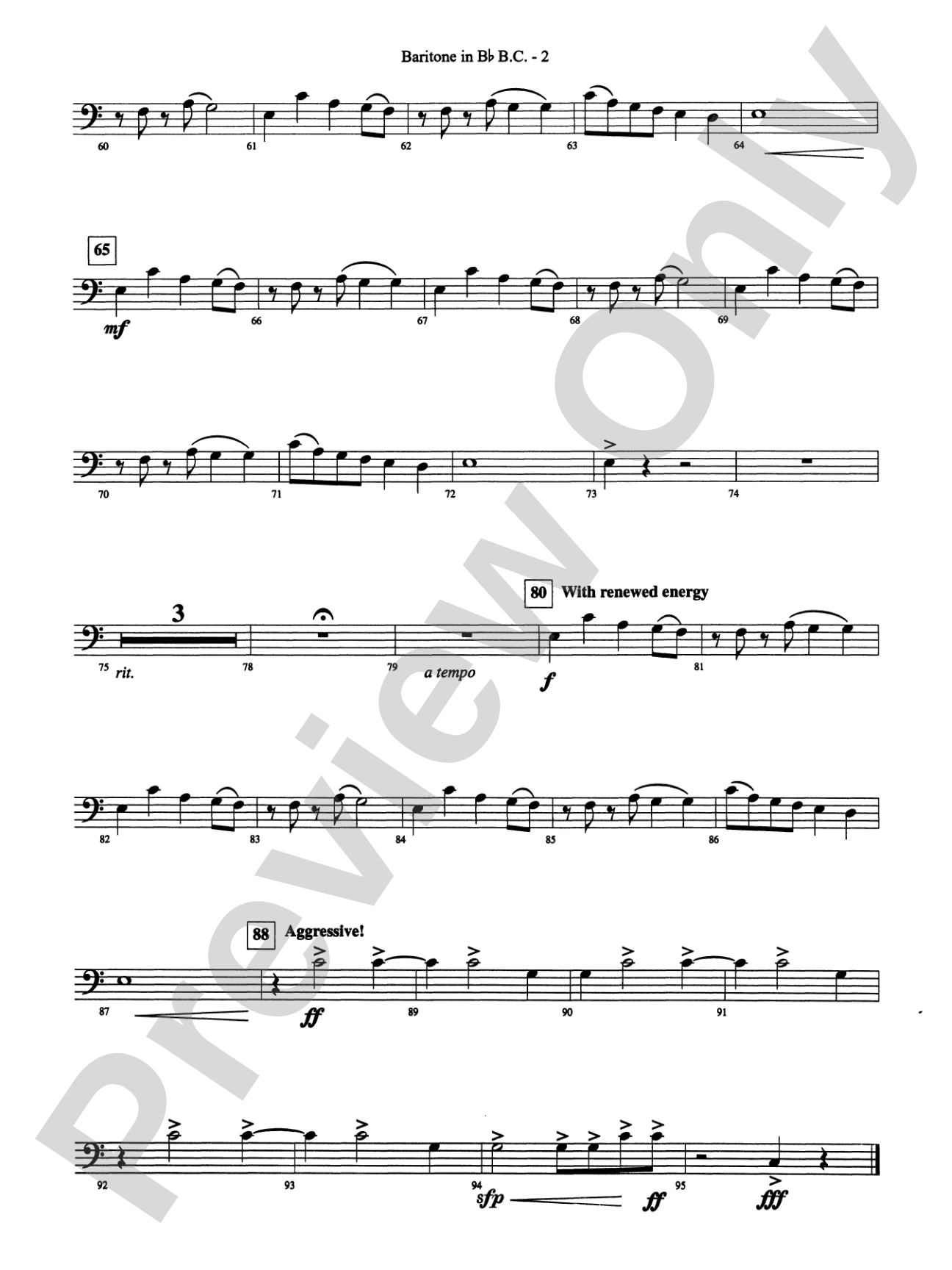

When Summer Takes Flight: (wp) B-flat Baritone B.C.
By Robert W. Smith
Grade: 2 (Easy)
Item: 00-PC-0014674_wpBBBC
$3.00
Pickup currently not available
Description
This brilliant new work at the young level by master composer Robert W. Smith begins with a characteristic fanfare with an elegant ballad-like section. The rhythms sounds hard but are easy to conquer. A stirring new work! (3:23)


Don't just read it, hear it, play along with it, and watch your students grow with it. In MakeMusic Cloud, When Summer Takes Flight: (wp) B-flat Baritone B.C. comes alive with professional accompaniment, adjustable tempo, and built-in practice tools that turn solo practice into real progress.
Open in the Player
Jump straight in and assign it today.
Start Your Free Trial
Open this title and explore the full library in minutes.
Sample Audio
1
Audio File
--:--
0:00
0:00
Sample Video
No sample videos found.
Additional Details
Series:
Belwin Young Band
Publisher:
Alfred Music
Page Count:
228
SKU:
00-PC-0014674_wpBBBC
More about this title
About the Composer: Robert W. Smith

Robert W. Smith stands among America's most performed composers for concert band and orchestra, with more than 400 works in circulation through Alfred Music. He holds degrees from Troy State University and the University of Miami, and his compositions have traveled globally, from performances across North America and Europe to stages in Australia, Asia, and beyond.
Smith's catalog includes large-scale works like his symphonies The Divine Comedy and The Odyssey, as well as repertoire standards for developing ensembles such as The Tempest. His music has reached audiences through television broadcasts, opening ceremonies, the Olympic Games, and major national events. He remains active as both a conductor and clinician, bringing his expertise to musicians across the United States, Canada, and internationally.
Why we love this
Smith knows exactly how to write for young bands without condescending to them. The fanfare opening hooks listeners immediately while the ballad section gives your ensemble room to sing. What makes this gem stand out is the deceptive rhythm writing: passages that look demanding on the page yield quickly to careful practice, building student confidence without requiring superhuman technique.
What to expect
The piece opens with bright fanfare energy, announcing itself to the audience with clear purpose and forward momentum. A shift into lyrical, singing music follows, allowing the band to explore depth and nuance before the work concludes with renewed energy and joy.
Who it's for
Grade 2 bands looking for contest or festival repertoire that delivers impact without overwhelming developing musicians. Directors seeking a work with strong opening presence and accessible technical demands will find this an ideal fit for young ensembles ready to build confidence through music that sounds more advanced than it is.
How to get the most out of it
- Shape the opening fanfare with clear articulation and unified dynamics across sections. Smith's brass writing here needs to sparkle, so let your players feel the energy without rushing the tempo.
- Balance the ballad section carefully; the melodic lines are meant to soar, but the accompaniment should stay transparent. Rehearse the accompaniment parts separately at first to lock the harmonic foundation.
- Mark the rhythm patterns that look complex in your score during rehearsal. Point out where the difficulty is optical rather than kinetic, and your band will attack these passages with much less anxiety.
- Give attention to the transition between fanfare and ballad. This shift sets up the emotional arc of the piece, so practice the tempo and character change deliberately before performing.
How to use it
Program this early in your contest season while students are still building ensemble cohesion. It works excellently as an opener on a concert program, giving audiences an immediate sense of what your band can accomplish. The 3:23 duration makes it ideal for mixed programs where time constraints matter.
Skills your students will build
- Executing rapid rhythmic patterns that appear complex but execute cleanly under tempo
- Balancing melody-driven voicing with transparent harmonic accompaniment
- Shifting between contrasting musical characters (fanfare to ballad) with clear articulation changes
- Building confidence through technically accessible yet musically substantial repertoire
- Controlling dynamic contrast within a limited range appropriate to the grade level