
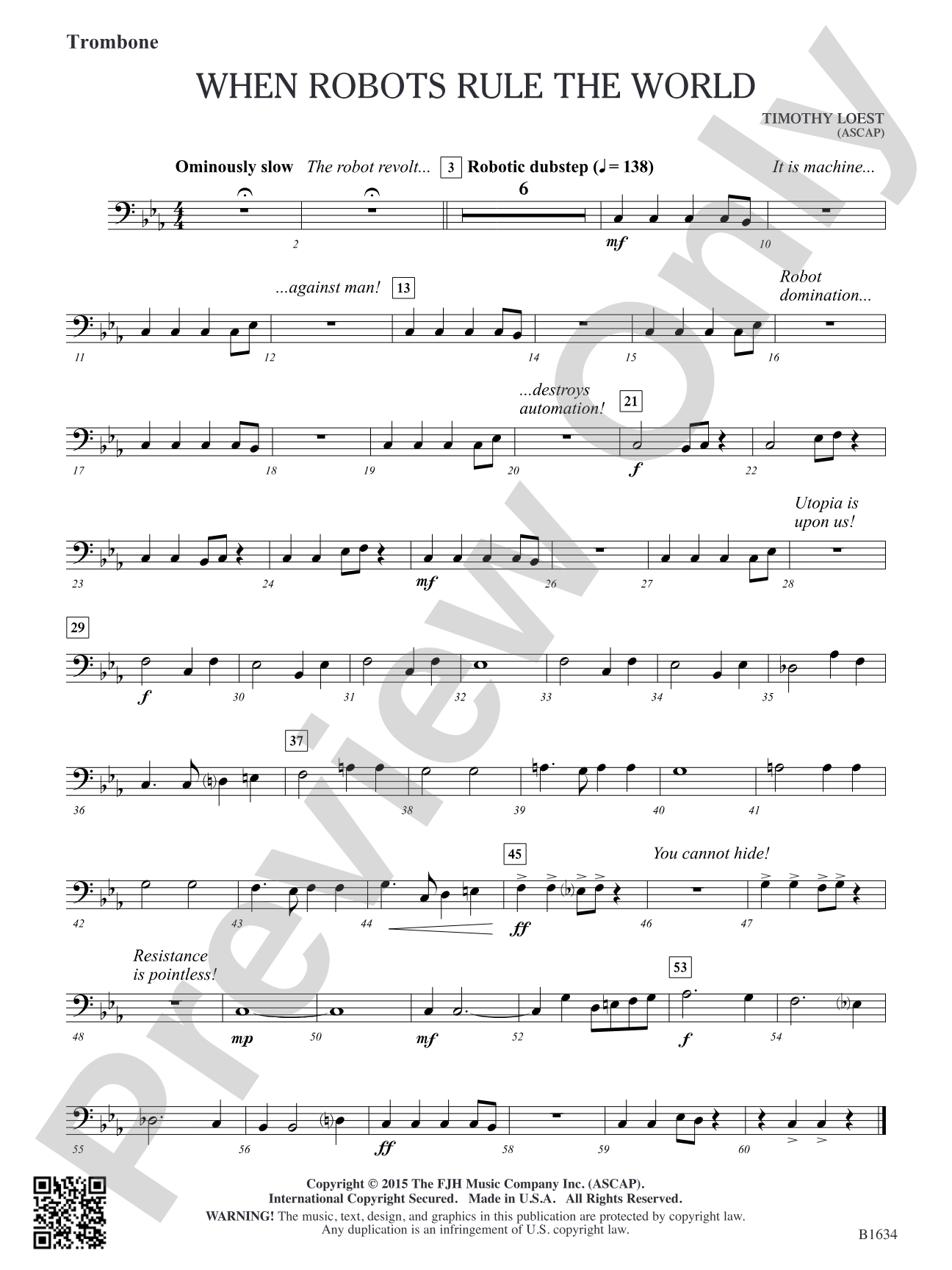

When Robots Rule the World: Trombone
By Timothy Loest
Grade: 1
Item: 98-PC-DB1634_TN1
$7.00
Pickup currently not available
Description
It’s man versus machine in this robotic dubstep thriller. Cordless drill, toy voice changer, and optional synthesized bass create a futuristic soundscape that will be the hit of your next concert. Incredibly approachable, yet full of drama with powerful imagery. The cybernetic revolt has begun!


Don't just read it, hear it, play along with it, and watch your students grow with it. In MakeMusic Cloud, When Robots Rule the World: Trombone comes alive with professional accompaniment, adjustable tempo, and built-in practice tools that turn solo practice into real progress.
Open in the Player
Jump straight in and assign it today.
Start Your Free Trial
Open this title and explore the full library in minutes.
Sample Audio
1
Audio File
--:--
0:00
0:00
Sample Video
No sample videos found.
Additional Details
Series:
FJH Beginning Band
Publisher:
The FJH Music Company, Inc.
SKU:
98-PC-DB1634_TN1
More about this title
About the Composer: Timothy Loest

Timothy Loest has spent over three decades in the classroom building a reputation for creating music that engages young musicians without sacrificing artistic merit. His works span from concert pieces performed at major venues like Chicago's Millennium Park to pedagogical resources that have become standards in band programs nationwide. In 2017, the Illinois Grade School Music Association recognized his contributions with the Cloyd Myers Memorial Award for Excellence in Music Education.
Loest's prolific output includes compositions and arrangements published through major houses including FJH Music Company and C.L. Barnhouse Company, as well as collaborations on influential method series like Measures of Success and Warm-ups and Beyond. His music has been featured on network television programs including The Tonight Show Starring Jimmy Fallon and Good Morning America. He holds degrees from Illinois State University and Northwestern University, maintains ASCAP membership, and founded Fanfare Music Press in 2022 to continue publishing high-quality band literature.
Why we love this
Loest nails that sweet spot where Grade 1 students get to feel like they're performing something genuinely current and culturally relevant. The concept is clever enough to keep audiences engaged while the writing stays accessible, so your students aren't battling unnecessary technical hurdles and can focus on delivering the drama. Few pieces at this level dare to use unconventional sound sources alongside traditional instrumentation and actually make it work.
What to expect
A futuristic carnival ride where the band is the heartbeat and electronics are the special effects. It's energetic and dramatic, with enough novelty to feel like an event rather than just another piece on the program. The cybernetic imagery gives students a visual anchor and permission to commit fully to the character of what they're playing.
Who it's for
Grade 1 concert bands ready to stretch beyond traditional repertoire without complexity. Your students will stay engaged because the premise is fun and immediate, and your audience will remember this piece long after the concert ends. This is ideal for programs that want to program something contemporary and surprising without losing the approachability that Grade 1 students need.
How to get the most out of it
- Assign the cordless drill and toy voice changer parts to students who can handle the theatrical timing without losing focus on the ensemble sound; these elements are effect punctuation, not the main event.
- Lock down the groove early in rehearsals using the recorded accompaniment if available; dubstep rhythms demand precision, and students will nail the feel faster with a solid reference.
- Emphasize dynamic contrast in the band sections framing the electronic elements; the power of this piece lives in the push and pull between mechanical and human sounds.
- Give yourself permission to rehearse the novelty elements separately first, then integrate them into full runthrough; this removes confusion and lets the band hear how their steady playing anchors the whole concept.
How to use it
Place this in the second half of your concert where it can land with maximum surprise and entertainment value after more traditional literature. It works especially well as a finale or as the bridge between a more serious first half and a lighter closing number. The theatrical hook makes it an excellent choice for young band concerts or family-friendly events where you want to showcase your students' versatility and sense of fun.
Skills your students will build
- Reading steady eighth-note and sixteenth-note rhythmic patterns
- Responding to clear dynamic markings and sudden changes
- Ensemble precision and synchronization with non-traditional sound sources
- Maintaining consistent pulse while accommodating novelty elements
- Performing with stylistic awareness and character commitment