
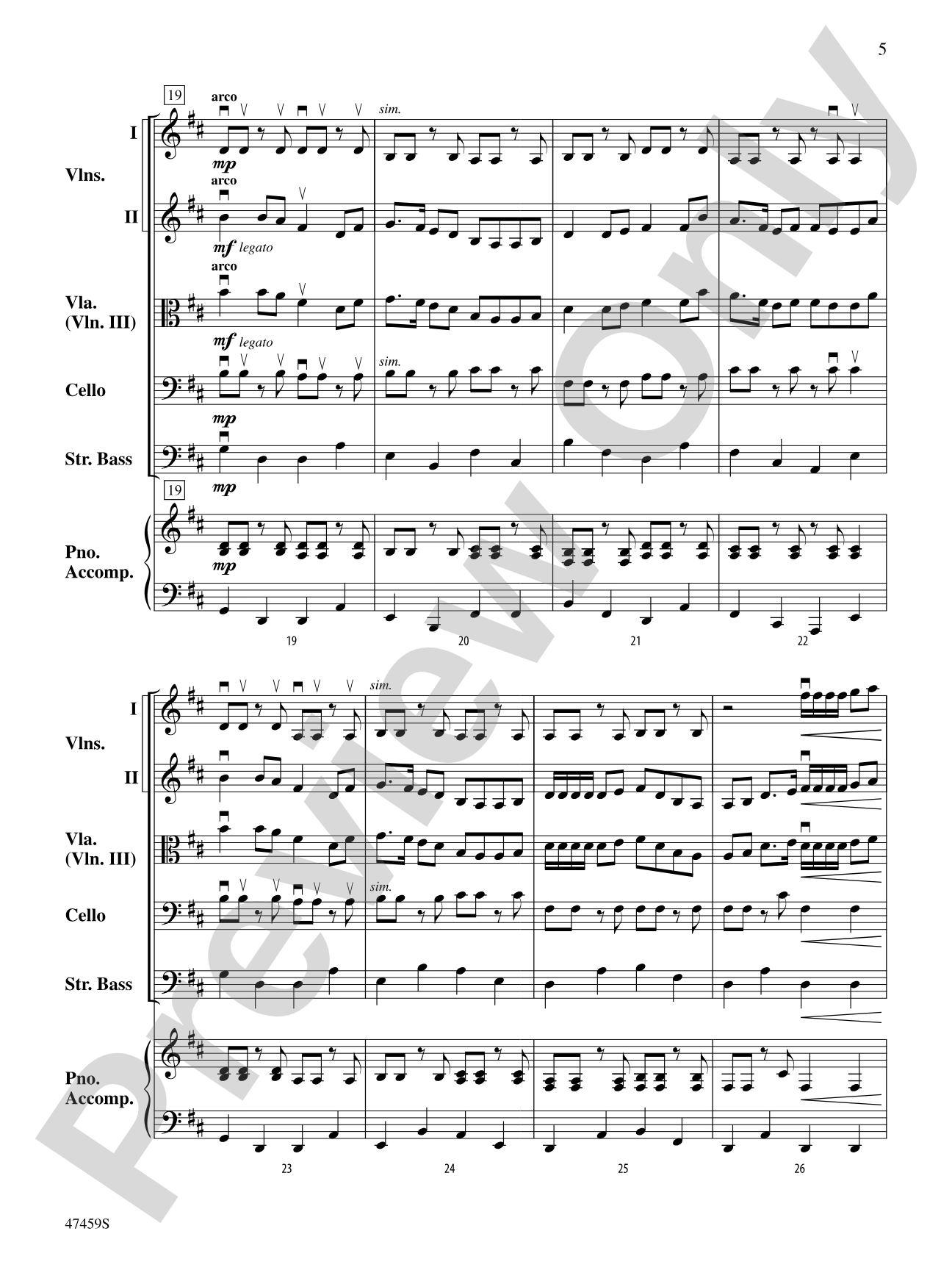
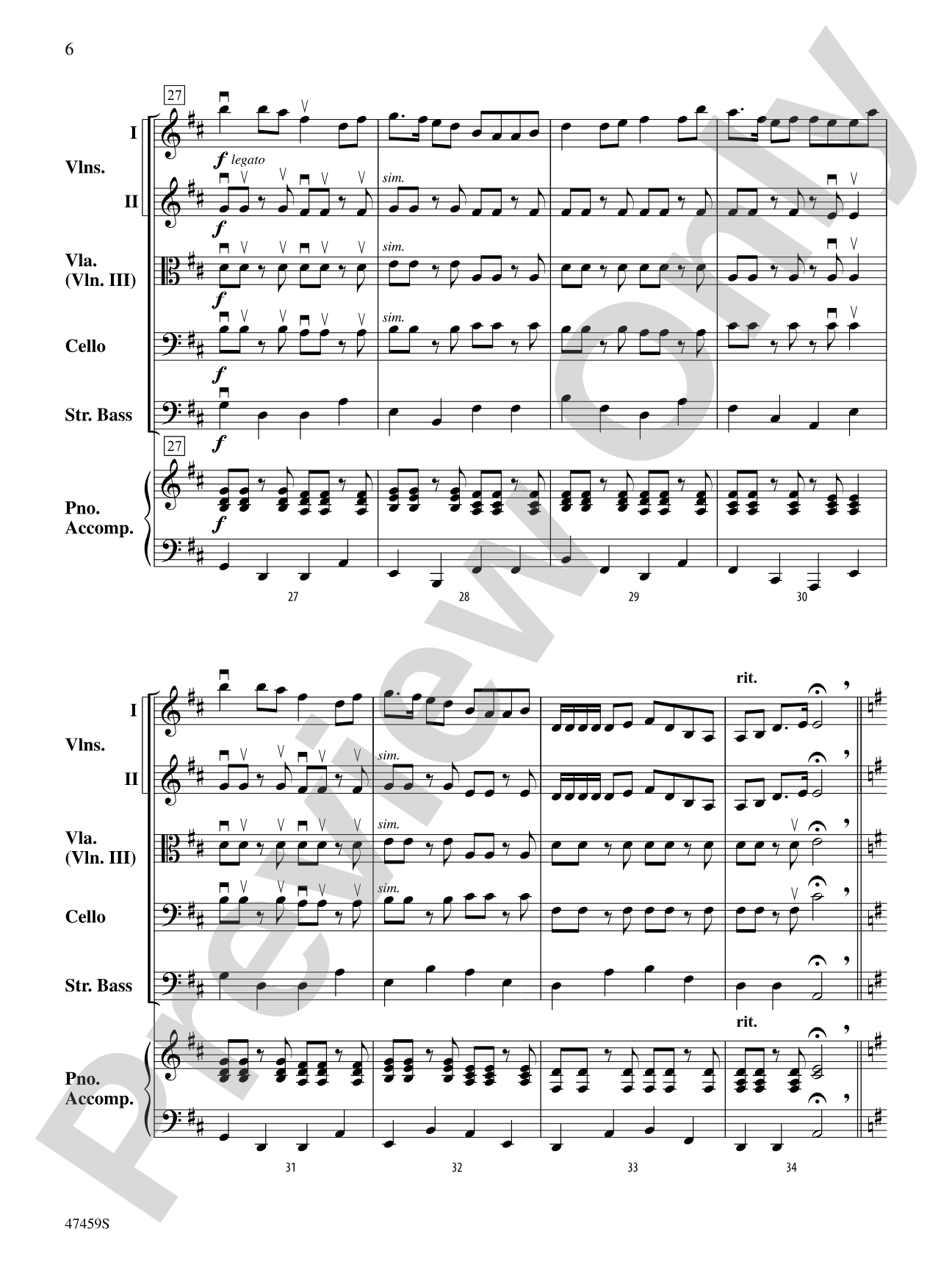
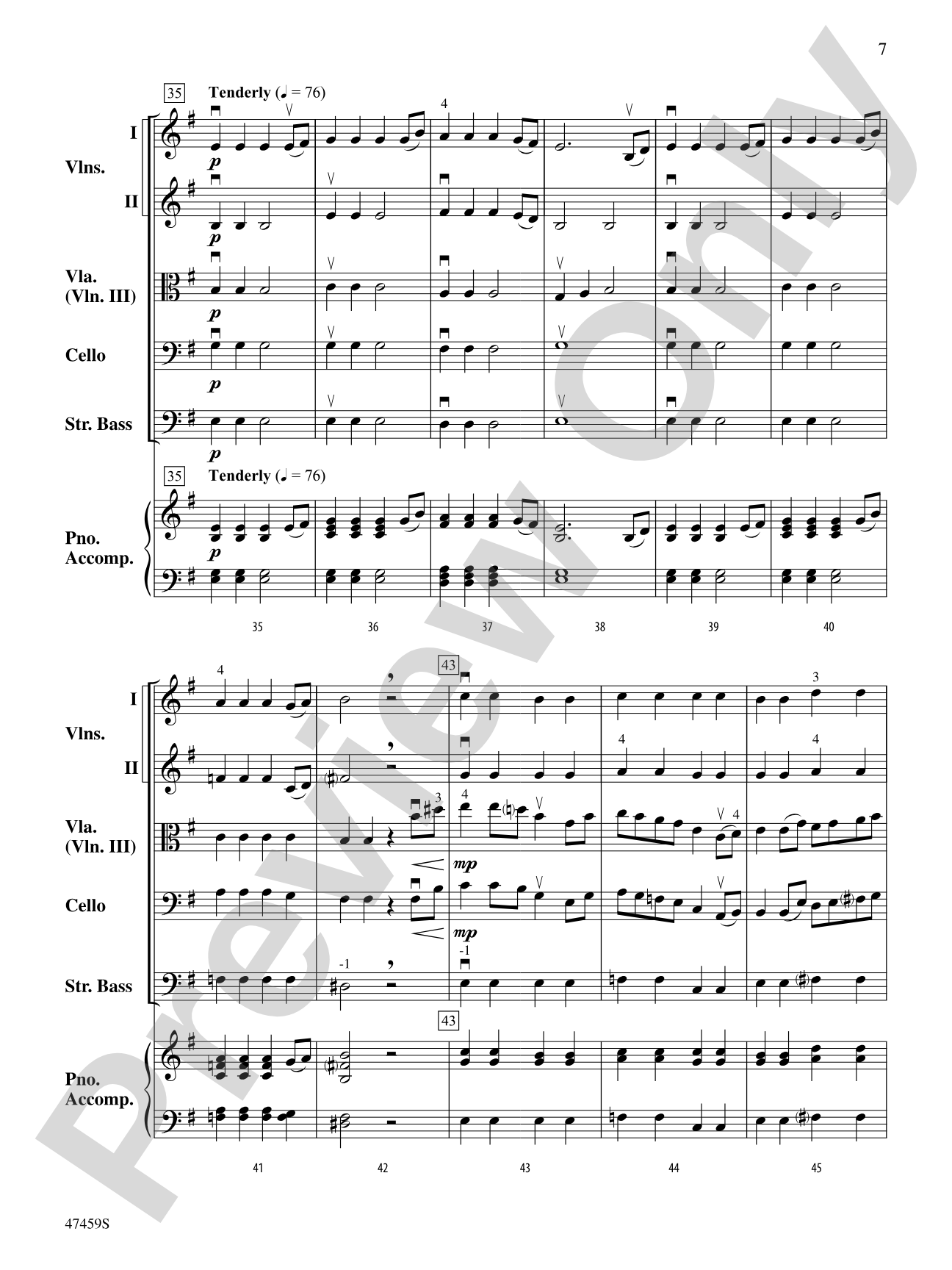
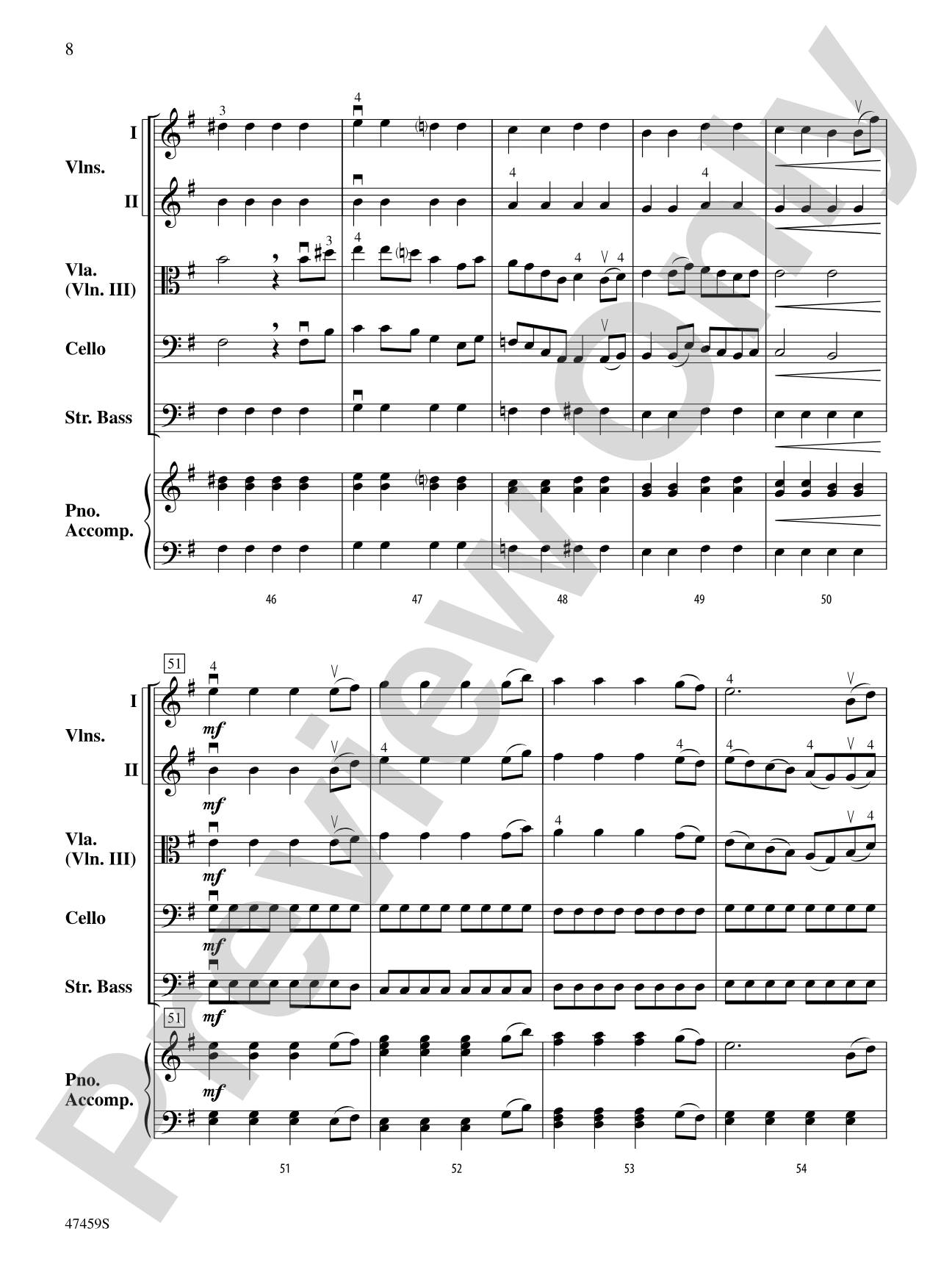
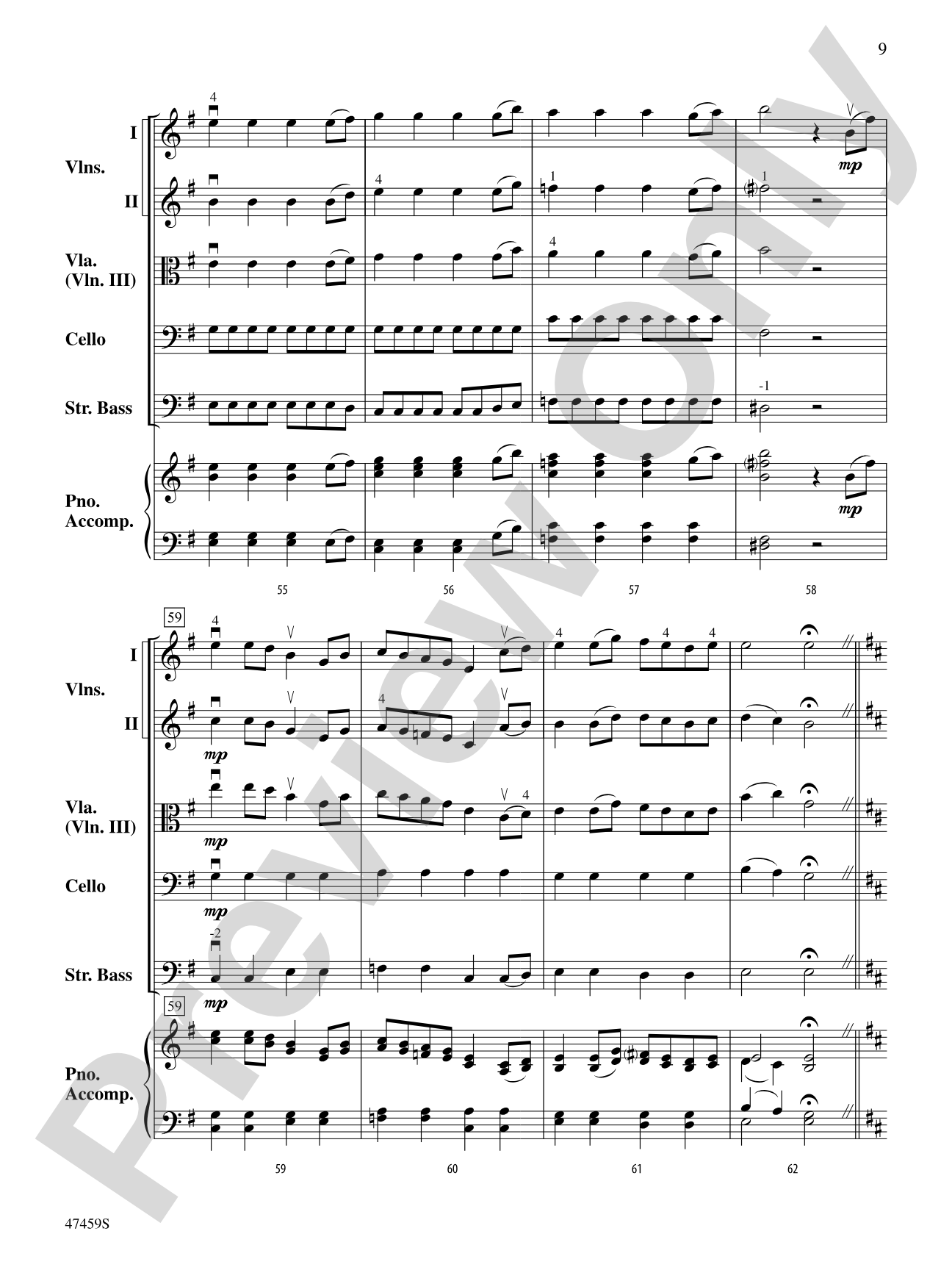
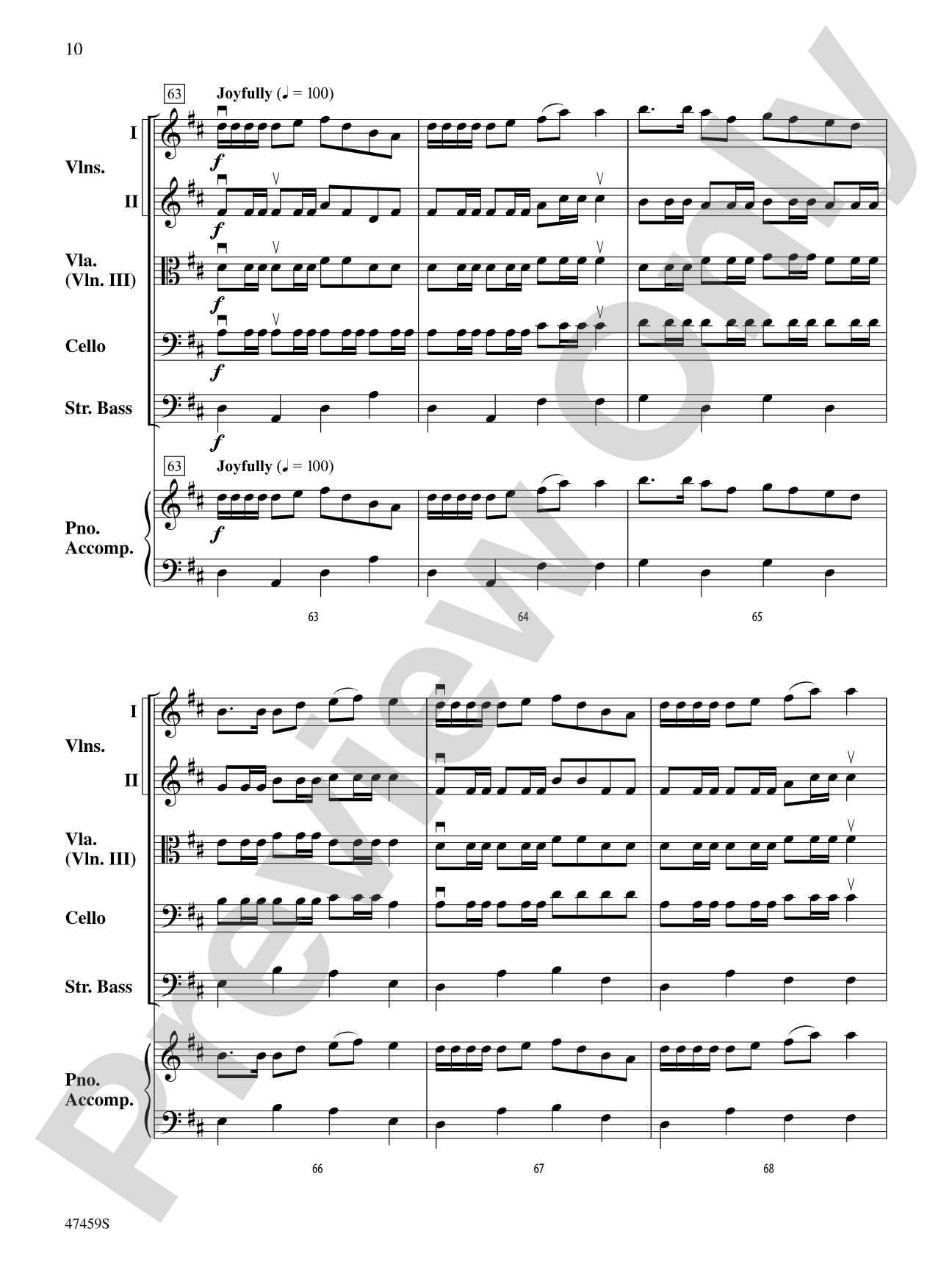
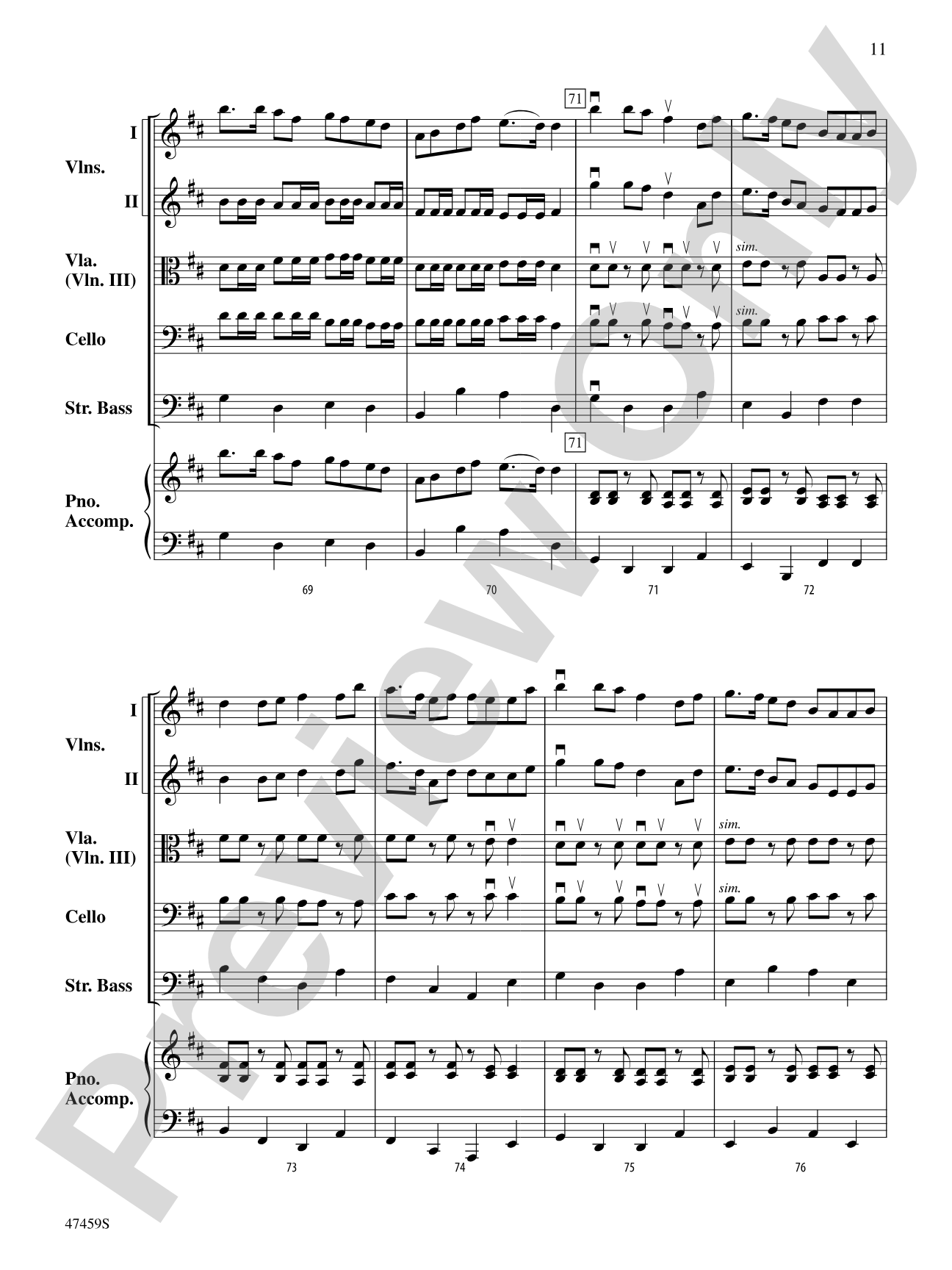
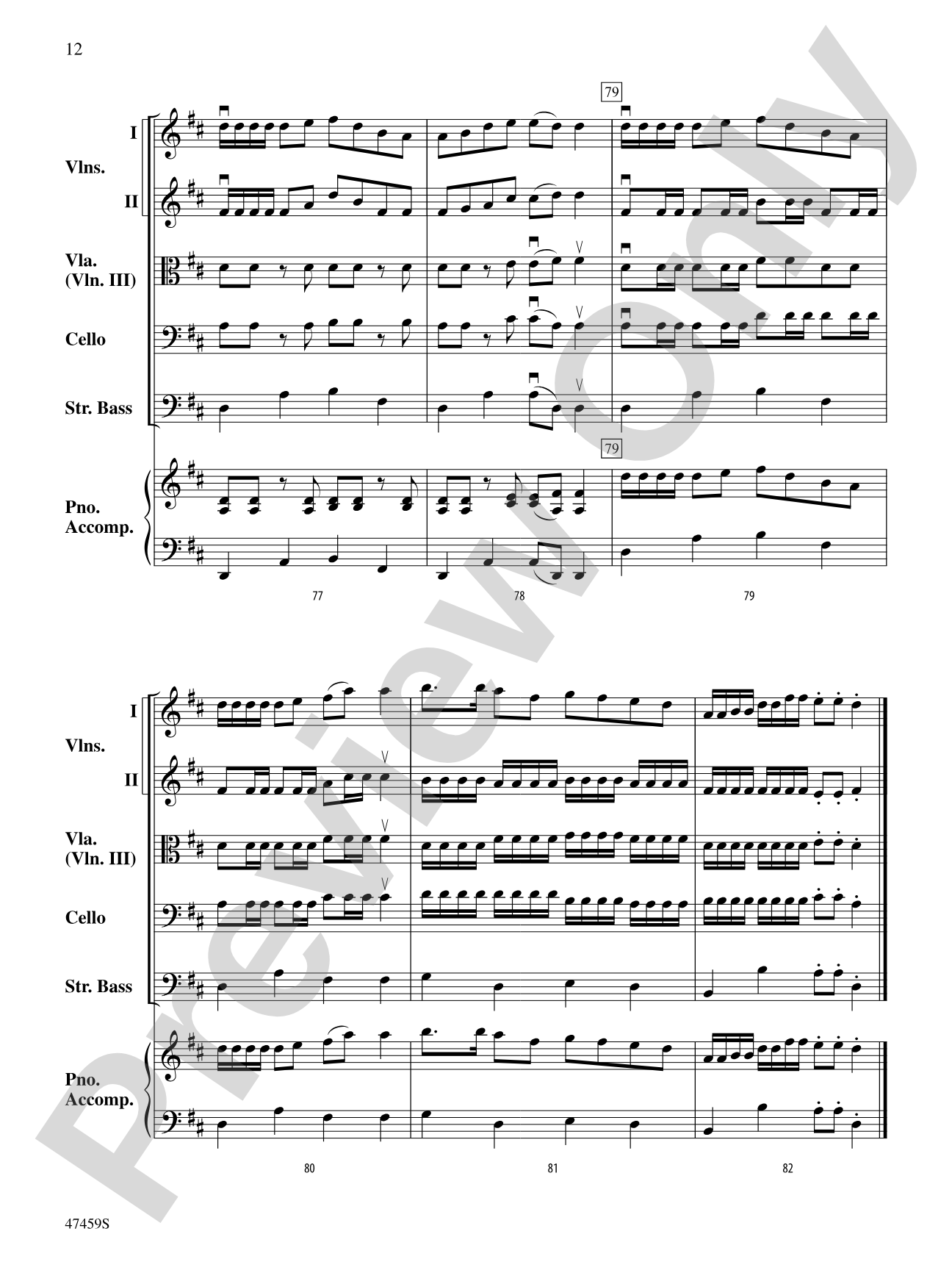

When Robins Dance: String Orchestra Conductor Score & Parts
By Bob Phillips
Grade: 2.5
Item: 00-PK-0007695

$49.00
Pickup currently not available
Buy Extra Parts (Digital PDF Download)
| Product | Price | Quantity |
|---|---|---|
| When Robins Dance: Score | $8.00 | |
| When Robins Dance: 1st Violin | $5.99 | |
| When Robins Dance: 2nd Violin | $5.99 | |
| When Robins Dance: 3rd Violin (Viola [TC]) | $5.99 | |
| When Robins Dance: Viola | $5.99 | |
| When Robins Dance: Cello | $5.99 | |
| When Robins Dance: String Bass | $5.99 | |
| When Robins Dance: Piano Accompaniment | $5.99 | |
| When Robins Dance: Violin Educational Pack | $5.99 | |
| When Robins Dance: Viola Educational Pack | $5.99 | |
| When Robins Dance: Cello Educational Pack | $5.99 | |
| When Robins Dance: Bass Educational Pack | $5.99 |
Parts Added to Cart!
Description
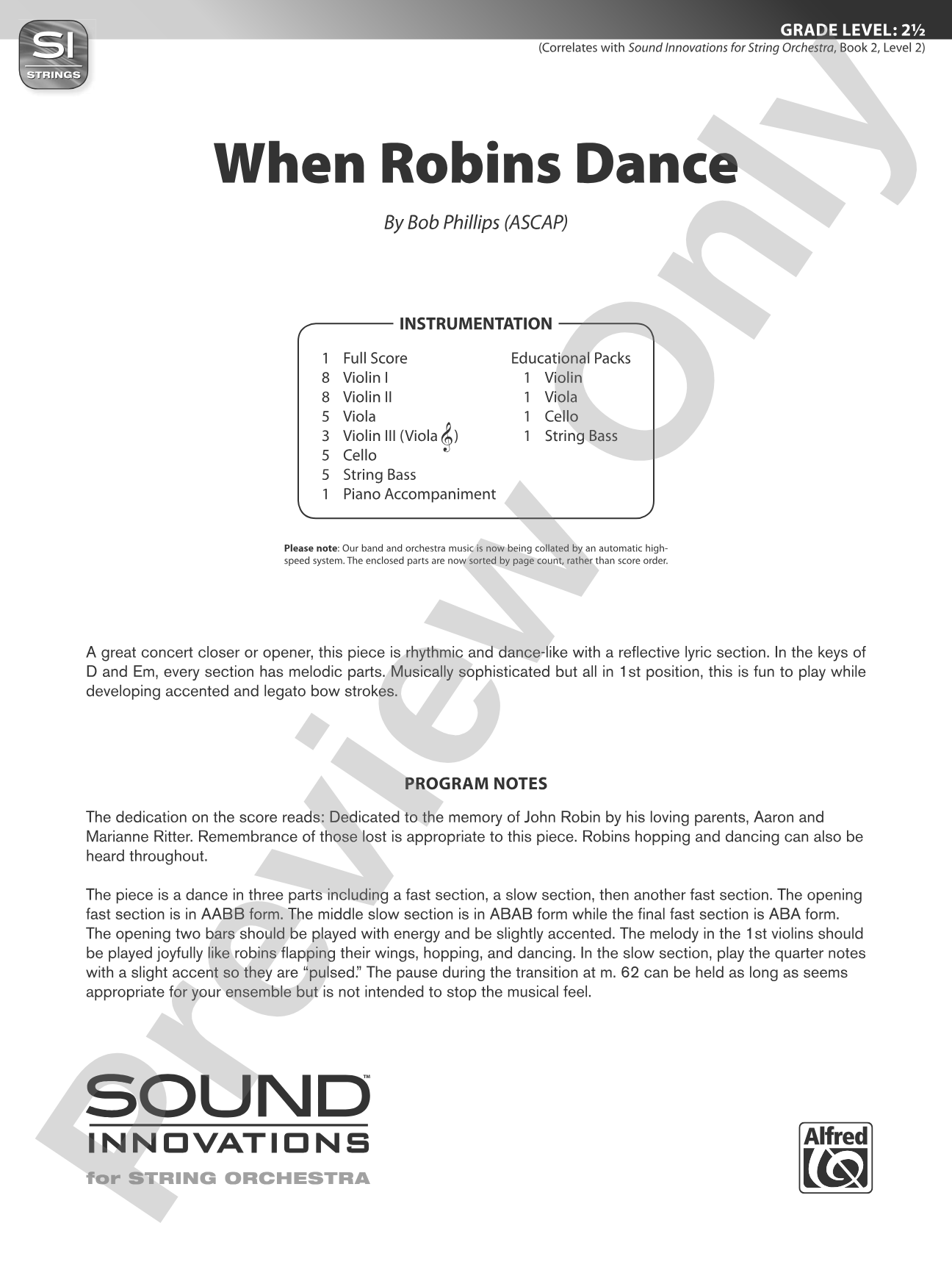
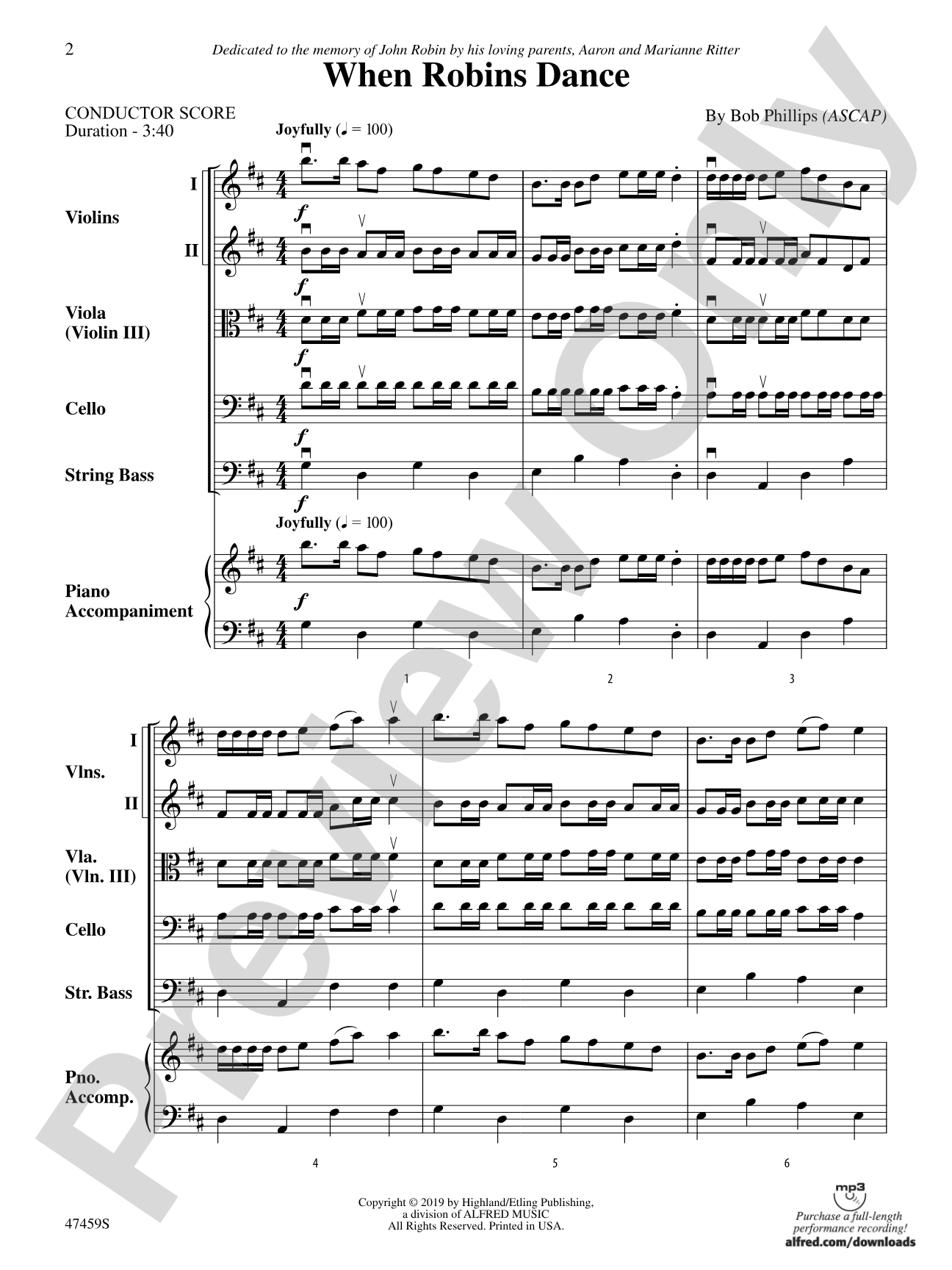
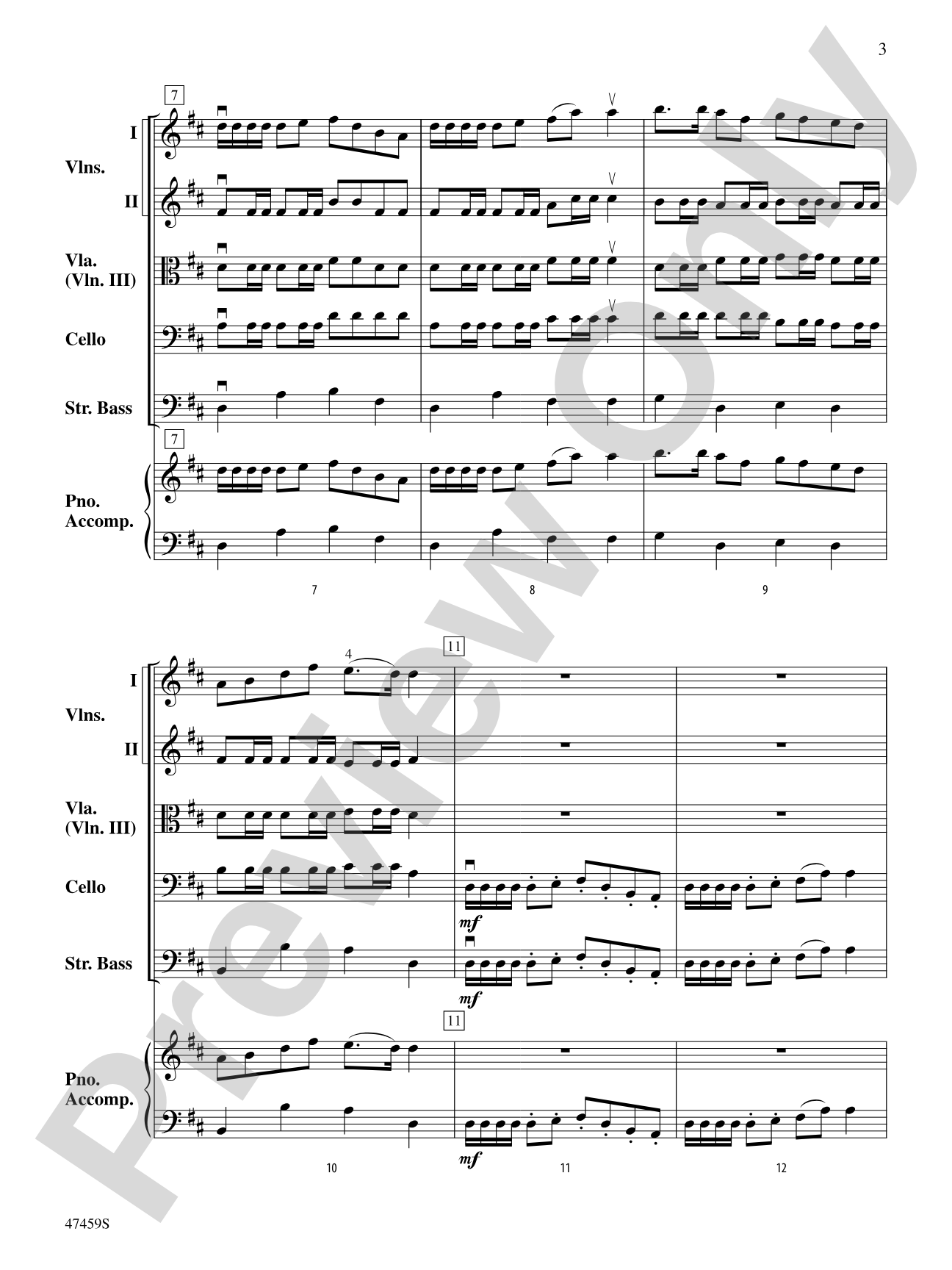
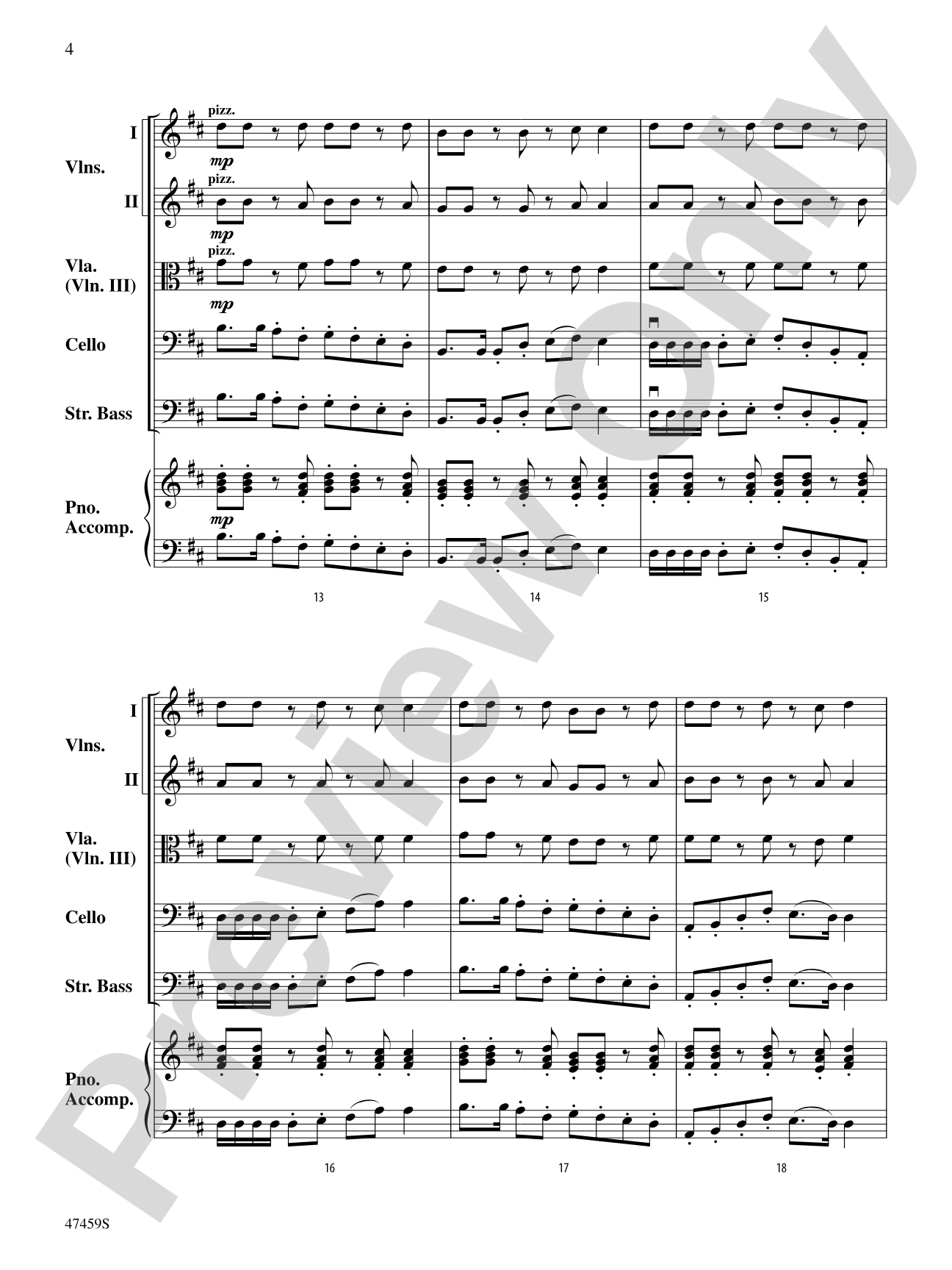
A great concert closer or opener, this piece is rhythmic and dance-like with a reflective lyric section and melodic parts for every instrument section. Musically sophisticated but written completely in 1st position, this piece will be fun for students to play while they develop their accented and legato bow strokes. (Correlates with Sound Innovations for String Orchestra, Book 2, Level 2)


Don't just read it, hear it, play along with it, and watch your students grow with it. In MakeMusic Cloud, When Robins Dance: String Orchestra Conductor Score & Parts comes alive with professional accompaniment, adjustable tempo, and built-in practice tools that turn solo practice into real progress.
Open in the Player
Jump straight in and assign it today.
Start Your Free Trial
Open this title and explore the full library in minutes.
Sample Audio
1
Audio File
--:--
0:00
0:00
Sample Video
Additional Details
Series:
Sound Innovations for String Orchestra
Publisher:
Alfred Music
Page Count:
148
SKU:
00-PK-0007695
More about this title
About the Composer: Bob Phillips

Bob Phillips (b. 1953) has shaped string education for decades as a composer, pedagogue, and conductor. His catalog spans over 200 published works for orchestras and bands, with an ASCAP award recognizing his contributions to the field. He authored the complete six-level Sound Innovations series alongside genre-focused collections like Jazz Philharmonic, Rock Philharmonic, and Mariachi Philharmonic, all designed to expand how students experience ensemble playing.
For 27 years, Phillips built the Saline, Michigan string program into a national model, growing it to over 700 students performing across classical and eclectic styles. He founded the Saline Fiddlers Philharmonic, which became internationally recognized through 80-plus annual performances and appearances at the White House and Midwest Clinic. His work as resident conductor and arranger for the Wintergrass Festival in Seattle, combined with his clinician experience at state and all-state orchestras across the country, reflects his commitment to raising the bar for young string musicians.
Why we love this
Phillips writes with a keen eye for what Grade 2 students can accomplish when given rhythmically engaging material that doesn't demand extreme technical reach. The piece balances immediate musical gratification (those rhythmic, dance-like sections) with genuine textural development, giving every section a moment to shine. His insistence on first position throughout means your students spend rehearsal time mastering bow control and expression rather than wrestling with shifting, which is exactly what this level needs.
What to expect
Energetic and playful at first, with a rhythmic bounce that invites physical engagement from the ensemble. The middle section pulls back into something more introspective and songlike, creating breathing room before the return to motion feels fresh rather than repetitive. The overall effect is sophisticated without being precious; it sounds like a real concert piece, not a training exercise.
Who it's for
String orchestras at the Grade 2-2.5 level who want a concert-ready piece that feels polished without demanding advanced shifting or complex rhythmic reading. This works equally well for students transitioning from beginning method books into independent repertoire as for ensembles solidifying fundamentals before moving toward Grade 3.
How to get the most out of it
- Isolate the rhythmic motive in the opening sections during sectionals. Have students tap the rhythm while bowing open strings to lock the gesture before layering in finger work.
- Shape the reflective lyric section with a clear dynamic arc. This contrast makes the return to the dance-like material feel earned and gives the piece narrative structure.
- Emphasize the difference between accented strokes in the outer sections and legato playing in the middle. Use this piece as a focused study in bow articulation rather than trying to perfect everything at once.
- Balance the melodic lines across all sections. Since Phillips gives material to violins, violas, and cellos throughout, resist letting violins dominate during tutti passages; listen for supporting lines.
How to use it
Open a concert with this to establish ensemble confidence and audience connection early, or close one to send listeners home with rhythmic energy and a sense of ensemble polish. Its length and balanced difficulty make it a strong festival selection where you want to showcase solid fundamentals and musical maturity without overreaching technically.
Skills your students will build
- Accented and legato bow strokes with clear articulation
- Reading and executing rhythmic patterns in first position
- Sustaining longer melodic lines with proper phrase shaping
- Ensemble listening and balance in multi-part textures
- Musical contrast and form awareness through lyric and rhythmic sections