

When Music Sounds: SATB Choral Octavo
Words by Walter de la Mare, music by Bruce W. Tippette
Item: 00-PO-0007190
$2.50
Minimum order quantity: 20 copies
Pickup currently not available
Description
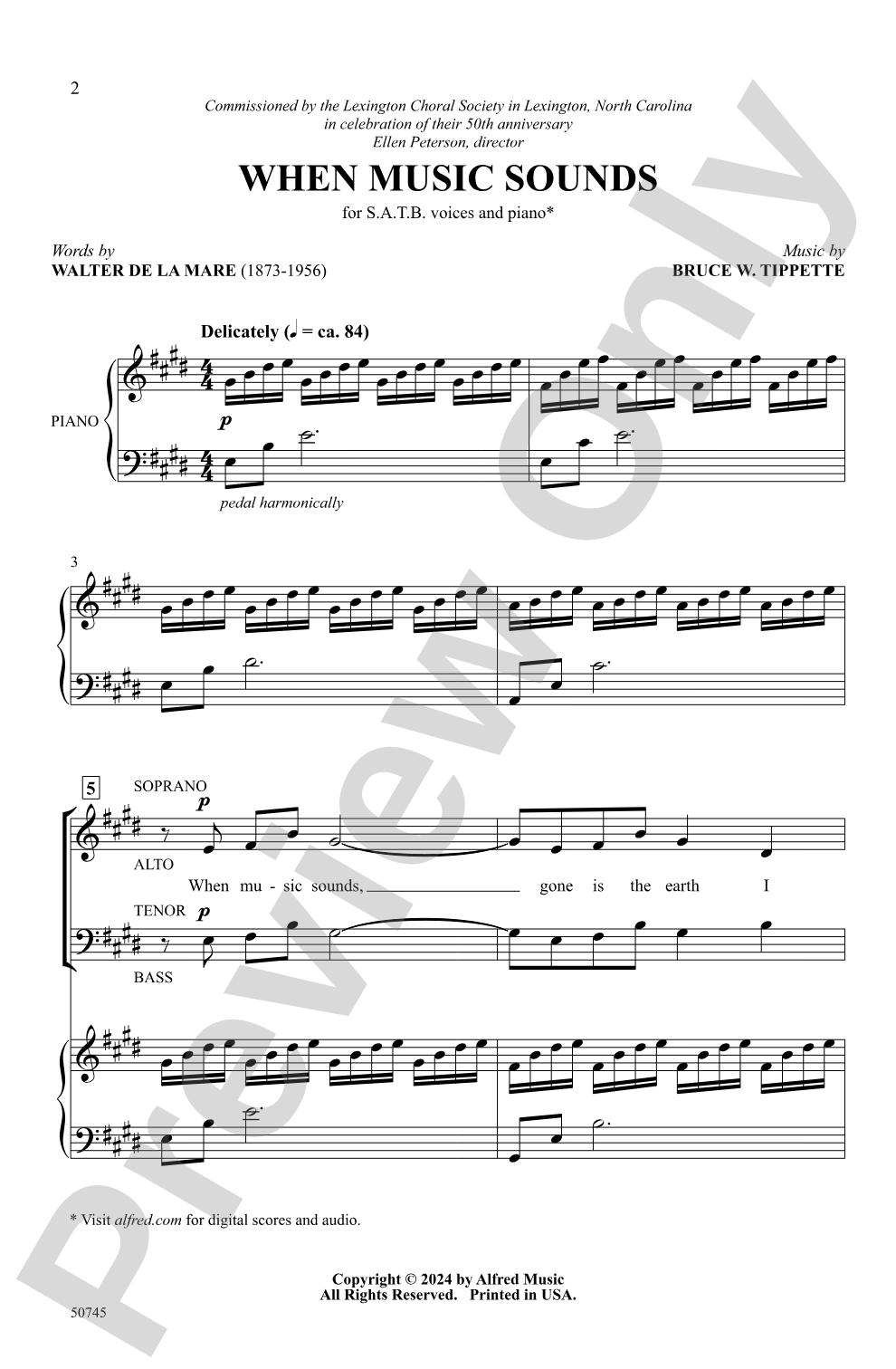
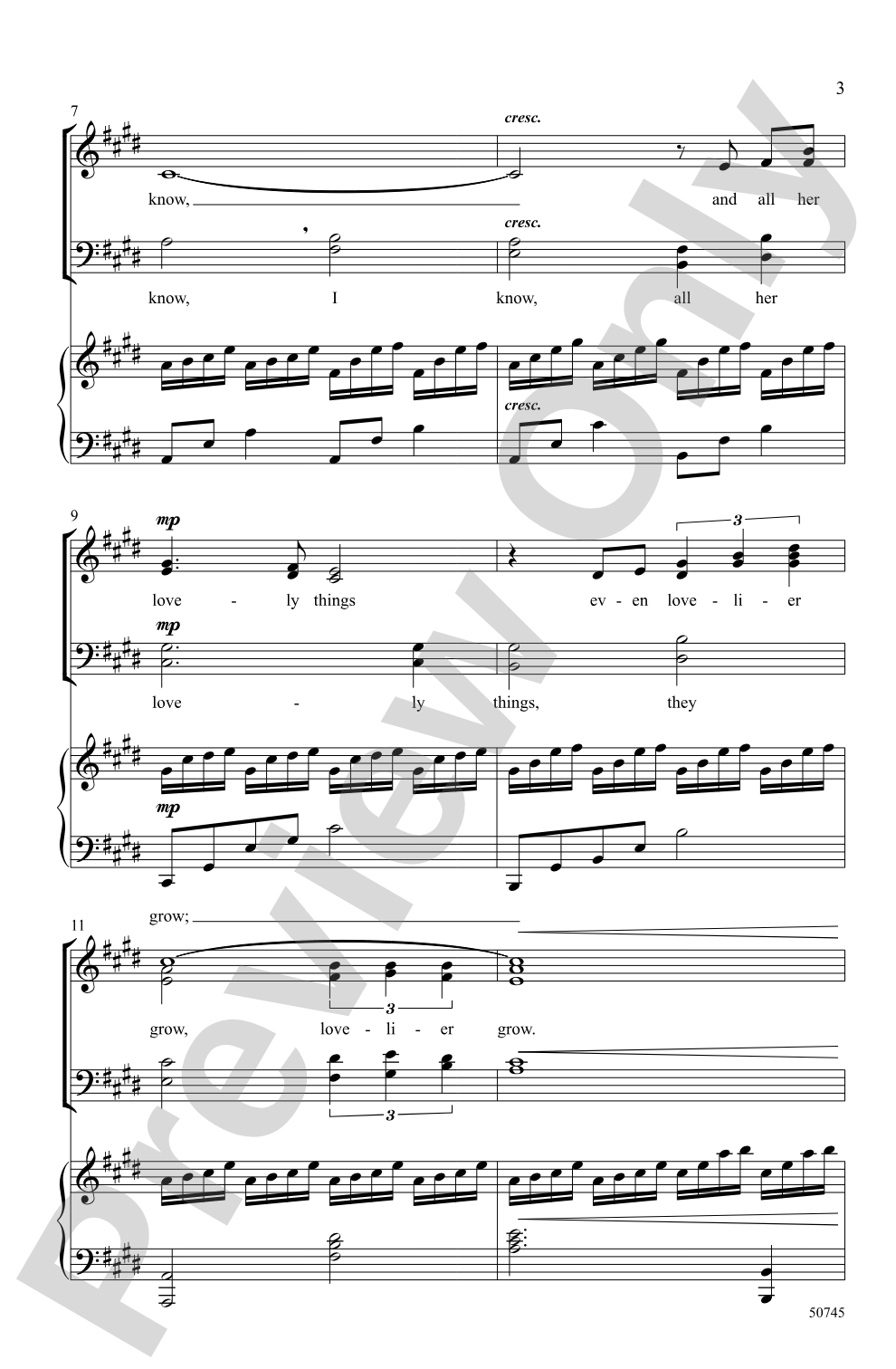
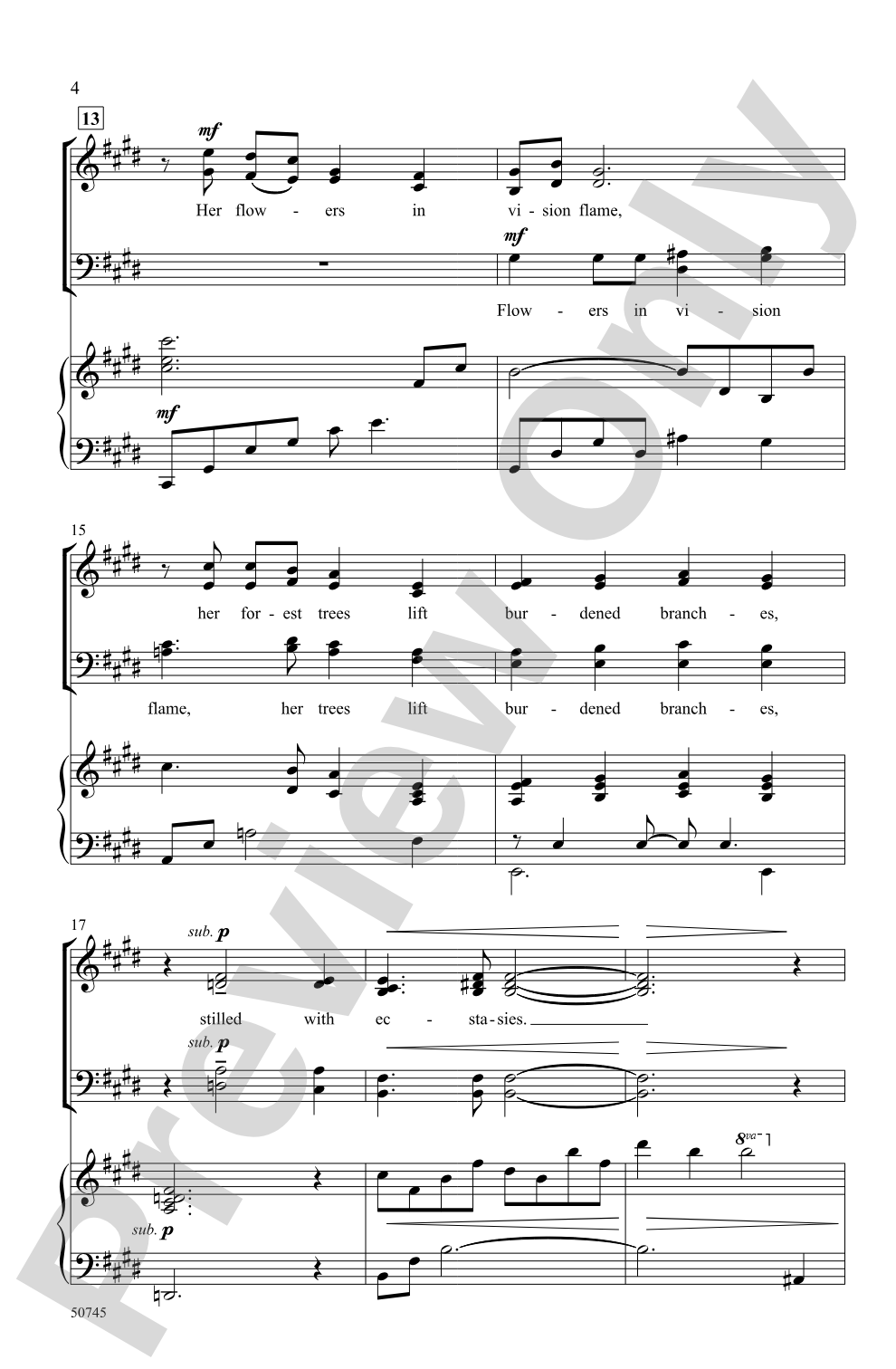
A artful text by poet Walter de la Mare is beautifully set by contemporary composer Bruce Tippette. Showcasing the power of music to ease burdens and still sorrows, this sweeping selection presents a full range of dynamics, textures, and harmonies. A fine addition to any concert program.


When Music Sounds: SATB Choral Octavo isn't in MakeMusic Cloud just yet...but it could be. Let us know you'd like to see it, and you'll help shape what comes next. In the meantime, start a free trial and dive into thousands of interactive titles your students can play along with today.
Request This Title
Tell us you want it.
Start Your Free Trial
Explore everything that's ready to play right now.
Sample Audio
1
Audio File
--:--
0:00
0:00
Sample Video
Additional Details
Series:
Lawson-Gould
Publisher:
Alfred Music
Page Count:
16
SKU:
00-PO-0007190
More about this title
About the Composer: Bruce W. Tippette

Bruce W. Tippette studied composition at the University of North Carolina School of the Arts (M.M.) and Appalachian State University (B.M.), where he earned degrees in both composition/theory and music education. His orchestral work Unconquered won the 2012 Mary Starling Composition Competition and has been performed multiple times by the Winston-Salem Symphony; his piano solo Dance of Fire received the Lynn Freeman Olson Composition Award.
Beyond concert works, Tippette composes for diverse media including dance, film, and musical theater. He has been commissioned to create new works for both choral and instrumental ensembles, and was selected three consecutive years (2012-2014) to compose pieces through an experimental partnership between Cirque du Soleil and UNCSA. He teaches music composition, theory, piano, and voice at the Community Music School of UNCSA, serves as Youth Music and Handbell Director at Augsburg Lutheran Church, and works as a collaborative pianist and freelance music engraver.
Why we love this
Tippette's setting honors de la Mare's elegant language without overwhelming it; the music breathes with the text and allows the poetry to resonate. The range of textures and dynamics gives your choir genuine interpretive challenges and rewards, moving well beyond simple declarative statements into genuine musical architecture.
What to expect
The piece unfolds with a sense of quiet contemplation, then gradually opens into something fuller and more expansive. There's an emotional honesty here—music as solace, music as balm—conveyed through Tippette's careful handling of color and space rather than bombast.
Who it's for
This octavo works for choirs at the advanced high school level and beyond, including university and community ensembles. Singers need secure music reading skills and the ability to sustain harmonic independence, though the writing is idiomatic and avoids unnecessary technical showmanship.
How to get the most out of it
- Balance the text clarity against the harmonic richness; rehearse with a strong emphasis on diction, particularly in moments where multiple voice parts overlap.
- Shape each dynamic marking deliberately rather than treating it as a sudden change; Tippette's contrasts are most effective when transitions feel intentional and supported by the breath.
- Attend to the interplay between parts, especially where one voice carries the melodic line while others provide harmonic support; these relationships shift frequently and deserve attention in sectional rehearsals.
- Use the full 16-page score to plan interpretive choices early; marking tempos, phrase peaks, and breath points before ensemble rehearsals saves time and builds confidence.
How to use it
Program this as an anchor for a concert section devoted to reflective or poetic texts, where it can breathe without immediate contrast to high-energy selections. It also serves well in contest or festival settings where the combination of artistic depth and musical substance carries weight with adjudicators.
Skills your students will build
- Reading and sustaining independent voice parts in four-part harmony
- Interpreting dynamic and textural shifts as musical meaning rather than mechanical instruction
- Balancing text projection with harmonic blend across changing sonorities
- Ensemble listening and blend within a chromatic harmonic language