
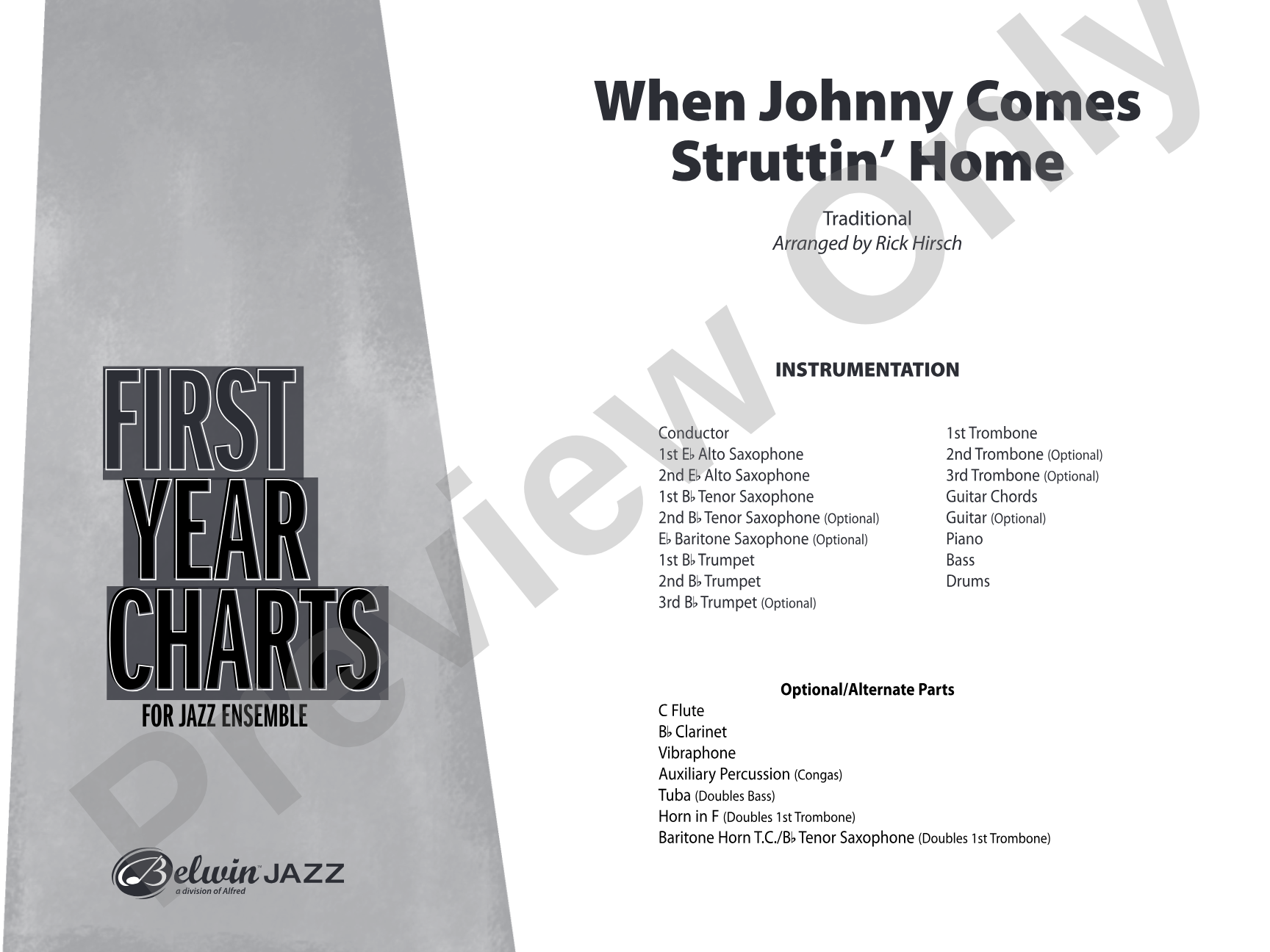
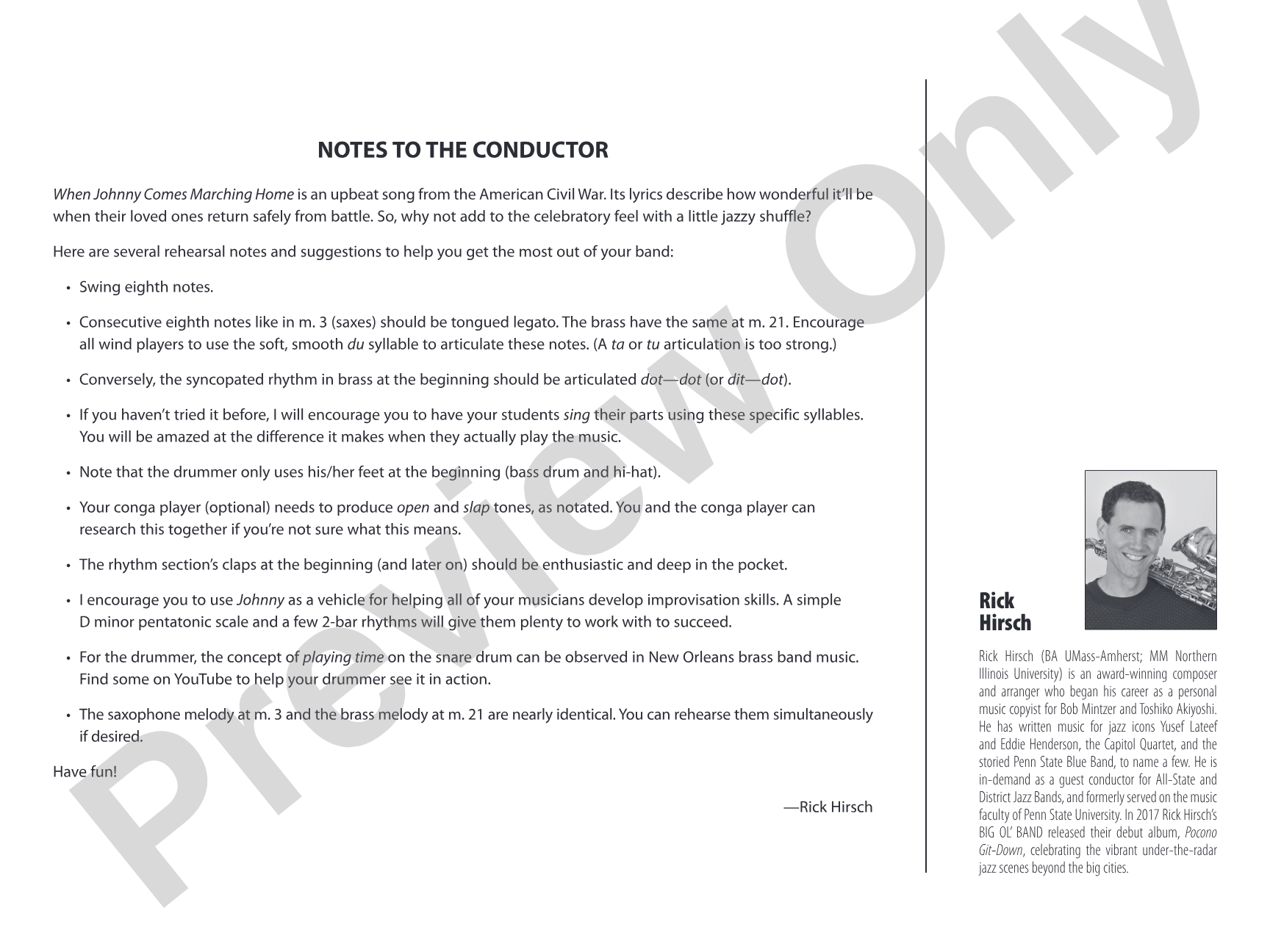
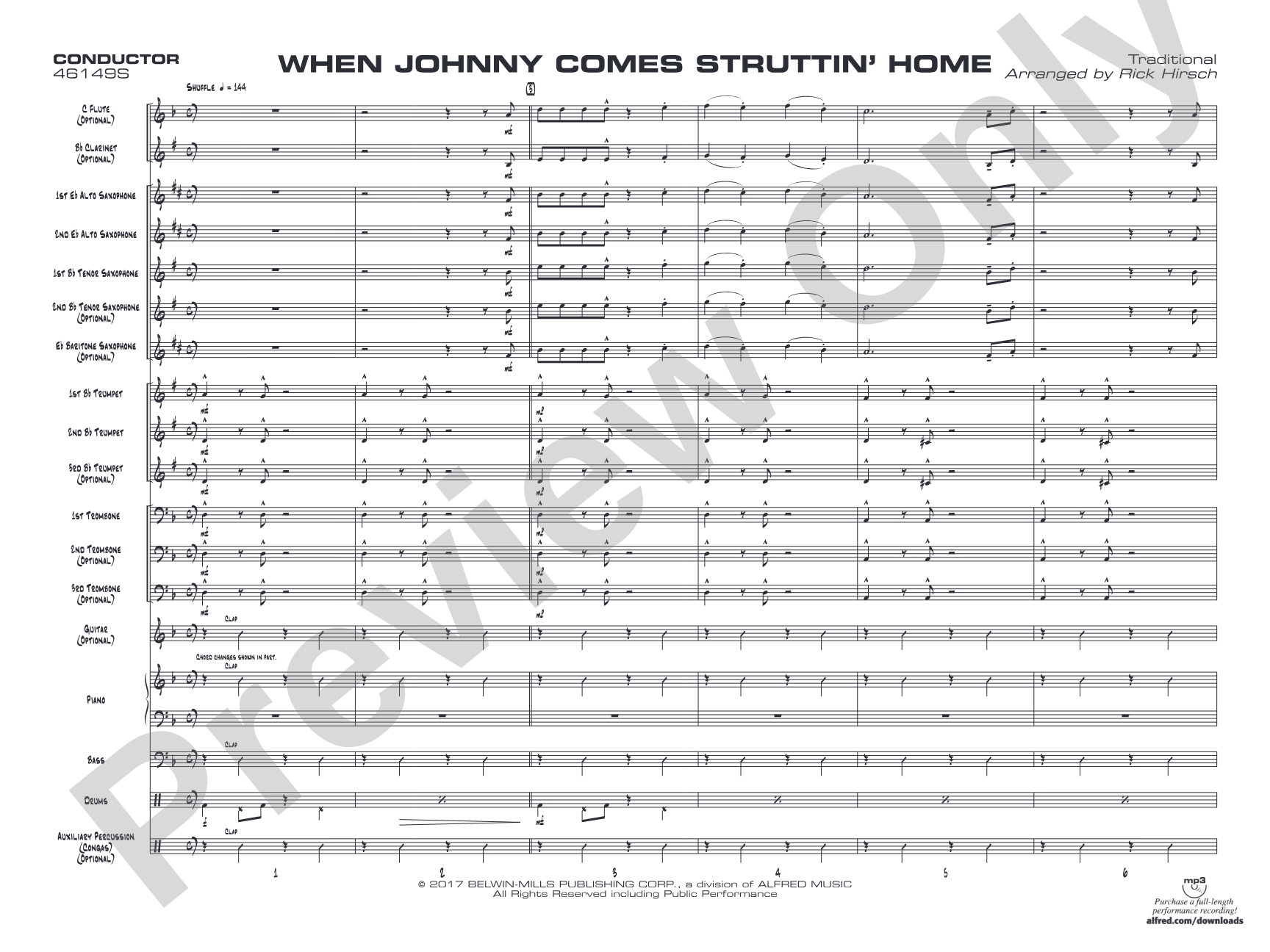
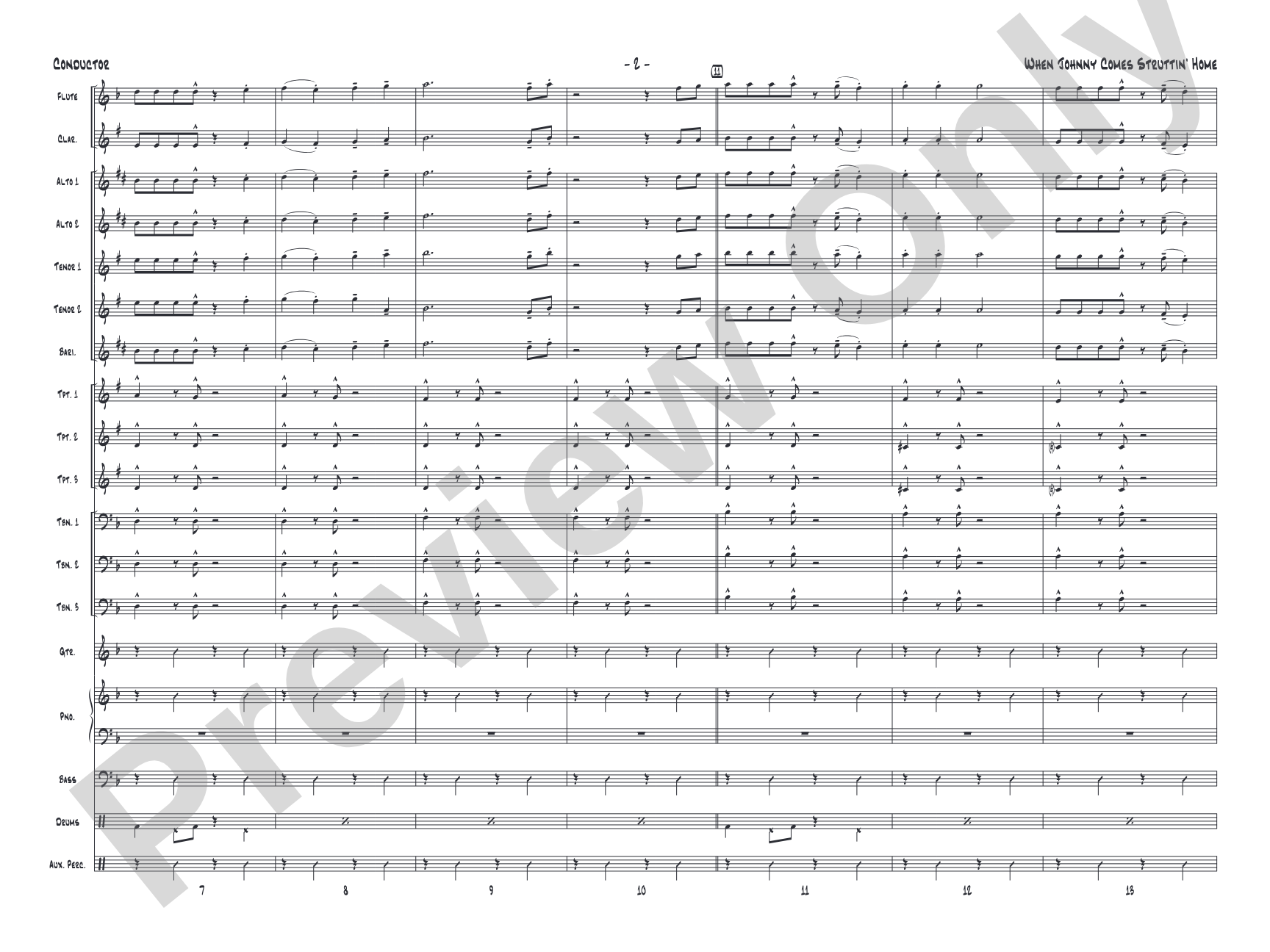
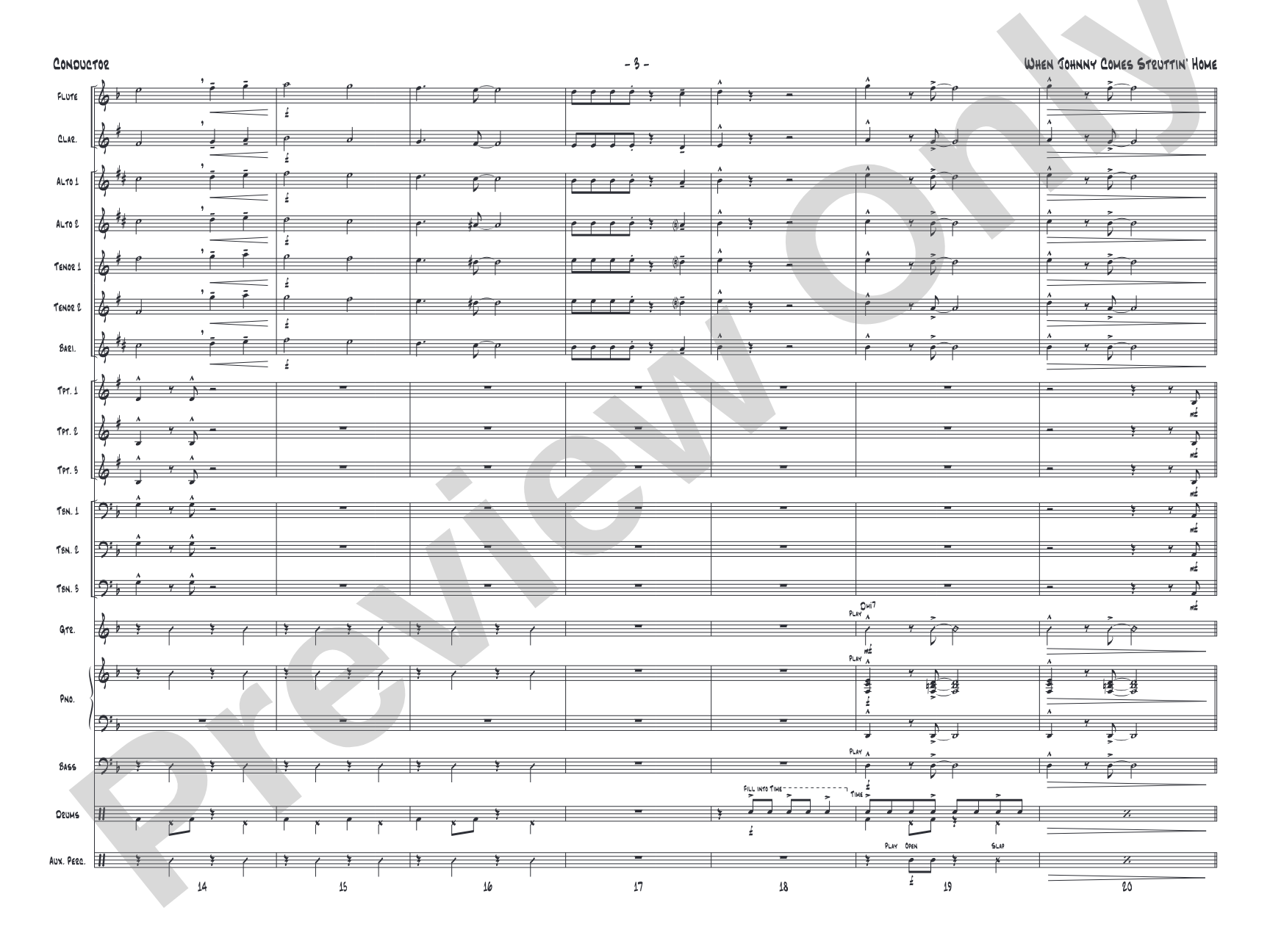
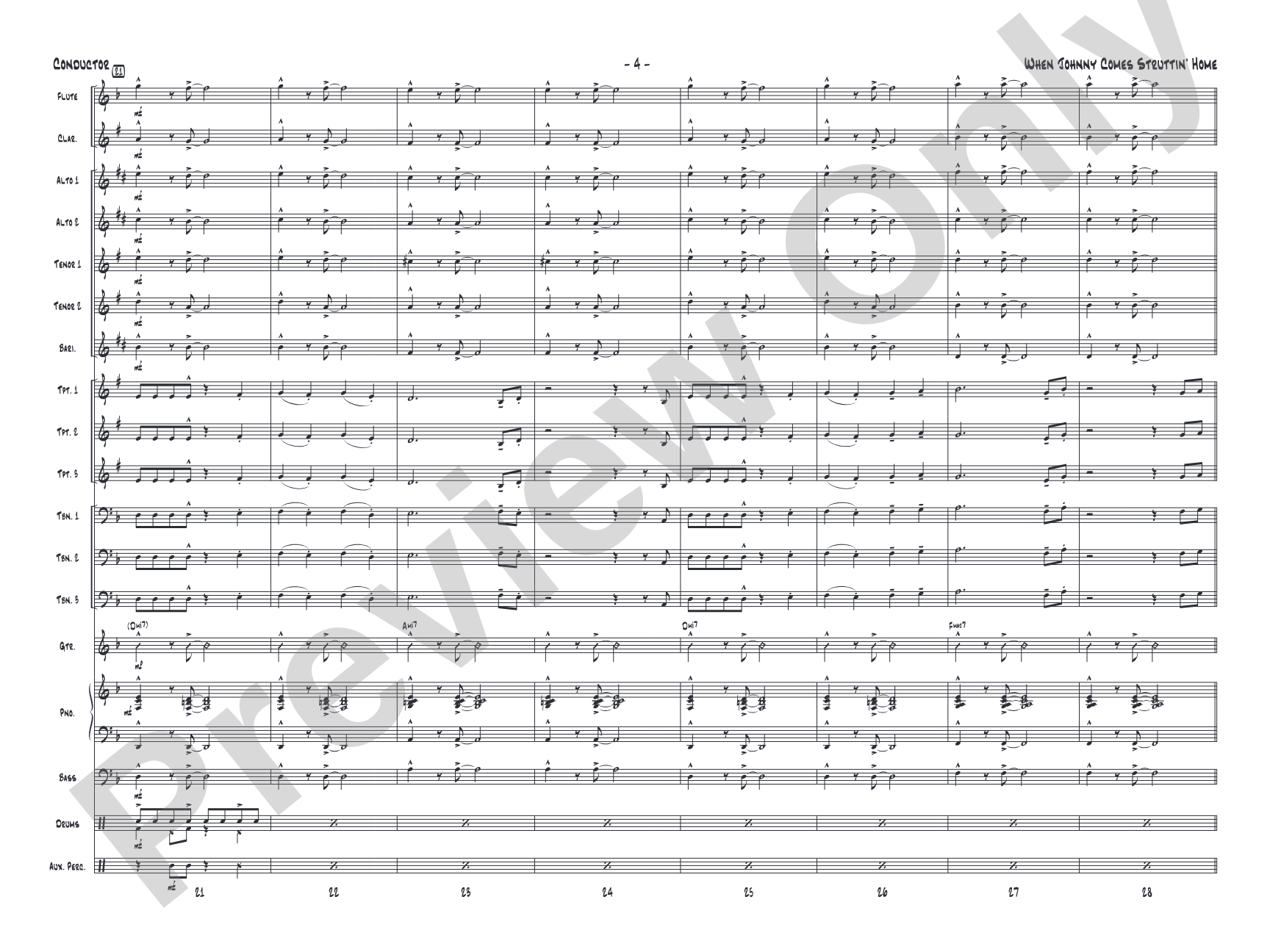
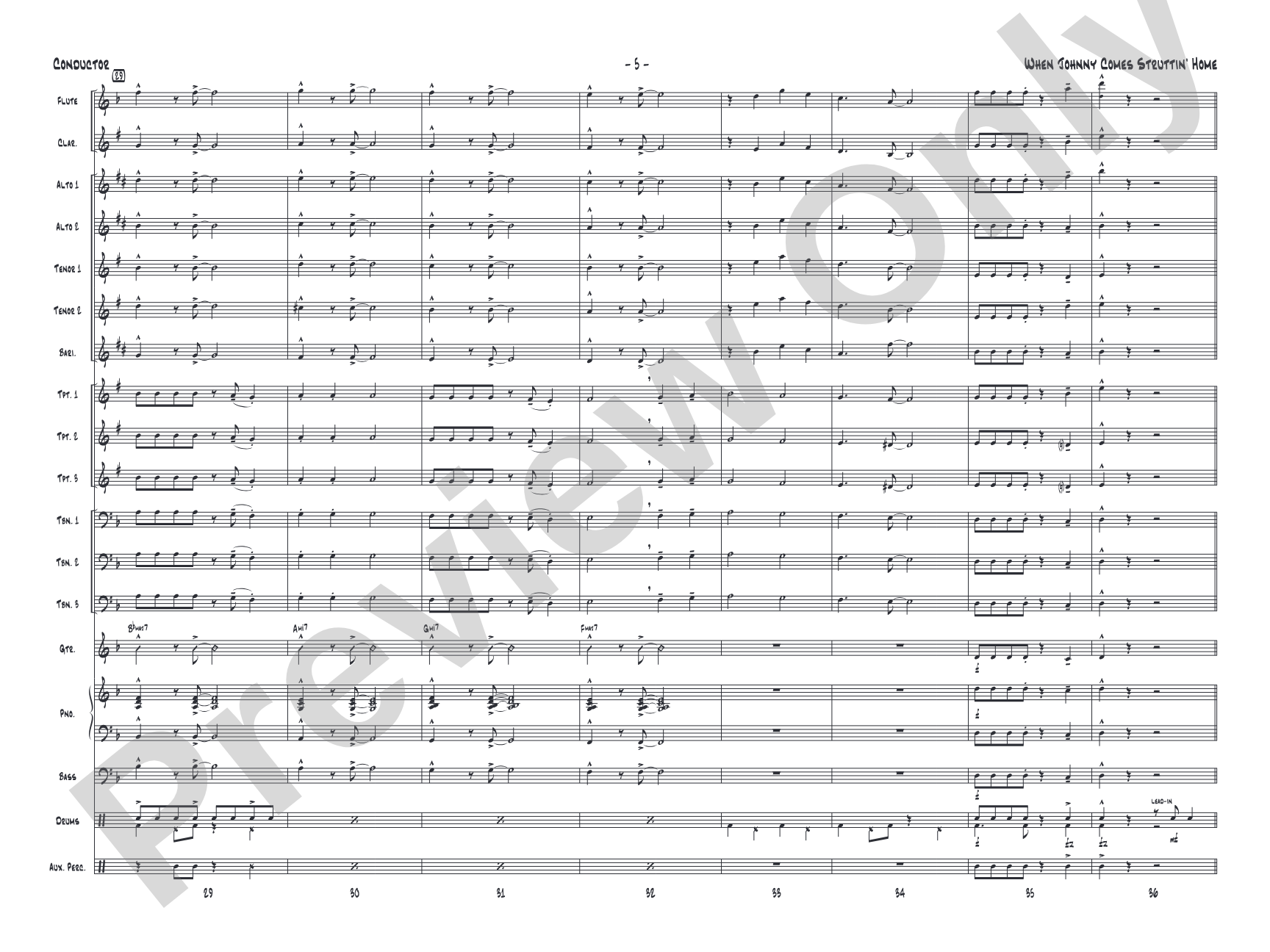
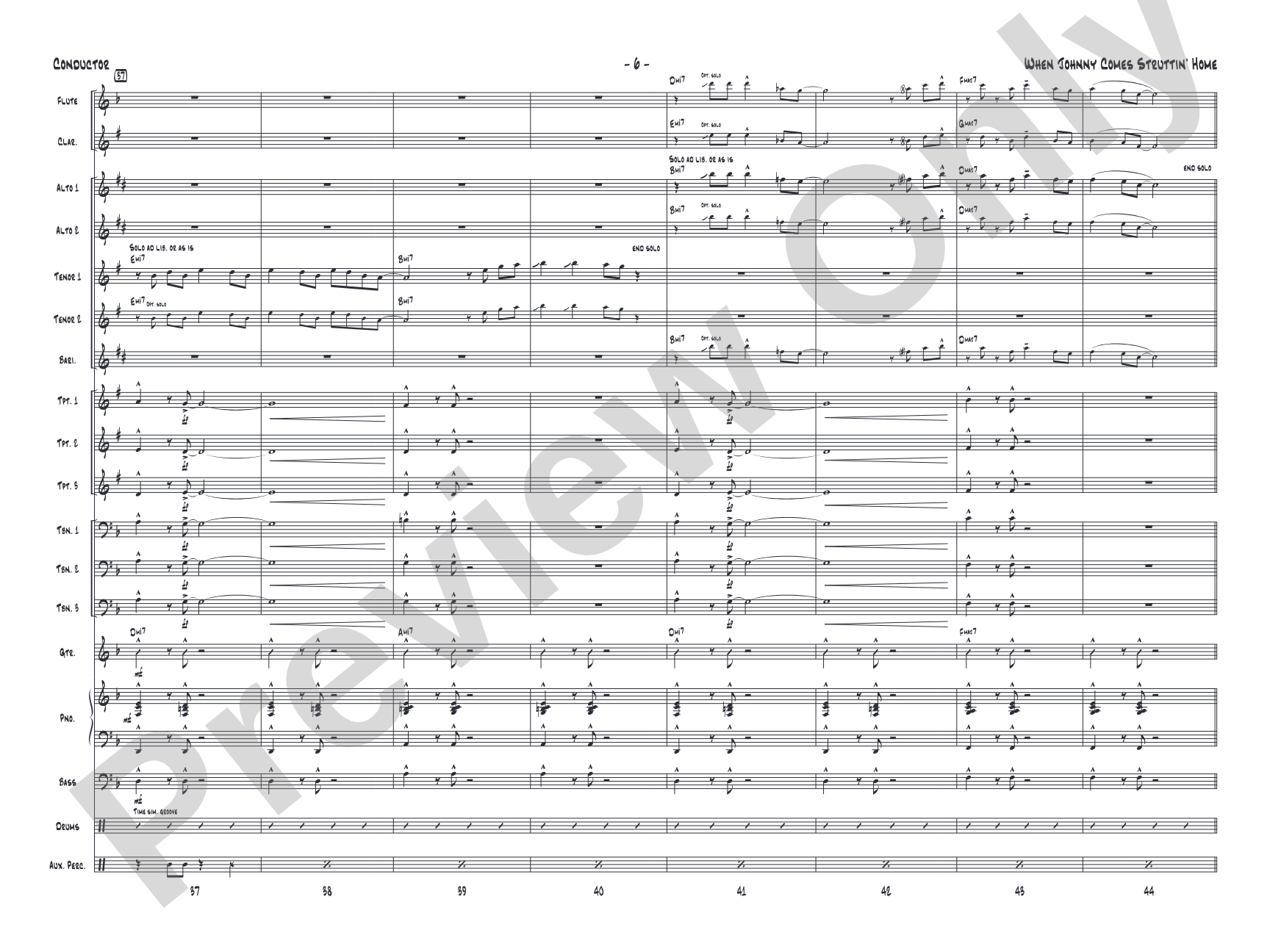
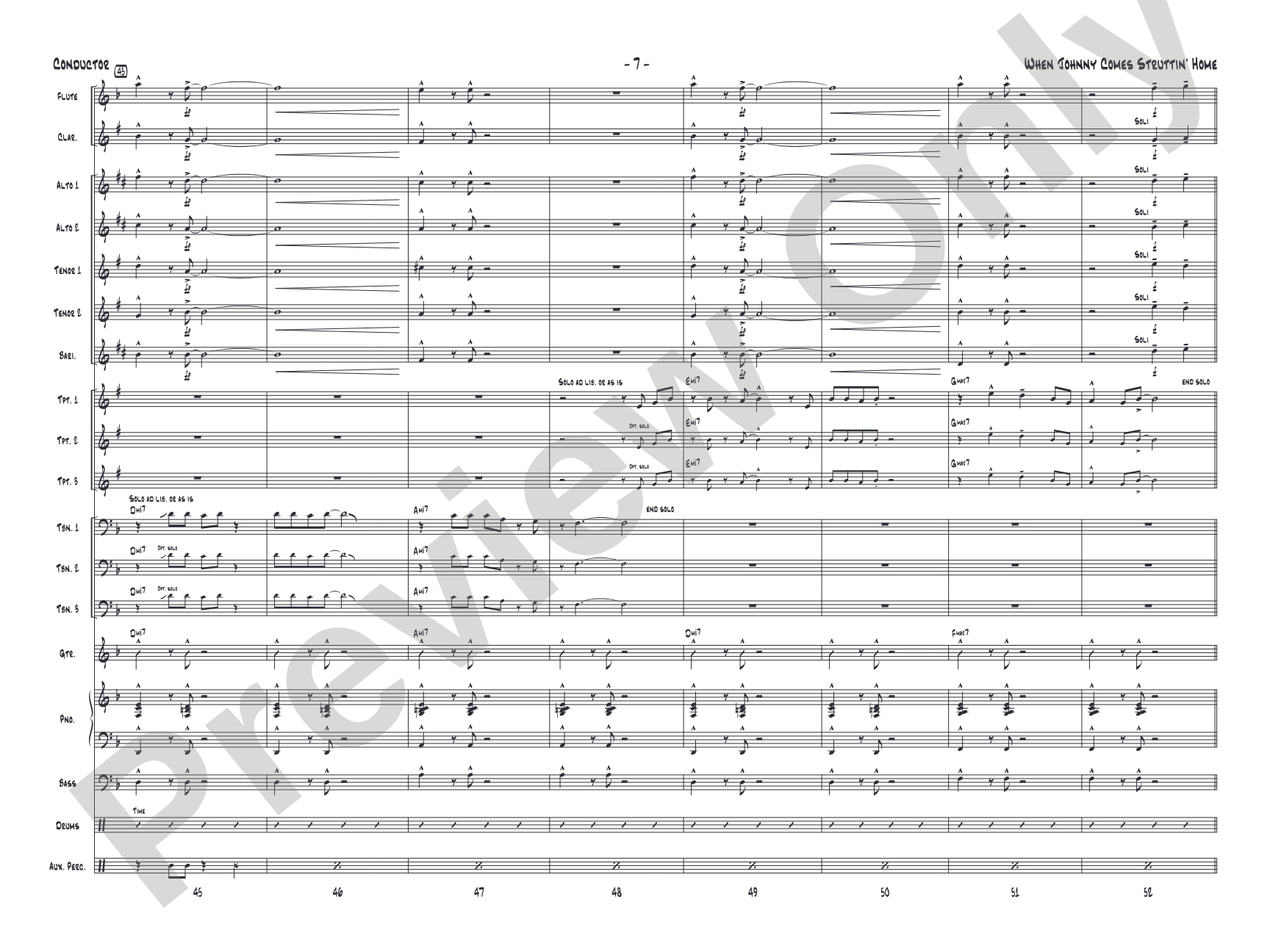
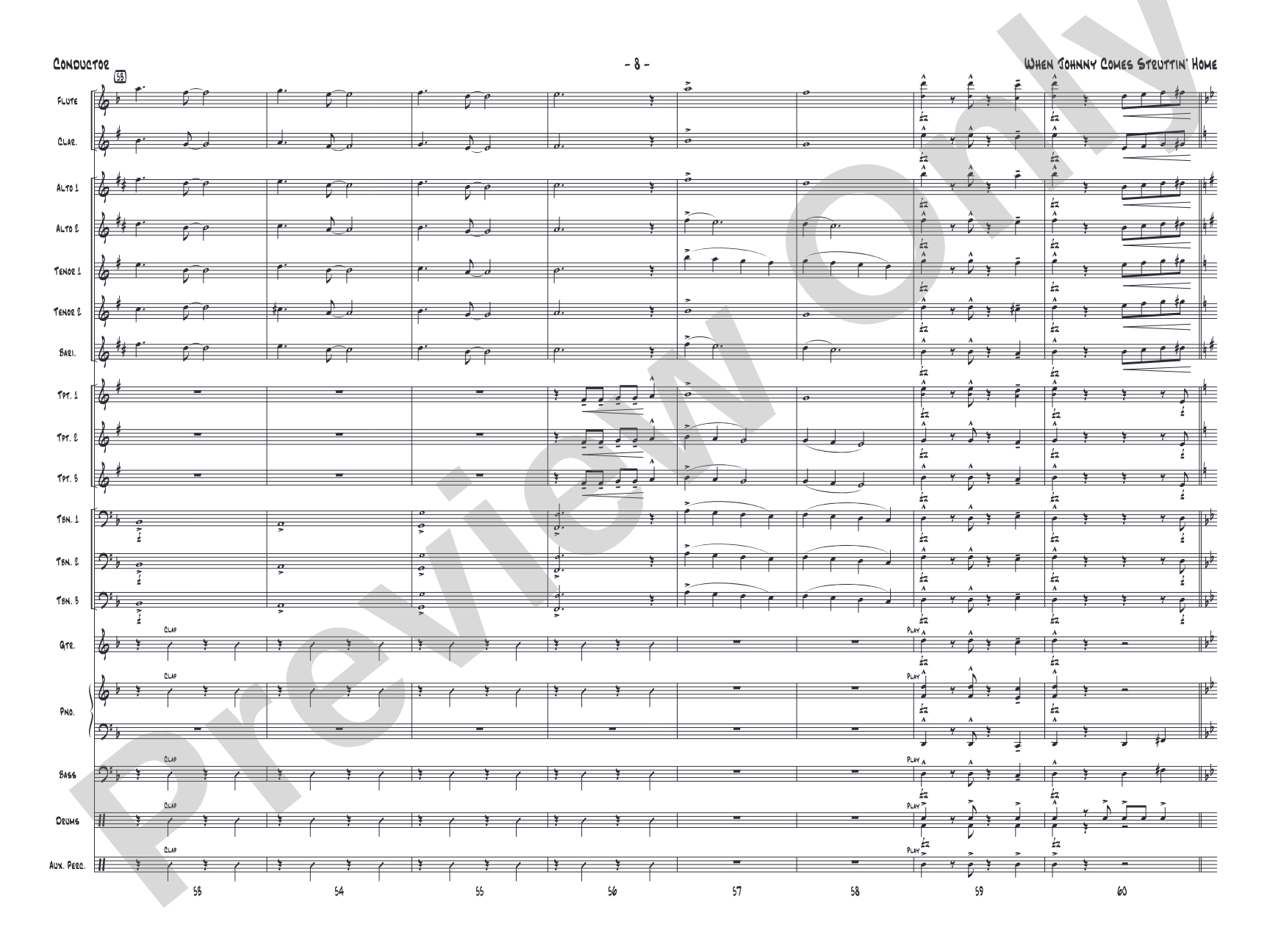
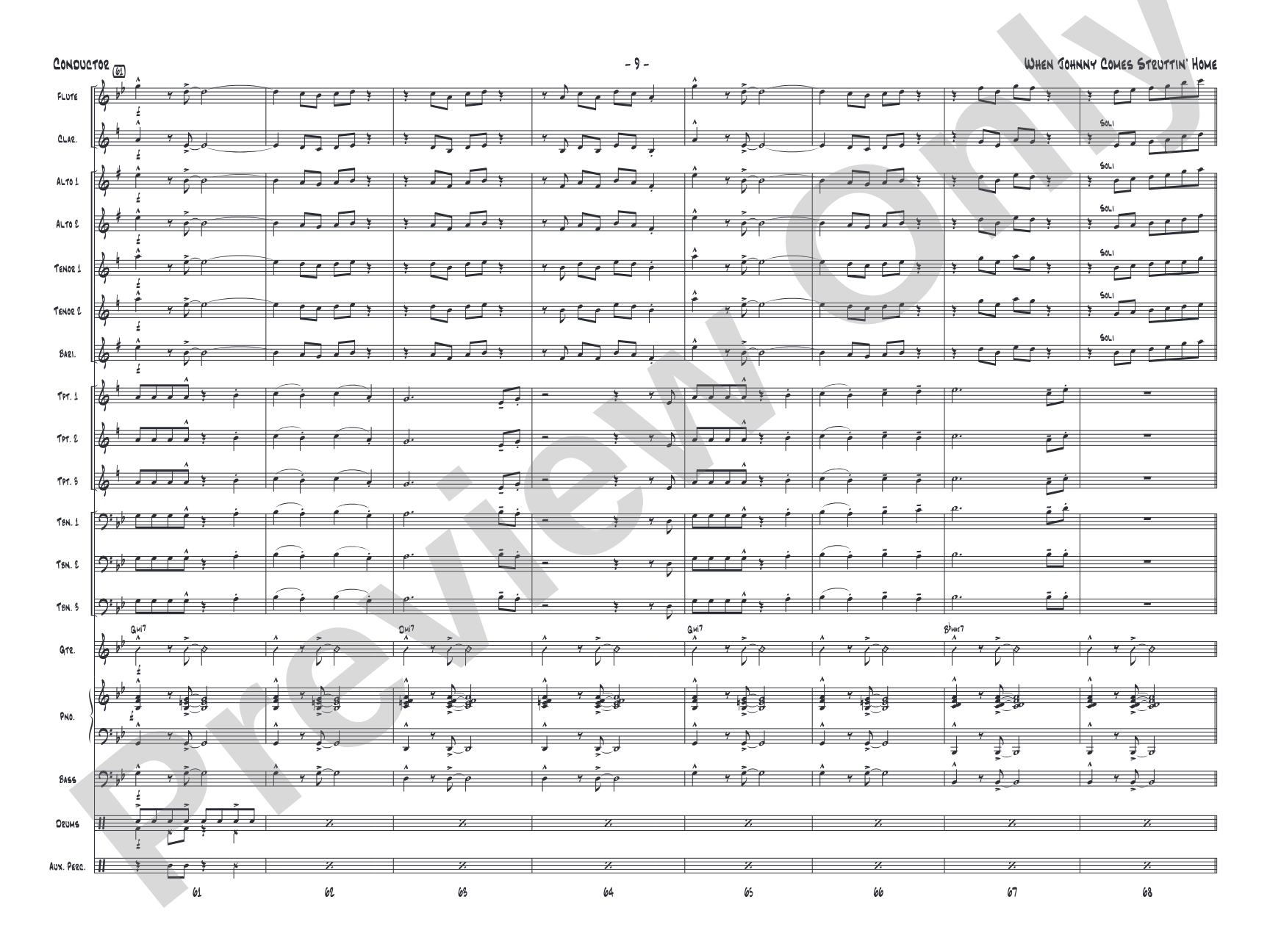
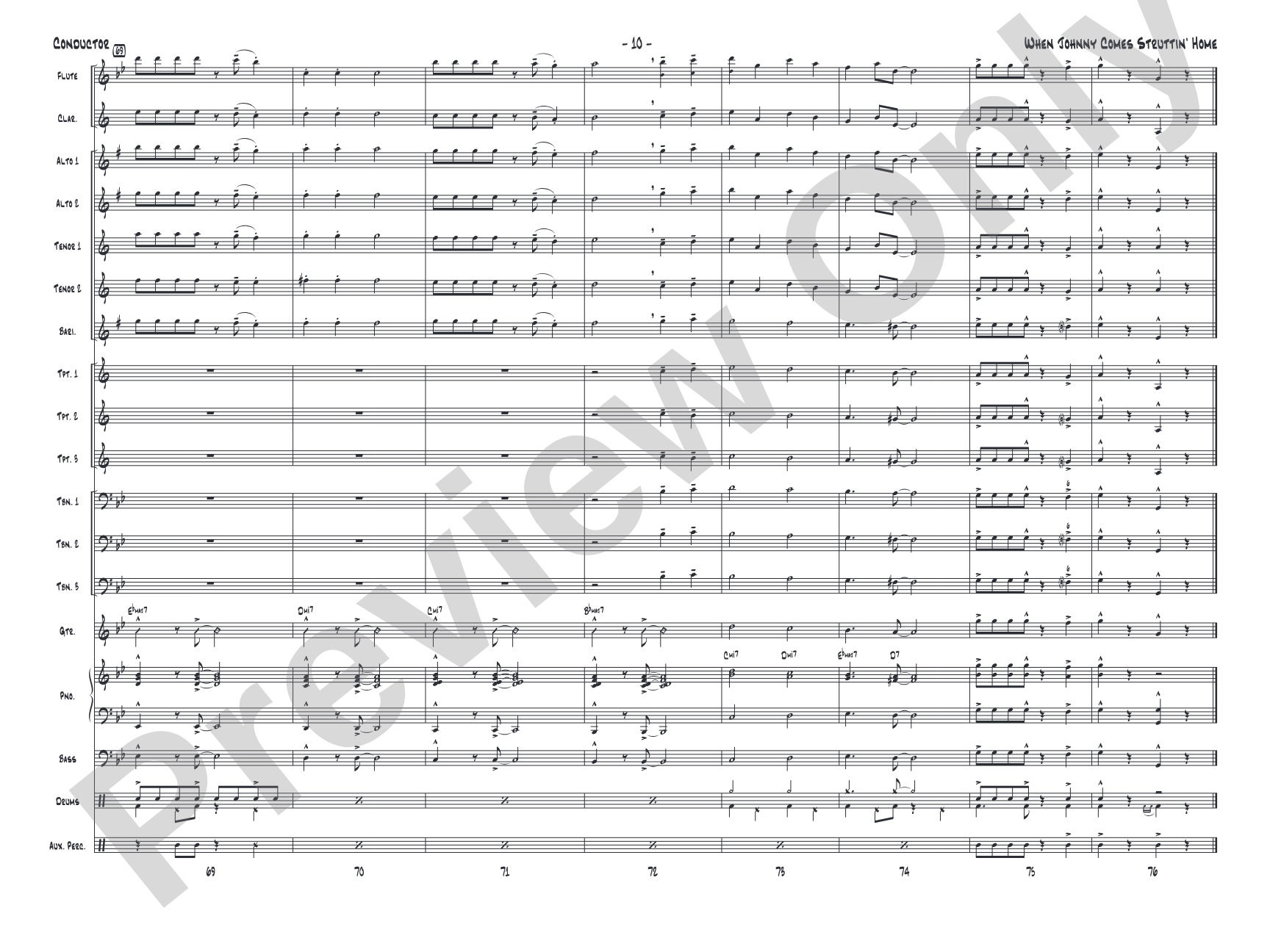

When Johnny Comes Struttin' Home: Jazz Ensemble Conductor Score & Parts
Traditional / arr. Rick Hirsch
Grade: 1 (Easy)
Item: 00-PK-0007448

$42.00
Pickup currently not available
Buy Extra Parts (Digital PDF Download)
Parts Added to Cart!
Description
This easy-to-play shuffle swings at around 144 BPM. This is a well-known melody scored for young players that features accessible ranges, brief written-out solos for tenor, alto, trumpet, and trombone, a nice modulation, and plenty of optional parts to include vibes. (2:10)


Don't just read it, hear it, play along with it, and watch your students grow with it. In MakeMusic Cloud, When Johnny Comes Struttin' Home: Jazz Ensemble Conductor Score & Parts comes alive with professional accompaniment, adjustable tempo, and built-in practice tools that turn solo practice into real progress.
Open in the Player
Jump straight in and assign it today.
Start Your Free Trial
Open this title and explore the full library in minutes.
Sample Audio
1
Audio File
--:--
0:00
0:00
Sample Video
Additional Details
Series:
First Year Charts for Jazz Ensemble
Publisher:
Alfred Music
Page Count:
90
SKU:
00-PK-0007448
More about this title
About the Arranger: Rick Hirsch

Rick Hirsch studied composition and arranging at UMass-Amherst and Northern Illinois University, earning degrees that prepared him for a career bridging classical and jazz worlds. Early in his professional life, he worked as a personal music copyist for legendary bandleaders Bob Mintzer and Toshiko Akiyoshi, an apprenticeship that shaped his ear for orchestration and his respect for the big band tradition. His compositions and arrangements have been performed by jazz luminaries including Yusef Lateef and Eddie Henderson, as well as the Capitol Quartet and Penn State's celebrated Blue Band.
Beyond his work as a composer and arranger, Hirsch has been a sought-after guest conductor for All-State and District Jazz Bands across the country, bringing his deep knowledge of the idiom to student ensembles at every level. He formerly taught at Penn State University and continues to be active in the jazz community. In 2017, his ensemble BIG OL' BAND released their debut album, Pocono Git-Down, a project celebrating the rich jazz creativity flourishing in regional scenes beyond major metropolitan centers.
Why we love this
Hirsch writes with young players firmly in mind. He pairs an instantly recognizable melody with a groove that swings hard at 144 BPM, giving your ensemble genuine jazz feel from the first read-through. The written-out solos for four voices mean every student gets a feature, the scoring includes optional vibes parts to expand instrumentation choices, and a modulation refreshes the form without creating unnecessary complications. This is a piece that sounds impressive to audiences while remaining genuinely playable for Grade 1 jazz bands.
What to expect
A patriotic melody stripped of its march context and reborn as a swinging shuffle. The tune bounces with the easy confidence of a song everyone knows, but the arrangement grounds it in the blues-inflected groove of mid-century jazz. There's joy in the solos, warmth in the harmonic movement, and the sense that even young players are playing something genuinely jazz, not just playing at jazz.
Who it's for
Young jazz ensembles ready to tackle a recognizable standard in a contemporary swing setting. First-year jazz students will find accessible ranges and clear musical roles, while the shuffle groove teaches the feel that defines jazz phrasing. School and community jazz bands in their first or second year of programming will find a reliable piece that builds confidence and connects to the jazz repertoire they hear beyond the classroom.
How to get the most out of it
- Lock the shuffle rhythm in the rhythm section before rehearsing the melody. The groove at this tempo needs precision from bass and drums to feel authoritative.
- Highlight the written solos by letting each featured voice (tenor, alto, trumpet, trombone) shine without drowning in accompaniment; use the full ensemble to support, not obscure.
- Stage the modulation deliberately, giving it space so listeners hear the key change as a compositional gesture rather than an accident.
- If vibes are available, integrate them early in rehearsal so the ensemble can balance the additional harmonic layer against the horns and rhythm.
How to use it
This works perfectly as an opener or closer for a concert featuring first-year jazz repertoire, setting an energetic, patriotic tone without requiring advanced musicianship. Pair it with a ballad and an uptempo feature to round out a jazz program that showcases different moods and showcases your ensemble's growing command of the idiom. It's also an excellent choice for festivals and competitions at the Grade 1 level, where the recorded timing (2:10) fits typical slot requirements and the piece impresses adjudicators with smart arranging and authentic swing.
Skills your students will build
- Playing shuffle rhythm with accurate swing eighth-note feel
- Reading and performing written jazz solos with appropriate articulation and phrasing
- Balancing ensemble voicing in a jazz texture (horns, rhythm section, optional vibes)
- Understanding and executing a key modulation within a jazz context
- Responding to and supporting featured soloists without overpowering them