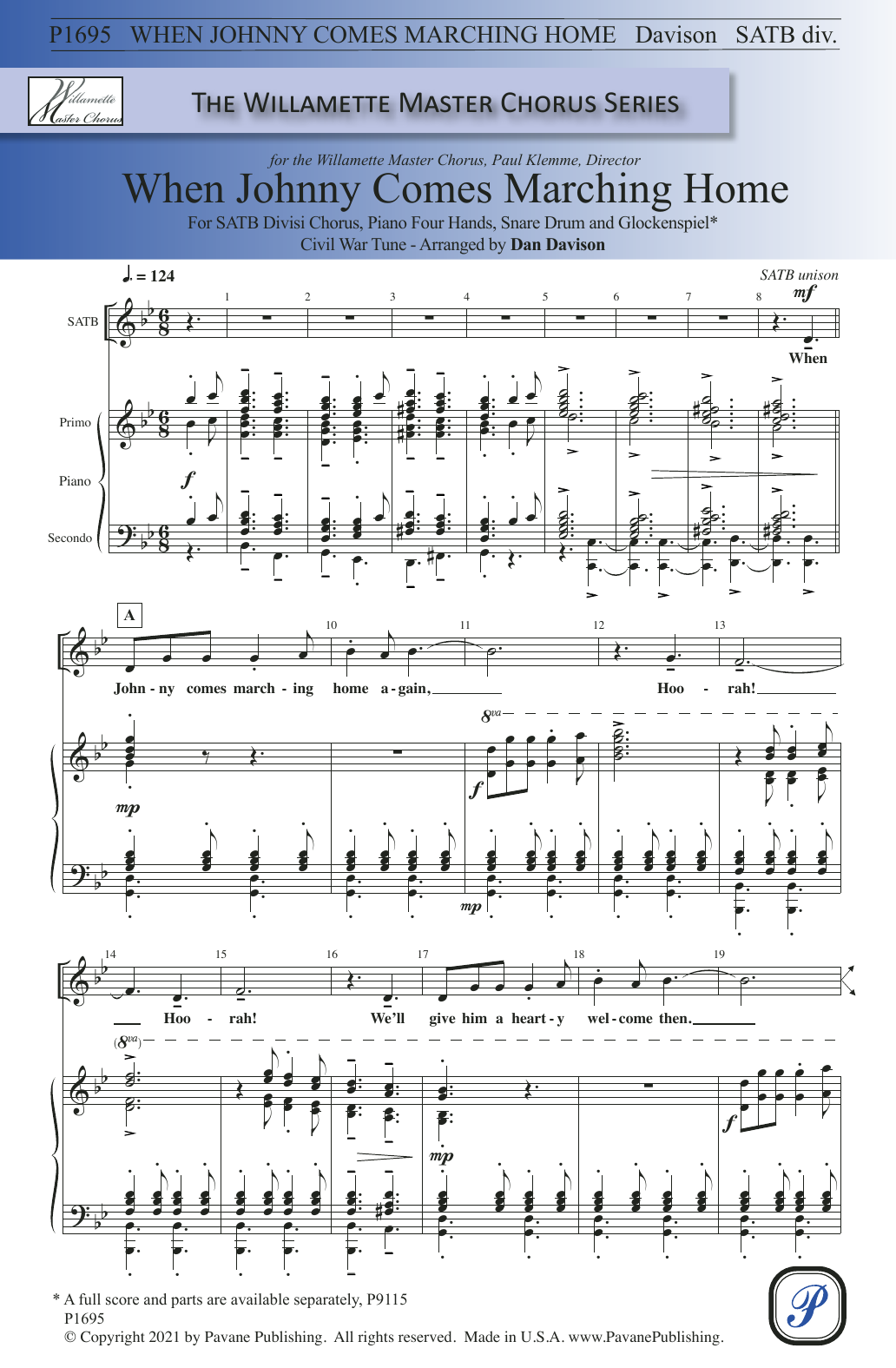
When Johnny Comes Marching Home (arr. Dan Davison) Sheet Music Preview

When Johnny Comes Marching Home (arr. Dan Davison): SATB Choral Octavo

By Civil War Tune / Arranged by Dan Davison

Item: 35-DS00500900

Digital Download
$3.60
Description

When Johnny Comes Marching Home (arr. Dan Davison): SATB Choral Octavo isn't in MakeMusic Cloud just yet...but it could be. Let us know you'd like to see it, and you'll help shape what comes next. In the meantime, start a free trial and dive into thousands of interactive titles your students can play along with today.

Sample Audio
No sample audio found.
Sample Video
Additional Details
Publisher: Hal Leonard
Page Count: 16
SKU: 35-DS00500900

More about this title

About the Composer: Civil War Tune

"When Johnny Comes Marching Home" emerged from the American Civil War era as a song that captured both the hope of soldiers returning home and the bittersweet reality of a nation transformed by conflict. The tune became one of the most enduring patriotic melodies in American music, sung across military ceremonies, parades, and community gatherings for generations. Its origins trace to the folk tradition, with lyrics and melody evolving through various versions before settling into the beloved standard we know today.

For music educators, this melody represents a crucial touchstone in American musical history. Teaching students the Civil War tune opens conversations about how music documents historical moments, serves social movements, and persists in cultural memory. The song's accessibility and emotional weight make it a powerful teaching tool for exploring how simple, singable melodies can carry profound meaning.

Why we love this

Dan Davison's arrangement honors the song's marching spirit while giving SATB singers genuine harmonic interest and textural variety across 16 pages. Directors appreciate how this version balances authenticity with musicality; it never feels like a rote historical reproduction but rather a thoughtful modern treatment that respects the original's power. The arrangement works equally well for concert programming or educational settings where you want to engage singers with meaningful American repertoire.

What to expect

There's a dignified march through these pages, tinged with nostalgia and longing. The harmonies support the melody's inherent optimism while acknowledging the weight of what the tune represents; singers experience both the hope of homecoming and the solemnity of sacrifice.

Who it's for

Choirs looking for substantial yet accessible repertoire that connects to American history and culture. This works for mixed ensembles ranging from high school to community and church choirs seeking music that teaches and moves audiences simultaneously.

How to get the most out of it

  • Shape the phrases with natural breath points rather than pushing through to phrase endings. The melody benefits from slight pauses that honor its marching, storytelling quality.
  • Balance the four parts so the tune remains clearly audible even when harmonies thicken. This keeps the familiar melody front and center for audiences.
  • Establish a steady, purposeful tempo from the start. This tune lives in forward motion; tentative conducting will deflate its character.
  • Explore dynamic contrast between verses and sections. Varying the volume from verse to verse adds drama without losing the song's straightforward charm.

How to use it

This arrangement fits naturally into concerts exploring American musical heritage, patriotic celebrations, or programs built around historical themes. Consider pairing it with other Civil War era spirituals or folk songs to build a cohesive set, or use it as a standalone centerpiece that demonstrates how choral music can honor significant cultural moments.

Skills your students will build

  • Singing with historical context and emotional authenticity
  • Balancing melody prominence across four-part writing
  • Maintaining steady pulse and forward motion in march-like meter
  • Blending harmony while preserving text clarity
  • Understanding how traditional melodies function in arranged settings

You May Also Like