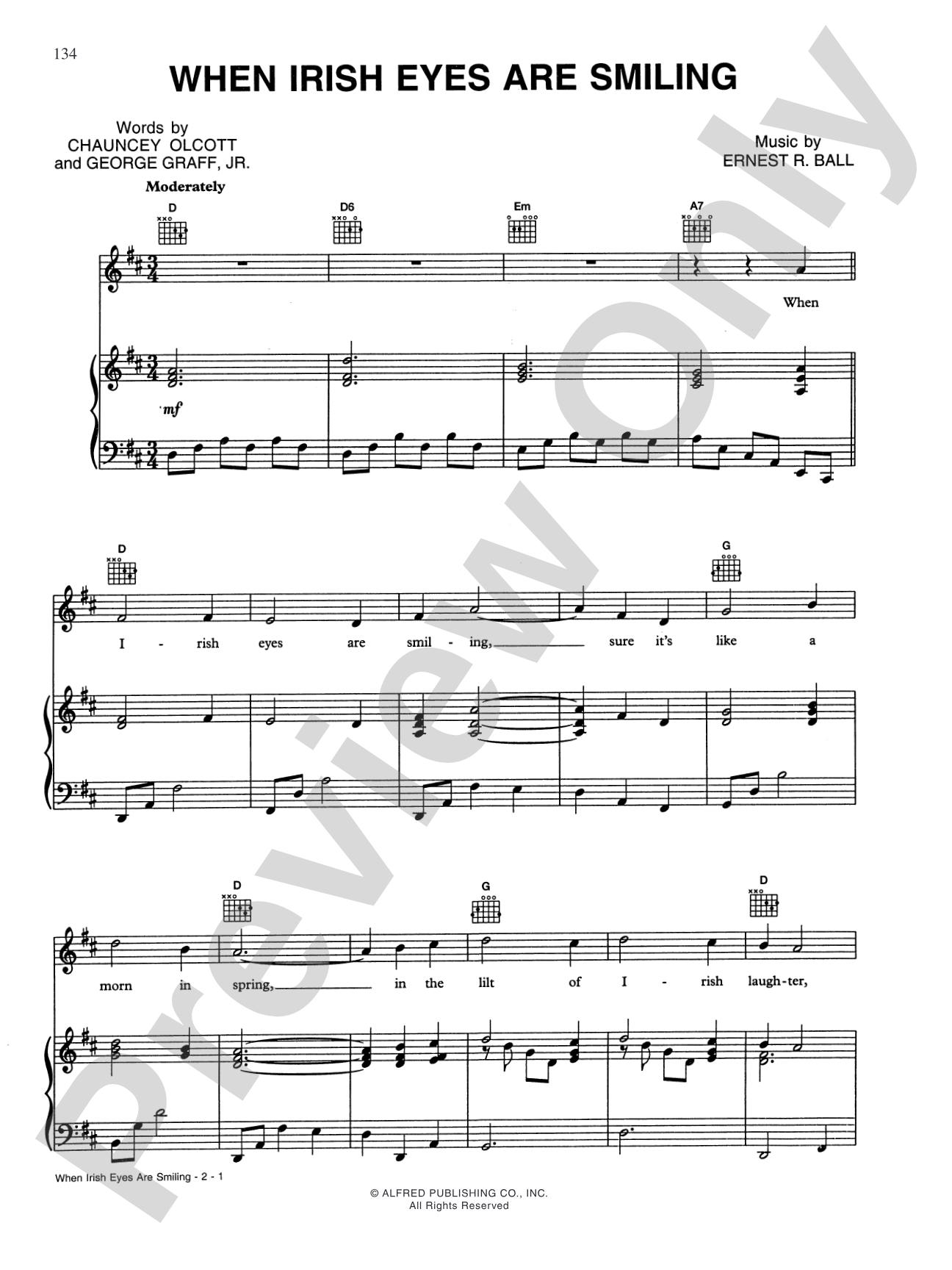
When Irish Eyes Are Smiling Sheet Music Preview

When Irish Eyes Are Smiling: Piano/Vocal/Chords

Words by Chauncey Olcott and Geo. Graff, Jr., music by Ernest R. Ball

Item: 00-PIP-000095

Digital Download
$3.99

One moment…

Description

When Irish Eyes Are Smiling: Piano/Vocal/Chords isn't in MakeMusic Cloud just yet...but it could be. Let us know you'd like to see it, and you'll help shape what comes next. In the meantime, start a free trial and dive into thousands of interactive titles your students can play along with today.

Sample Audio
No sample audio found.
Sample Video
Additional Details
Series: Deluxe Edition
Publisher: Alfred Music
Page Count: 4
SKU: 00-PIP-000095

More about this title

About the Composer: Ernest Ball

Ernest Ball (1878-1927) was an American composer and singer who became one of the most prolific and commercially successful songwriters of the early twentieth century. He wrote over 2,000 songs during his career, many of which became standards of the American popular songbook and remain instantly recognizable today.

Why we love this

This is the kind of song that instantly connects with audiences across generations. The melody is so naturally singable and the harmonic language so warm that singers can focus on storytelling rather than technical hurdles, while the piano part provides authentic period accompaniment without demanding virtuosity.

What to expect

Warm, tender, and deeply sentimental. The melody unfolds with a natural lilt and grace that evokes Irish folk traditions while maintaining the smoothness of Tin Pan Alley songwriting. Every phrase feels like a small confession of affection, supported by gently rocking piano accompaniment.

Who it's for

Singers exploring early American popular song and nostalgia repertoire will find this accessible and rewarding. Piano accompanists benefit from the straightforward harmonic writing and clear voice-leading. This is ideal for recital singers, community performers, and students learning the art song tradition of the early twentieth century.

How to get the most out of it

  • Shape the vocal line with a gentle rubato that honors the song's reflective, nostalgic character; resist the urge to rush through sentimental moments.
  • Keep the piano accompaniment light and conversational rather than heavy. Let the voice lead while the chords provide support and color.
  • Pay attention to the lyrical content to inform your interpretive choices. The lyrics about Irish heritage and tender affection should shape phrasing and dynamic shaping.
  • Balance vocal projection with intimacy. This song works best when it feels personal, not performative.

How to use it

Program this alongside other early twentieth-century American standards to showcase the evolution of popular song. It works beautifully in recitals centered on nostalgia, Irish heritage, or the golden age of songwriting. Consider pairing it with other Ernest Ball compositions or contemporary songs from the same era to create a thematic concert program.

Skills your students will build

  • Singing with rubato and interpretive flexibility in the vocal line
  • Accompanying a singer with sensitive dynamic balance and light touch
  • Understanding early twentieth-century harmonic language and song structure
  • Connecting lyrical content to interpretive and expressive choices

You May Also Like