When I'm Sixty-Four Sheet Music Preview

When I'm Sixty-Four

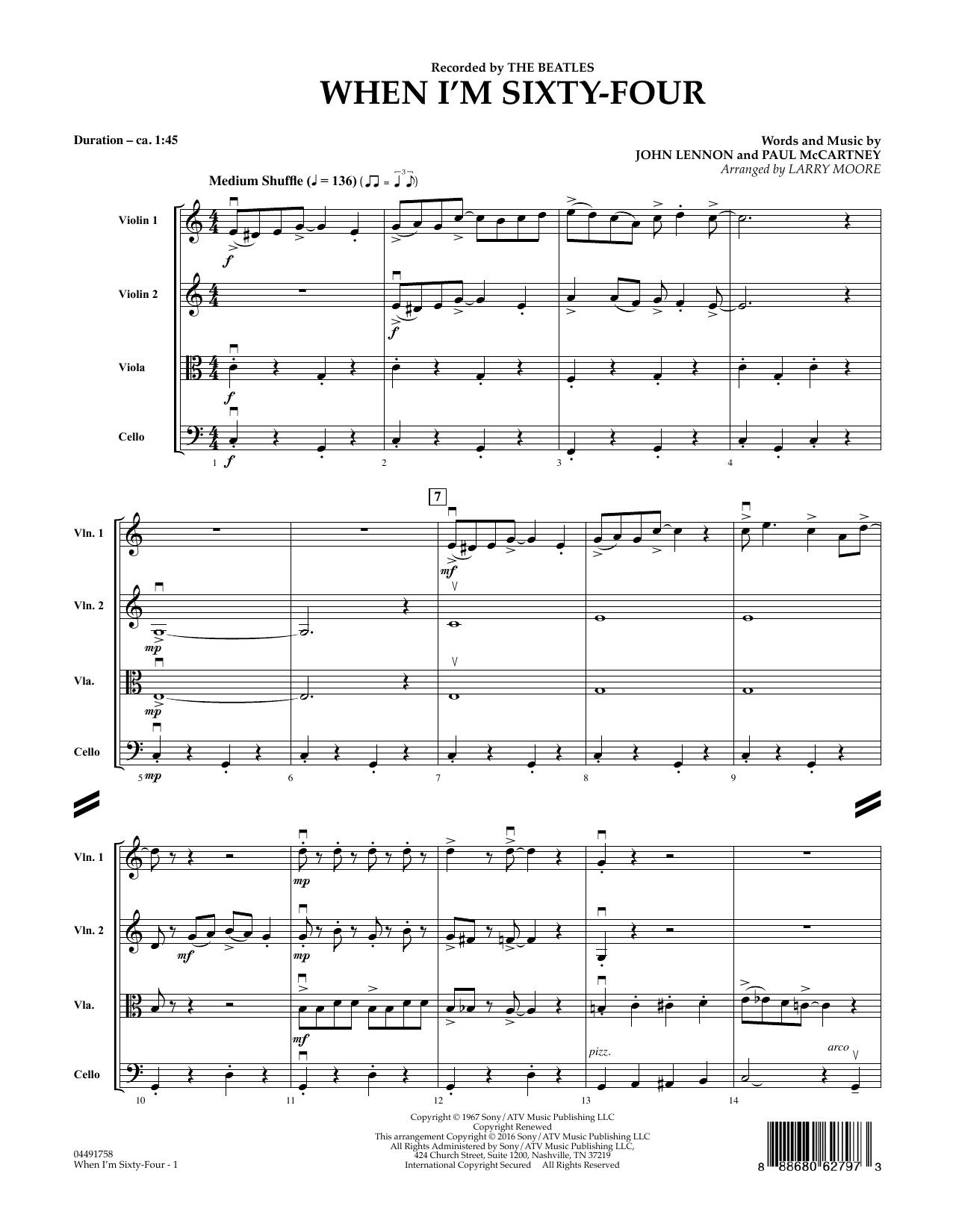
As performed by The Beatles / Arranged by Larry Moore

Grade: 3-4

Item: 35-PK00383219

Digital Download
$16.99
Description
Here's a string quartet version of the evergreen Beatles toe-tapper that is certain to bring a smile to all. Simple swing/shuffle rhythms that will easily fall into place with your young performers. Dur: 1:45

When I'm Sixty-Four isn't in MakeMusic Cloud just yet...but it could be. Let us know you'd like to see it, and you'll help shape what comes next. In the meantime, start a free trial and dive into thousands of interactive titles your students can play along with today.

Sample Audio
No sample audio found.
Sample Video
Additional Details
Publisher: Hal Leonard
SKU: 35-PK00383219

More about this title

About the Artist: The Beatles

The Beatles transformed popular music across the 1960s with their innovative songwriting, harmonic sophistication, and studio experimentation. Their catalog remains a goldmine for music educators seeking repertoire that engages students while teaching genuine musicianship.

Why we love this

Larry Moore's arrangement captures the song's vaudeville charm without sacrificing playability for young string players. The swing rhythms feel authentic to the original while remaining accessible, and the novelty factor virtually guarantees audience engagement whenever you program it.

What to expect

Wistful and quirky in equal measure, the arrangement channels the original's tongue-in-cheek attitude about aging. The swing rhythm gives it a playful, almost music-hall quality that feels sophisticated despite its simplicity.

Who it's for

String quartets working at grades 3 and 4 who want to program something that entertains audiences and performers alike. It works equally well for intermediate students looking for popular music arrangements that don't oversimplify the original.

How to get the most out of it

  • Establish the shuffle feel early in sectional rehearsals by tapping the dotted rhythm on the beat before adding notes. Many young players rush swing rhythms, so isolate this element until it feels natural.
  • Balance the melodic line across all four voices rather than letting the violins dominate. Moore likely distributed thematic material throughout the voicing, so ensure violas and cellos project their parts with confidence.
  • Keep the tempo conversational and slightly buoyant. The piece should sound like your quartet is gently poking fun at the subject matter, not steamrolling through it.

How to use it

Place this strategically in a pops concert or variety program where a brief, high-energy lift is needed. It also works as a charming interlude between heavier classical works, signaling to audiences that your ensemble enjoys itself while still executing with care.

Skills your students will build

  • Swing eighth-note rhythms and shuffle interpretation
  • Ensemble balance and voice independence in four-part textures
  • Maintaining consistent rhythmic feel while managing bow control
  • Stylistic flexibility and performance attitude

You May Also Like