
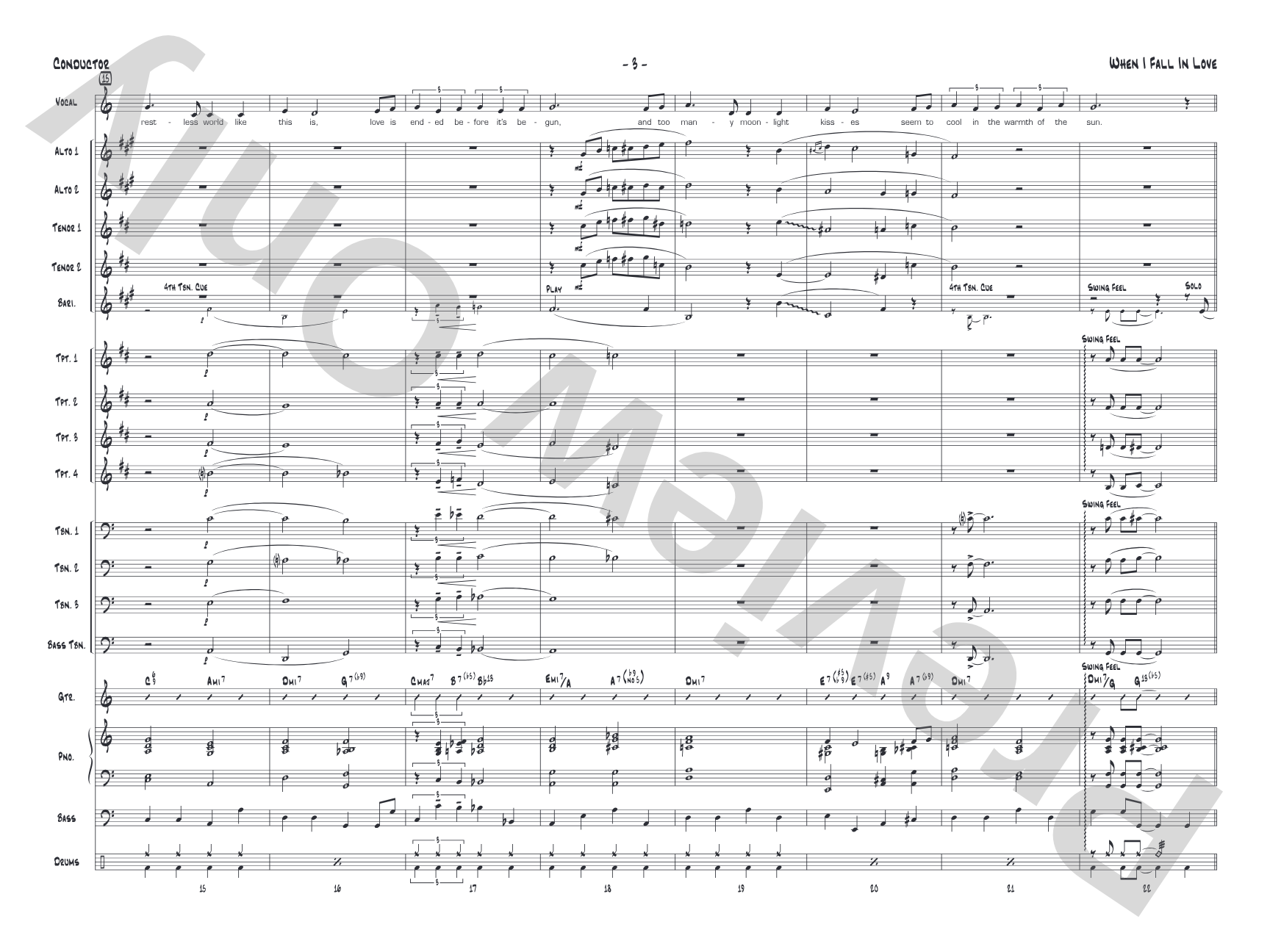
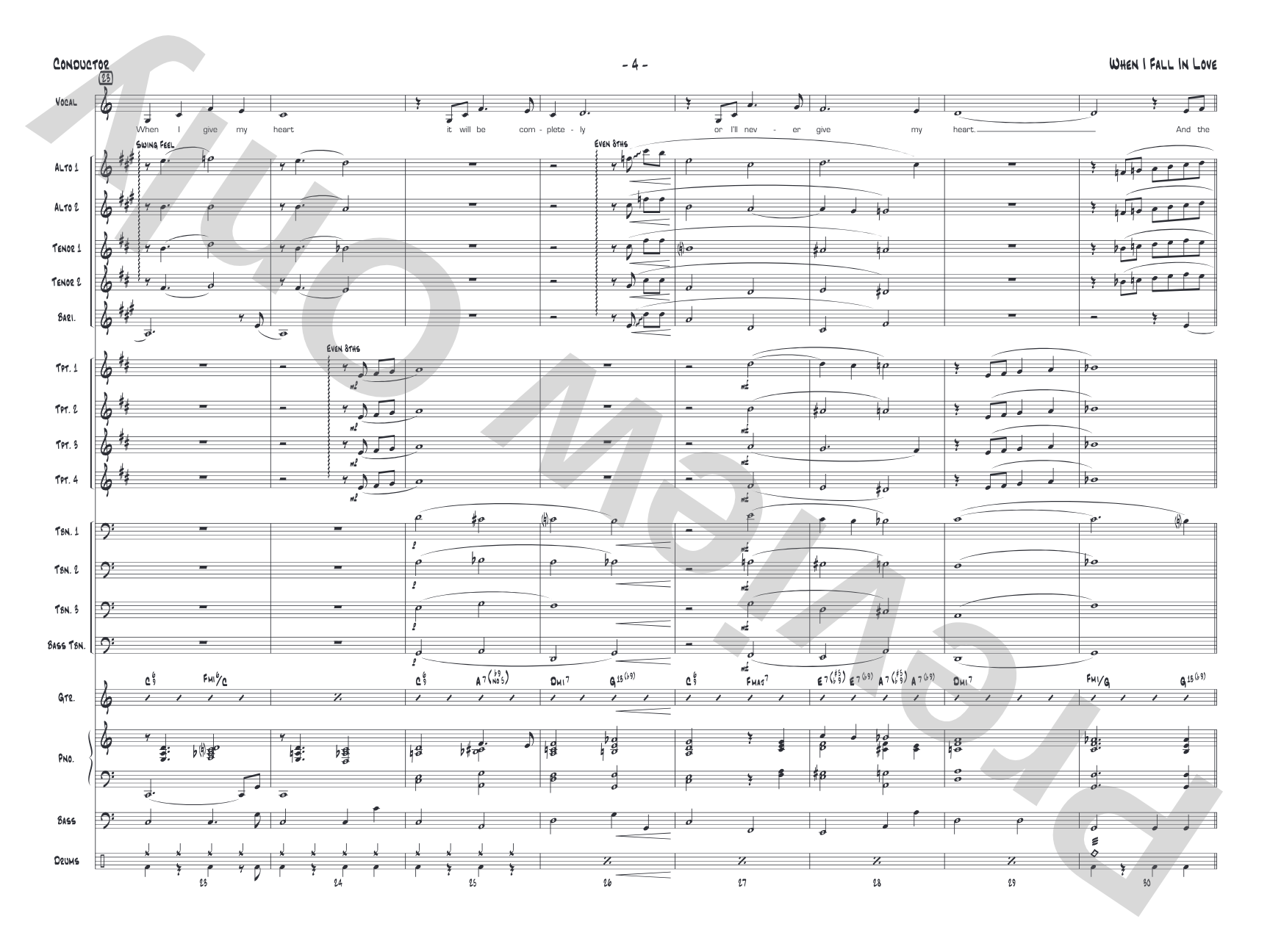
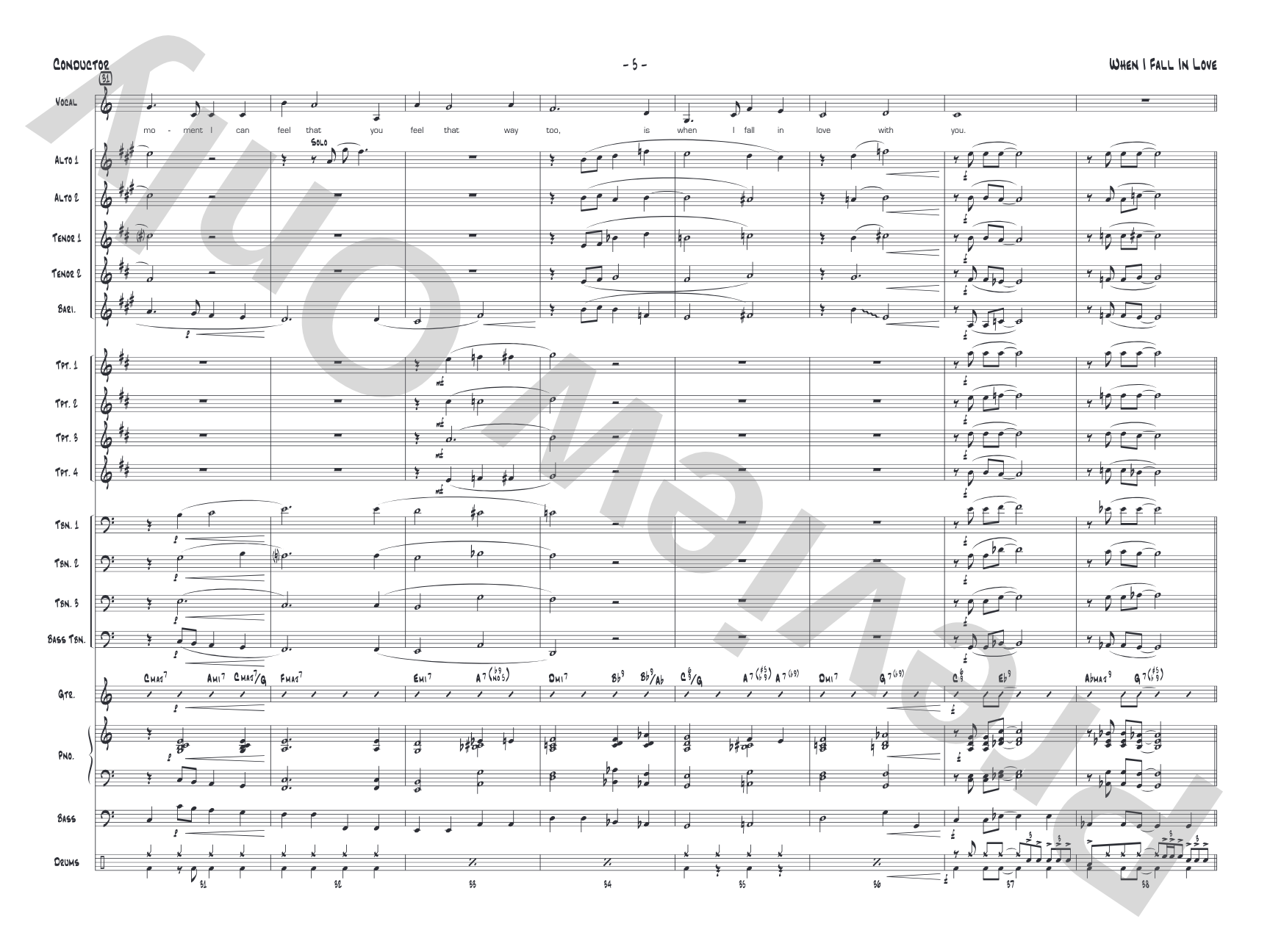
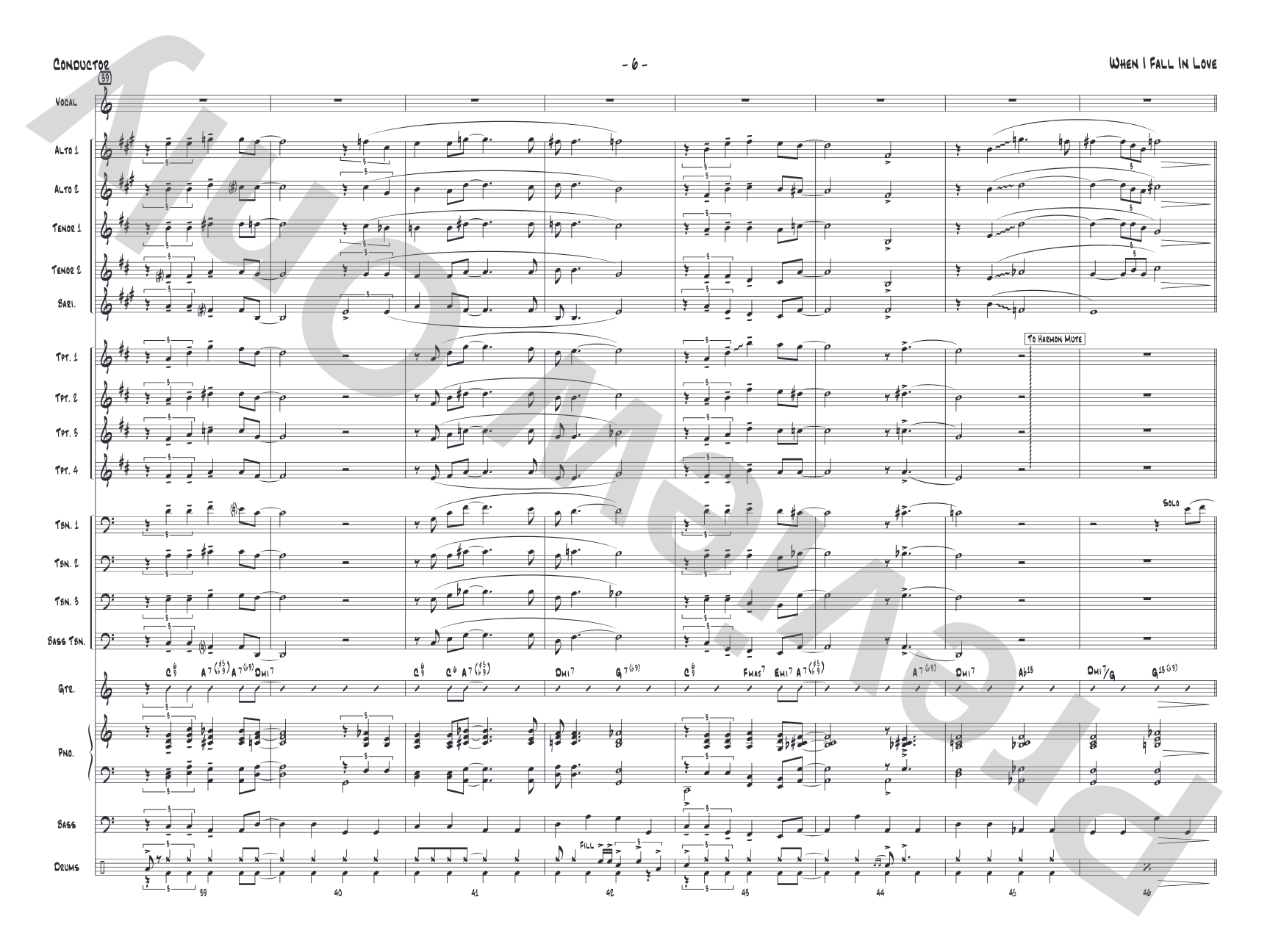
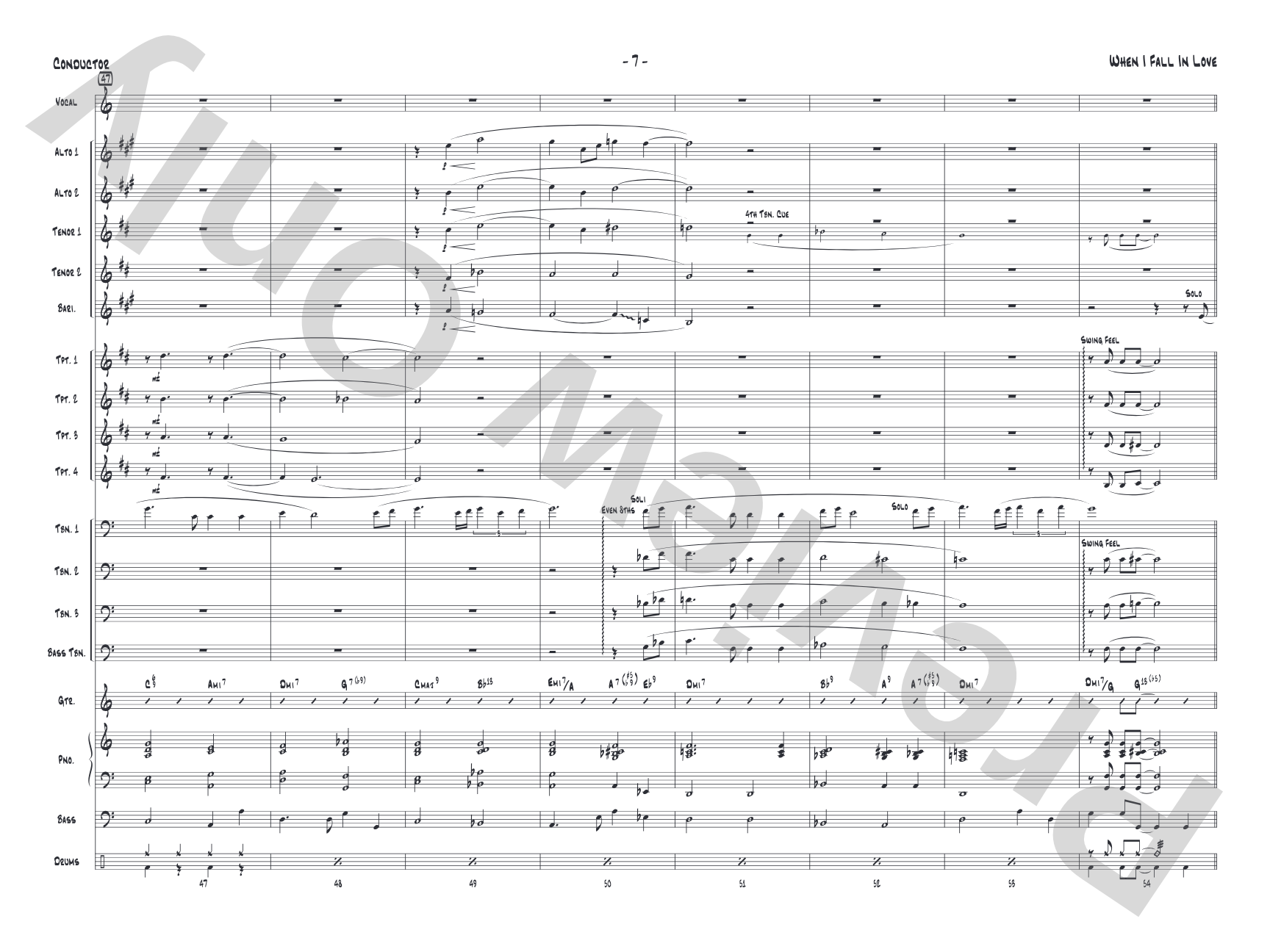
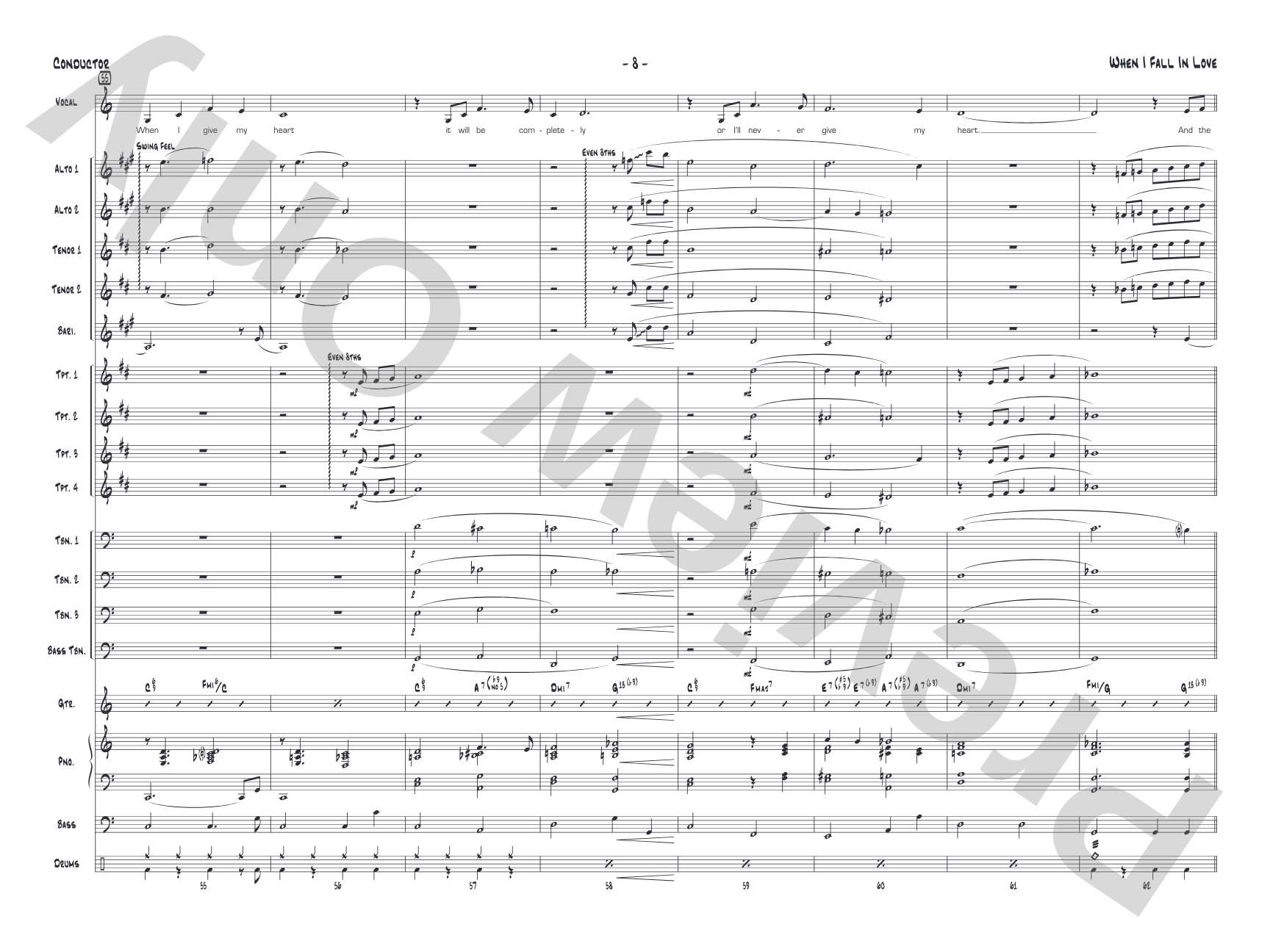
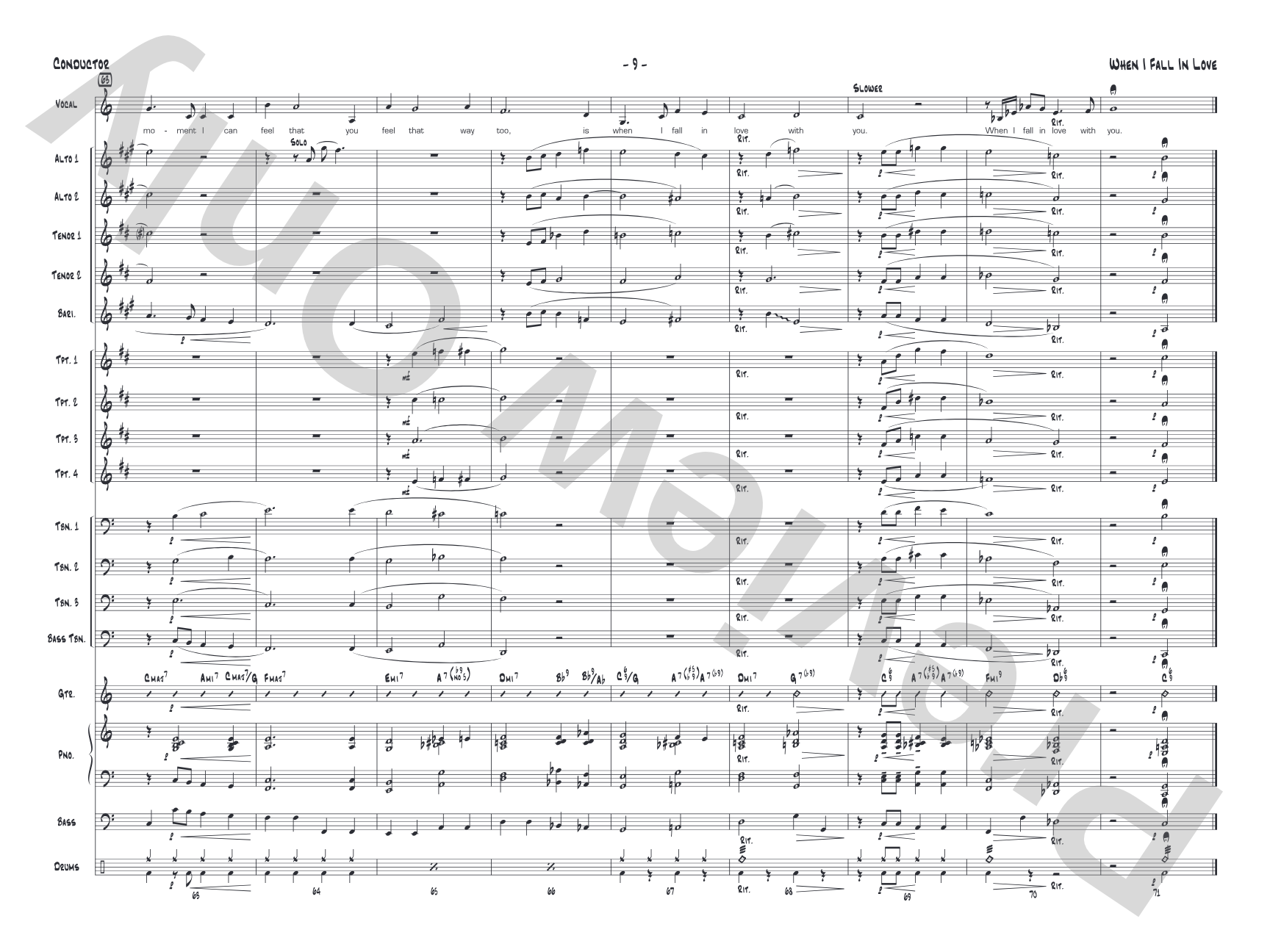

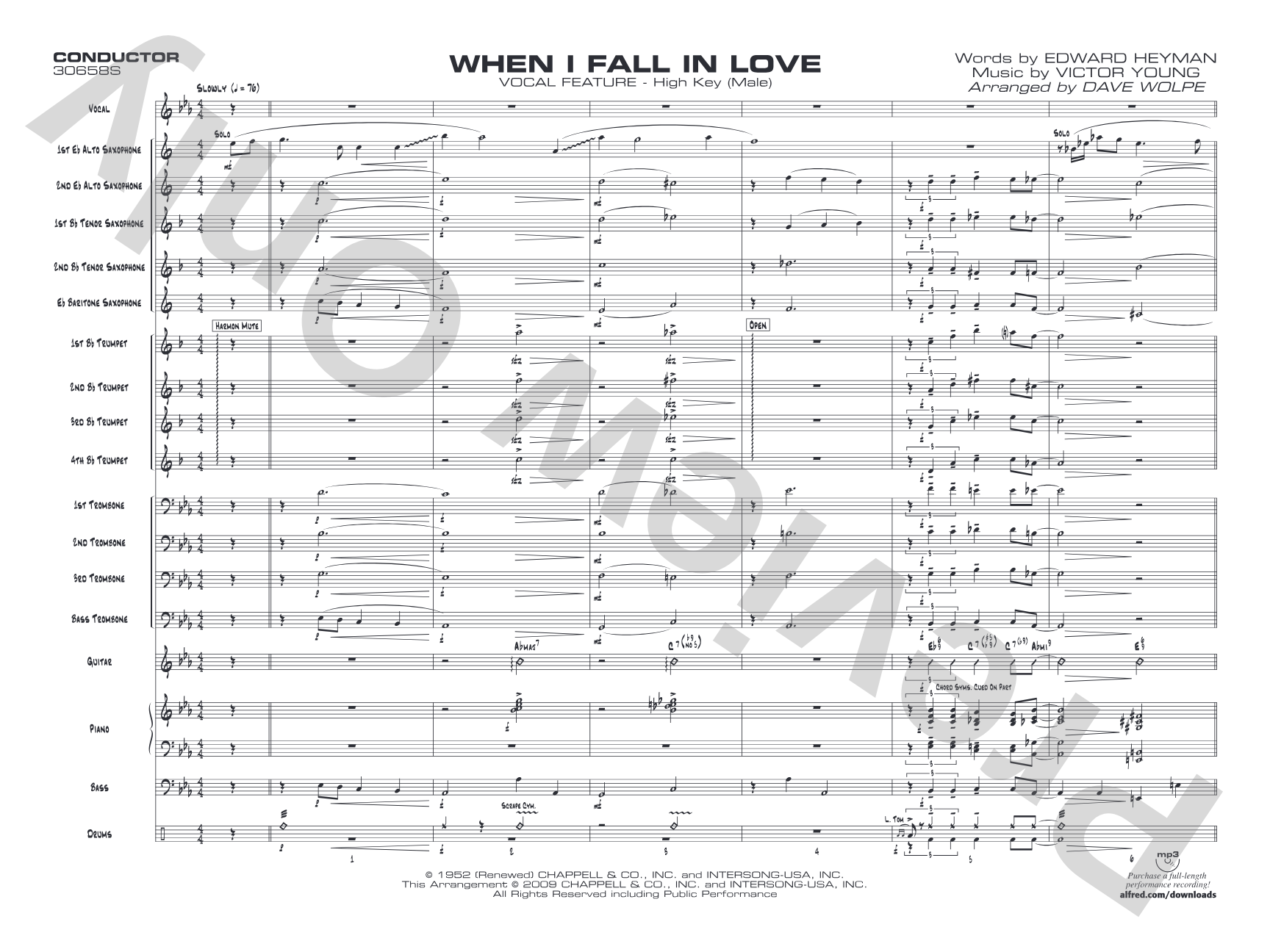
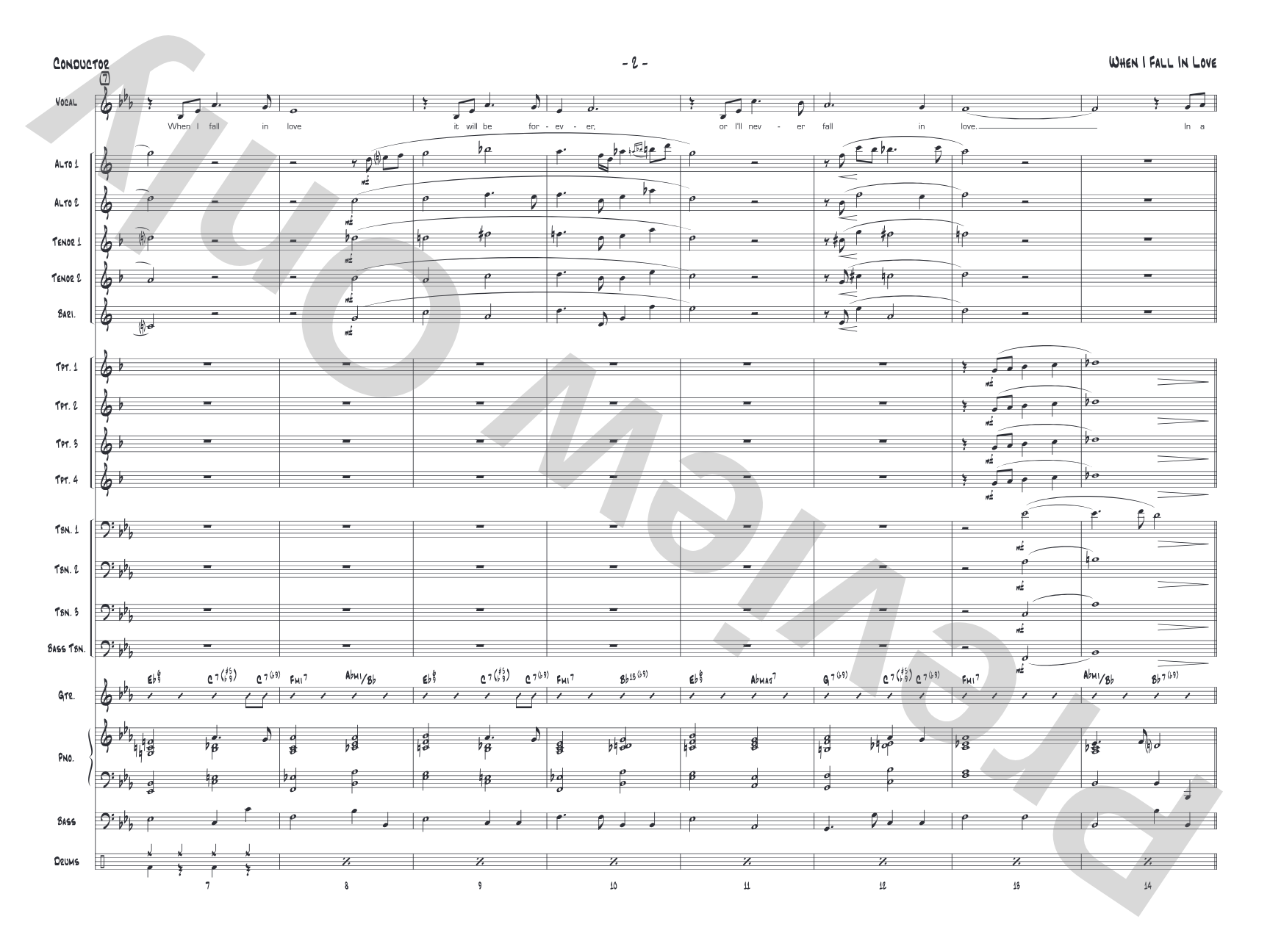
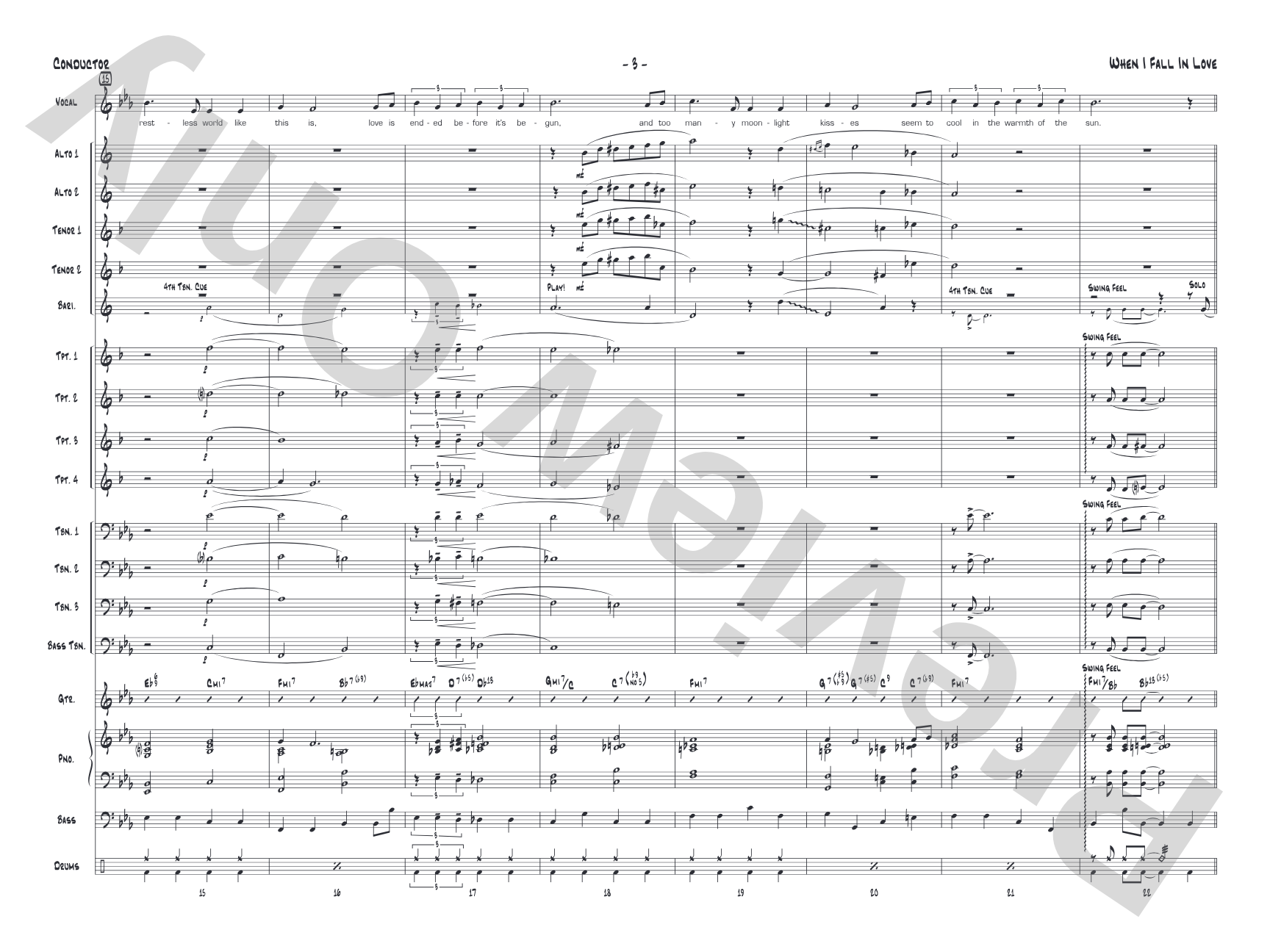
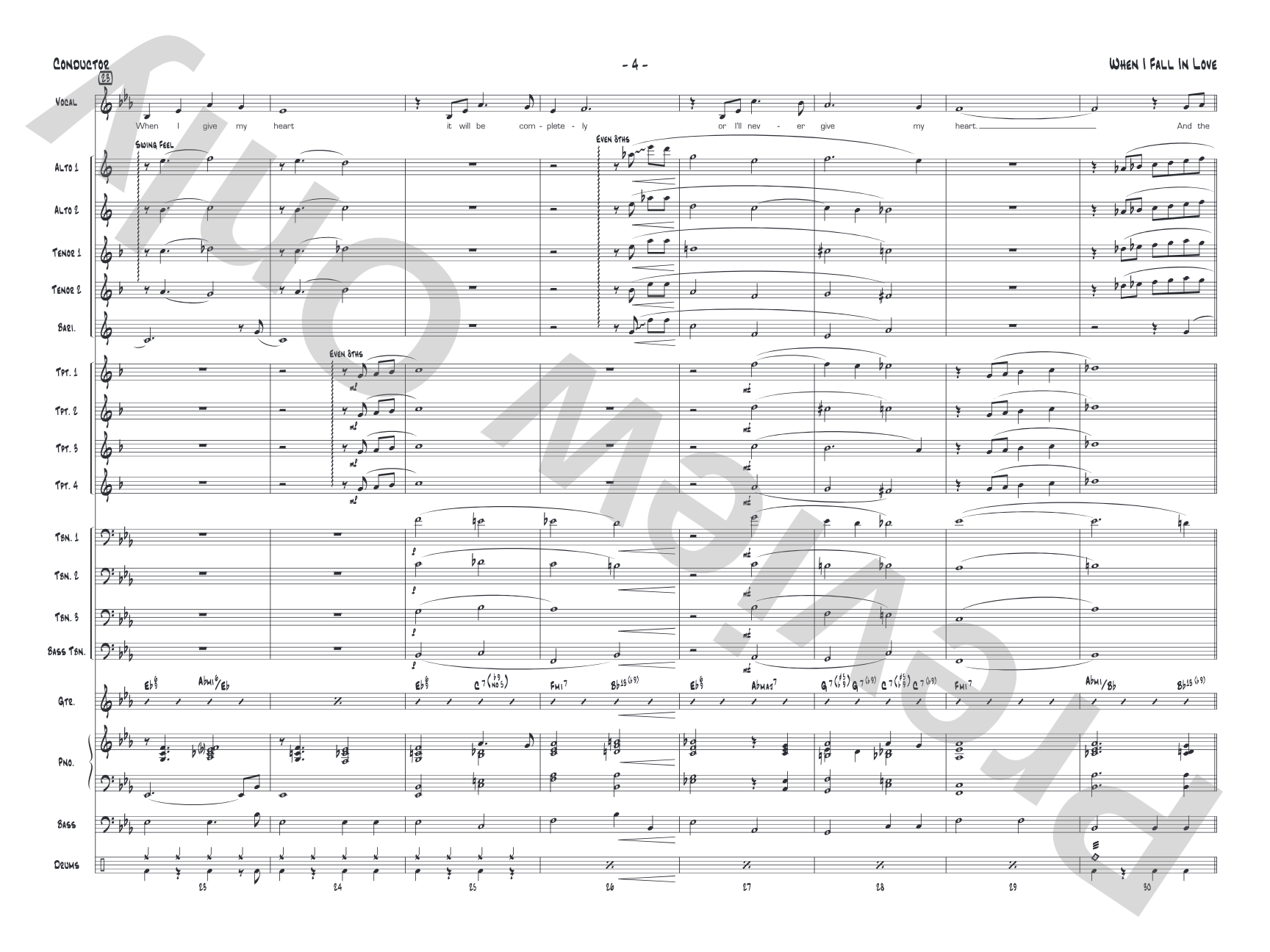
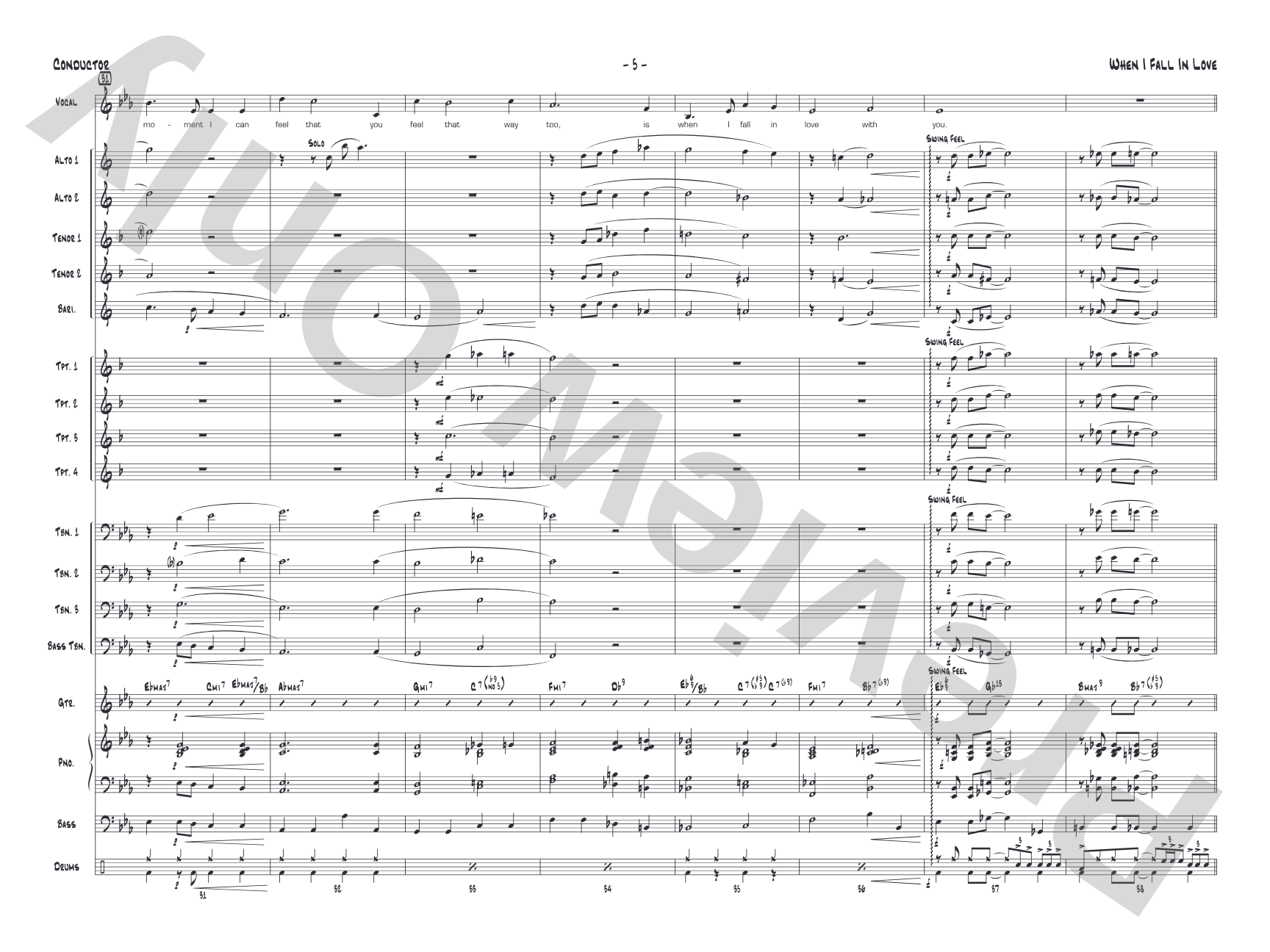
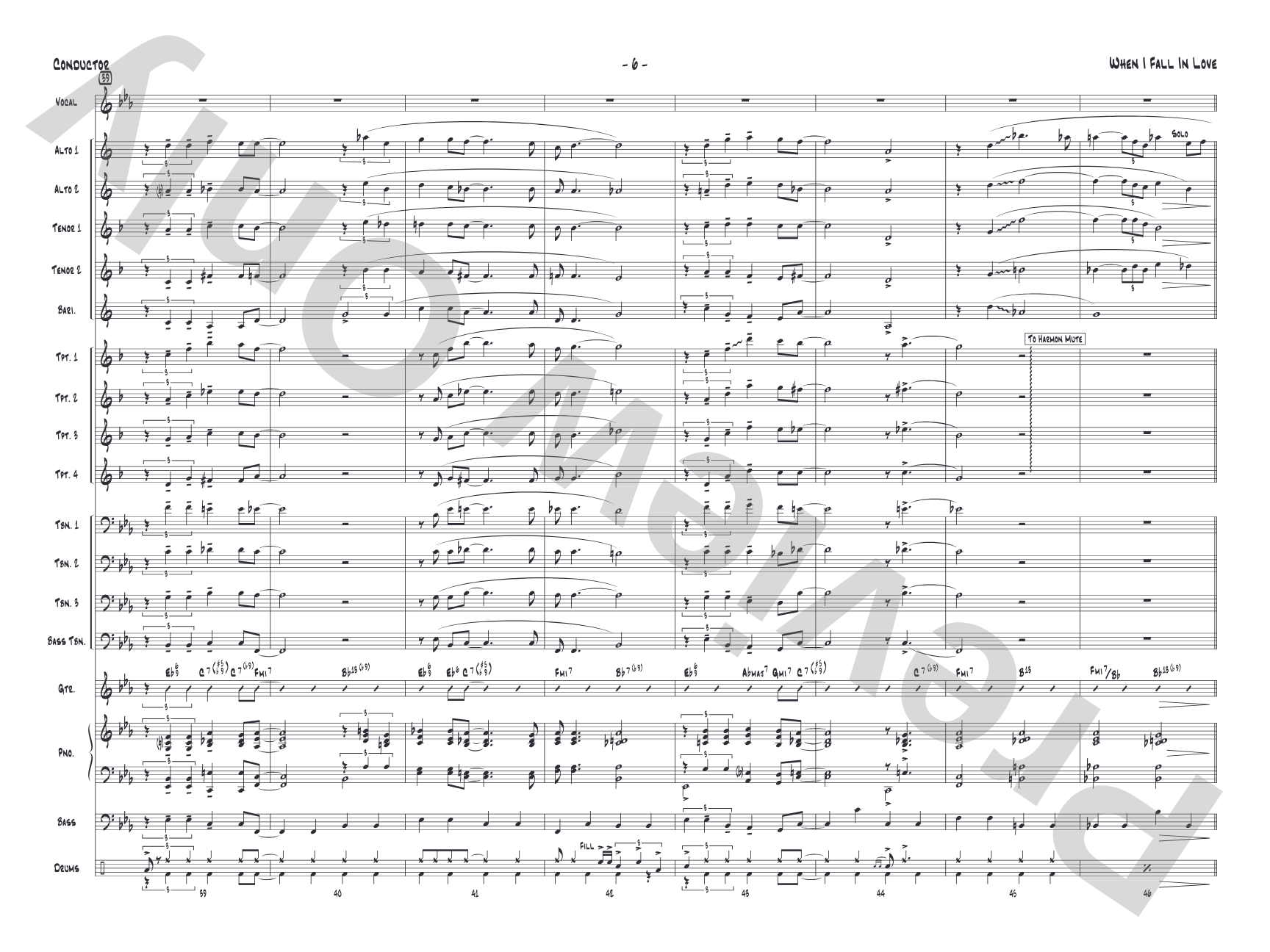
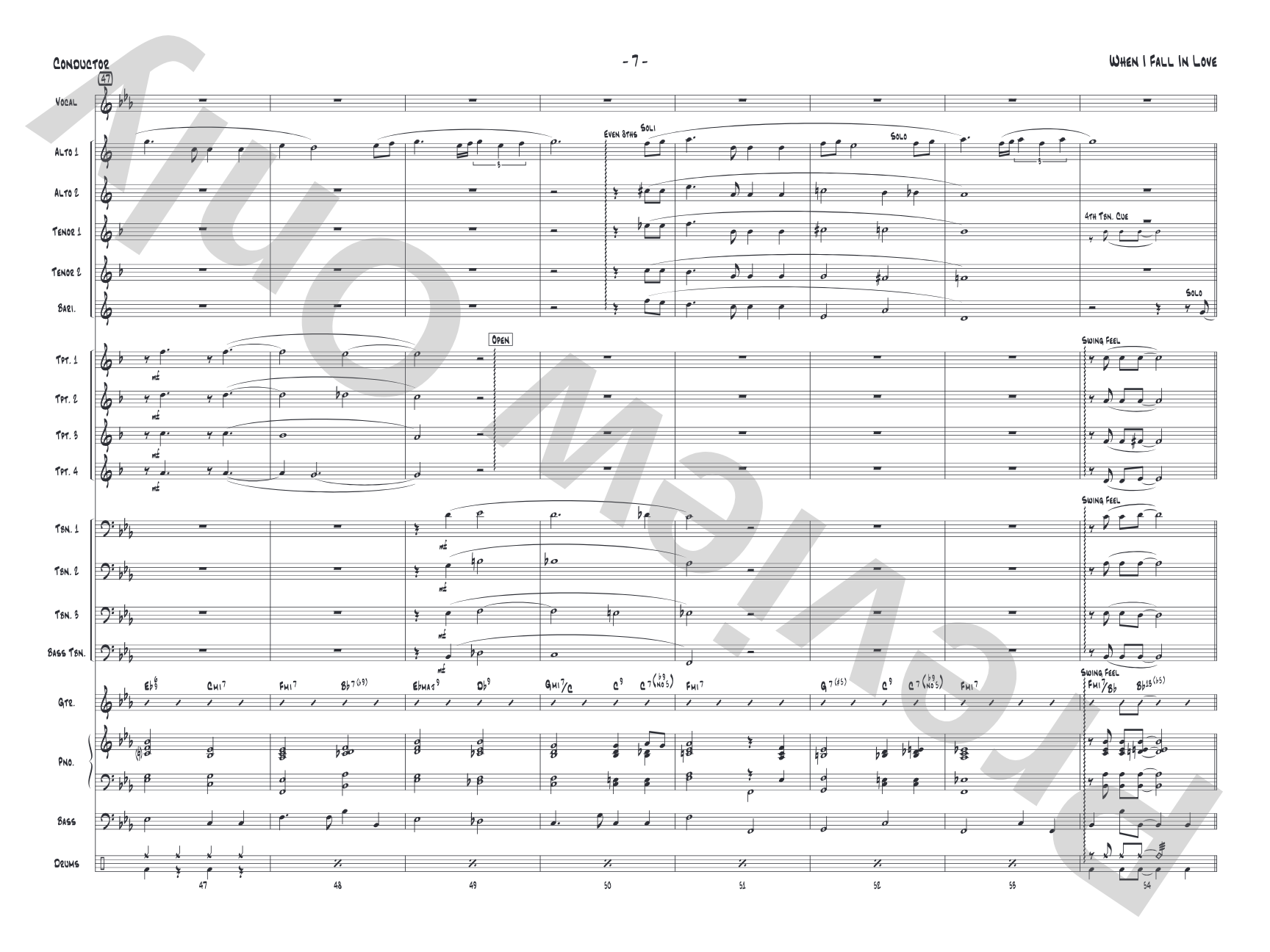
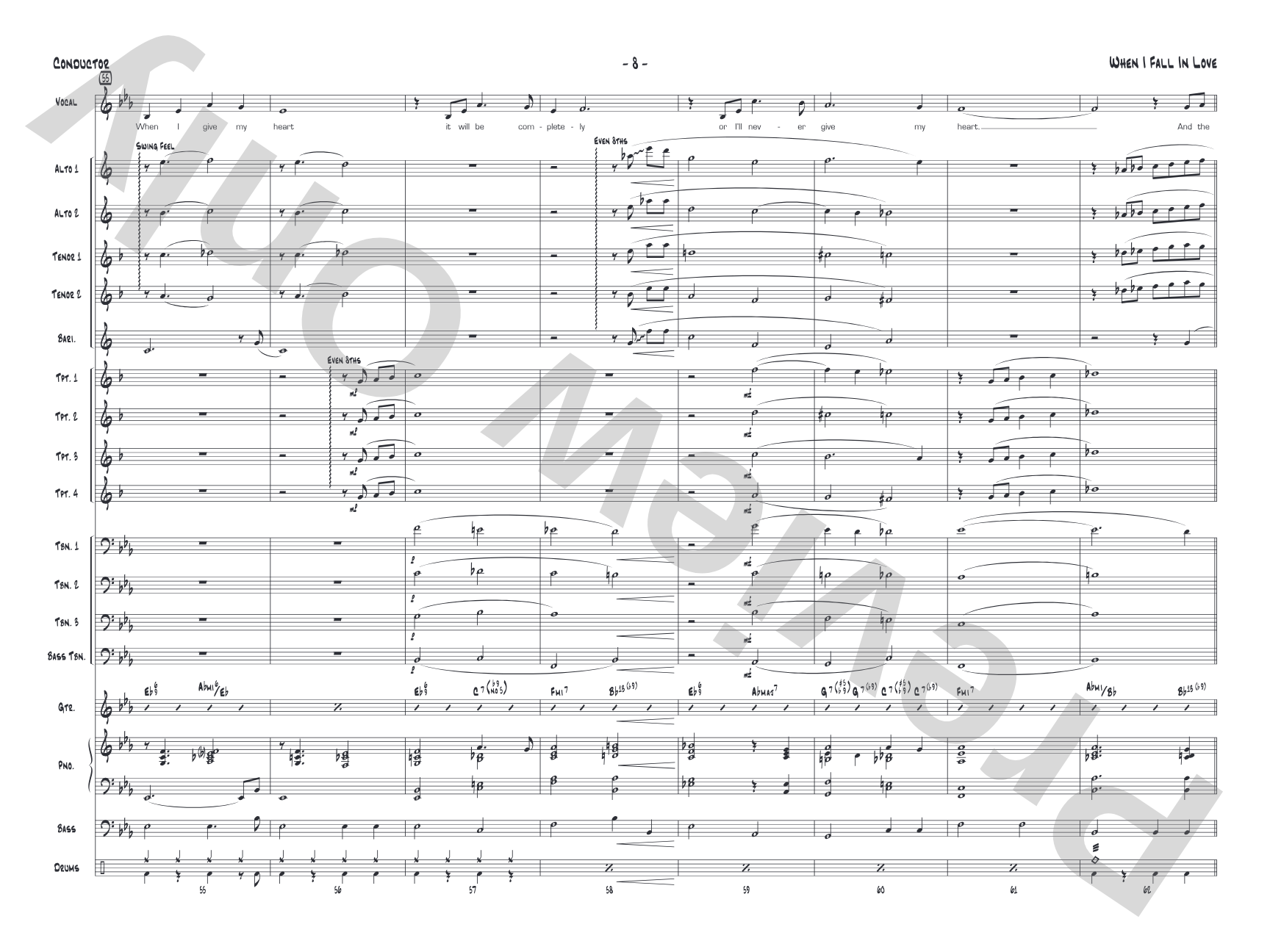
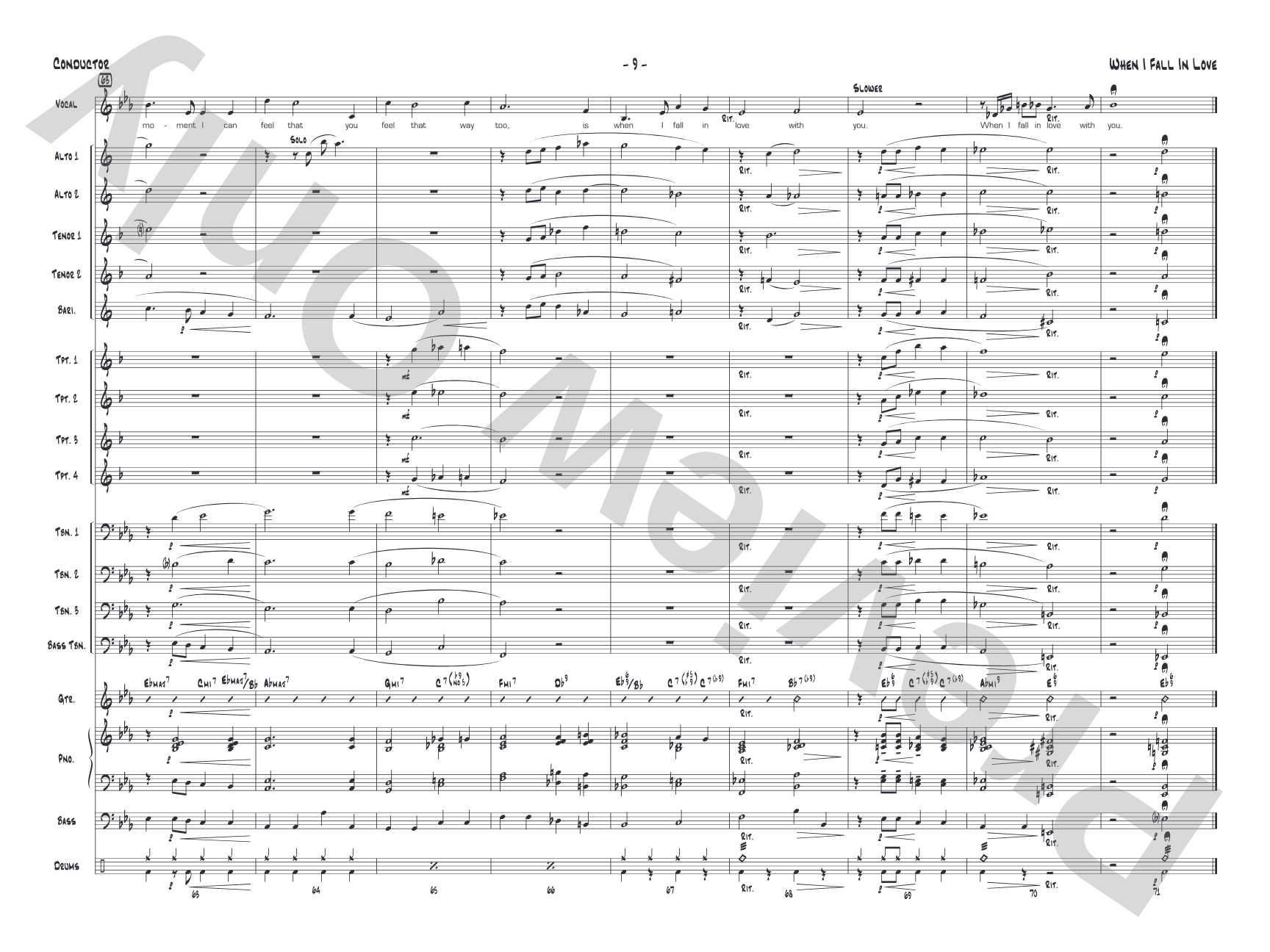




When I Fall in Love: Score
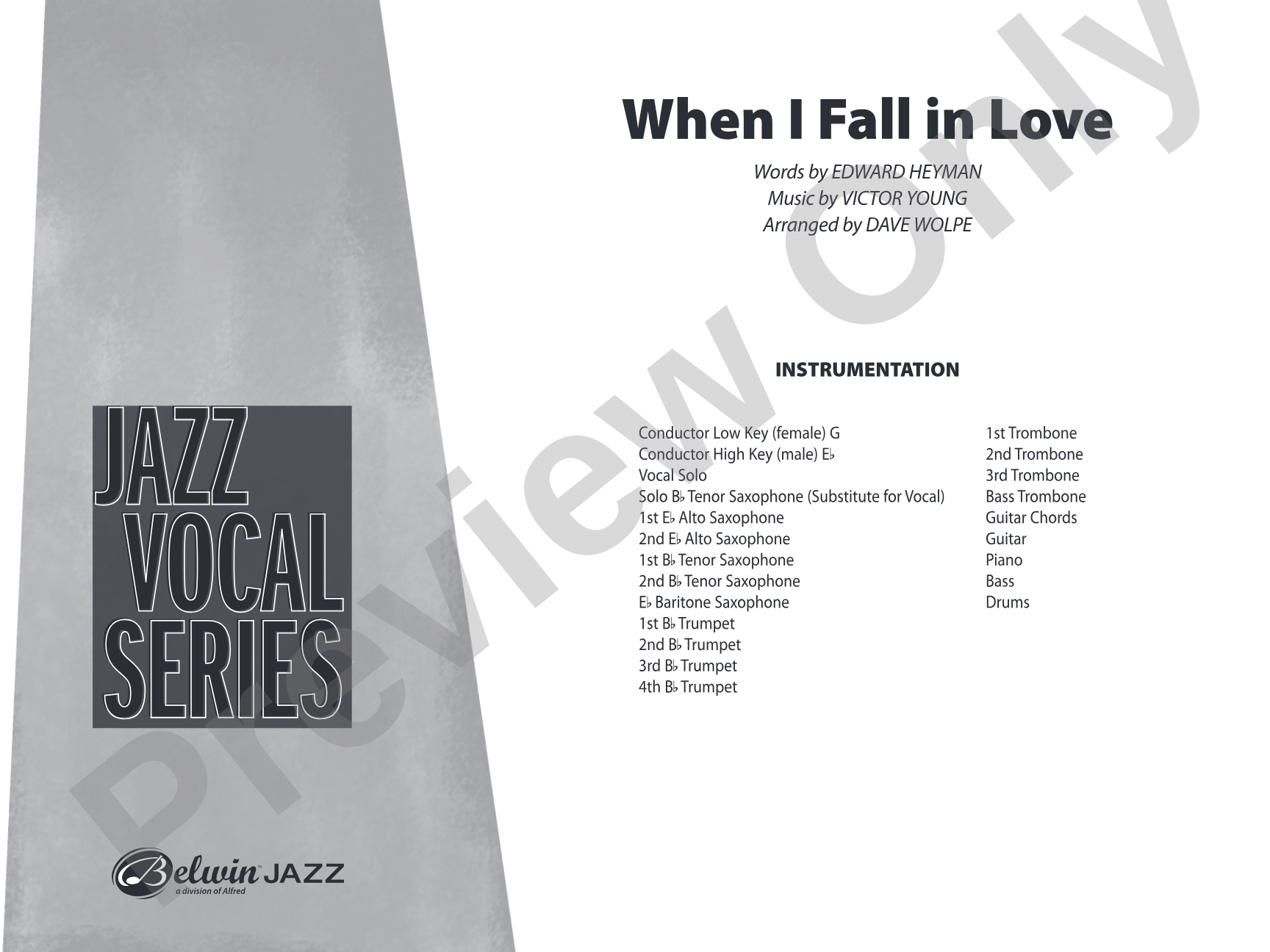
Words by Edward Heyman, music by Victor Young / arr. Dave Wolpe
Grade: 3.5 (Medium)
Item: 00-PR-0003135
$13.00
Pickup currently not available
Description
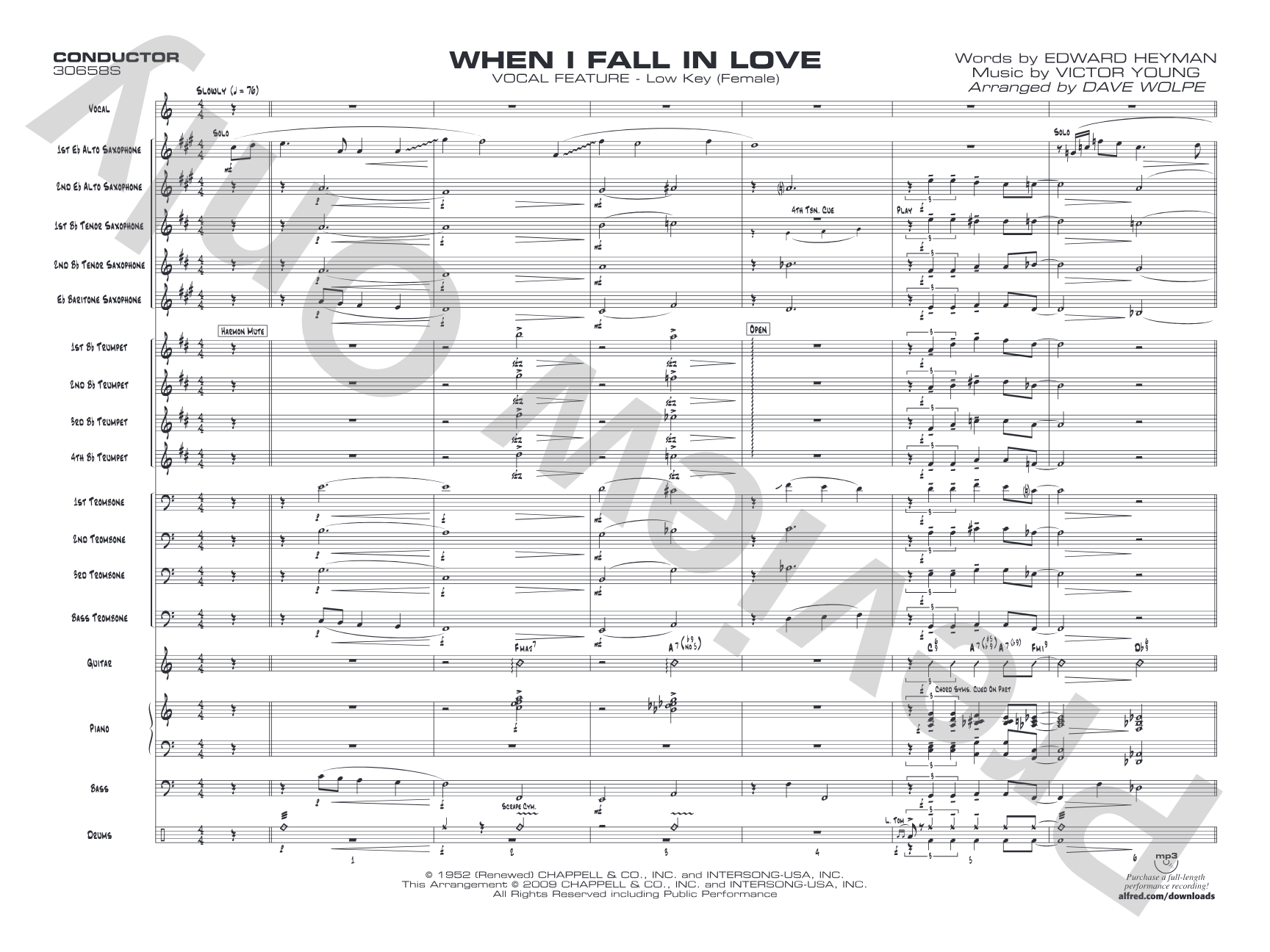
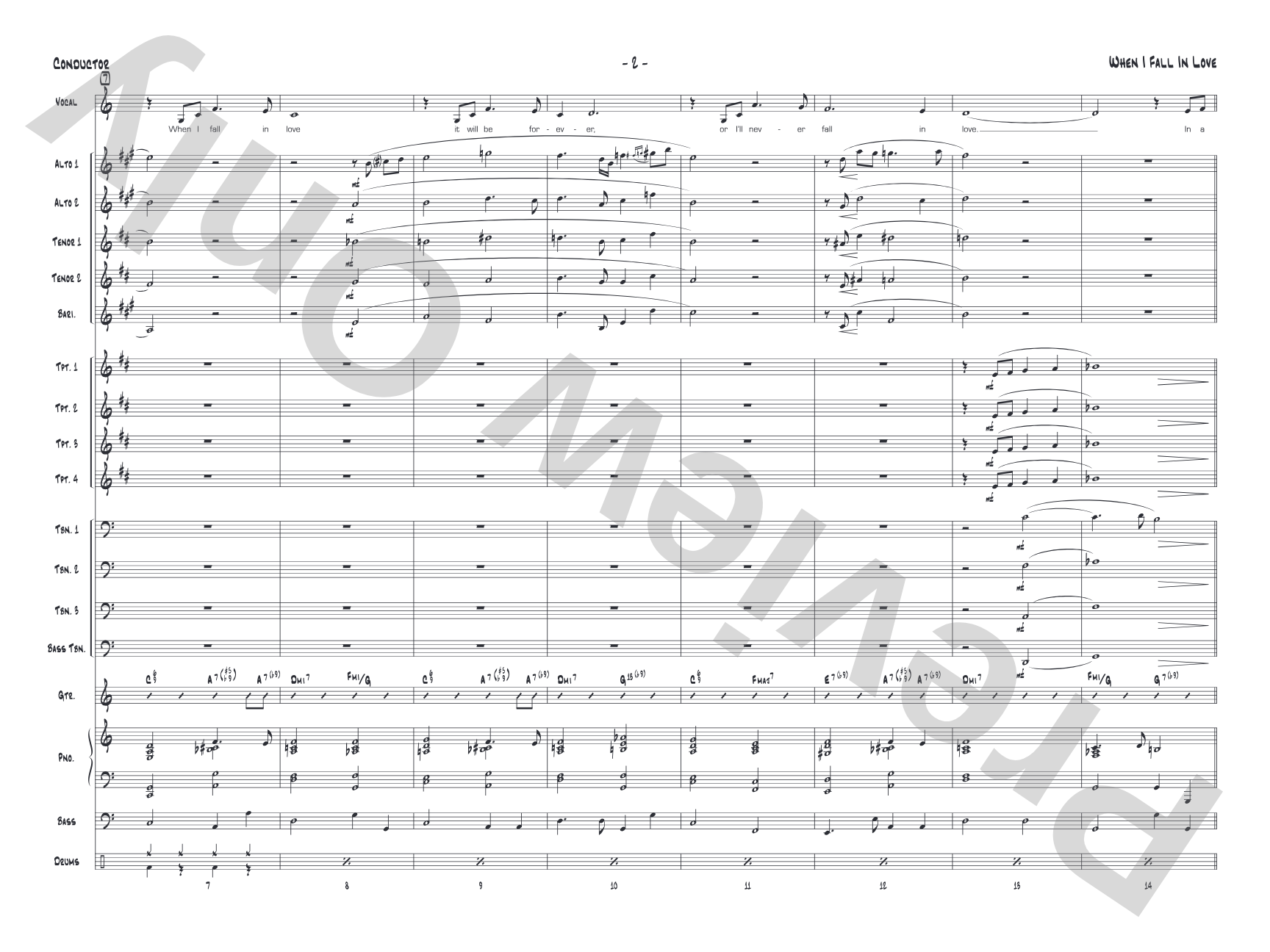
You'll love this gorgeous ballad arranged by Dave Wolpe in two keys for flexibility. Vocal ranges: female key (low) of C, from G below middle C to third line B. Male key (high) of E-flat from B-flat below middle C to fourth space D, treble clef. Superb chart. (3:50)


Don't just read it, hear it, play along with it, and watch your students grow with it. In MakeMusic Cloud, When I Fall in Love: Score comes alive with professional accompaniment, adjustable tempo, and built-in practice tools that turn solo practice into real progress.
Open in the Player
Jump straight in and assign it today.
Start Your Free Trial
Open this title and explore the full library in minutes.
Sample Audio
1
Audio File
--:--
0:00
0:00
Sample Video
Additional Details
Series:
Jazz Vocal Series
Publisher:
Alfred Music
Page Count:
82
SKU:
00-PR-0003135
More about this title
About the Composer: Victor Young
Victor Young (1900-1956) composed film scores and popular standards that defined the sound of mid-century American music. His melodic gift and sophisticated harmonic sensibility earned him numerous Academy Award nominations and made his songs enduring fixtures of the Great American Songbook.
Young's work bridges classical training and vernacular song. His compositions remain essential repertoire for jazz vocalists and ensemble arrangers because they combine accessibility with genuine musical substance. Teachers and directors value his melodies for their singability and their capacity to teach phrasing and interpretive nuance.
Why we love this
Dave Wolpe's arrangement respects the ballad's inherent beauty while giving the ensemble genuine stakes. The two-key option removes the logistical headache of transposition and lets you cast the piece authentically for your vocalist without compromise. This is the kind of sophisticated chart that sounds professionally recorded when your ensemble plays it well.
What to expect
A genuine ballad moment: tender and unhurried. The melody unfolds with classic songbook elegance, supported by warm jazz voicings that honor the song's romantic intent without sentimentality. Performing it feels like playing something that matters.
Who it's for
Jazz ensemble directors looking for a substantial vocal feature that balances musicality with playability at the Grade 3.5 level. Singers with intermediate jazz experience benefit from the well-crafted melody and harmonic clarity, and the piece works equally well for a developing vocalist or an experienced soloist.
How to get the most out of it
- Balance the vocal line above the ensemble texture without asking the singer to oversing. Young's melody carries the harmonic weight; the jazz ensemble should support rather than compete for attention.
- Treat the tempo rubato as a feature, not an obstacle. Coordinate with your vocalist on where the ballad breathes and settles into the meter so the rhythm section can follow with confidence.
- Use the full duration (3:50) to let the arrangement unfold. Resist speeding up in the middle section; patience in a ballad creates emotional space.
- Lock the comping rhythm across the ensemble so it feels like one harmonic bed underneath the vocal line rather than separate instrumental voices jostling for position.
How to use it
Anchor the second half of a concert with this piece. Its three-minute-fifty-second arc gives you breathing room after a set of harder-swinging numbers and positions the ensemble for a strong closing sequence. Alternatively, use it as the centerpiece of a program built around Great American Songbook standards, where its arrangement demonstrates what good jazz orchestration can do with beloved repertoire.
Skills your students will build
- Voice-and-ensemble balance within a jazz context
- Rubato and jazz phrasing as interpretive tools
- Reading and comping complex jazz voicings across the ensemble
- Supporting a melodic line with cohesive harmonic texture
- Extended ballad form and song structure