
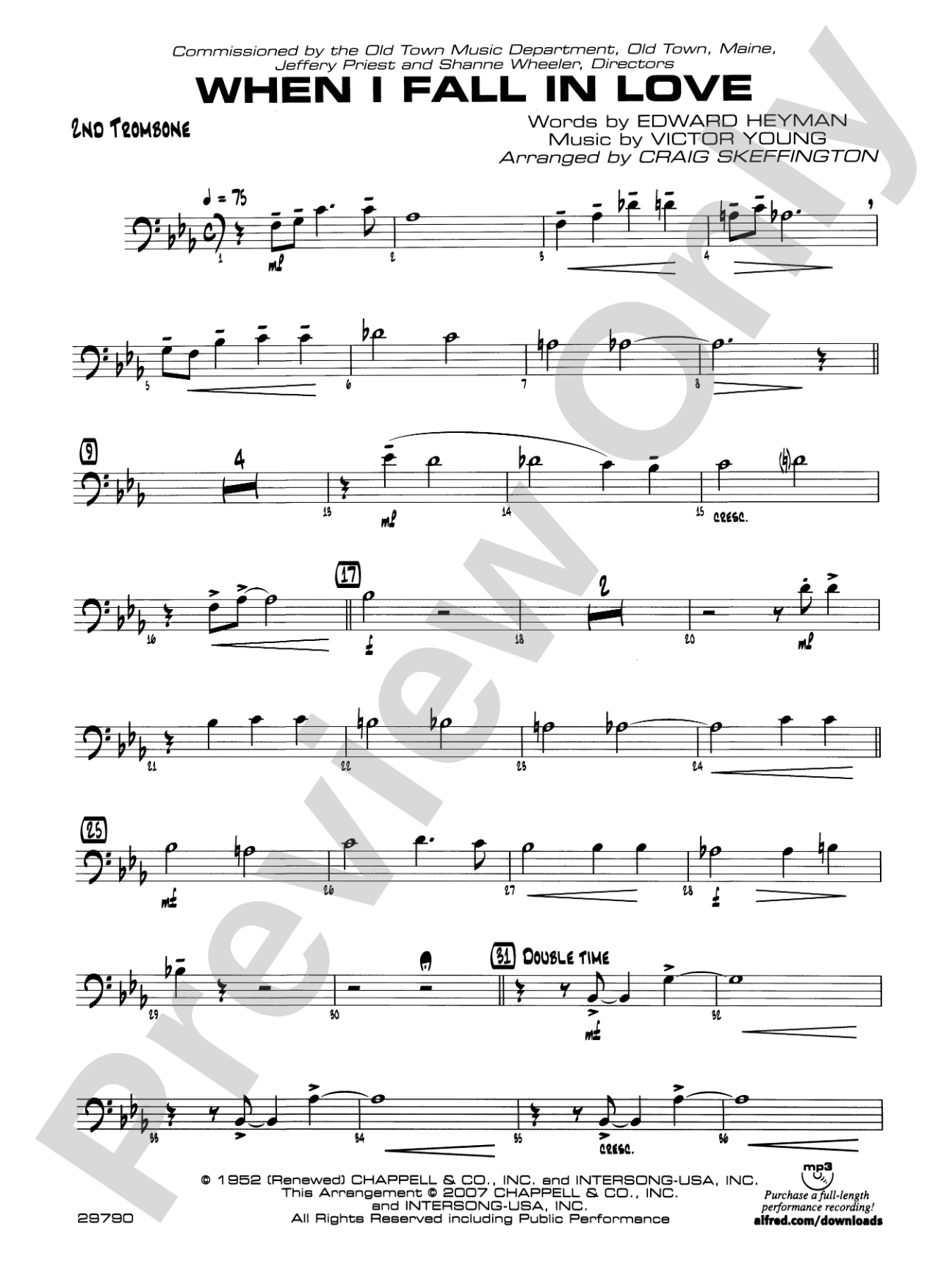

When I Fall in Love: 2nd Trombone
Words by Edward Heyman, music by Victor Young / arr. Craig Skeffington
Grade: 3 (Medium)
Item: 00-PC-0016184_TN2
$3.00
Pickup currently not available
Description
Show off the sensitive side of your ensemble with this ballad with no featured soloist. There is a brief 4-bar written trumpet melody; otherwise, it's all ensemble blend with a lush texture, a double-time section and lead trumpet range is to written G on top of the staff. The drummer plays brushes and sticks, the band emotes and everybody sounds great. Arranged by Craig Skeffington, you'll fall in love with this excellent chart. (3:40)


Don't just read it, hear it, play along with it, and watch your students grow with it. In MakeMusic Cloud, When I Fall in Love: 2nd Trombone comes alive with professional accompaniment, adjustable tempo, and built-in practice tools that turn solo practice into real progress.
Open in the Player
Jump straight in and assign it today.
Start Your Free Trial
Open this title and explore the full library in minutes.
Sample Audio
1
Audio File
--:--
0:00
0:00
Sample Video
No sample videos found.
Additional Details
Series:
Jazz Band Series
Publisher:
Alfred Music
Page Count:
94
SKU:
00-PC-0016184_TN2
More about this title
About the Composer: Craig Skeffington

Craig Skeffington has spent more than twenty years composing for jazz ensembles, marching bands, and wind bands, often working from commissions. His background as a high school band director for fifteen years shaped his understanding of what works in the rehearsal room and on stage. He received the MMEA Teacher of the Year award in 2003 and has taught at the University of Southern Maine.
Beyond the classroom, Skeffington's professional performance history includes work with Barry Manilow and Natalie Cole, plus touring with the Artie Shaw Orchestra. This dual career in education and performance gives his arrangements authentic voice leading and practical orchestration that ensembles respond to immediately.
Why we love this
This chart captures what makes jazz ballads rewarding to conduct: a small amount of exposed writing (that four-bar trumpet melody) that puts just enough spotlight on the ensemble without demanding a single dominant voice. The lush harmonies and textural control required to balance the ensemble blend across sections builds maturity in your group, while the double-time section gives you a natural energy shift that feels earned rather than imposed.
What to expect
Warm and introspective, with that classic ballad quality where restraint becomes the point. The arrangement breathes; there's space for the ensemble to settle into each phrase, and the texture never overwhelms the song's essential intimacy. When the double-time section arrives, it feels like a natural deepening of emotion rather than a stylistic detour.
Who it's for
Jazz ensembles at the Grade 3 level looking to build sophistication in ballad interpretation. This works well for groups ready to move beyond rhythmic energy into nuance and blend, and for directors who want to demonstrate that jazz can be lyrical without sacrificing musicality or ensemble cohesion.
How to get the most out of it
- Shape the opening ensemble textures with attention to dynamic balance across the saxophone, brass, and rhythm sections; the beauty of this arrangement depends on blend more than volume.
- Approach the brief trumpet melody as a conversation starter rather than a featured moment; it should emerge naturally from the ensemble sound around it.
- Use the rhythm section (especially the drummer's transition between brushes and sticks) as a structural anchor that tells the story of the arrangement's emotional arc.
- Rehearse the double-time section with clear subdivision in the rhythm section so the ensemble can lock into the textural shift without losing the ballad's emotional core.
How to use it
Program this as a centerpiece for a concert set focused on jazz standards or as a palate-cleansing ballad between uptempo charts. It's an ideal choice for a spring concert program where you want to highlight your ensemble's maturity, and at 3 minutes and 40 seconds, it fits naturally between longer feature pieces without feeling rushed.
Skills your students will build
- Listening and blend across four or five instrumental voices within a single chord
- Dynamic control and phrasing in a ballad idiom without a featured soloist
- Rhythmic precision in double-time figures while maintaining legato texture
- Coordination between melodic and harmonic accompaniment roles within the ensemble
- Brush and mallet technique in the rhythm section (for drummers)