
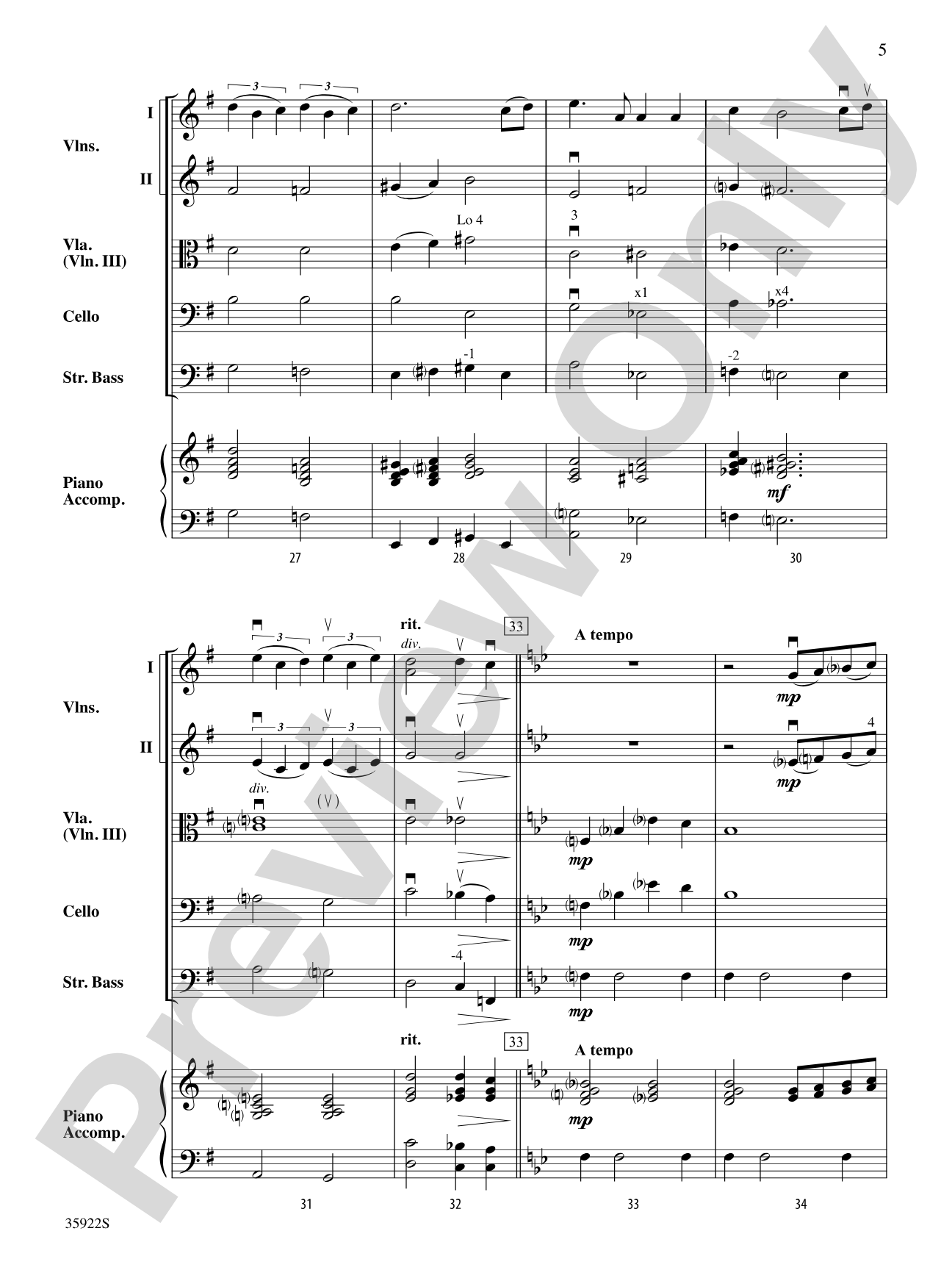
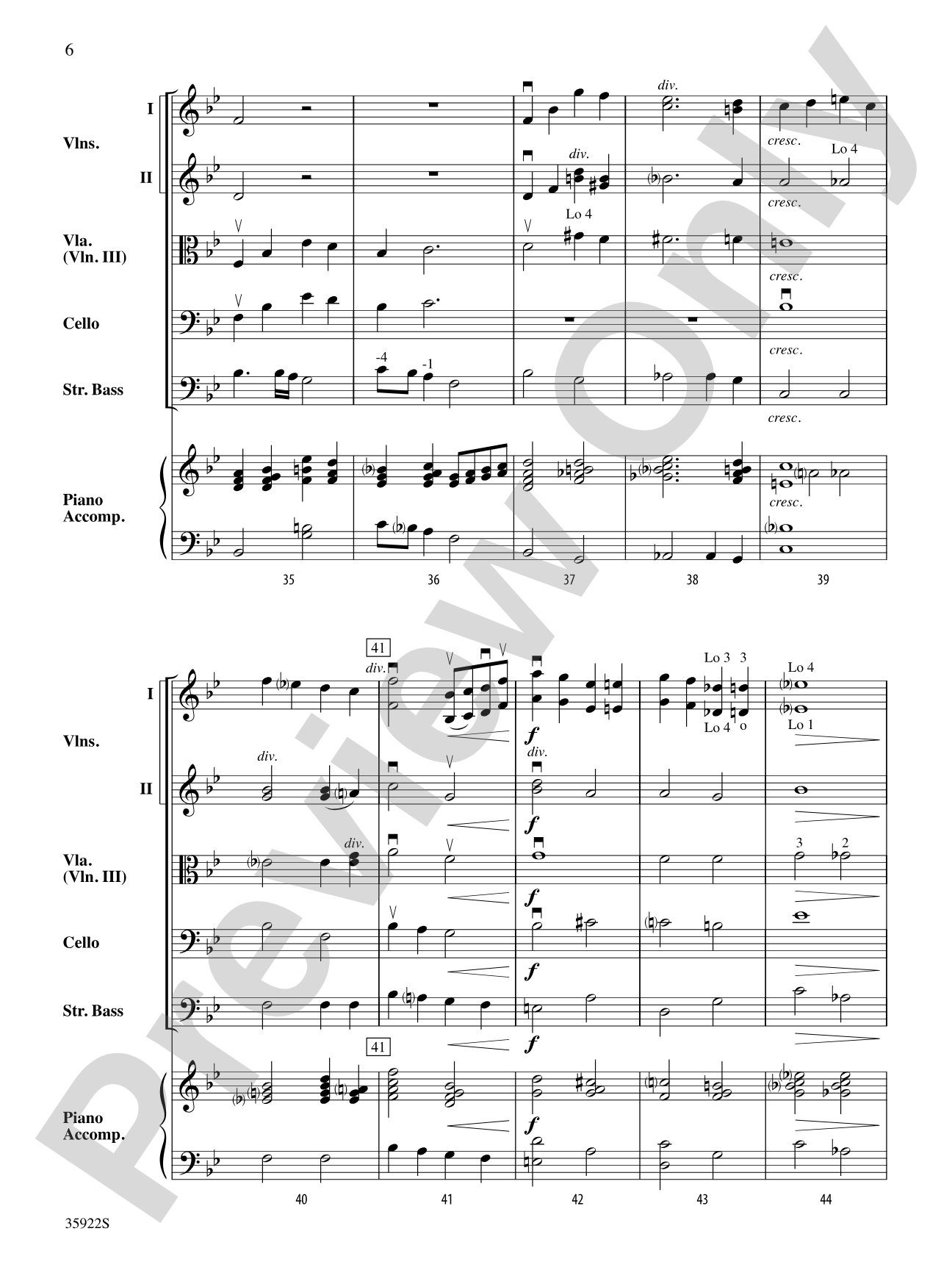
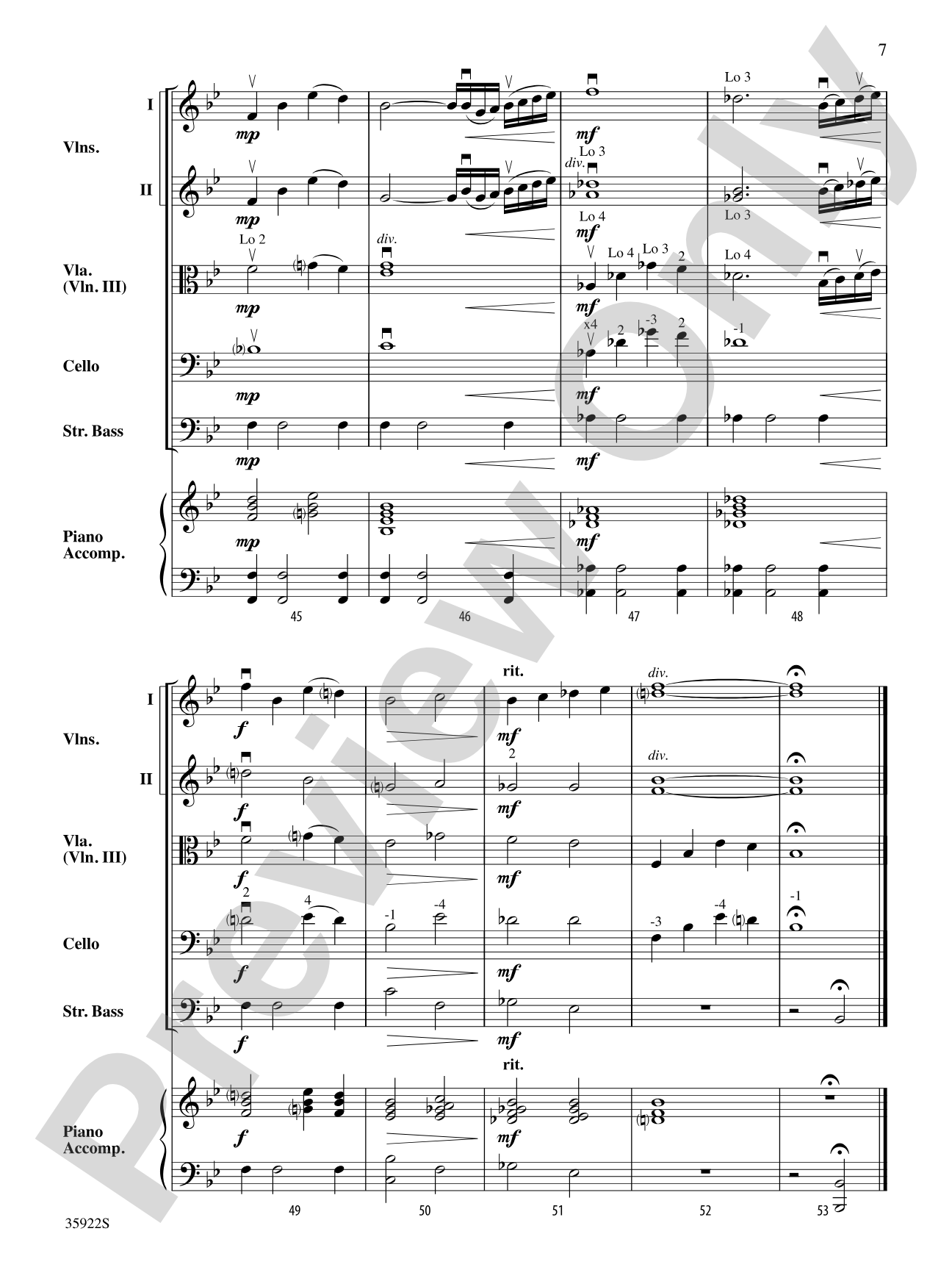


When I Fall in Love: String Orchestra Conductor Score & Parts
Music by Victor Young, lyrics by Edward Heyman / arr. Carl Strommen
Grade: 3
Item: 00-PK-0004718

$51.00
Pickup currently not available
Buy Extra Parts (Digital PDF Download)
| Product | Price | Quantity |
|---|---|---|
| When I Fall in Love: Score | $9.00 | |
| When I Fall in Love: 1st Violin | $5.99 | |
| When I Fall in Love: 2nd Violin | $5.99 | |
| When I Fall in Love: 3rd Violin (Viola [TC]) | $5.99 | |
| When I Fall in Love: Viola | $5.99 | |
| When I Fall in Love: Cello | $5.99 | |
| When I Fall in Love: String Bass | $5.99 | |
| When I Fall in Love: Piano Accompaniment | $5.99 |
Parts Added to Cart!
Related Items
When I Fall in Love: String Orchestra Conductor Score & Parts |
$50.00
|
View |
Description
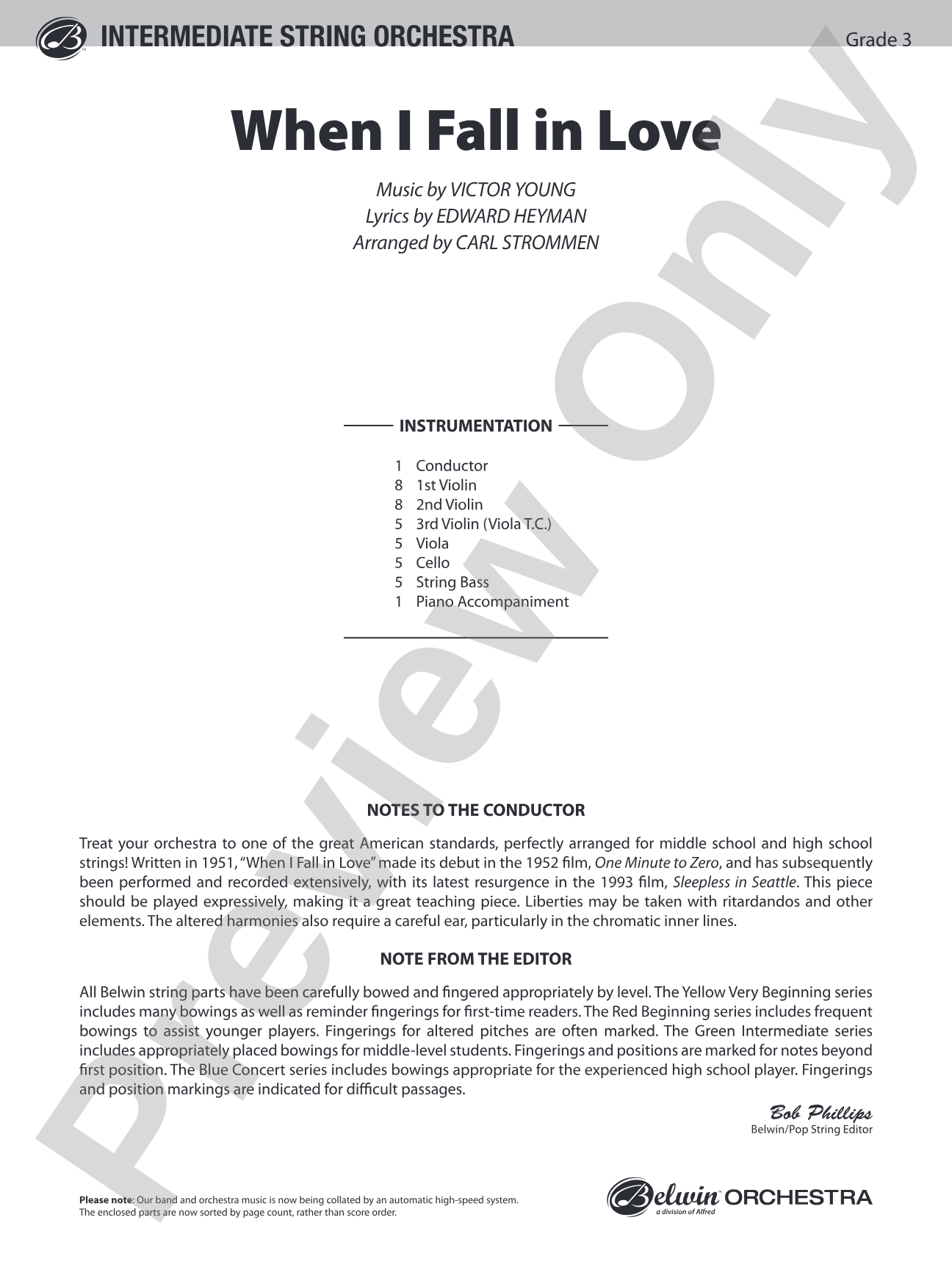
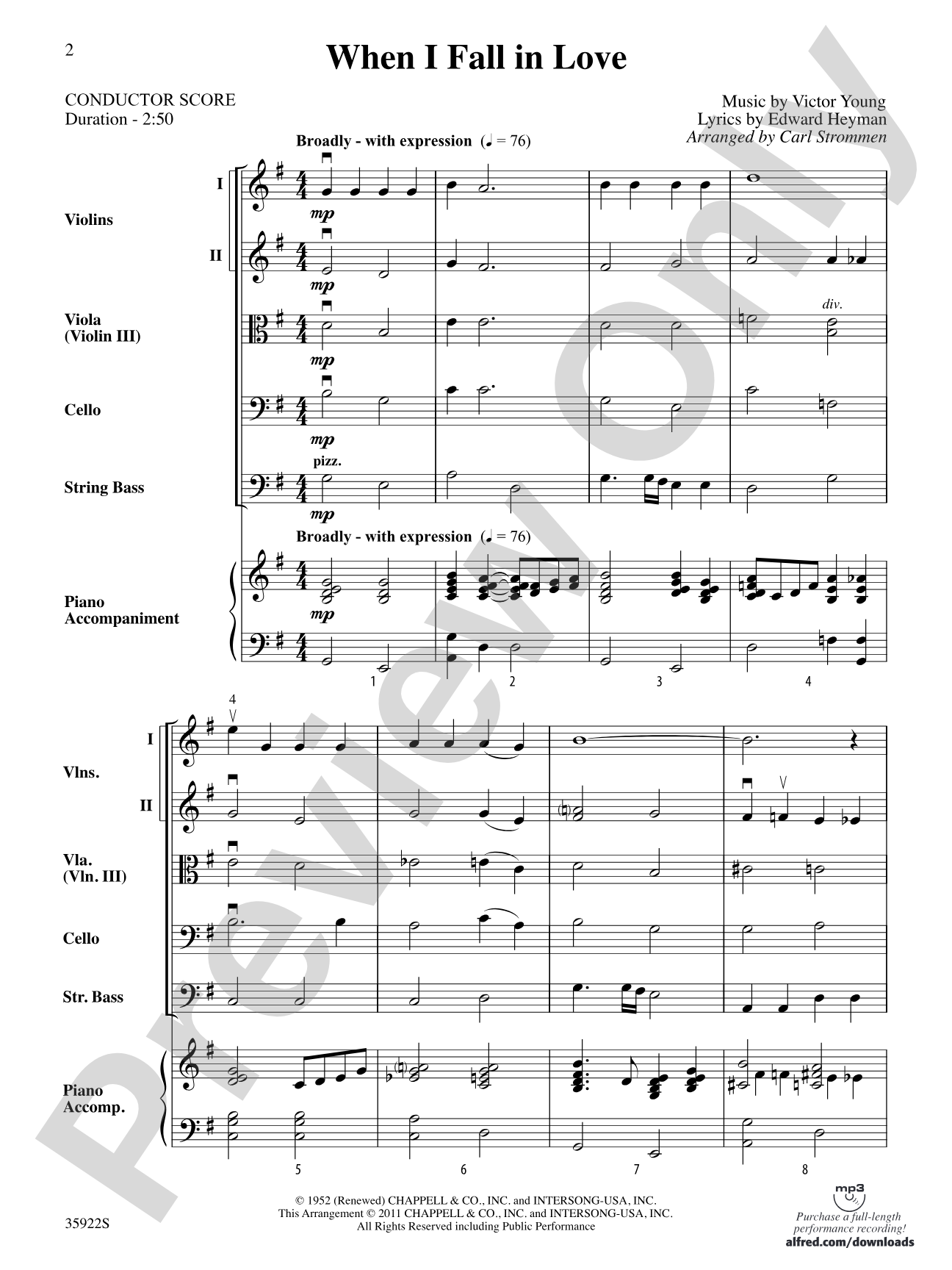
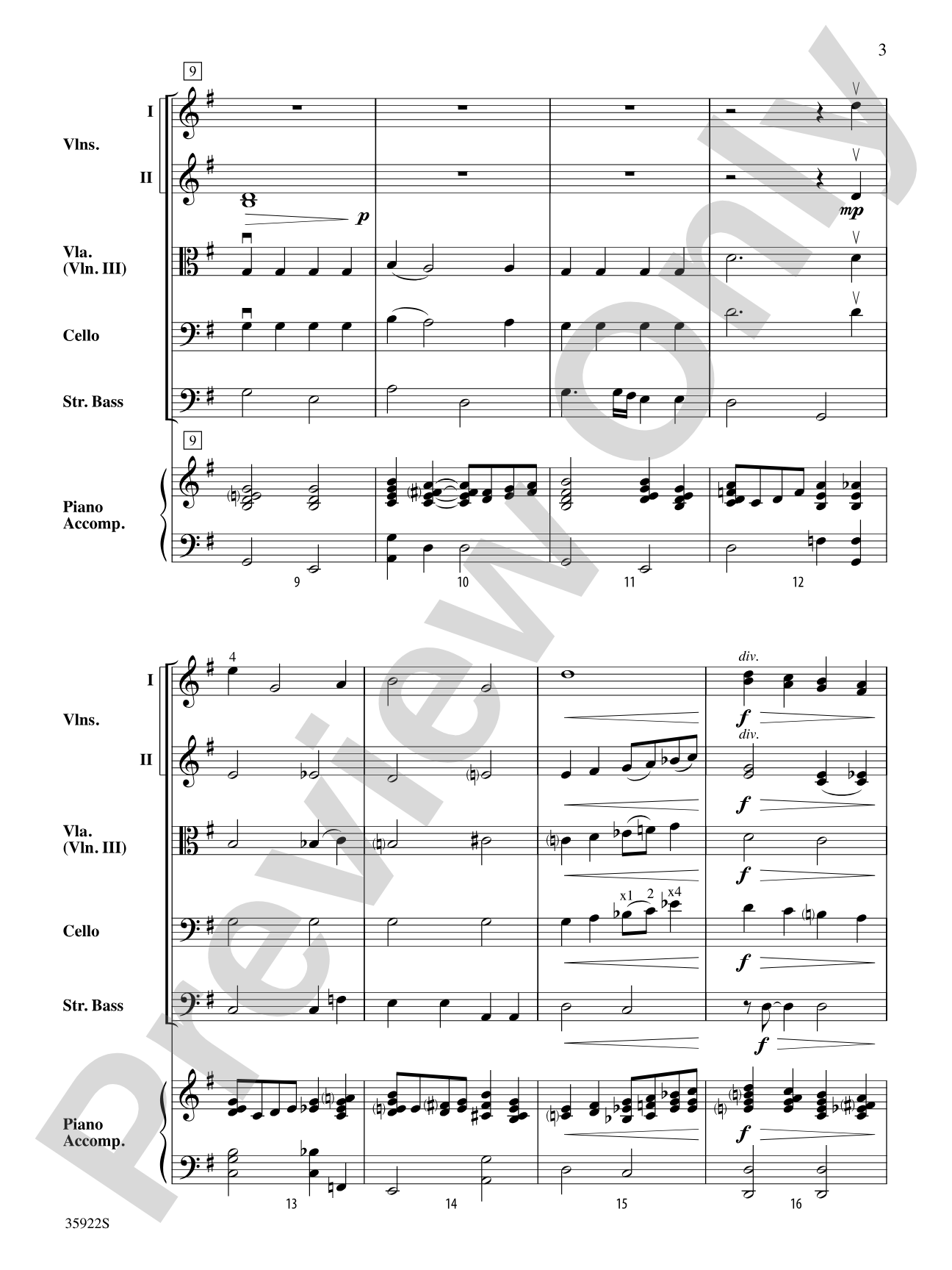
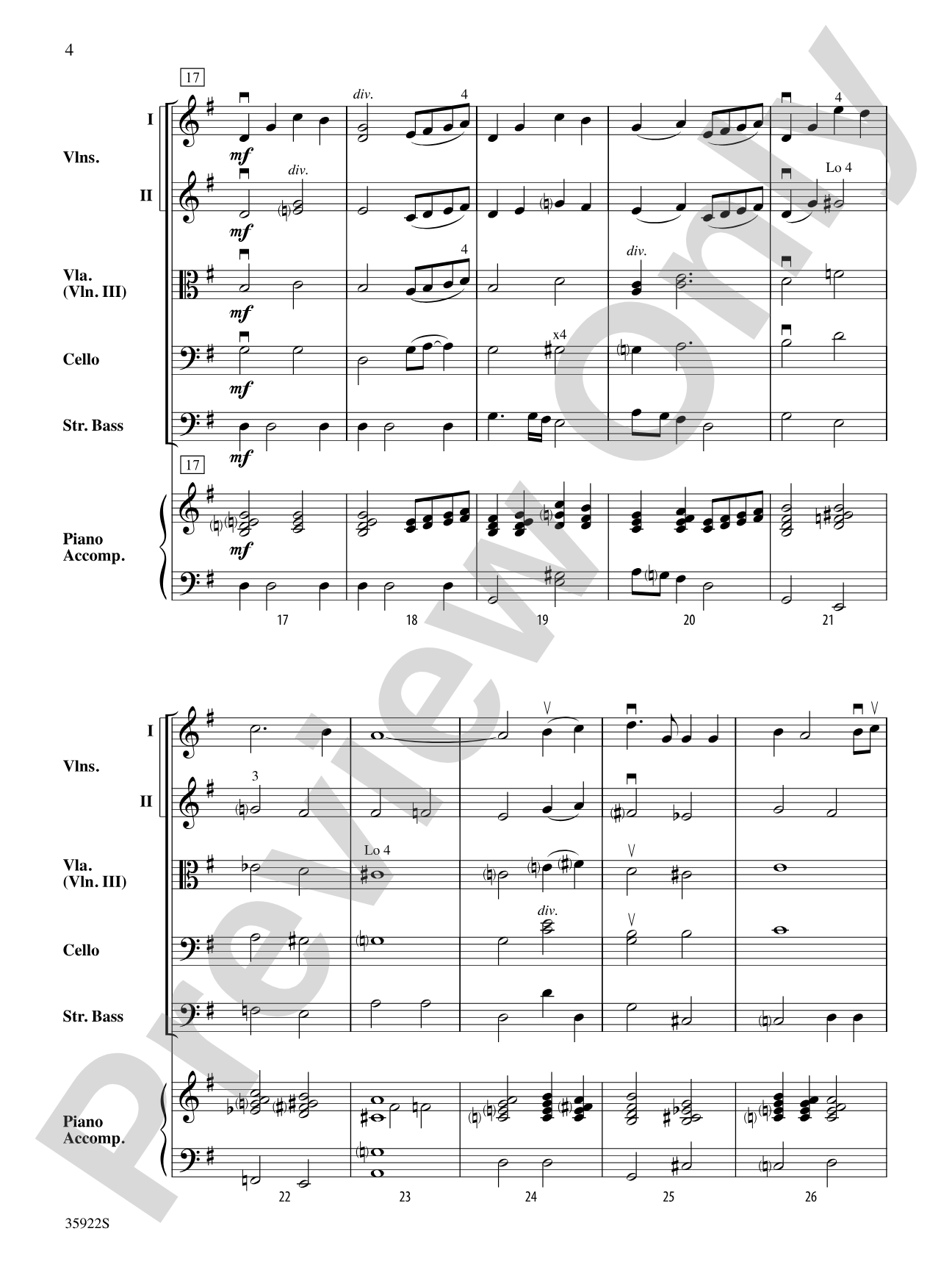
Treat your orchestra to one of the great American standards, perfectly arranged for middle school and high school strings! Allow your students to explore expressive playing and give aural attention to harmonies, particularly in the chromatic inner lines.


Don't just read it, hear it, play along with it, and watch your students grow with it. In MakeMusic Cloud, When I Fall in Love: String Orchestra Conductor Score & Parts comes alive with professional accompaniment, adjustable tempo, and built-in practice tools that turn solo practice into real progress.
Open in the Player
Jump straight in and assign it today.
Start Your Free Trial
Open this title and explore the full library in minutes.
Sample Audio
1
Audio File
--:--
0:00
0:00
Sample Video
No sample videos found.
Additional Details
Series:
Pop Intermediate String Orchestra
Publisher:
Alfred Music
Page Count:
76
SKU:
00-PK-0004718
Instrumentation:
strings w/ vln3, pno acc
More about this title
About the Composer: Victor Young
Victor Young (1900-1956) was one of Hollywood's most prolific film composers, scoring over 300 movies across five decades. His gift for lyrical melody and sophisticated orchestration made him a master of light entertainment, from romance to adventure, and his work remains a cornerstone of the American songbook. Young understood how to write music that moved audiences while remaining accessible to performers at all levels, a quality that makes his work invaluable for music education.
Why we love this
Carl Strommen's arrangement captures the elegance of Young's melody while keeping the technical demands appropriate for young string players. The chromatic inner voices add sophisticated harmonic color without overwhelming the ensemble, giving your musicians real material to work with as they develop their ears and refine their vibrato. It's a standard that genuinely rewards careful, expressive playing.
What to expect
Warm and romantic without being overly sentimental, this arrangement glows with the sophistication of the Great American Songbook. The chromatic inner voices create subtle harmonic richness that rewards close listening, while the melody sits naturally in the upper voices with a clear, singable shape. It feels like good taste, accessible to young players but never patronizing.
Who it's for
String orchestras at the middle and high school level looking for repertoire that teaches genuine musicianship without requiring advanced technique. Students need secure reading skills and comfort with diatonic harmony, but this arrangement doesn't demand soloistic virtuosity. It's ideal for ensembles building confidence and refinement during the concert season.
How to get the most out of it
- Balance the chromatic movement in the inner voices against the soaring melody line; these countervoices should remain audible but never overpower the primary tune.
- Shape the phrase through dynamic tapering rather than sudden drops; this melody benefits from a sense of continuous line, even at softer volumes.
- Bring the piano accompaniment into the rehearsal early and let your players hear how it supports (and sometimes leads) the harmonic progression.
- Establish a steady, unhurried tempo in early rehearsals so players can focus on intonation and blend before adding expressive elements like vibrato variation.
How to use it
This works beautifully as a standalone light concert piece or as part of a program celebrating American standards and popular songbook material. It provides ideal contrast in a concert that might otherwise lean toward classical or folk repertoire, and it's the kind of piece that resonates with families in the audience. Consider pairing it with other Strommen arrangements or other pieces that explore expressivity and harmonic sophistication.
Skills your students will build
- Expressive vibrato control and dynamic shaping within a long phrase
- Listening to and balancing chromatic inner voices against the primary melody
- Awareness of harmonic progression and how inner voices support the tonality
- Sustaining tone quality and intonation through rubato and expressive playing
- Blend and balance in a string orchestra setting with four-part writing