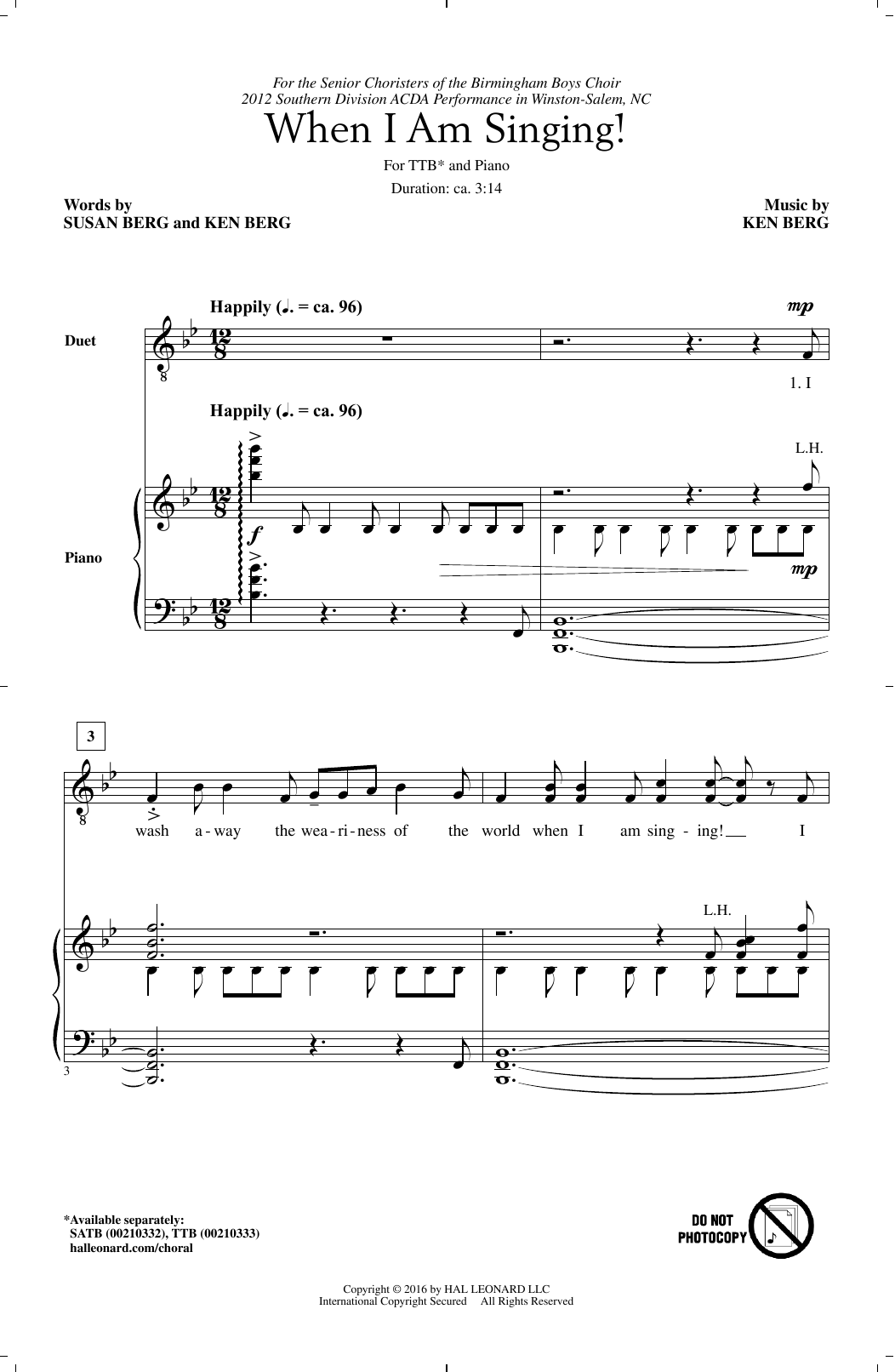
When I Am Singing! Sheet Music Preview

When I Am Singing!: TTBB Choral Octavo

By Ken Berg

Item: 35-DS00357500

Digital Download
$2.99
Description

When I Am Singing!: TTBB Choral Octavo isn't in MakeMusic Cloud just yet...but it could be. Let us know you'd like to see it, and you'll help shape what comes next. In the meantime, start a free trial and dive into thousands of interactive titles your students can play along with today.

Sample Audio
No sample audio found.
Sample Video
Additional Details
Publisher: Hal Leonard
Page Count: 22
SKU: 35-DS00357500

More about this title

Why we love this

Berg captures something genuine about the joy of singing itself, avoiding the saccharine tone that can plague self-referential choral pieces. The flexibility across multiple voicings (TB through TTBB) means you can program this for nearly any men's ensemble configuration without transposition or rearrangement.

What to expect

Warm and affirmative, with the kind of sincerity that lands because it avoids overwrought gestures. The piece invites singers to feel proud of what they do rather than performing gratitude about it.

Who it's for

Men's choirs seeking repertoire that celebrates singing as a subject without irony or pretension. Works equally well for high school festival groups, community ensembles, and college programs.

How to get the most out of it

  • Balance the text clarity with the musical momentum. The piece works best when diction stays crisp even as the ensemble leans into the emotional core.
  • Explore the full dynamic range available. Berg's writing suggests natural peaks and valleys, so resist the urge to settle into a comfortable middle dynamic.
  • Let the harmonic movement breathe. Rushing through chord changes flattens the message; give each sonority its moment.

How to use it

Place this as an opener on a concert program to establish an accessible, inclusive tone that welcomes the audience. It also pairs naturally with other secular pieces that celebrate human connection or ensemble spirit.

Skills your students will build

  • Voicing independence across multiple TTBB configurations
  • Text-driven phrasing and emotional intent
  • Balance between individual line clarity and chordal blend

You May Also Like