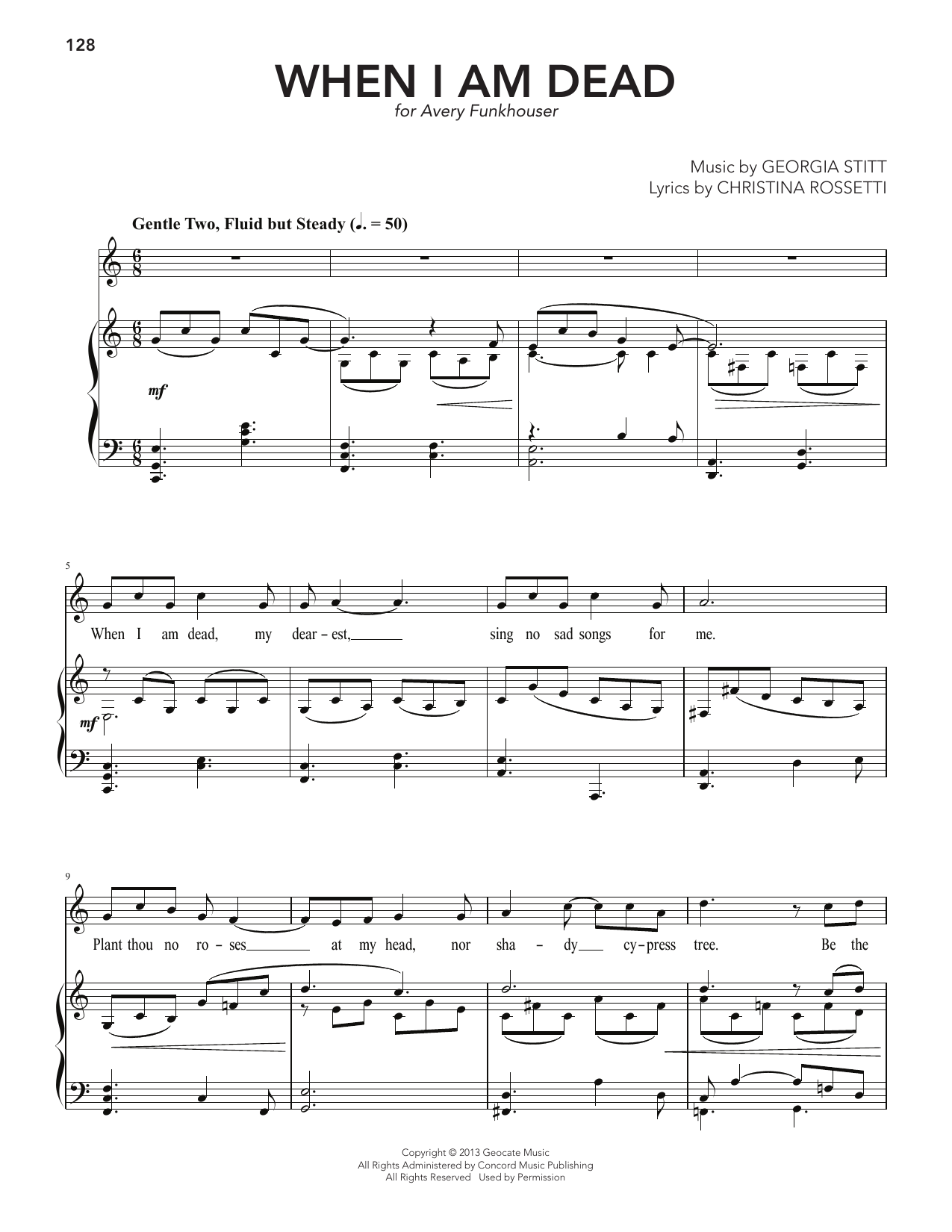
When I Am Dead Sheet Music Preview

When I Am Dead: Piano Vocal

As performed by Georgia Stitt

Item: 35-DS01905417

Digital Download
$5.99
Description

When I Am Dead: Piano Vocal isn't in MakeMusic Cloud just yet...but it could be. Let us know you'd like to see it, and you'll help shape what comes next. In the meantime, start a free trial and dive into thousands of interactive titles your students can play along with today.

Sample Audio
No sample audio found.
Sample Video
Additional Details
Publisher: Hal Leonard
Page Count: 4
SKU: 35-DS01905417

More about this title

About the Artist: Georgia Stitt

Georgia Stitt is a composer and lyricist whose work spans musical theater, art song, and contemporary classical music. Her compositions are known for their emotional directness and sophisticated harmonic language, making her a distinctive voice in American songwriting.

Why we love this

Stitt's setting brings real vulnerability to this text without resorting to melodrama. The piano part is neither decorative nor accompaniment in the traditional sense; it's a full partner in the emotional arc, giving singers genuine material to shape alongside strong vocal writing.

What to expect

The piece carries a quietly introspective quality, neither maudlin nor detached. There's a sense of contemplation, even acceptance, with moments of surprising tenderness emerging from a spare musical texture.

Who it's for

This is ideal for advanced high school and collegiate singers with secure musicianship and emotional maturity. It suits recital programs, art song festivals, and concert contexts where the audience expects something beyond standard repertoire.

How to get the most out of it

  • Let the piano establish the harmonic and emotional foundation before you enter. This isn't a song where the voice leads; you're joining an already-in-progress conversation.
  • Pay attention to where the vocal line sits against the piano texture. Stitt creates moments where the voice rests while the piano deepens the thought. Use these silences.
  • Explore the relationship between the text and the harmonic movement. The music won't always resolve where you expect it to, and that dissonance is intentional.

How to use it

Pair this with other contemporary art songs to create a recital set exploring modern approaches to emotional expression. It also works well in a concert program that juxtaposes classical and contemporary works, offering singers and audiences a bridge between styles.

Skills your students will build

  • Interpretation of contemporary harmonic language
  • Balance between vocal line and piano texture
  • Collaboration with an equal-partner accompaniment rather than a supportive one
  • Emotional restraint and subtlety in text expression

You May Also Like