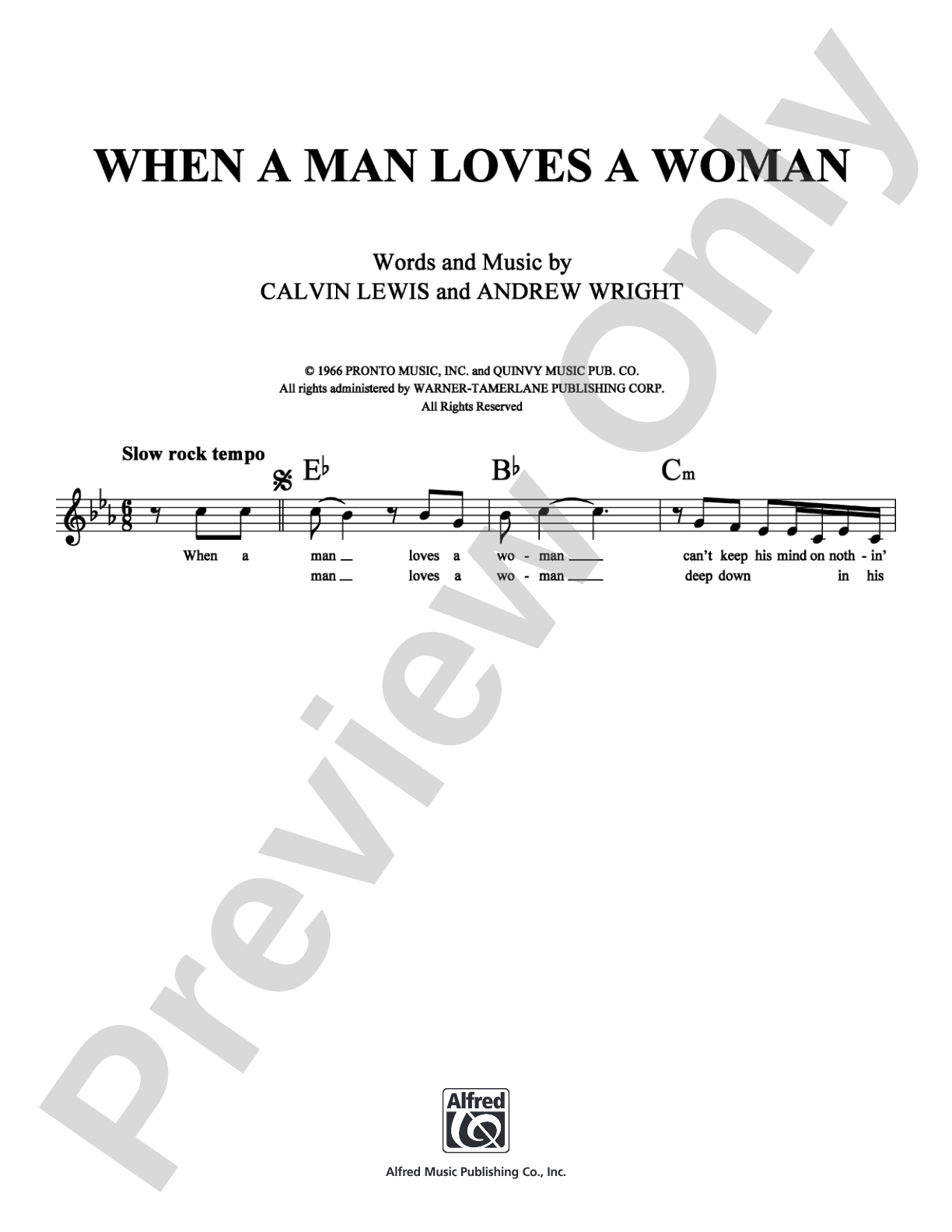
When A Man Loves A Woman: Lead Sheet Digital Sheet Music

When A Man Loves A Woman: Lead Sheet Digital Sheet Music

Percy Sledge, Calvin Lewis, Andrew Wright

Item: 00-PS-0008988

Digital Download
$1.99
Description

When A Man Loves A Woman: Lead Sheet Digital Sheet Music isn't in MakeMusic Cloud just yet...but it could be. Let us know you'd like to see it, and you'll help shape what comes next. In the meantime, start a free trial and dive into thousands of interactive titles your students can play along with today.

Sample Audio
No sample audio found.
Sample Video
Additional Details
SKU: 00-PS-0008988

More about this title

About the Artist: Percy Sledge

Percy Sledge's 1966 recording of "When A Man Loves A Woman" became one of the most enduring soul ballads in American music history. A former hospital orderly from Alabama, Sledge brought an unaffected sincerity to his vocals that resonated across genre boundaries, earning him induction into the Rock and Roll Hall of Fame and establishing him as a cornerstone artist of soul music's golden era.

For music educators, Sledge's artistry demonstrates how emotional authenticity and restraint in vocal delivery can carry a song further than technical virtuosity. His influence extends across decades of pop, R&B, and soul education, making his signature songs essential reference points for understanding vocal phrasing and emotional communication in music.

Why we love this

This lead sheet captures one of soul music's most teachable moments. The straightforward melody and harmonic structure make it accessible for students learning to arrange and interpret songs, while the emotional weight of the tune rewards careful attention to dynamics and phrasing. Programming this alongside pop standards gives students a direct entry point into understanding how R&B and soul vocabularies shape contemporary music.

What to expect

This tune radiates quiet intensity. The melody sits in a conversational range with unhurried phrasing that invites singers to tell the story rather than display technique. Beneath it flows a soul harmony that speaks as much through what it leaves out as what it includes, creating space for interpretation and emotional vulnerability.

Who it's for

Vocalists and instrumentalists arranging pop and soul material will find this lead sheet essential for learning how to work from a melody-and-changes foundation. It serves pianists, guitarists, and small ensemble players who are building improvisation and reharmonization skills on standard tunes. Jazz and contemporary music students benefit from studying how a simple, powerful melody and chord progression create lasting emotional resonance.

How to get the most out of it

  • Study the original recording's phrasing and breath placement; Sledge uses silence as deliberately as he uses notes, and those moments shape the emotional arc.
  • Explore how chord extensions and reharmonization options work within the lead sheet framework, since this tune has been reimagined countless times across genres.
  • Let the rubato breathe naturally rather than locking into strict time; the melody's power comes partly from its conversational, speech-like delivery.
  • Consider the full range of dynamics available even within a single phrase, moving away from one-note intensity toward the subtle gradient Sledge brings to the vocal line.

How to use it

Feature this as a solo vehicle for a vocalist exploring soul and R&B standards, or arrange it for a small ensemble to study how instrumental accompaniment can support a compelling vocal narrative. It works equally well in a pop repertoire survey or as a bridge between historical soul music and contemporary music appreciation, showing students how foundational material continues to influence modern artists.

Skills your students will build

  • Reading and performing from a lead sheet (melody line with chord symbols)
  • Understanding soul and R&B harmonic language and chord progressions
  • Vocal phrasing and emotional storytelling in popular song
  • Reharmonization and arrangement possibilities from a simple harmonic foundation
  • Interpreting dynamics and space within a melody-driven structure

You May Also Like