
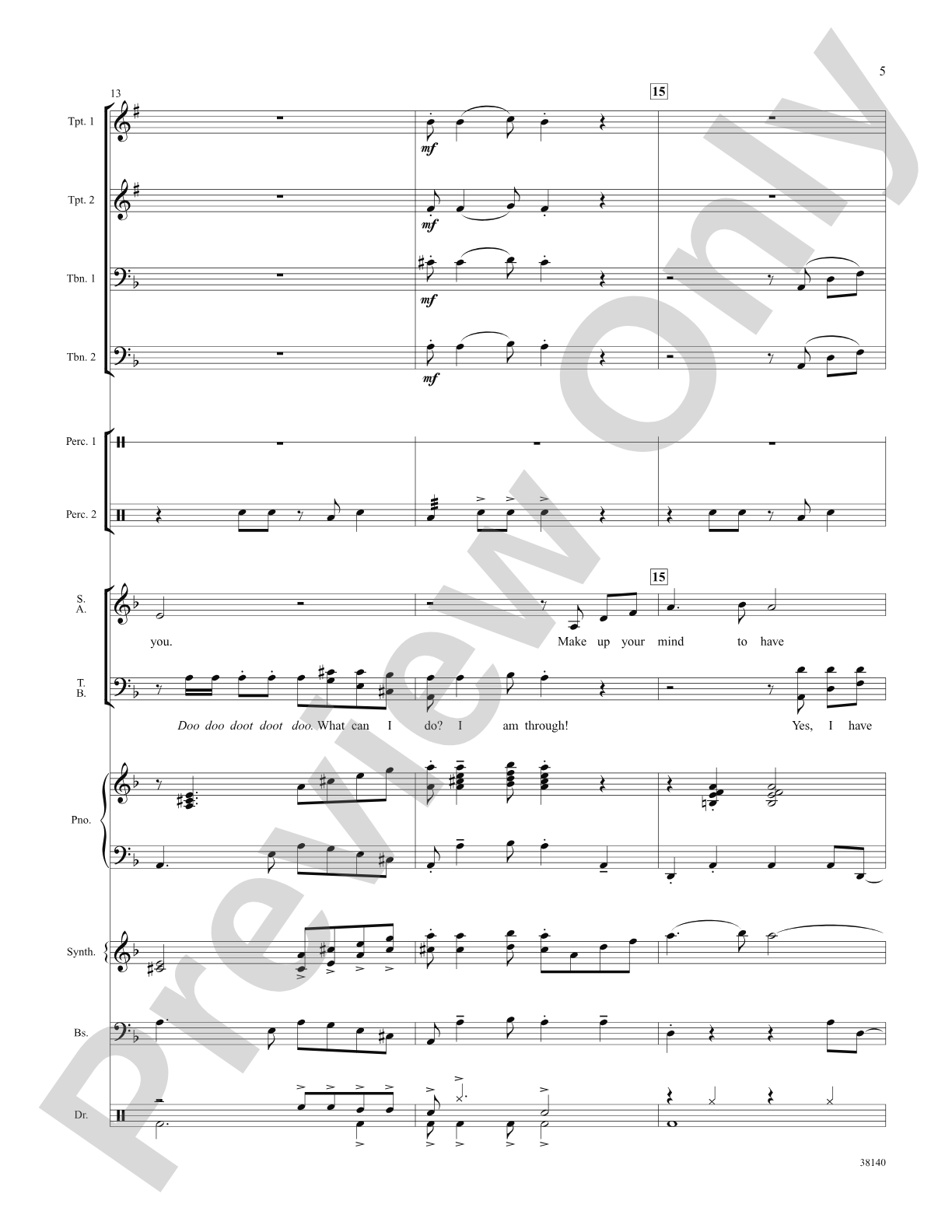
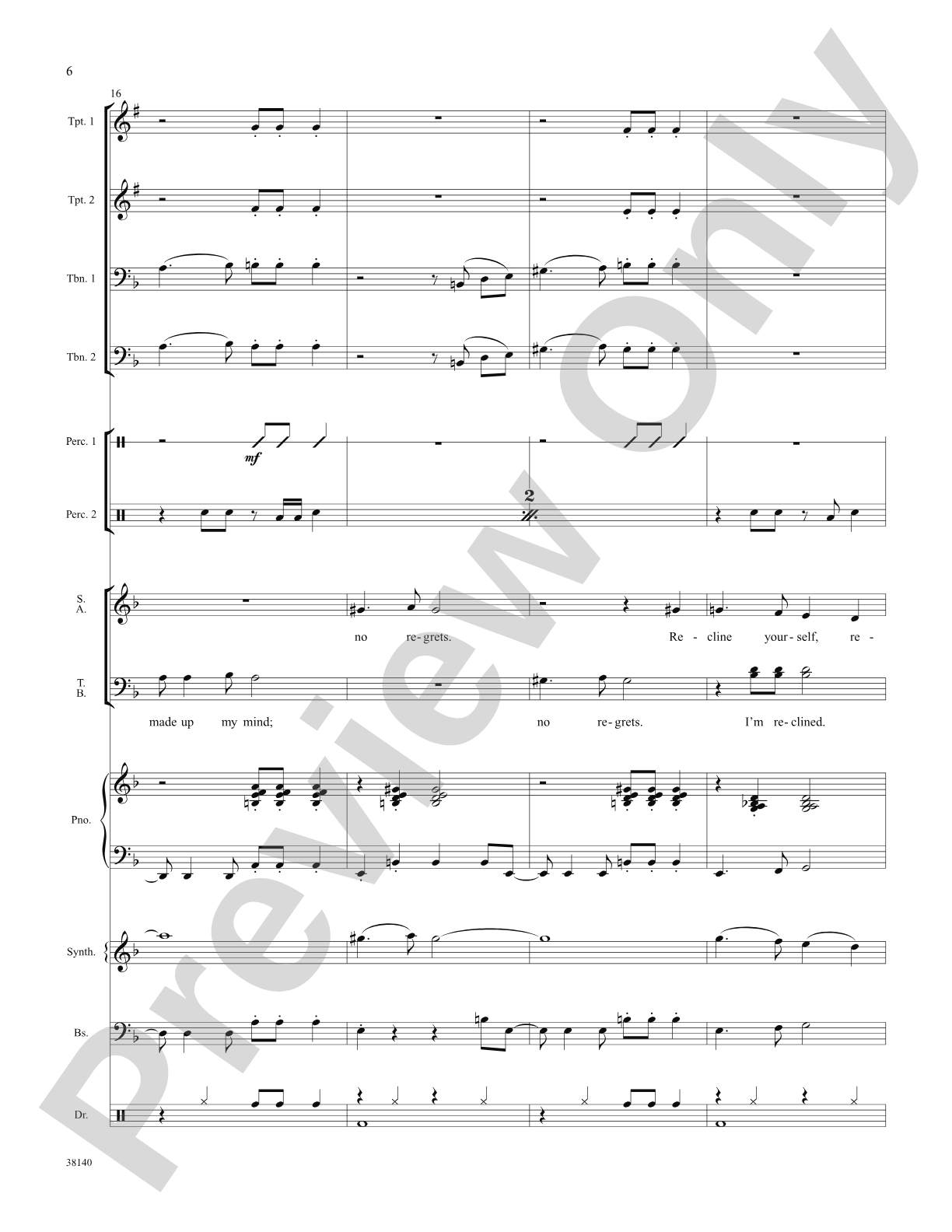
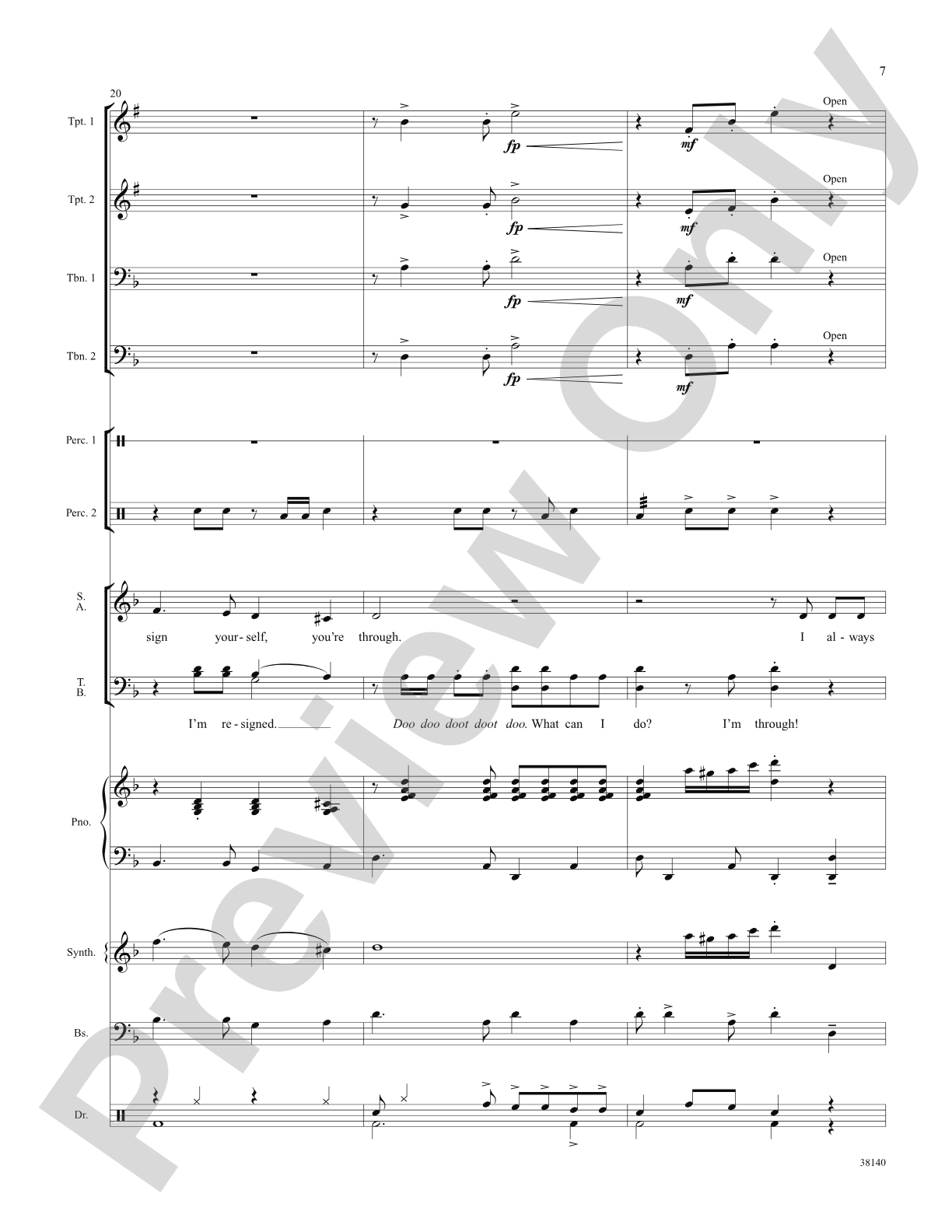
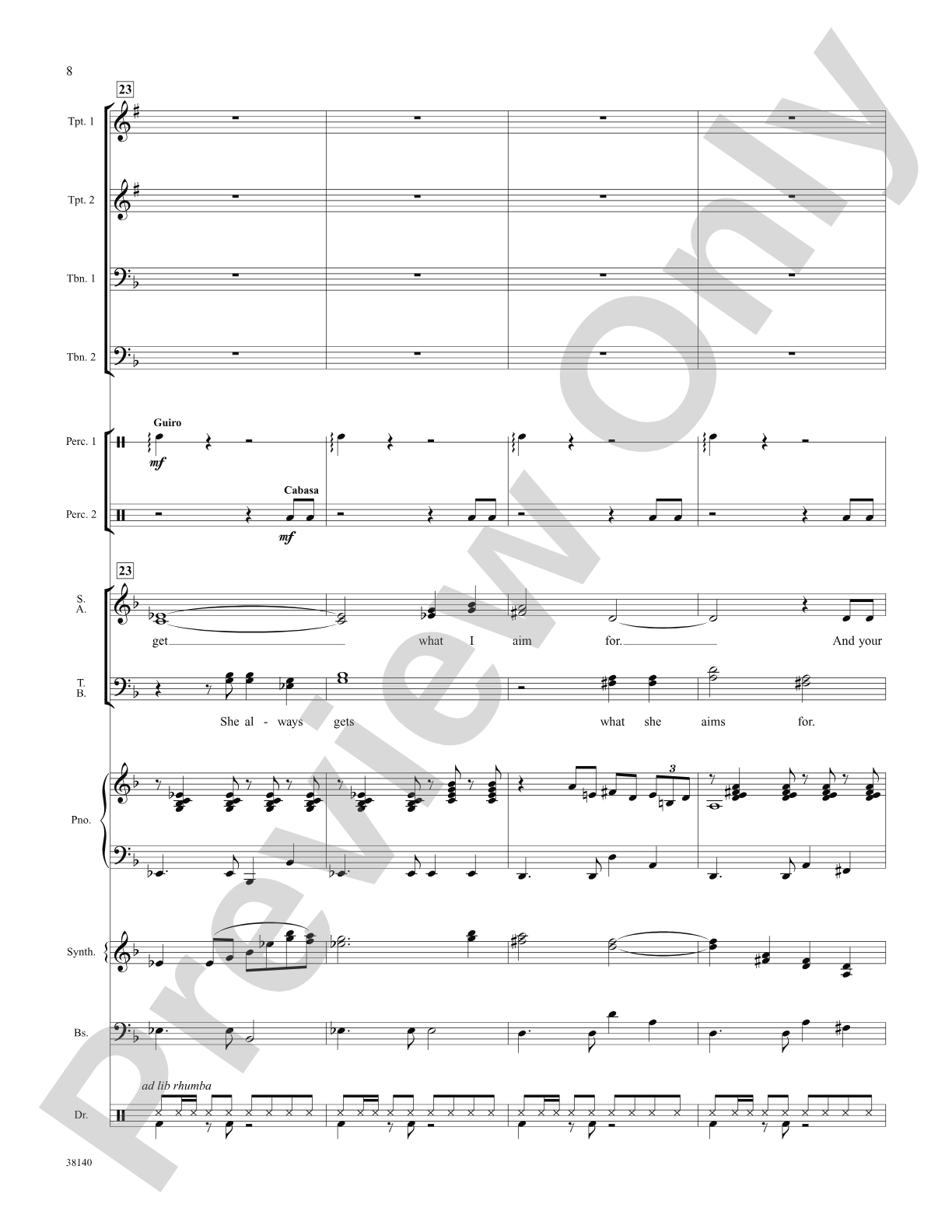
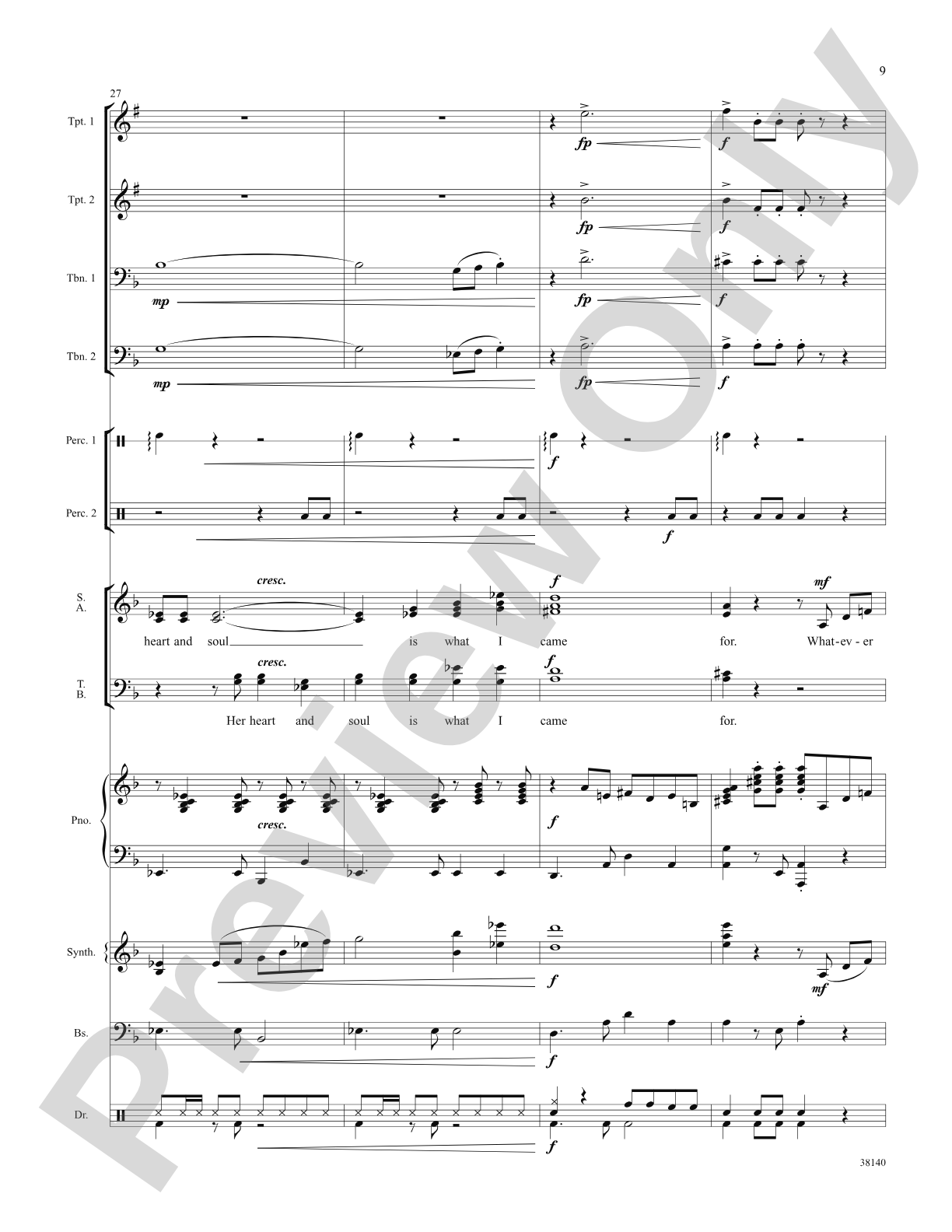
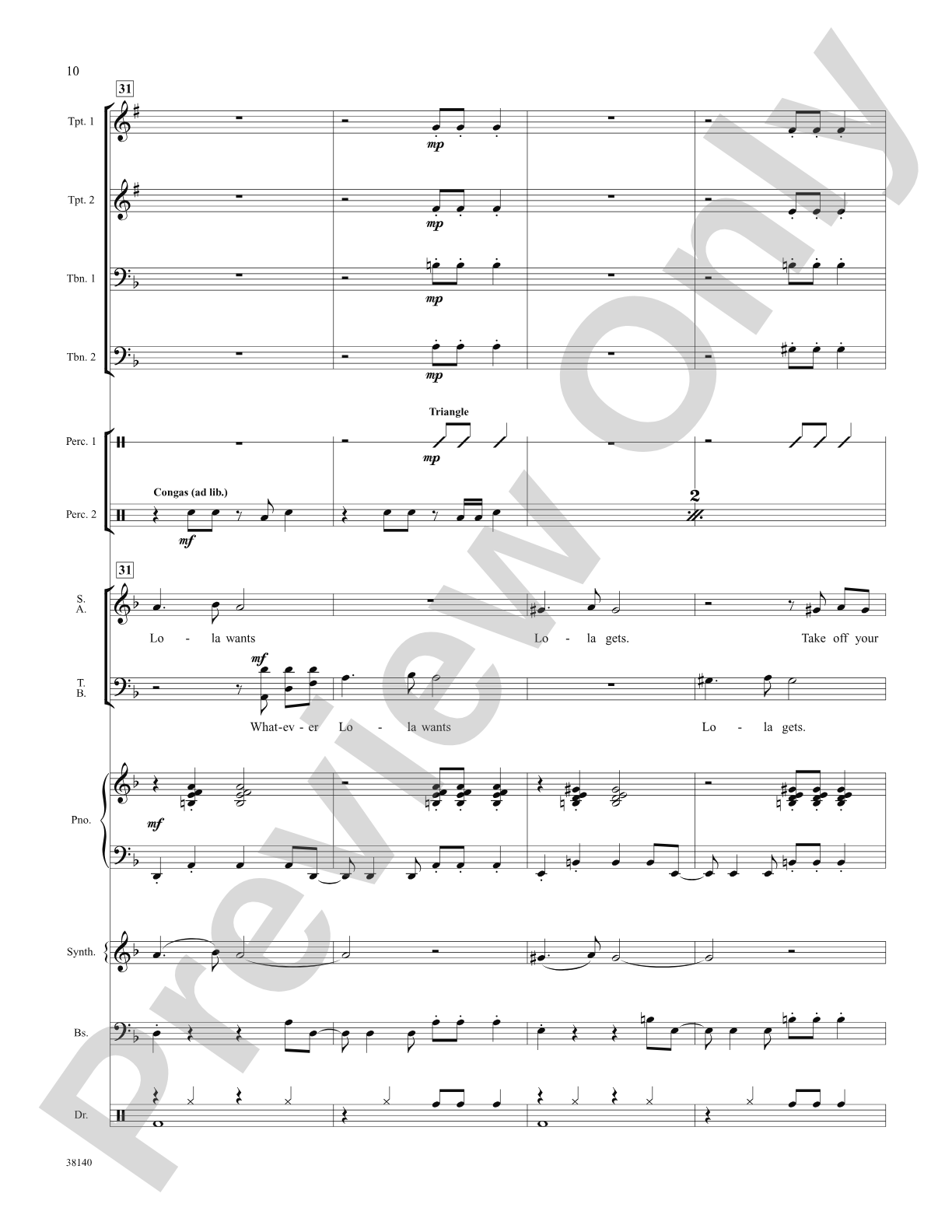
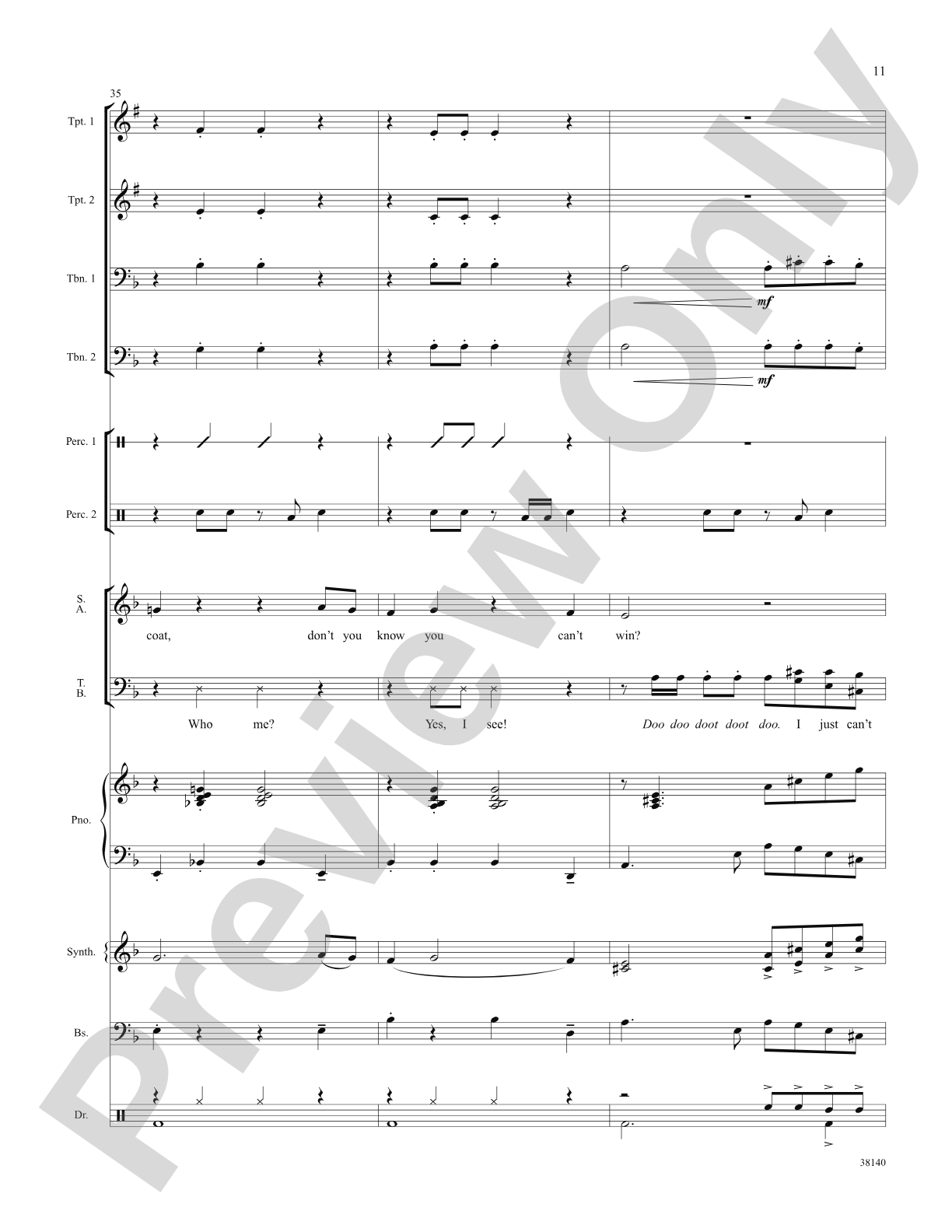
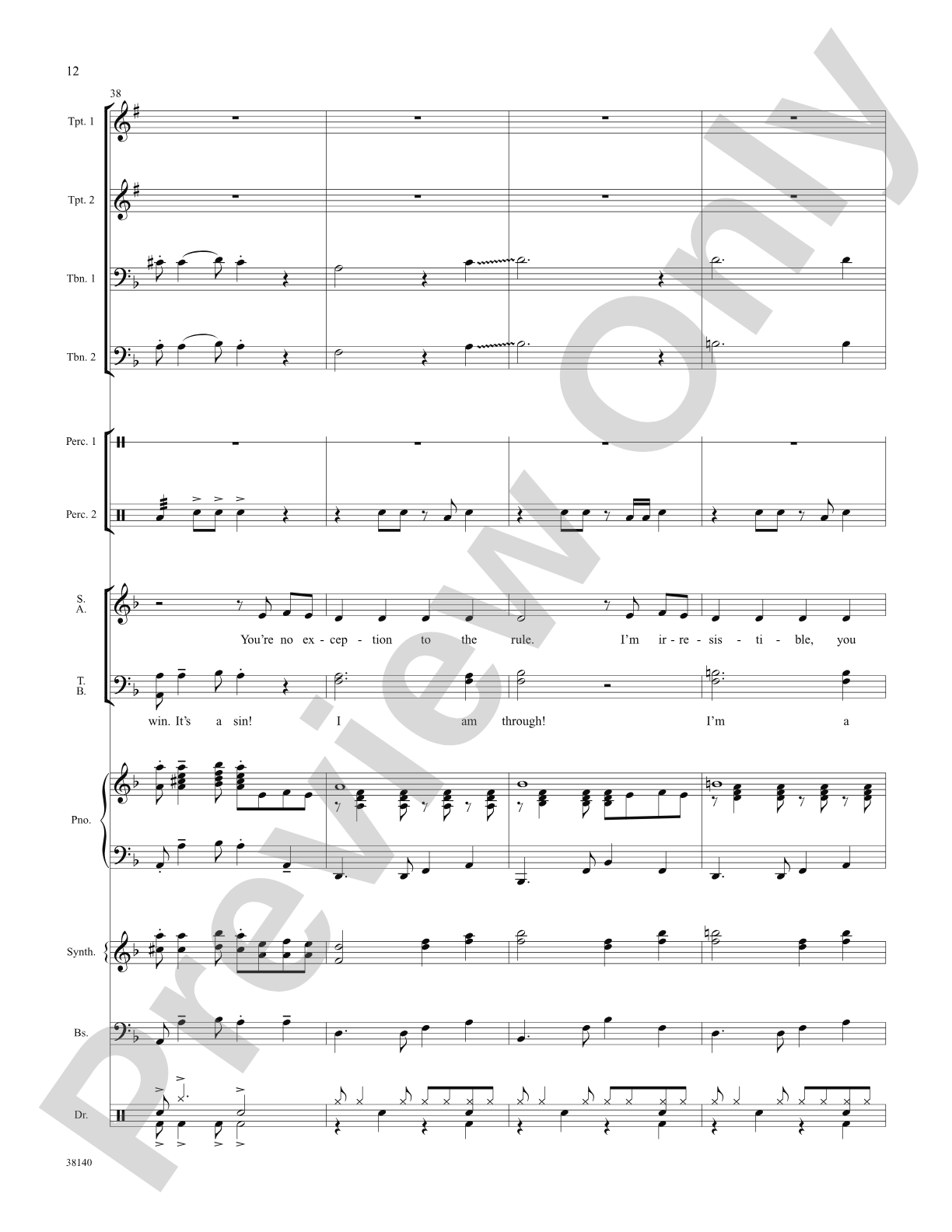
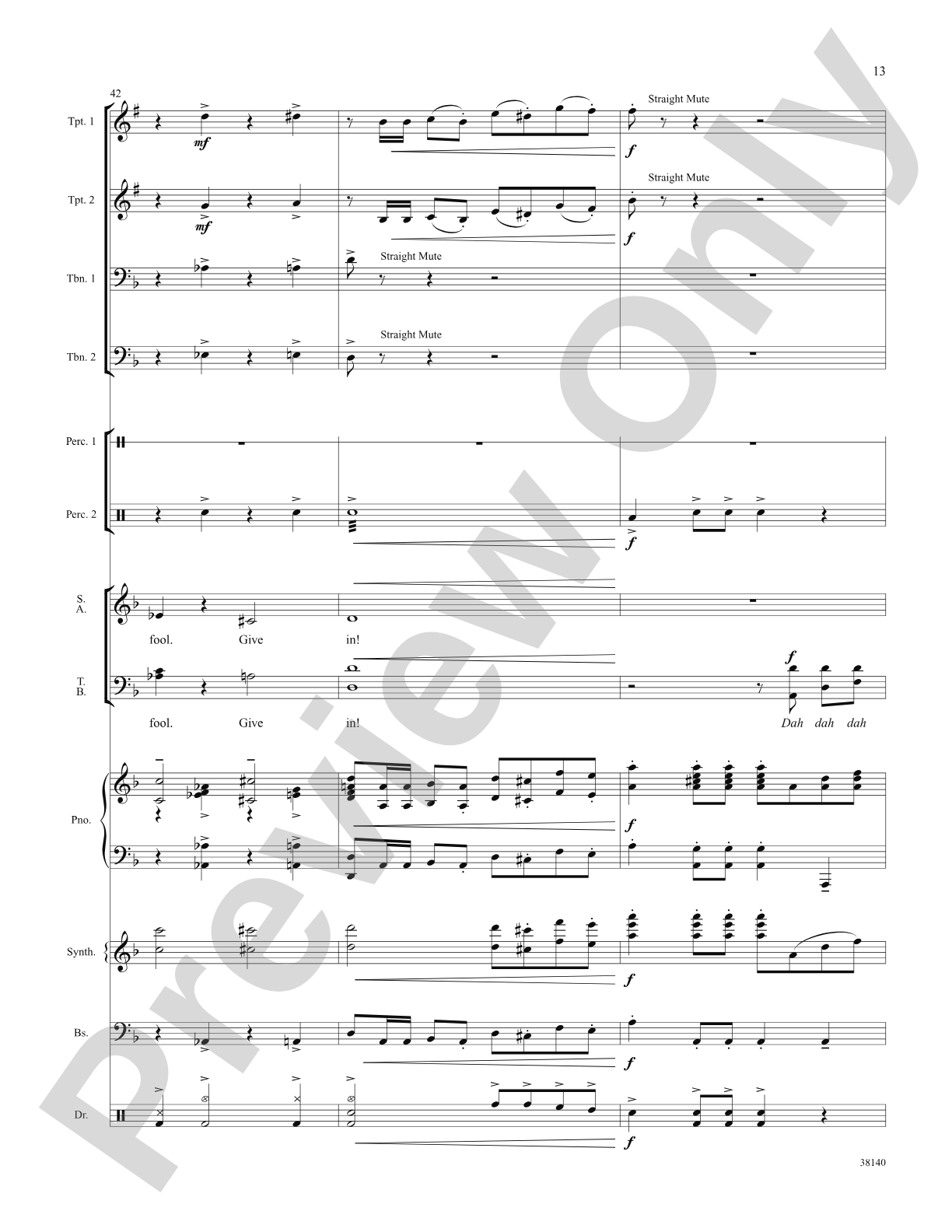
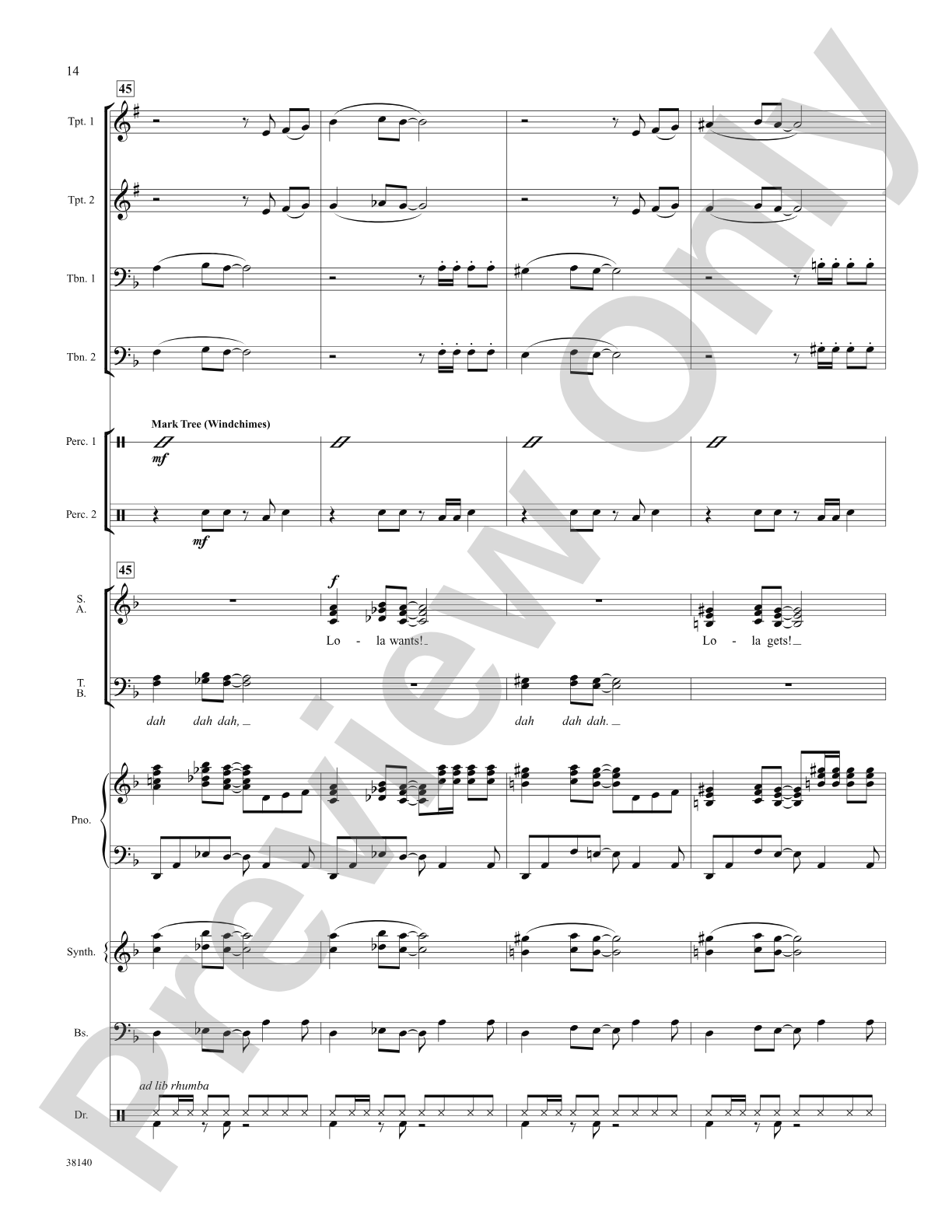
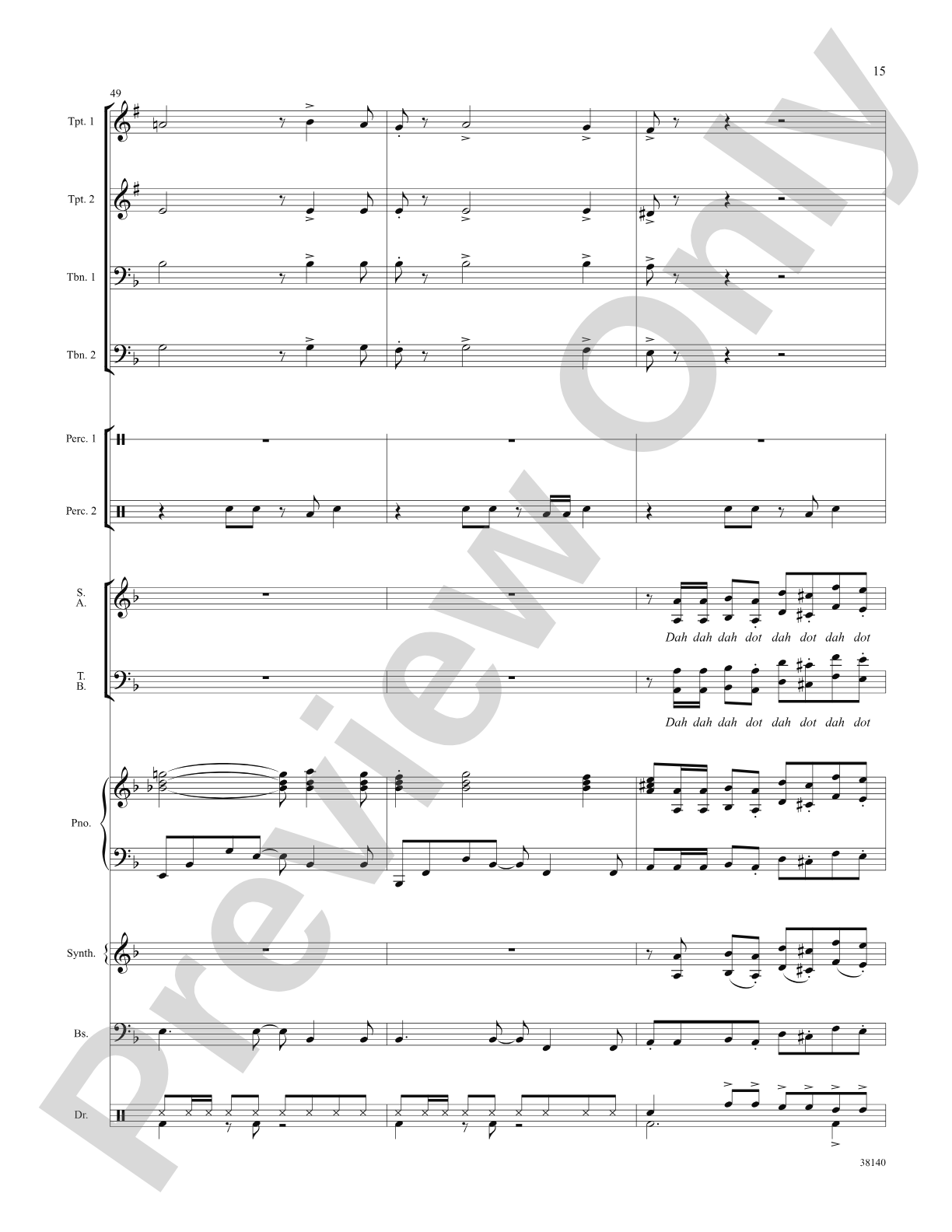
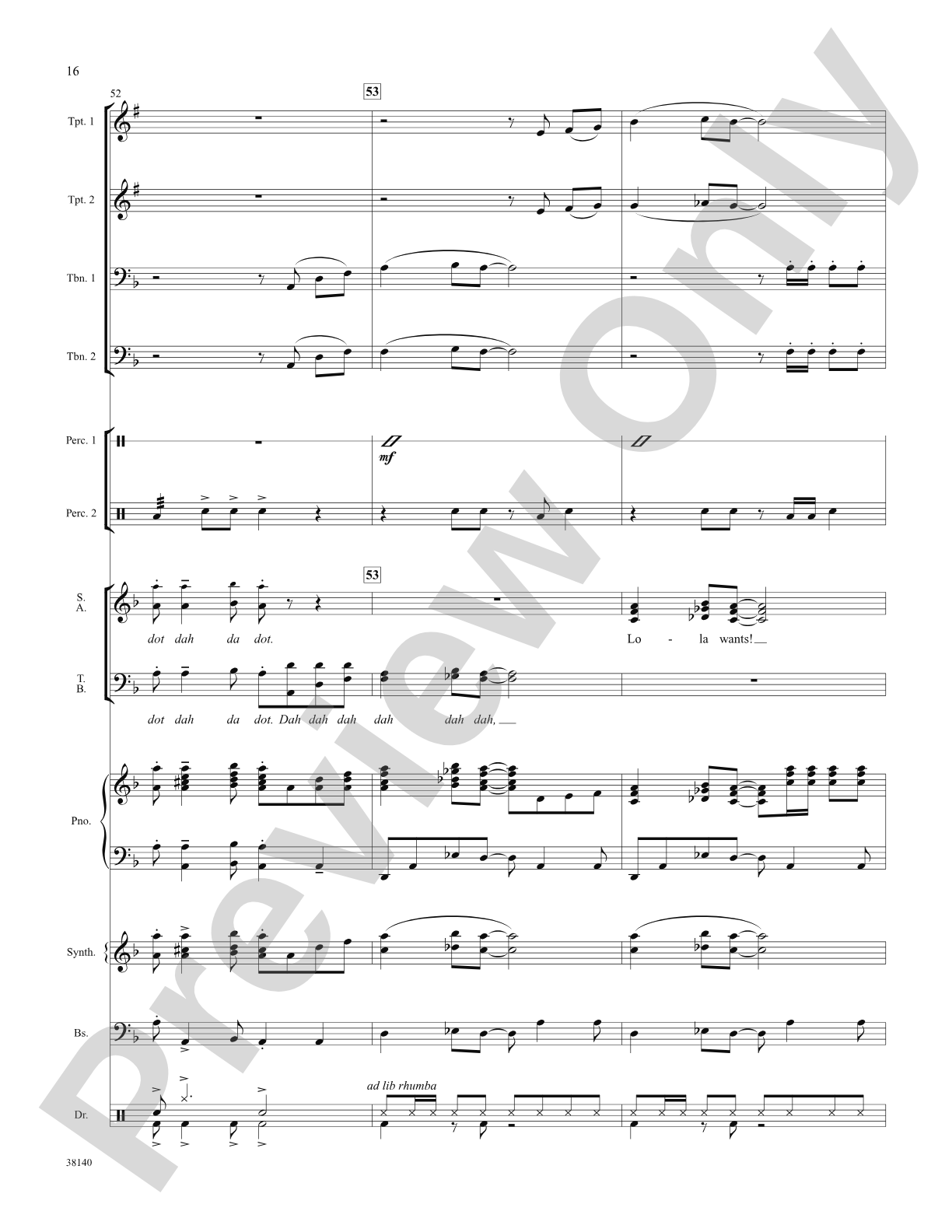
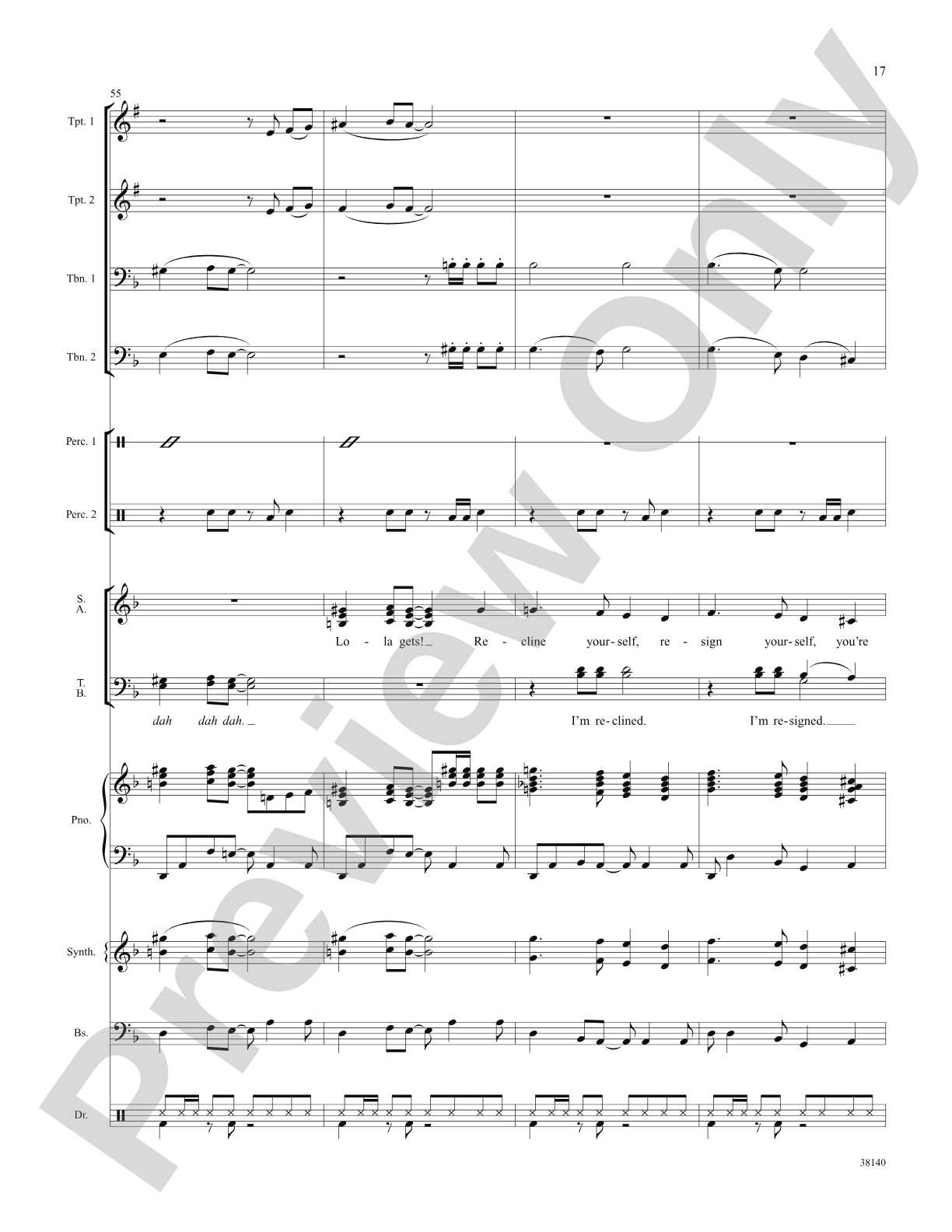
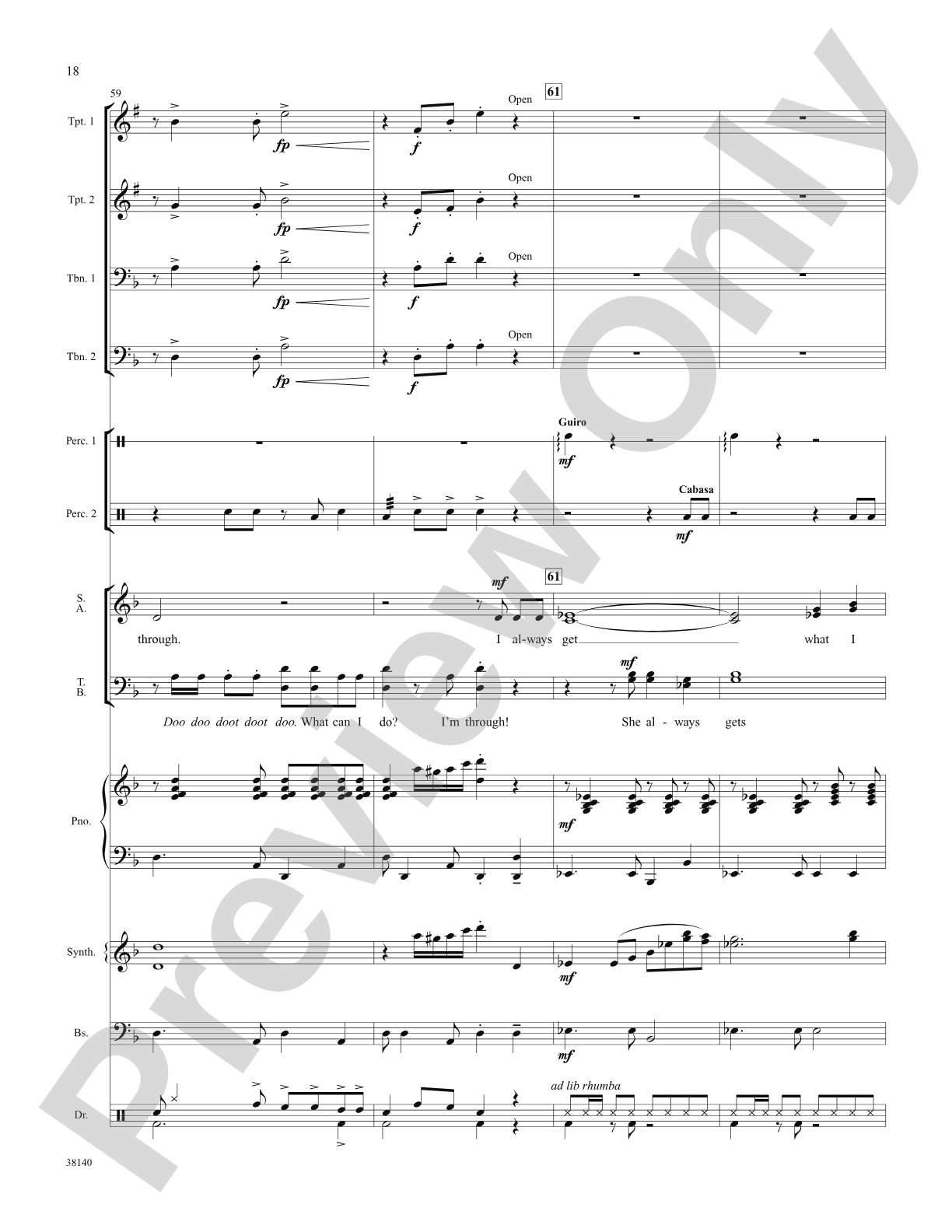
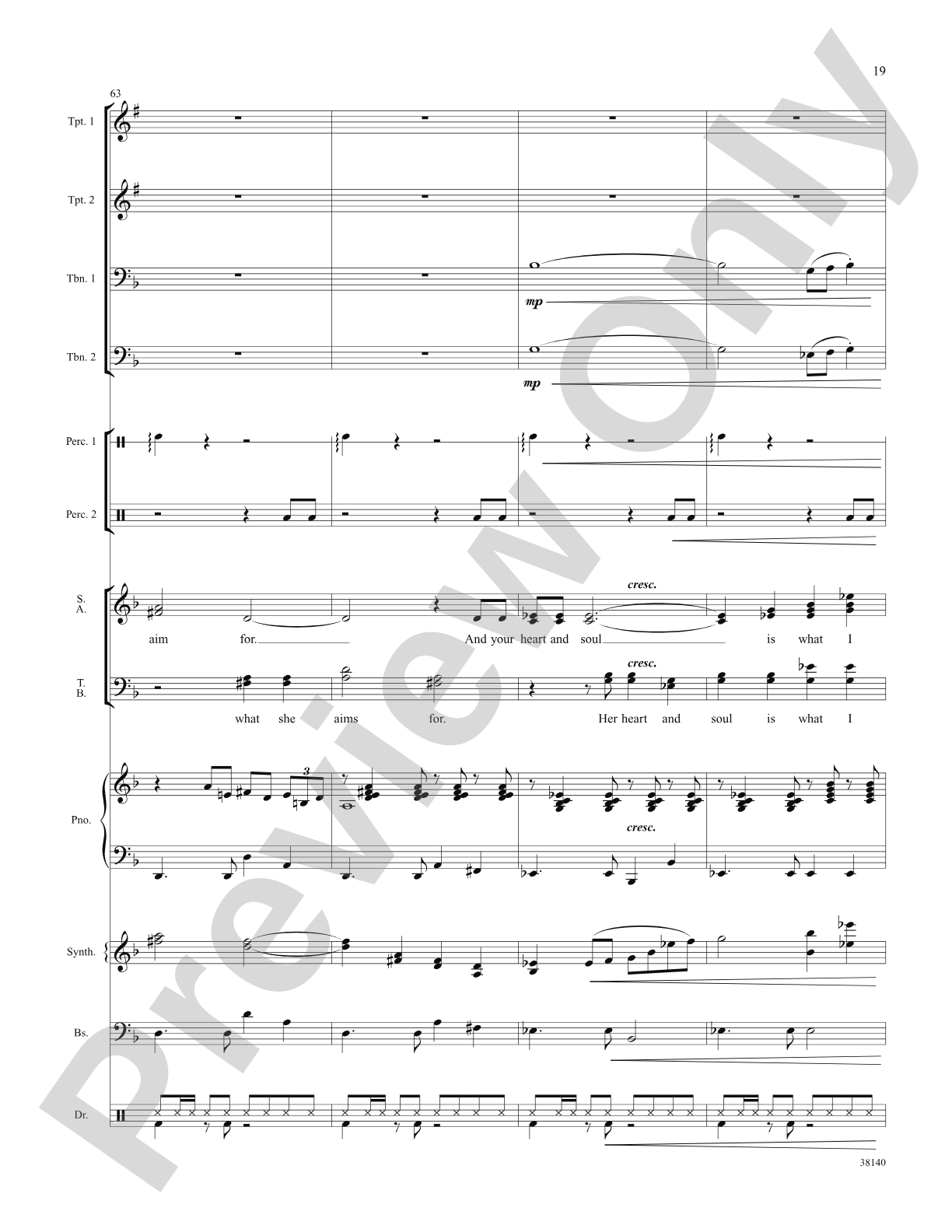
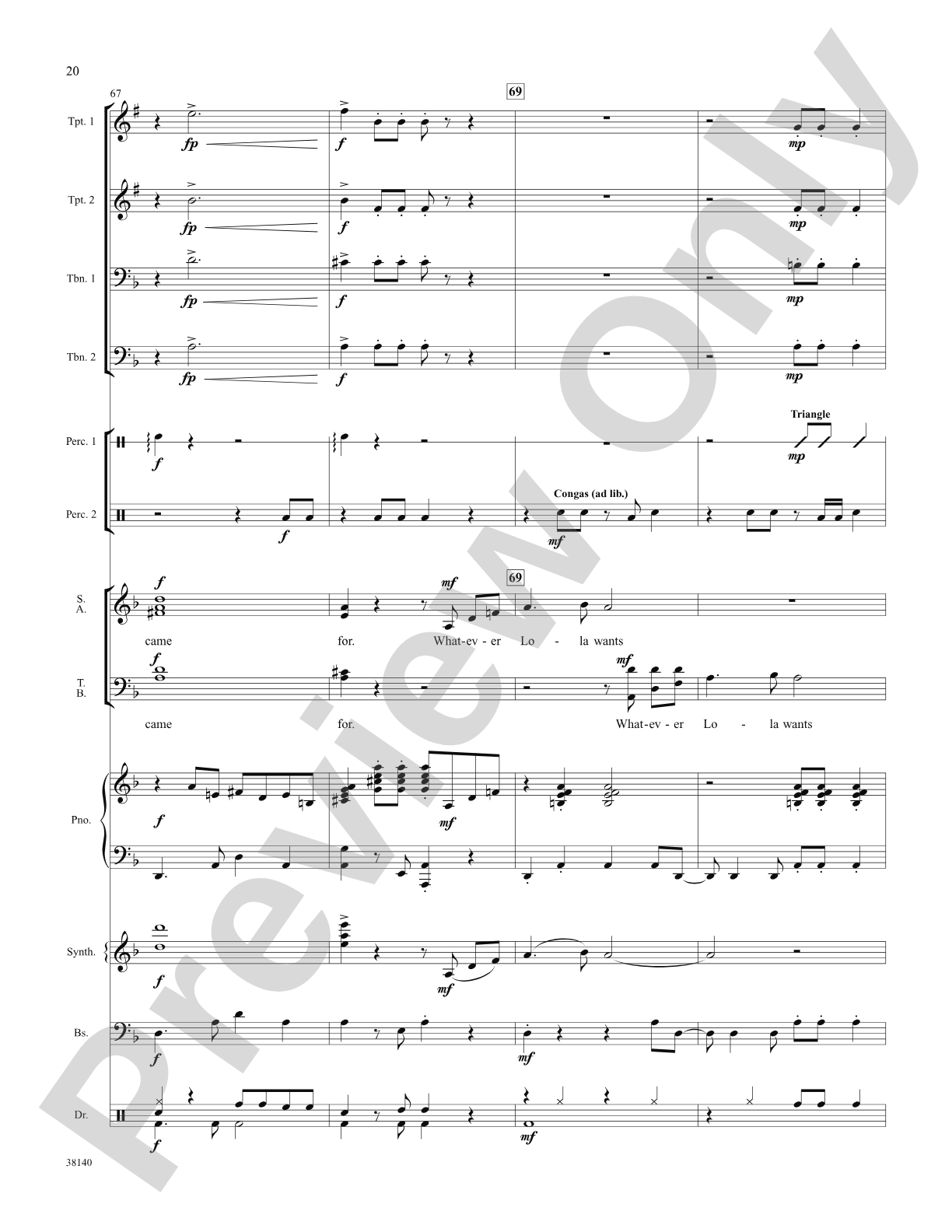
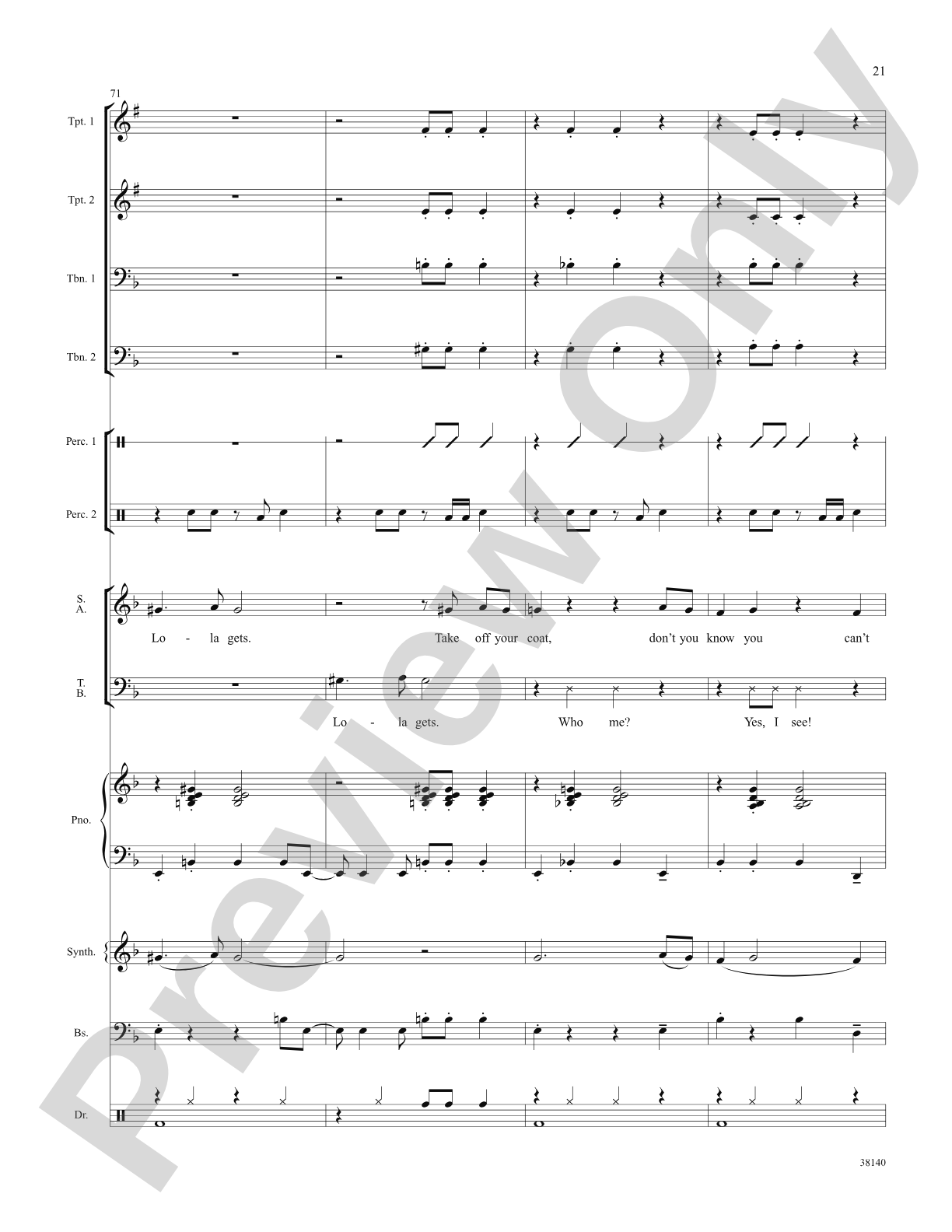
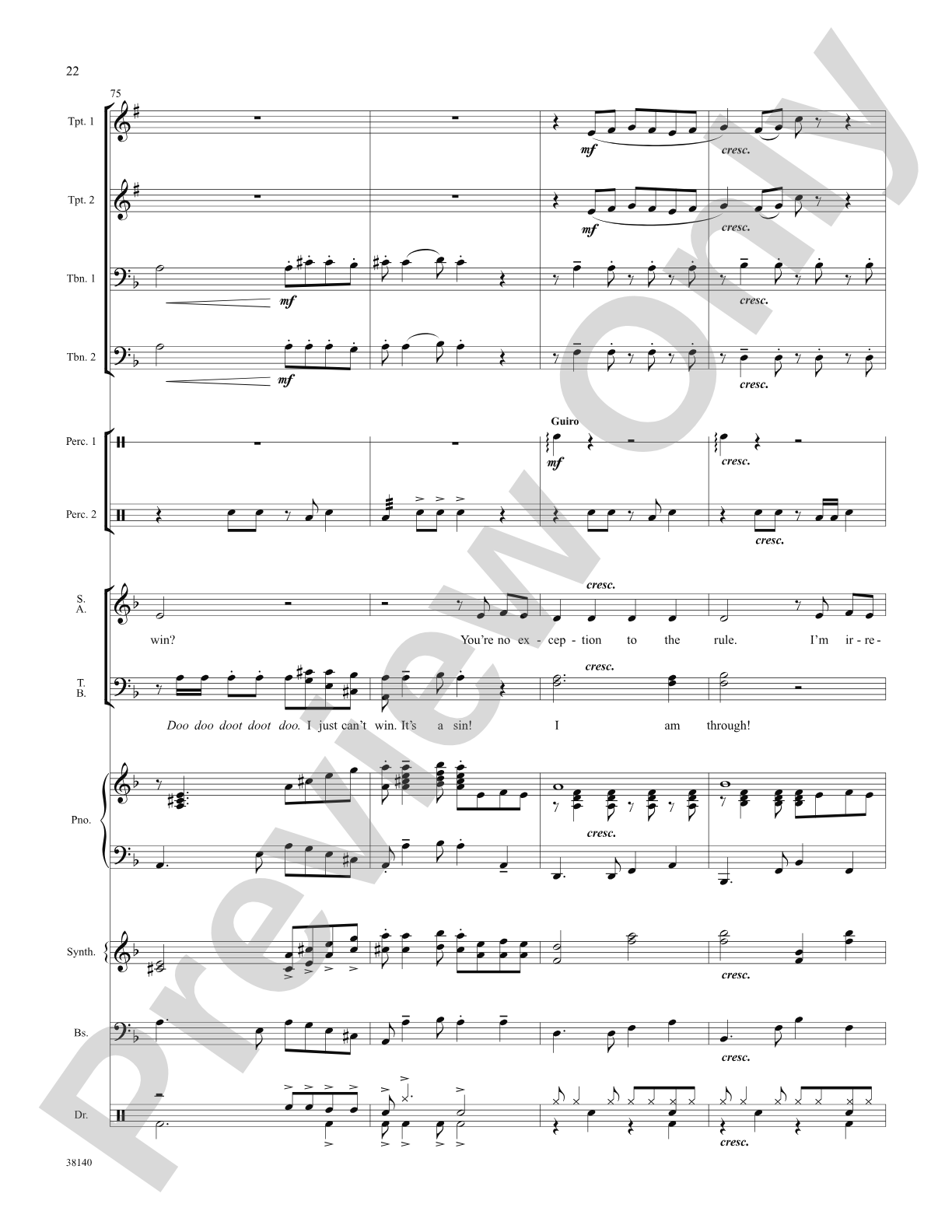
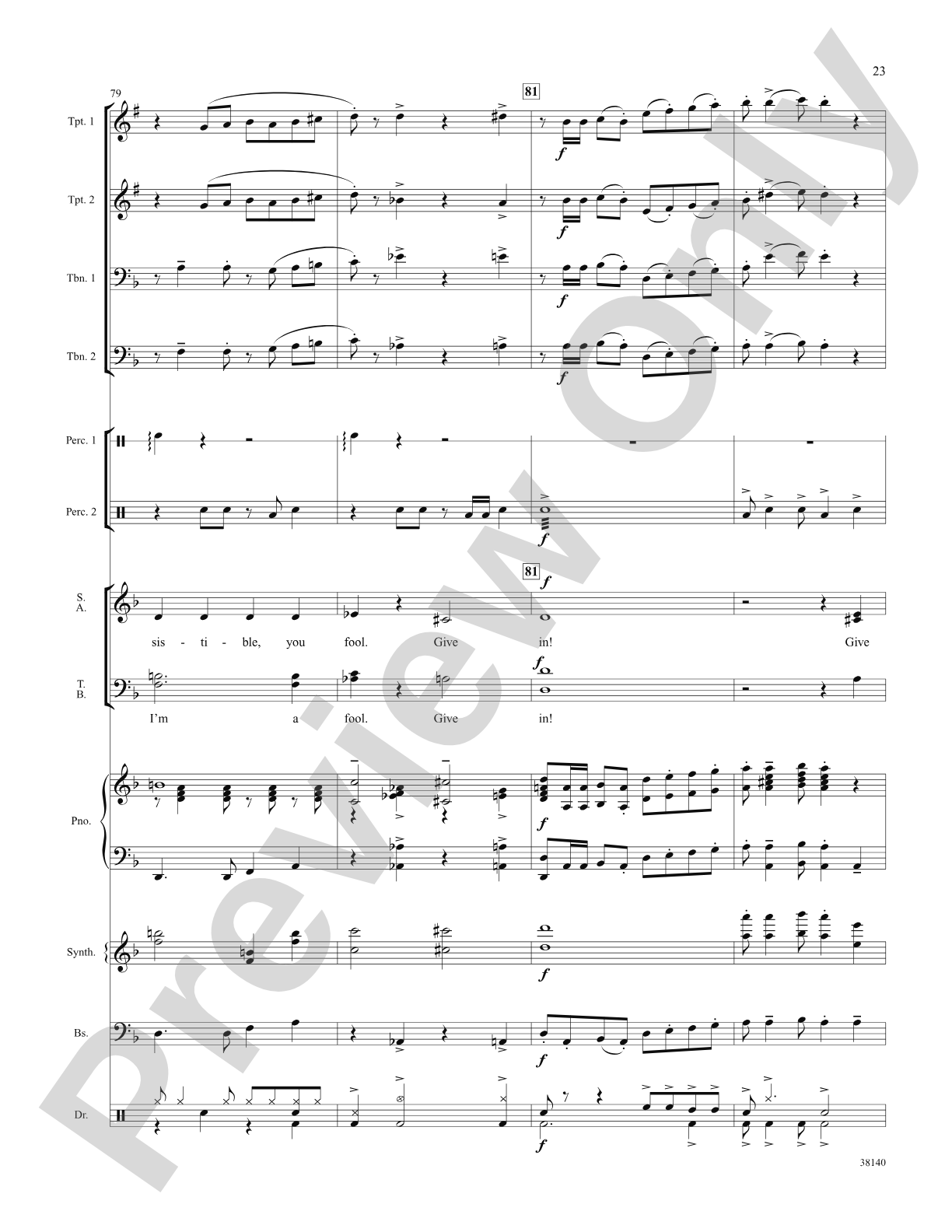
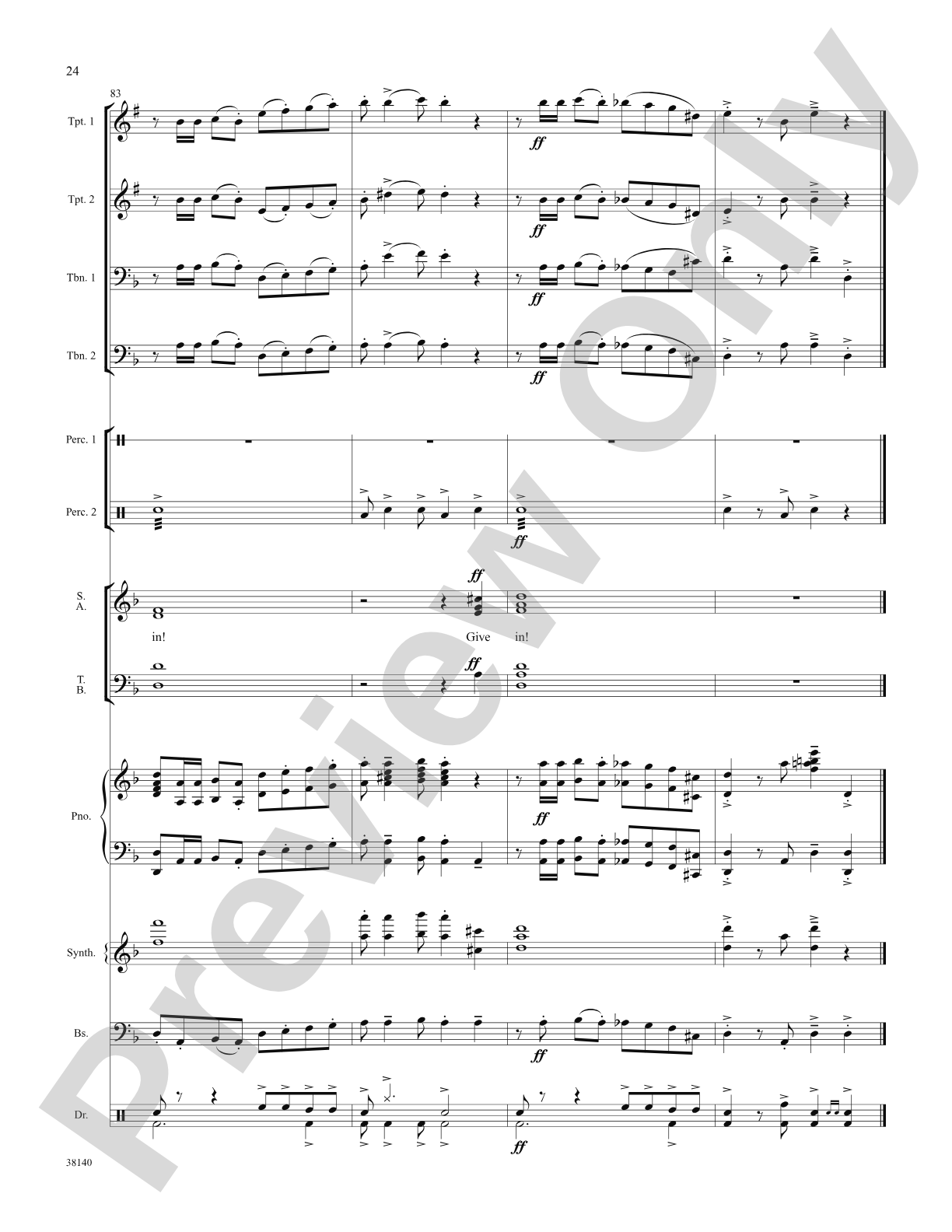

Whatever Lola Wants (Lola Gets) (from the musical Damn Yankees): Choral SoundPax
From the Musical Damn Yankees
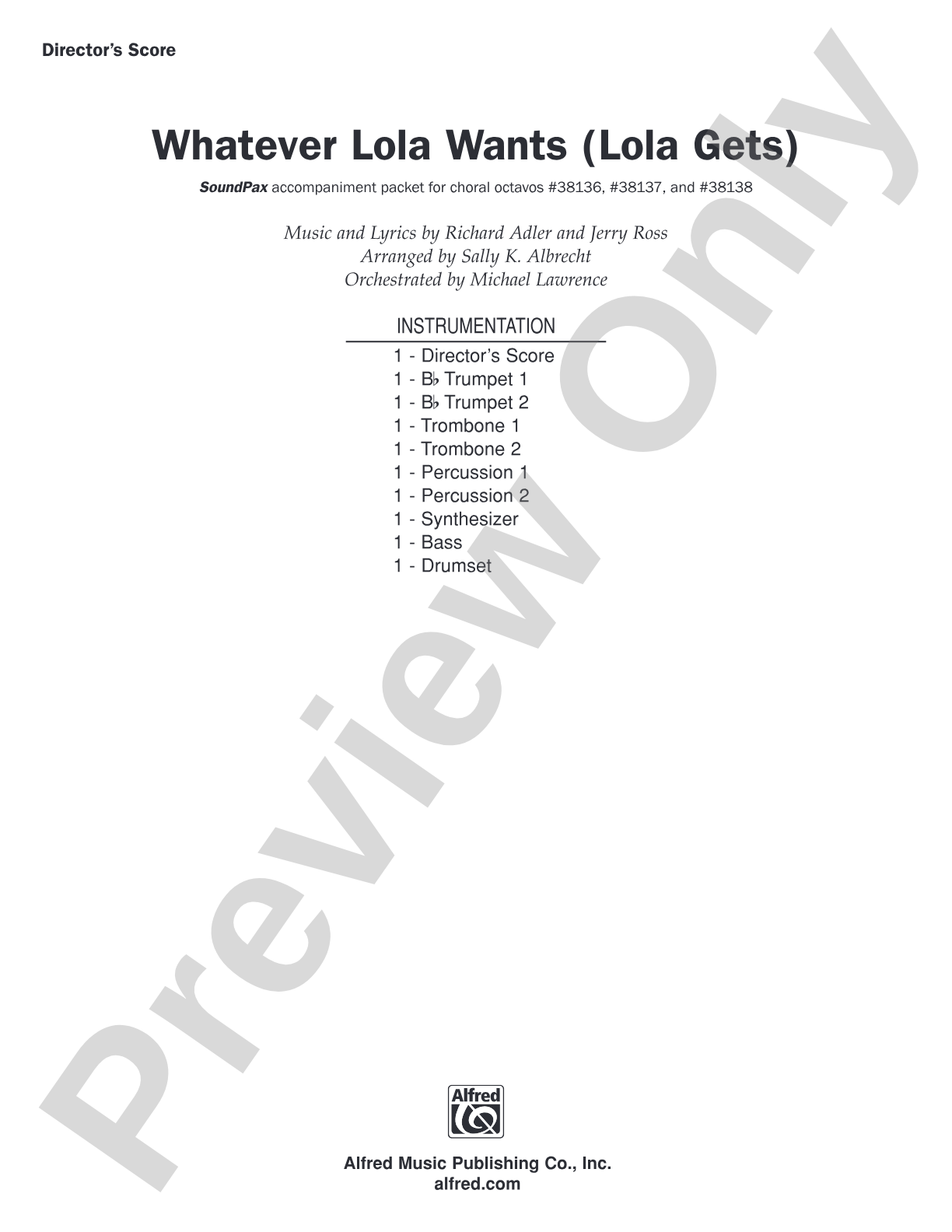
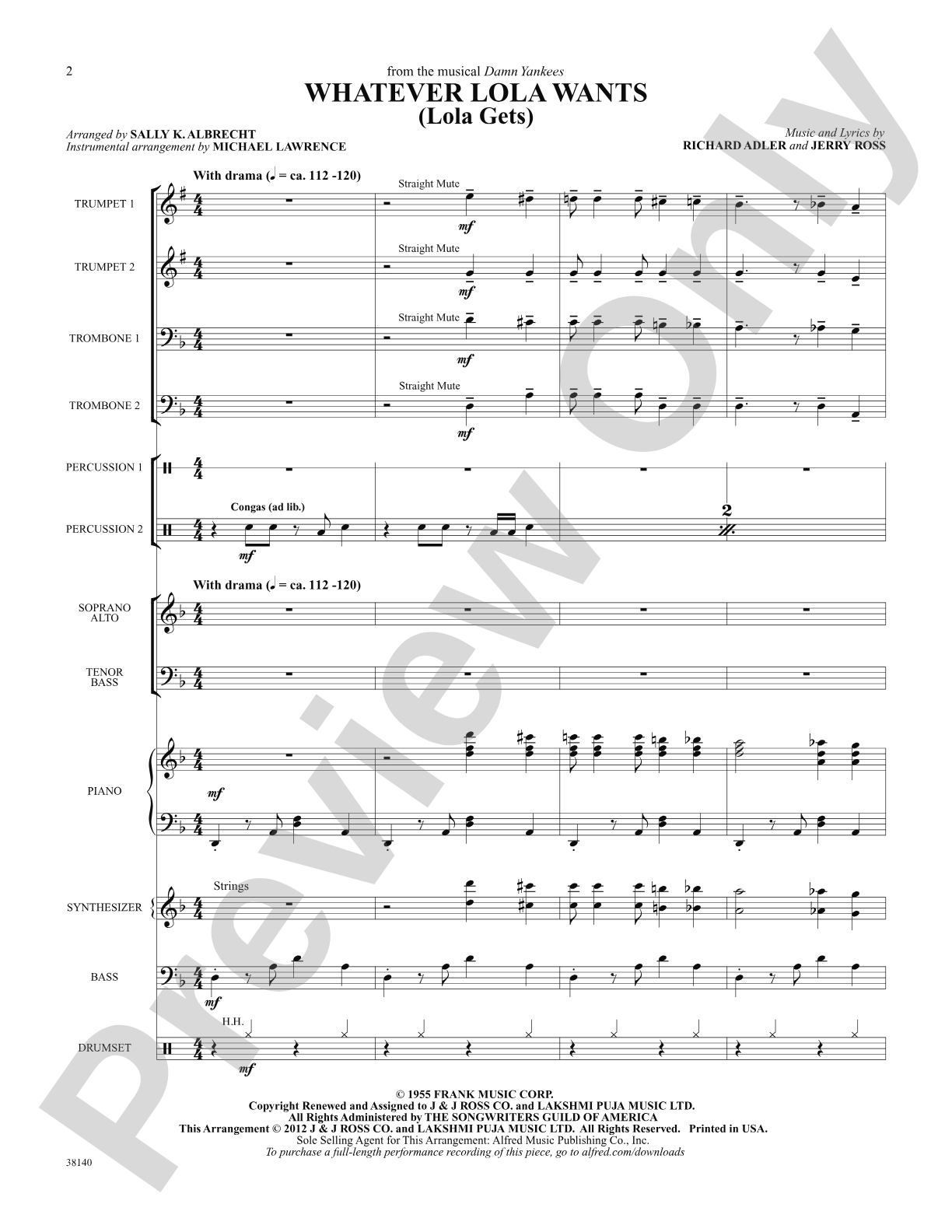
Music and lyrics by Richard Adler and Jerry Ross / arr. Sally K. Albrecht
Item: 00-PK-0005128
$35.00
One moment…
Related Items
Whatever Lola Wants (Lola Gets) (from the musical Damn Yankees): Choral SoundPax |
$35.00
|
View |
Description
Gwen Verdon made this sassy, saucy number a hit when Damn Yankees played on Broadway in 1955. Enjoy the "girls vs. guys" mixed arrangement, or let your ladies steal the show with the SSA version. Featured on Lift Me Up! choral movement DVD (00-38171).


Whatever Lola Wants (Lola Gets) (from the musical Damn Yankees): Choral SoundPax isn't in MakeMusic Cloud just yet...but it could be. Let us know you'd like to see it, and you'll help shape what comes next. In the meantime, start a free trial and dive into thousands of interactive titles your students can play along with today.
Request This Title
Tell us you want it.
Start Your Free Trial
Explore everything that's ready to play right now.
Sample Audio
1
Audio File
--:--
0:00
0:00
Sample Video
No sample videos found.
Additional Details
Series:
Alfred Pop Choral Series
Publisher:
Alfred Music
Page Count:
34
SKU:
00-PK-0005128
Instrumentation:
SoundPax
More about this title
About the Composer: Richard Adler
Richard Adler composed the scores for some of Broadway's most enduring musicals during the 1950s, a decade that defined the golden age of American musical theater. His collaborations with lyricist Jerry Ross produced work of genuine sophistication: melodies that stick with audiences for decades while lyrics that balance wit, charm, and emotional depth. Adler's ability to write songs that serve both the story and the performer made him one of the most sought-after composers of his generation.
Why we love this
Sally K. Albrecht's arrangement captures everything that made Gwen Verdon's original performance a showstopper while giving your singers multiple ways to perform it. The flexibility to run the mixed "girls vs. guys" version or spotlight your treble section with the SSA arrangement means you can program this exactly as your ensemble's strengths demand. The choreography suggestions and accompaniment recording make this as performance-ready as Broadway itself.
What to expect
Pure theatrical charm wrapped in a confident strut. The number pulses with sass and sophistication, mixing spoken moments of flirtation with sung passages that swing and seduce. There's genuine wit here, not just wink-and-nudge comedy; singers get to inhabit characters who are clever, playful, and completely in control.
Who it's for
Mixed choirs and treble ensembles with performance experience and comfort with musical theater style. This is equally at home in a show choir context or a traditional choir program looking to add contemporary Broadway repertoire that engages audiences and singers alike.
How to get the most out of it
- Lean into the rhythmic swagger of the melody. Verdon's delivery was all attitude, and your singers should match that energy in their phrasing and articulation, especially on the syncopated figures.
- Use the recorded accompaniment to lock the ensemble's rhythmic precision first, then gradually reduce reliance on it during rehearsals so singers internalize the groove.
- Shape the "girls vs. guys" moments with clear character work. Brief staging directions go far here; even simple blocking that emphasizes the playful competition makes the arrangement come alive.
- Balance the breathy, intimate sections with the belting moments. This number moves between coy and bold, and that contrast keeps audiences engaged.
How to use it
Program this on a concert that celebrates American musical theater, or use it as your stand-alone Broadway moment in a mixed repertoire show. The optional SSA arrangement works beautifully as a feature for your treble singers within a longer concert program. Its compact length (34 pages of score) also makes it realistic to rehearse alongside heavier classical repertoire without overwhelming your rehearsal schedule.
Skills your students will build
- Rhythmic precision in syncopated passages and swing-inflected figures
- Character work and stage presence in musical theater contexts
- Ensemble flexibility between solo spotlight moments and full-group singing
- Articulation control across intimate and bold dynamic ranges
- Interpretation of lyrical style that balances speech-like delivery with singing