
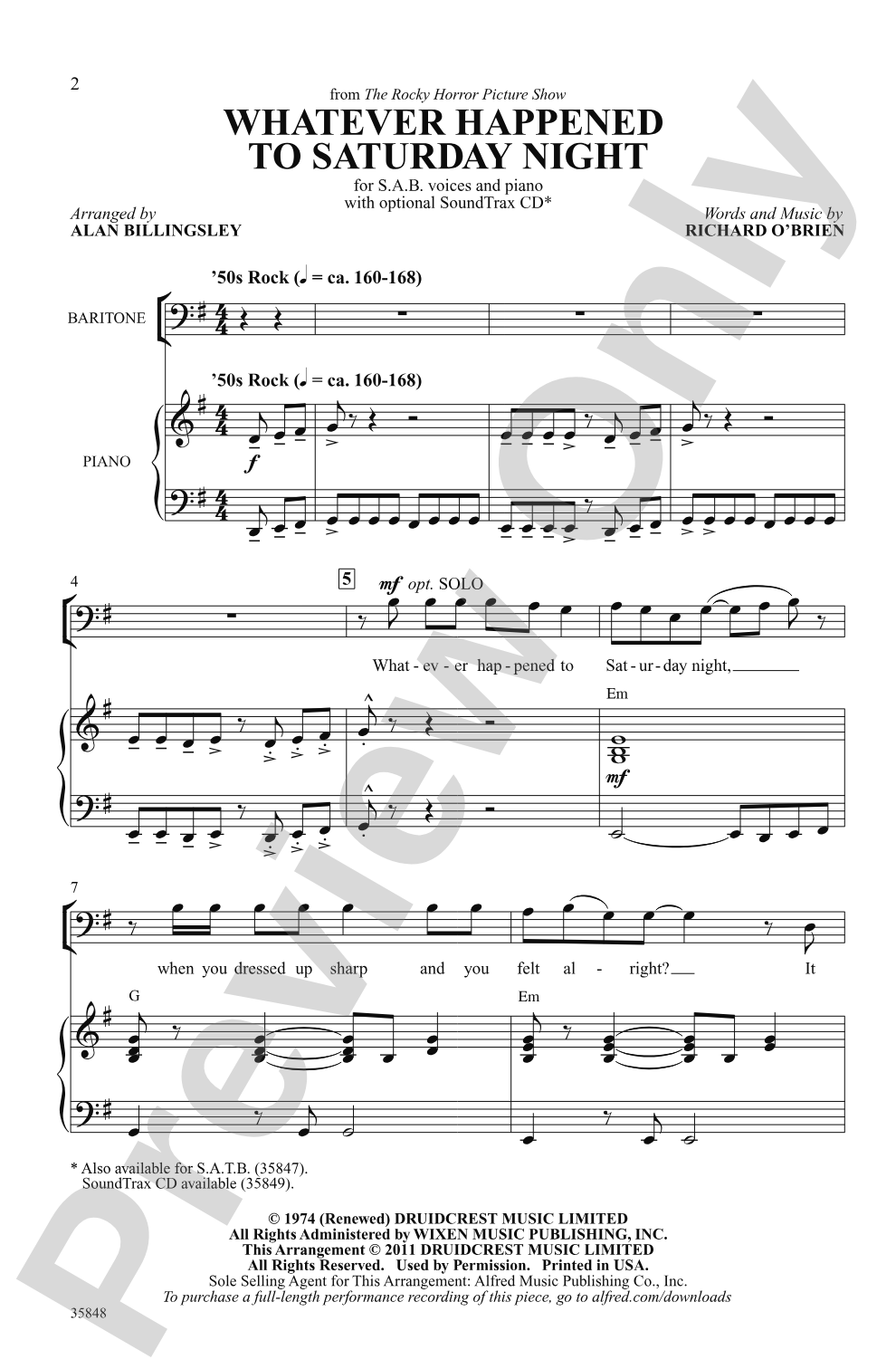
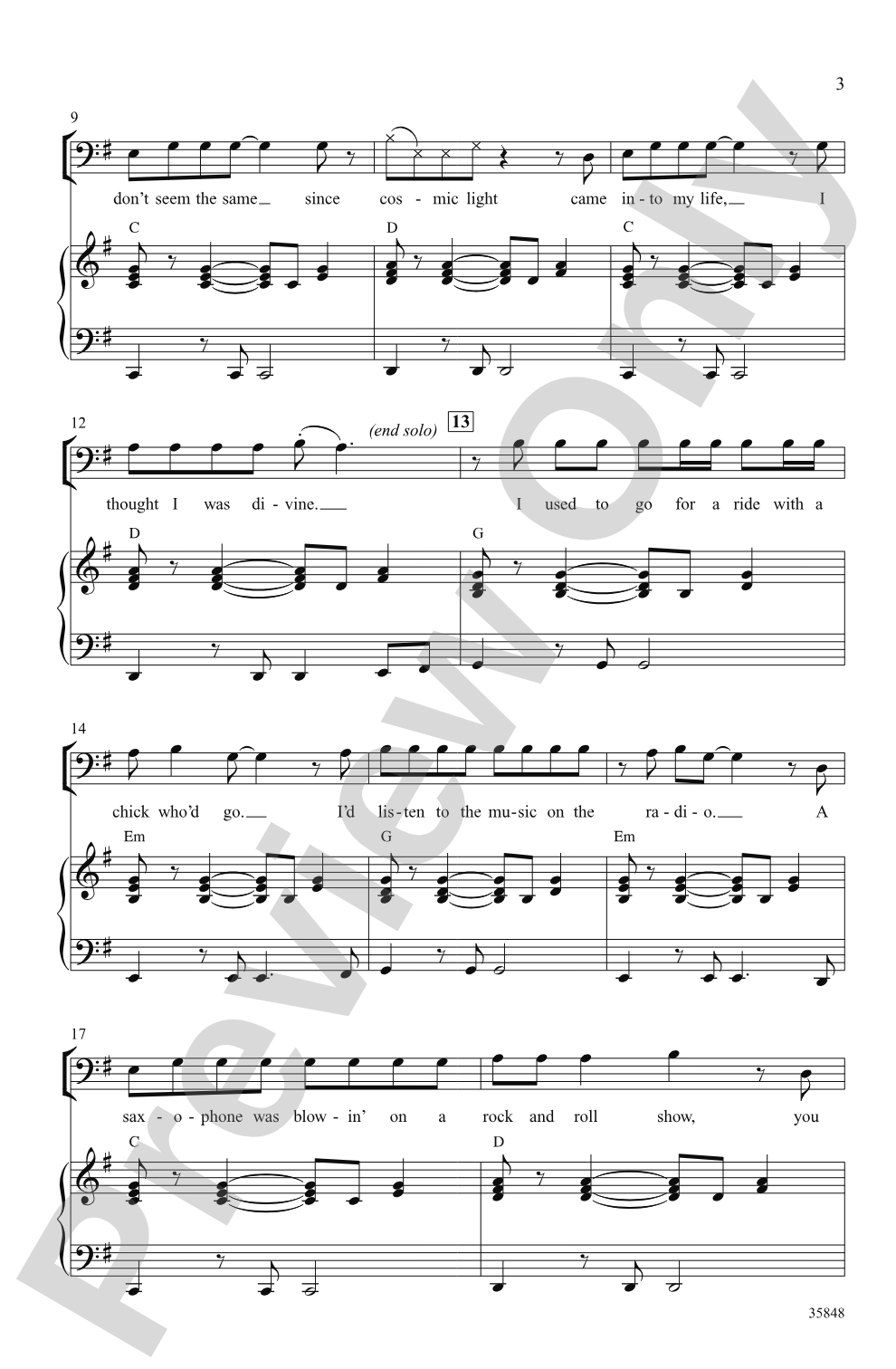

Whatever Happened to Saturday Night (from The Rocky Horror Picture Show): SAB Choral Octavo
From The Rocky Horror Picture Show
Words and music by Richard O'Brien / arr. Alan Billingsley
Item: 00-PO-0001128

$1.90
Minimum order quantity: 20 copies
Pickup currently not available
Related Items
Whatever Happened to Saturday Night: SAB Choral Octavo |
$1.90
|
View |
Description
The gang from Glee rocked the choir room the night they featured this hot hit in their Rocky Horror Glee Show! Great for singing---and dancing!


Don't just read it, hear it, play along with it, and watch your students grow with it. In MakeMusic Cloud, Whatever Happened to Saturday Night (from The Rocky Horror Picture Show): SAB Choral Octavo comes alive with professional accompaniment, adjustable tempo, and built-in practice tools that turn solo practice into real progress.
Open in the Player
Jump straight in and assign it today.
Start Your Free Trial
Open this title and explore the full library in minutes.
Sample Audio
1
Audio File
--:--
0:00
0:00
Sample Video
No sample videos found.
Additional Details
Series:
Alfred Pop Choral Series
Publisher:
Alfred Music
Page Count:
12
SKU:
00-PO-0001128
More about this title
About the Composer: Richard O'Brien
Richard O'Brien created The Rocky Horror Picture Show in 1973 as a stage musical, then adapted it for film in 1975, establishing himself as a distinctive voice in musical theater. His work blends rock music with theatrical storytelling, creating pieces that defy easy categorization and have sustained cult followings for decades. O'Brien's influence on popular music and performance culture extends far beyond his original creation, inspiring countless adaptations and reinterpretations across genres and media.
Why we love this
This arrangement captures the theatrical energy of the original while sitting comfortably in a three-part mixed voicing that gives every singer something engaging to do. Alan Billingsley's orchestration respects the rock DNA of the piece while making it accessible for choirs that want to move beyond traditional repertoire. A recorded accompaniment is available, which makes rehearsal coaching straightforward and gives singers the full sonic context they need to commit to the attitude of the song.
What to expect
Defiant and playful, with an infectious rock groove that makes standing still nearly impossible. The energy is theatrical without being precious; singers feel the cultural moment they're inhabiting while delivering what amounts to a performance art statement. It's rock and roll with permission to have fun.
Who it's for
Choirs ready to step outside classical and show choir standards and tackle contemporary material with theatrical flair. This works especially well for school choirs and community ensembles that want an audience-connecting moment that doesn't rely on either power ballads or novelty songs. Singers benefit from a piece that demands personality and rhythmic confidence alongside vocal technique.
How to get the most out of it
- Nail the rhythmic precision of the rock feel. This isn't legit singing; lock the groove first, then layer in the vocal delivery.
- Use the recorded accompaniment to establish tempo and style early in rehearsal. Let singers hear how their parts sit in the fuller arrangement before asking them to internalize the feel.
- Encourage genuine character commitment from all three voice parts. SAB allows each section to carry distinct musical moments, so each group should understand what role they're playing in any given phrase.
- Balance transparency with energy. The piece needs clarity so the humor and attitude land, but not at the expense of the driving rock pulse underneath.
How to use it
Program this as a statement piece on a concert that mixes eras and styles, or use it as a closing number if your group has earned audience trust through the program. It works beautifully as a bridge between classical warmup repertoire and pure entertainment, signaling that your choir can do both. A performance with choreography (even minimal movement) elevates the piece significantly and justifies the theatrical approach.
Skills your students will build
- Singing with a rock/pop rhythmic feel and emphasis
- Interpreting character and attitude through vocal delivery
- Balancing part independence in a three-part voicing
- Sustaining energy and precision across a driving rhythm section