
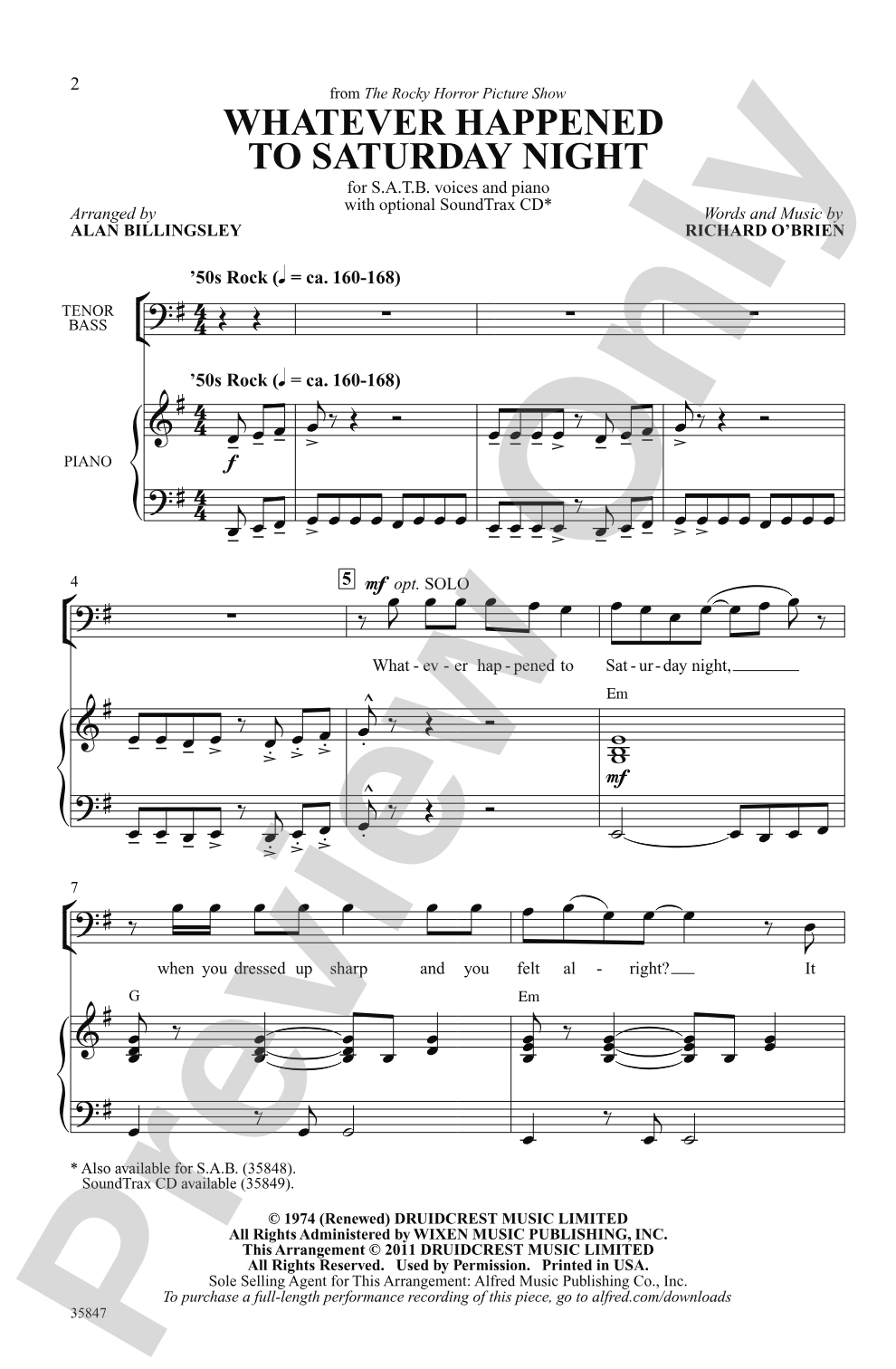
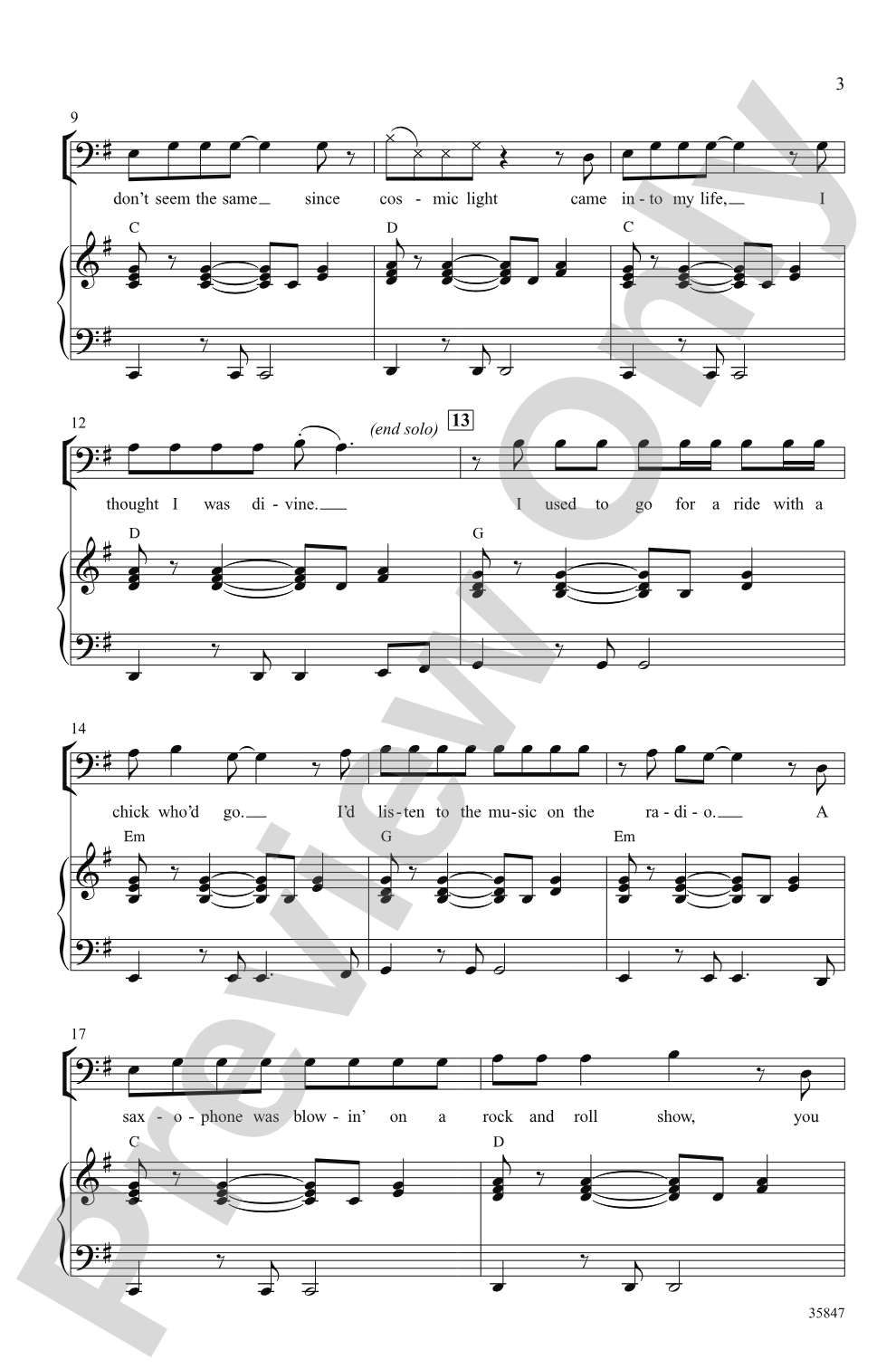

Whatever Happened to Saturday Night (from The Rocky Horror Picture Show): SATB Choral Octavo
From The Rocky Horror Picture Show
Words and music by Richard O'Brien / arr. Alan Billingsley
Item: 00-PO-0001127
$1.90
Minimum order quantity: 20 copies
Pickup currently not available
Description
The gang from Glee rocked the choir room the night they featured this hot hit in their Rocky Horror Glee Show! Great for singing---and dancing!


Whatever Happened to Saturday Night (from The Rocky Horror Picture Show): SATB Choral Octavo isn't in MakeMusic Cloud just yet...but it could be. Let us know you'd like to see it, and you'll help shape what comes next. In the meantime, start a free trial and dive into thousands of interactive titles your students can play along with today.
Request This Title
Tell us you want it.
Start Your Free Trial
Explore everything that's ready to play right now.
Sample Audio
1
Audio File
--:--
0:00
0:00
Sample Video
No sample videos found.
Additional Details
Series:
Alfred Pop Choral Series
Publisher:
Alfred Music
Page Count:
12
SKU:
00-PO-0001127
More about this title
About the Composer: Richard O'Brien
Richard O'Brien created The Rocky Horror Picture Show as a stage musical in 1973, then adapted it for film in 1975, writing both the book and music. His work has become a cultural phenomenon, spawning countless productions worldwide and introducing audiences to a theatrical experience unlike anything else in popular entertainment. O'Brien's fearless approach to musical storytelling and character-driven songwriting continue to influence how composers and arrangers think about genre-blending and audience engagement.
Why we love this
Alan Billingsley's arrangement captures all the theatrical energy and character of the original while making it genuinely singable for high school and community choirs. The piece gives every voice part something fun and active to do, and the built-in appeal of the Rocky Horror legacy means singers arrive already invested in nailing the performance.
What to expect
The piece crackles with retro-glam energy and theatrical mischief. You're inhabiting the quirky confidence of Brad and Janet's evening, complete with the defiant joy of characters who know they're about to encounter something completely unexpected. Every phrase feels designed for a knowing smile and a little bit of movement.
Who it's for
This octavo works for high school choirs, community ensembles, and college groups who want to program something with genuine popular appeal and room for choreography. Singers need solid ensemble blend and rhythmic independence, but the part writing is accessible and doesn't demand soloists.
How to get the most out of it
- Lean into the theatrical attitude from the first measure. This isn't a song to sing prettily; it's a song to perform with personality and swagger.
- Use the recorded accompaniment to lock the rhythmic groove, which is essential to keeping the piece snappy and driving forward.
- Emphasize the interplay between voice parts, especially where one section echoes or responds to another. The arrangement thrives on those moments of conversation.
- Keep the energy consistent even during softer passages. Restraint and quiet are not the same thing.
How to use it
This pairs naturally with other pop-influenced or theatrical repertoire in a concert celebrating entertainment and musical storytelling. It also works as a concert finale or as part of a show-themed concert where audience engagement and fun are priorities. The piece lends itself beautifully to choreography, making it ideal for spring concerts or events where singers can move beyond the risers.
Skills your students will build
- Maintaining rhythmic precision in syncopated, pop-influenced contexts
- Blending as an SATB ensemble while preserving individual character in each voice part
- Dramatic interpretation and theatrical commitment in secular music
- Singing with speech-like articulation and conversational phrasing in a choral texture